Skip to product information
1 of 5

Vintage and Antique Gifts

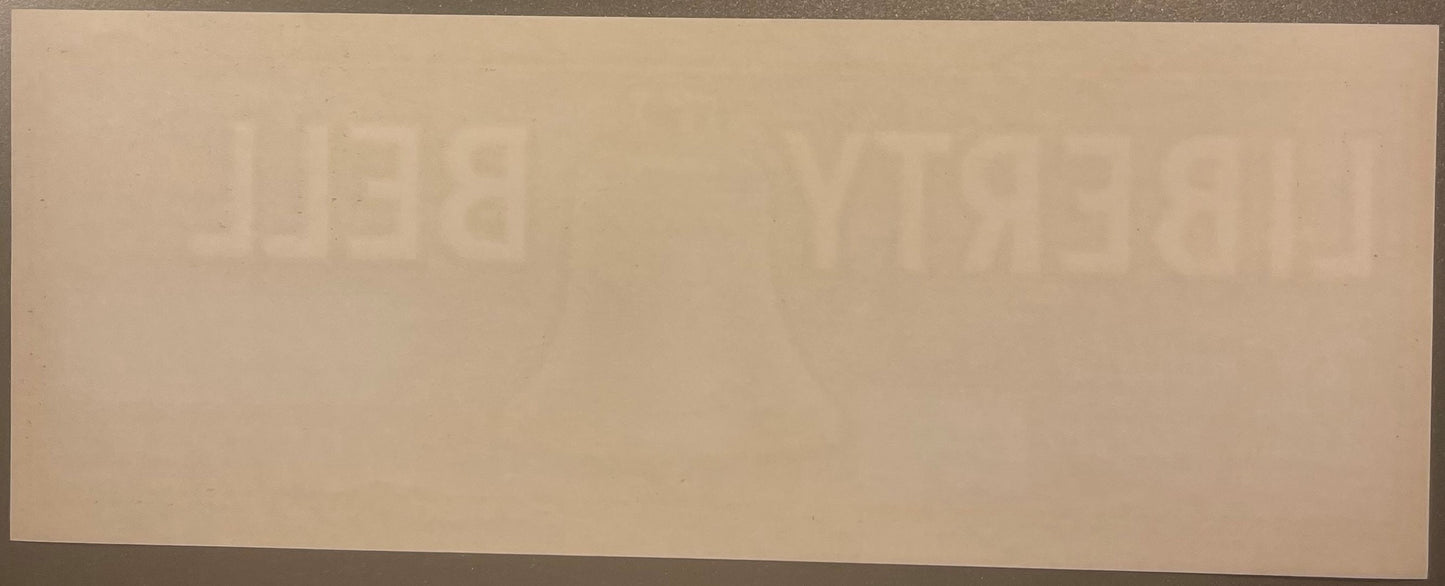
Vintage Liberty Bell Brand 🔔 Crate Label C. & A. Emerzian Growers Fresno & Modesto California Alicante Grapes American Made

Regular price 8.00 USD
Regular price Sale price 8.00 USD
Sale Sold out
Shipping calculated at checkout.

Description

🔔 What Does It Feel Like to Hold a Piece of the California Dream?

There is something quietly extraordinary about holding a lithographed grape crate label in your hands — a thing that was never meant to be saved, yet here it is, vivid and whole, carrying an entire world inside it. This Liberty Bell Brand label from C. & A. Emerzian, Growers & Shippers of Fresno and Modesto, California, is exactly that kind of survivor. It was printed to be pasted onto a wooden lug box, stacked on a loading dock, shipped across the country, and forgotten. Instead, it outlasted the crate, the season, and much of the industry it once served. And today it stands as a genuine artifact of mid-century California agricultural advertising — a small rectangle of American commercial art that tells a story far larger than its dimensions suggest.

What you are looking at is an original, New Old Stock (NOS) color lithographed grape lug crate label — the kind of elongated, horizontal format designed for the flat wooden lug boxes in which fresh California table and wine grapes were packed and shipped to markets across the United States. The label features a commanding central illustration of the Liberty Bell, rendered in warm bronze and copper tones against a rich, deep navy blue field, flanked by the brand name in bold red-outlined white block letters: LIBERTY BELL on the left, BELL BRAND on the right. The inscription detail on the bell's shoulder is faithfully reproduced — the partial texts referencing the State House in Philadelphia and the foundry markings, just as they appear on the actual bell — a nice touch that speaks to the care a skilled lithographer brought to even a utilitarian shipping label. Below and to the left, in clear light blue lettering: C. & A. EMERZIAN / GROWERS & SHIPPERS / FRESNO AND MODESTO, CALIFORNIA. The words PRODUCE OF U.S.A. and TRADE MARK REG. appear as well, the latter confirming that the Emerzians thought enough of their brand identity to formally protect it. The label's color palette — blue, red, white, warm brown, and light blue — is as patriotic as the bell itself, a calculated appeal to American pride at the point of sale.

Archival records from the University of California's Online Archive of California, which holds this label in its Southern California Wine and Wine Industry Grape Crate Labels Collection, date the Liberty Bell Brand label to circa 1950–1960 — a dating independently corroborated by collector and dealer records. That places it squarely in the postwar decade when California agriculture was booming, refrigerated rail cars were moving fresh grapes to dining tables from coast to coast, and Armenian-American families in the San Joaquin Valley were, at long last, stepping fully into the mainstream of California commercial life.


🍇 Alicante Grapes, Lug Boxes, and the Art of the Crate Label

The specific grape packed under the Liberty Bell Brand was the Alicante Bouschet — a deeply pigmented, thick-skinned variety originally developed in France in the 1860s by Henri Bouschet. By the mid-twentieth century, Alicante was widely grown in the San Joaquin Valley, valued for its intensely colored juice and its durability in shipping. It was the kind of grape that could survive a transcontinental rail journey in a wooden lug box and arrive looking robust enough to sell. Shippers loved it. Winemakers loved it. And in the Prohibition years that preceded this label's era, home winemakers had loved it most of all — Alicante was among the most sought-after varieties for backyard wine production because its thick skin resisted mold and its juice ran almost purple-black.

The lug box itself was a California innovation: a shallow, flat wooden crate designed to carry grapes in a single or double layer, protecting the fragile clusters from crushing. Each box wore its label on the end panel — sometimes on both ends — so that when the crates were stacked on a railroad freight car or a produce market's floor, the brand was visible from across the room. The label was, in every practical sense, the salesman. A packer in Chicago or a produce buyer in New York made purchasing decisions based on what that label communicated: the brand's reputation, the grower's name, the region of origin, and the signal of quality carried by the design itself. A registered trademark, a patriotic emblem, bold professional lithography — all of it said: this shipper is serious, this fruit is worth buying.

The lithography that produced these labels was genuine craft work. California crate label printing in this era was dominated by major lithography houses — firms like Schmidt Litho in San Francisco, Louis Roesch Co., Stecher-Traung, and Western Lithograph in Los Angeles — whose skilled artists transferred designs onto stone or metal plates and printed them in multiple color passes, each registration slightly critical to the final result. The warm, dimensional rendering of the Liberty Bell on this label, with its graduated bronze tones and the fine inscription detail along the shoulder, reflects the hand of a competent commercial artist working within a tradition of careful, production-minded craft. Which specific firm printed the Emerzian label is not documented in any source I've been able to locate — that particular thread of history hasn't yet been pulled from the archive — but the quality of the printing speaks for itself.


🌄 Fresno, Modesto, and the Valley That Fed a Nation

To understand C. & A. Emerzian, you have to understand the San Joaquin Valley in the middle of the twentieth century — and specifically what Fresno County meant to the American produce industry. By the postwar decades, Fresno was one of the most agriculturally productive counties in the United States, and the backbone of that productivity was grapes: wine grapes, raisin grapes, and table grapes, grown across hundreds of thousands of acres of sandy loam soil under a sun that could push triple digits in August. The Southern Pacific Railroad had made Fresno possible — its tracks through the valley in the 1870s transformed what had been near-desert scrubland into some of the most intensively farmed land in the world, and the refrigerated rail car made it possible to ship fresh grapes to markets that had never tasted a California fruit.

Modesto, the other city named on the Emerzian label, sits at the northern end of the San Joaquin Valley in Stanislaus County — a separate agricultural hub with its own grape-growing tradition. A grower-shipper operating across both Fresno and Modesto was indicating reach: this was not a small family plot but an operation with roots and resources in two distinct growing regions, positioned to offer both volume and variety to buyers. The label's dual-city identification was a statement of commercial credibility.

Old-timers in the Fresno produce trade remember the lug-box era with a particular kind of fondness — the smell of fresh-cut wood, the thwack of a label brush, the stacks of labeled crates baking gently in the morning sun before the refrigerated trucks arrived. The loading docks of Fresno and Modesto were, in season, among the busiest freight origination points in the western United States. Collectors who grew up near those operations occasionally recall, passed down through family stories, how intensely competitive the label game was — how a striking brand image could make a significant difference in what a buyer was willing to pay per lug, and how growers with strong brand identities were known and respected in produce markets from Los Angeles to Boston.


🕍 The Armenian-American Grape Growers of Fresno — A Story Bigger Than Any Single Label

The name Emerzian places this label firmly within one of the most remarkable and underappreciated chapters of California agricultural history: the rise of the Armenian-American farming community in Fresno County.

The Armenian presence in Fresno dates to 1881, when merchant Hagop Seropian — who had first settled in Massachusetts but found the winters punishing — moved west with his half-brothers George and John, drawn by a climate and landscape that reminded them of their homeland in what is today eastern Turkey and Armenia. They found the San Joaquin Valley familiar in the best possible sense: hot, dry summers, mild winters, fertile soil — conditions identical in many ways to the grape-growing regions of the Caucasus where Armenian viticulture stretched back thousands of years. Word spread, and wave after wave of Armenian immigrants followed, many of them survivors or descendants of survivors of the Armenian Genocide of 1915, arriving in California with almost nothing but agricultural knowledge and an extraordinary capacity for hard, patient work.

By 1930, Armenians owned forty percent of Fresno County's raisin-producing acreage — a statistic that still astonishes when you consider how recently that community had arrived and how little capital most families brought with them. They became pioneers in melon and fig production alongside grapes, and the most successful among them built grower-shipper operations that moved fresh fruit to markets across the continent. The Armenian community in Fresno clustered initially in what became known informally as "Armenian Town" in the southeast part of the city, and expanded outward through the 1920s and 1930s as prosperity grew.

Yet for much of the early and mid-twentieth century, this success was achieved against a backdrop of real social exclusion. Armenian-Americans in Fresno were not fully welcomed into the broader social and civic life of the city until the 1950s — the very decade this label was produced — partly because of prejudice rooted in their appearance, language, customs, and Middle Eastern origins. William Saroyan, Fresno's most celebrated Armenian-American literary voice, wrote about this exclusion with both tenderness and fury, describing a community that was American to its core in ambition and labor but treated as foreign in its own adopted city.

Set against that history, the Liberty Bell at the center of this label carries a resonance that goes beyond marketing strategy. Here is an Armenian-American grower-shipper family, operating at the exact moment their community was gaining broader acceptance, choosing as their brand symbol the most iconic emblem of American liberty and equality. Whether that choice was purely commercial instinct or carried some personal meaning for the Emerzian family, we cannot say for certain — but collectors and historians who study this era of California crate label art often note, as a piece of received wisdom in the field, that patriotic branding by immigrant-owned produce companies was rarely entirely accidental. The Liberty Bell said: we are American, our fruit is American, and we are proud of both.

The Emerzian surname recurs across Fresno records through multiple generations — the family's roots in the valley run deep, and the name appears today in Fresno's legal and professional communities, suggesting a family that planted itself in California soil as firmly as its vines. The "C. & A." of the label's partnership almost certainly refers to two family members — partners, perhaps brothers, perhaps a husband-and-wife or sibling pair — though the full first names behind those initials have not yet surfaced in any archive I've been able to consult. That detail remains one of the small mysteries this label carries with it, a thread worth pulling if a researcher ever works through Fresno County business directories from the period.


📜 The Liberty Bell on a Crate Label — A Patriotic Motif with Deep Roots

The Liberty Bell was not an unusual choice for a produce brand in mid-century America — it was, in fact, a fairly common patriotic motif in the crate label industry, used by growers of everything from pears in the Yakima Valley to citrus in Southern California. What made each version distinct was the execution and the company behind it. The Emerzian bell is notably faithful to the actual bell's inscription and physical form, rendered with enough detail that the partial texts along the shoulder — referencing the State House in Philadelphia and the foundry commission — are legible, not merely suggested. That level of care in reproduction was a choice, and it gave the label an air of authenticity and seriousness that a simpler, more stylized bell would not have carried.

The Liberty Bell itself, of course, had been cast in London's Whitechapel Bell Foundry in 1752, ordered by the Pennsylvania Provincial Assembly for the State House in Philadelphia (now Independence Hall). It famously cracked — the nature and timing of that crack remain a subject of historical debate — and the crack visible on the real bell is faithfully reproduced on the label's illustration, running diagonally up from the bell's lip. Collectors who study crate label art note that the foundry's pass-and-stow inscription, partially visible on the label, reads in full: "Pass and Stow / Philada / MDCCLIII" — the names of the Philadelphia foundry workers John Pass and John Stow, who recast the bell in 1753 after the original cracked on its first test ring. The Roman numeral date, MDCCLIII — 1753 — is the date of that recasting, and it appears on the label, faithfully reproduced.

Lore passed down among crate label collectors holds that buyers in eastern markets — particularly in Philadelphia and the Mid-Atlantic states — responded especially warmly to Liberty Bell branded produce, creating a kind of regional marketing advantage for shippers smart enough to use the motif. Whether the Emerzians had East Coast market penetration in mind when they registered the trademark, or whether the bell was simply the most resonant American symbol available to a patriotic immigrant-family operation, remains a lovely open question.


🖼️ Display Ideas

  • 🏛️ Americana gallery wall — pair with vintage Philadelphia or Pennsylvania ephemera, Independence Hall prints, or other patriotic advertising art for a striking mid-century Americana vignette.
  • 🍇 California wine country display — frame alongside a vintage California road map, a wine-region poster, or other San Joaquin Valley agricultural labels to tell the story of the state's grape-growing heritage.
  • 🧑‍🍳 Kitchen or dining room accent — the bold blue, red, and gold palette works beautifully in a farmhouse kitchen or a wine-themed dining room; frame it simply in a clean white or natural wood frame and let the color do the work.
  • 📚 Armenian-American heritage display — in a home, community center, or museum context celebrating Armenian-American history in California, this label is a rare, tangible artifact of that community's agricultural achievement and commercial creativity.
  • 🏢 Office or wine cellar focal point — for a wine professional, restaurateur, or serious collector, framed behind glass in a wine cellar, tasting room, or office, it becomes an instant conversation piece with genuine provenance.
  • 🎁 Gift-ready framing — at its size, it frames beautifully in a standard 5x14 or custom elongated frame, ready to give as a distinctive, one-of-a-kind gift to a history lover, California native, or Fresno connection.

🎁 Who Collects These

Crate label collectors are among the most passionate and knowledgeable collectors in the American ephemera world, and the community for California grape and agricultural labels specifically has grown steadily as awareness of this art form has spread. This particular label attracts several overlapping communities of collectors and enthusiasts.

California agricultural history collectors seek labels from specific regions, growers, and commodity types — a documented, archivally held label from a named Fresno-Modesto operation carries more weight than an anonymous or generic example. Armenian-American heritage collectors and institutions represent a growing and increasingly organized collecting community; the Emerzian label, tied to the specific story of Armenian grape growing in Fresno, is the kind of artifact that family foundations, cultural organizations, and individual collectors actively seek. Americana and patriotic advertising collectors are drawn by the Liberty Bell motif and the bold red-white-blue-and-gold palette — it reads as a pure expression of mid-century American commercial graphic design. Wine and viticulture history enthusiasts prize Alicante grape labels specifically, since Alicante's story — from its French origins through Prohibition-era home winemaking to postwar commercial viticulture — is a fascinating thread within the larger California wine narrative. And graphic design and vintage advertising collectors simply respond to the label as a superb example of mid-century commercial lithography, where skilled anonymous artists produced work of genuine aesthetic quality within the constraints of a purely functional medium.


❓ Frequently Asked Questions

What kind of label is this, exactly — citrus, grape, something else?
This is a grape lug crate label, designed for the flat wooden lug boxes used to ship fresh grapes. The elongated horizontal format is characteristic of grape-lug labels, which differ from the square or near-square end-labels used on citrus boxes. The specific grape packed under this label was Alicante — a deeply pigmented wine and juice grape widely grown in the San Joaquin Valley.

Is this an original label or a reproduction?
This is an original, New Old Stock (NOS) lithographed label — not a reprint, poster reproduction, or digital facsimile. It is an actual period commercial label of the kind produced for use on shipping crates, held unused and unaffixed.

How do I know the circa 1950–1960 date is reliable?
The dating comes from the Online Archive of California's finding aid for the Southern California Wine and Wine Industry Grape Crate Labels Collection, which is a university-level archival catalog with documented curatorial methodology. It is independently corroborated by collector and dealer records. This is among the strongest possible dating sources for a crate label with no printed date on its face.

Who were C. & A. Emerzian?
C. & A. Emerzian were Armenian-American grape growers and shippers operating in Fresno and Modesto, California. The "C. & A." initials identify two family members — almost certainly partners, likely siblings or close relatives — though the full first names behind those initials have not yet surfaced in the available archival record. The Emerzian family was part of Fresno County's large and historically significant Armenian-American agricultural community, which by 1930 owned forty percent of the county's raisin-producing acreage.

What does "Trade Mark Reg." on the label mean?
It means the Liberty Bell Brand trademark was formally registered with the U.S. Patent and Trademark Office, giving C. & A. Emerzian exclusive rights to use that brand name on their produce. The specific registration number and filing date have not surfaced in any source consulted, so those particulars remain undocumented — but the presence of "Trade Mark Reg." confirms the Emerzians took their brand identity seriously enough to protect it legally.

What does the inscription on the bell on the label say?
The label faithfully reproduces key elements of the actual Liberty Bell's inscriptions. The visible text references the State House in Philadelphia and the foundry commission. The "Pass and Stow / Philada / MDCCLIII" inscription — naming the Philadelphia foundrymen John Pass and John Stow, who recast the bell in 1753 — is partially visible on the label's illustration, as is the characteristic crack in the bell's lower section. The level of detail in the bell's rendering was a deliberate artistic choice that distinguishes this label from more stylized Liberty Bell brand graphics of the era.

How should I frame or store this label?
For display, a simple frame with UV-protective glass or acrylic works beautifully and protects the color lithography from light exposure over time. For storage, acid-free sleeves or archival folders are the standard collector's approach. The label's elongated format fits standard panoramic or custom frames well — it's a natural fit for a horizontal display space.

Shipping

🚚 Shipping & Handling

  • Shipping costs and timing are calculated at checkout.
  • Items curated and shipped directly by me include U.S. shipping at no additional cost, professionally packed to ensure safe arrival of your artifact.

Items from Vetted Pro Collectors
Shipping for items offered by vetted Pro Collectors is determined at checkout. All Pro Collector listings are reviewed to ensure fair, reasonable shipping practices.

For full details, please refer to our Shipping Policy.

Returns & Exchange

Product Page Return Policy

  • 60-Day Returns – Items must be in original condition.
  • Refunds – Issued after inspection (excluding shipping costs).
  • Return Shipping – Customer is responsible unless item is damaged or incorrect.
  • Damaged/Incorrect Items – Contact us within 48 hours for a replacement or refund.
  • Easy Returns – Email [email protected] or call 802-356-9872 to initiate a return.

For full details, visit our Refund Policy.

View full details