Skip to product information
1 of 5

Vintage and Antique Gifts

Vintage Dad's Root Beer NOS Bottle Cap Chicago IL Jasper IN Classic Draft Soda Advertising 🥤

Vintage Dad's Root Beer NOS Bottle Cap Chicago IL Jasper IN Classic Draft Soda Advertising 🥤

Regular price 8.00 USD
Regular price Sale price 8.00 USD
Sale Sold out
Shipping calculated at checkout.
Quantity

Ever wonder what a whole family's story could look like pressed onto one small circle of tin? 🍺

There's something about a bottle cap that gets overlooked by folks who don't collect them — it's the last thing anyone thought to save. You popped it off, took a swig, and it rolled under the icebox or got swept into the trash with the excelsior and the wax paper. But every one of these little crowns carried a company's whole pitch in miniature: its name, its promise, its history, all crimped into a circle you could hold between two fingers. This one belongs to a soda that once ran neck-and-neck with the biggest names in root beer, brewed by two Chicago families who started the whole thing in a basement.

What you're looking at is a Dad's Root Beer bottle cap , New Old Stock and never applied to a bottle, carrying the brand's own accepted founding line right across its face: "Caffeine Free — DAD'S Classic Draft ROOT BEER — Since 1937." The design is bold and cheerful in the way only mid-century soda advertising could pull off — a bright yellow crimped crown ringing a deep navy-blue disk, with the DAD'S name punched out in tall blue block letters, each one traced in a hot orange-red outline that makes the lettering practically jump off the tin.

Above the name sits a little pennant-shaped crest in matching yellow and red, and below it a ribboned banner spells out "Classic Draft" in a dark, almost hand-lettered script, with "ROOT BEER" running underneath in bold capitals inside its own scalloped banner. "Caffeine Free" sits quietly up top in a soft italic, and "Since 1937" anchors the whole design at the bottom in that same warm yellow.

It's a genuinely handsome piece of American soda advertising — the kind of bright, punchy color lithography that made a drugstore cooler or a diner counter look like a carnival midway. Style-wise, the glossy modern crown and the bright halftone printing point to a piece made in the 1990s-to-2000s stretch of the brand's long life — decades after 1937, but very much still trading proudly on that founding date.

🧪 The Company: Two Chicago Families and a Basement Recipe

Dad's Root Beer began in 1937 in Chicago, the creation of two men named Ely Klapman and Barney Berns , and the story collectors have long passed down is a good one: the recipe itself came together in the basement of Klapman's own house. That's about as humble an origin as an American soft drink brand gets — no factory, no board of directors, just two families cooking up root beer at home and deciding it was good enough to sell. The trademark paperwork backs the date up exactly: filed in September of 1938 and granted in February of 1939, with the company's own filing stating the name had already been in commercial use since February of 1937 — which is precisely the "Since 1937" line still riding proudly on this cap decades later.

The name itself carries its own bit of family sentiment. "Dad's" wasn't a marketing invention dreamed up by an ad agency — it was chosen by Ely Klapman as a tribute to his own father. There's a softer, wider version of that story that's been passed down among old-timers in Chicago too: that the "Dad's" name was as much a nod to every hardworking father-brewer of that era as it was to one specific man — a small-batch homage that just happened to turn into a national brand.

By 1940 the company dropped its earlier, more cumbersome corporate name (the outfit had been operating for a stretch as "Chicago Distilled Water Company") in favor of simply the Dad's Root Beer Company — a cleaner name for what was becoming a genuinely serious soda business, with new bottling franchises being signed right up until Pearl Harbor put the brakes on nearly every consumer-goods expansion in the country in December of 1941.

🏙️ The Town: A Turret, a Silo, and a Sign You Could See for Blocks

Dad's built its home on Chicago's Northwest Side, in the Avondale and Logan Square neighborhoods, at a plant address remembered as 2800 North Talman Avenue. The building itself had a story before Dad's ever moved in — it started life in the 1920s as a Borden's Dairy facility, and it came with a distinctive turret and silo section rising off its south end that made it recognizable on the block long before root beer had anything to do with it. When Dad's took the building over in the late 1930s, that old dairy silo stayed right where it was, repurposed for a soda company instead of a milk company, and Dad's added something the neighborhood would remember for years afterward: a massive, flashing neon sign that lit up the plant after dark.

The plant also sat along the Chicago & North Western rail line, which mattered enormously to a bottling operation in that era — root beer syrup, glass bottles, and finished cases all moved by rail, and a plant built right along the tracks had a real logistical edge. It's the kind of detail that tells you a lot about how a mid-century regional soda brand actually operated: not glamorous, but efficient, industrial, and deeply woven into the fabric of its own neighborhood.

👨‍👩‍👦 The People: A Son's Testimony and a Boy on the Bottle

The Klapman and Berns families didn't just found the company — they stayed woven into it for decades. Ely's son, Jules Klapman , grew up into the business and eventually served as its secretary-treasurer, helping carry the Dad's name into wider distribution. In 1966, Jules found himself called before a Congressional hearing on television advertising rates — and, given the microphone, he used part of his testimony to fill in the record on his own father's company's origins, which is a large part of why we have as clear a paper trail on the brand's founding as we do today.

There's a sweeter bit of family history tied up in the label art of that era, too: when Dad's rolled out its family of bottle sizes in 1941 — a "Junior" bottle for the kids, a "Mama" quart, and a "Papa" half-gallon — the boy pictured on that Junior bottle wasn't a hired model or an illustrator's invention. It was Gene Berns, Barney Berns's own son, whose face ended up representing the smallest member of the Dad's family lineup on store shelves across the Midwest. It's a small thing, but it's the kind of detail that turns a soda brand from a logo into an actual family's legacy.

📦 The Innovations: How Dad's Changed the Way America Bought Soda

Dad's earns its place in soda history for reasons that go well beyond flavor. It was the first product to use the six-pack carrier when the Atlanta Paper Company invented that format in the 1940s — a packaging idea so obviously good that it became the industry standard almost overnight, and Dad's got there first. The company also became the first brand to market a half-gallon bottle , a genuinely bold move at a time when most soda came in single-serve sizes.

That half-gallon "Papa" bottle, the quart "Mama," and the small "Junior" (bottled in 7, 10, or 12-ounce sizes depending on the year) gave Dad's a whole family lineup on the shelf — a clever, homey bit of branding that made the whole product line feel like something you brought home for everybody, not just a single drink for one person. And the promotions built around it were just as clever: a classic Dad's deal in the 1940s let a customer buy the full-price Papa half-gallon and pick up the Mama quart for a single penny — the famous "1-cent sale" that old-time grocers and soda-fountain regulars still remember as one of the better deals to be had on a hot afternoon.

The "Caffeine Free" claim sitting quietly at the top of this cap is worth a word too — it's not a modern marketing invention layered onto an old brand. Root beer, unlike a cola, has traditionally never carried caffeine at all, and Dad's simply put that plain truth in writing once shoppers started reading labels more closely and looking for it on the shelf.

🔄 The Long Road: From a Chicago Basement to a Coca-Cola Bottler Network

By the late 1940s, Dad's had become one of the most consumed root beer brands in the entire country, distributed widely across the Midwest through a growing network of independent bottling franchises. But the ownership story took some real turns as the decades went on. In the 1970s, the Klapman and Berns families sold the rights to the Dad's name and its logo to IC Industries of Chicago — the founding families' direct hand on the brand ending there.

In 1986, the Monarch Beverage Company of Atlanta acquired Dad's from IC Industries. By that point Dad's was being distributed through the Coca-Cola bottler network, moving an estimated 12 million cases a year and holding the second-largest share of the entire root beer category in the country, trailing only A&W. It's this Monarch-era Dad's — a brand still beloved but no longer run out of a family basement — that this bottle cap's own printing style and marketing language most closely belong to, with the plant's original Chicago production winding down and much of the bottling work shifting over time to other regional Pepsi-affiliated plants around the city.

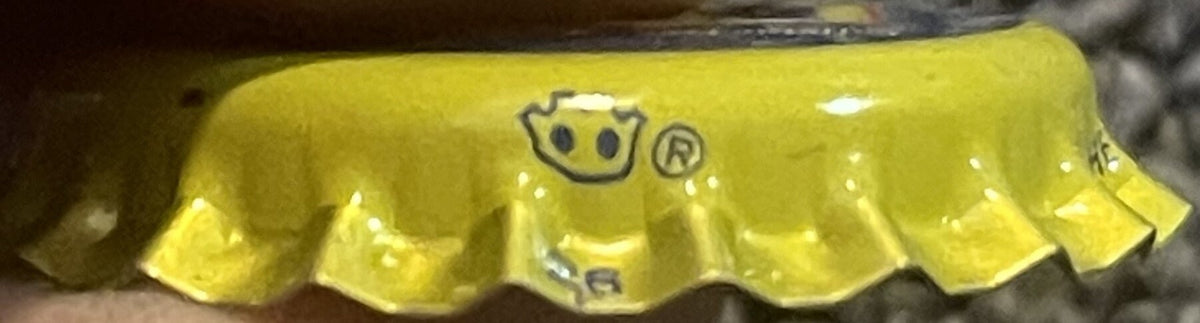
Collector notes passed down on caps like this one point to American Crown Company as the manufacturer of the crown itself — American Crown was, for decades, one of the dominant suppliers of bottle crowns to soda bottlers across the country, and lore among collectors ties caps like this to the regional bottling networks that carried the Dad's name through both its Chicago roots and its later chapter centered in Jasper, Indiana. That Jasper connection isn't a stretch of imagination, either — in 2007 the Dad's brand was acquired by Hedinger Brands, a company based in Jasper, Indiana that had its own roots as a Pepsi distributor, and the brand continues to be licensed through the Dad's Root Beer Company under that Indiana ownership today.

🎉 The Impact Today

Dad's Root Beer never had the marketing budget of the giants, but it earned something arguably better: a genuine, documented reputation as an innovator that reshaped how American soda got packaged and sold, right down to the six-pack carrier sitting in refrigerators across the country to this day. For collectors, a cap like this is a small, holdable piece of that story — the same bright lithography that once caught a kid's eye across a drugstore counter, preserved instead of lost to a bottle opener. It's Americana in the truest sense: a family business, a Chicago neighborhood, a rail line, a neon sign, and a root beer that made it all the way from a basement recipe to a national shelf.

🖼️ Display Ideas

🧊 Grouped in a shadow box alongside other root beer and soda fountain advertising for a full "corner drugstore" wall 🍺 Set in a small glass dish or bowl near a home bar or soda fountain nostalgia display 🧷 Mounted in a bottle-cap display frame or coin capsule to protect the printed face while keeping it visible 🎨 Photographed or scanned as a graphic element for kitchen art celebrating classic American soda brands 🎁 Given as a small, meaningful gift to a Chicago-history buff, a soda memorabilia collector, or anyone whose own dad has a soft spot for root beer 📚 Tucked into a scrapbook or memory box alongside other pieces of Chicago industrial and advertising history

🎁 Who Collects These

Bottle cap collecting has its own dedicated following — collectors known as "closure" or "crown" collectors who chase down regional soda and beer brands the way others chase stamps or coins. Dad's Root Beer pieces draw interest from that crowd specifically, but also from a wider circle: Chicago-history collectors tracking the city's old industrial neighborhoods, root beer and soda-fountain enthusiasts building out a themed collection, and everyday nostalgia lovers who remember Dad's from a childhood cooler or a family cookout. It's an approachable, affordable entry point into advertising history for someone just starting a collection, and a nice small addition for someone who already has the bottles, signs, or trays and wants the closure to go with them.

❓ FAQ

Is this cap new old stock? Yes — this is genuine New Old Stock (NOS), meaning it was never applied to a bottle and has sat unused since it left the factory.

Does "Since 1937" mean this cap was made in the period? No — 1937 is the year the Dad's Root Beer brand itself was founded in Chicago, and the company has proudly printed that founding date on its packaging ever since. This particular cap's own printing style and marketing language place its actual production later, in the 1990s-to-2000s stretch of the brand's history.

Who founded Dad's Root Beer? Ely Klapman and Barney Berns, two Chicago men who developed the recipe and started the company together, with the name itself chosen as a tribute to Klapman's own father.

Where was Dad's Root Beer made? The company's longtime home was a plant at 2800 North Talman Avenue in Chicago's Avondale and Logan Square area — a building that started out as a Borden's Dairy facility before Dad's took it over in the late 1930s.

Why does the cap say "Caffeine Free"? Root beer, unlike cola, has traditionally never contained caffeine, and Dad's included that fact plainly on its packaging as shoppers grew more attentive to reading labels.

Is Dad's Root Beer still around? The brand has passed through several owners over the decades, moving from its founding families to corporate ownership and eventually to Jasper, Indiana-based Hedinger Brands, which continues to carry the Dad's name forward.

What made Dad's important to soda history? Dad's was the first brand to use the six-pack carrier and the first to market a half-gallon bottle, packaging innovations that helped shape how soda has been sold across the country ever since.

Shipping

🚚 Shipping & Handling

  • Shipping costs and timing are calculated at checkout.
  • Items curated and shipped directly by me include U.S. shipping at no additional cost, professionally packed to ensure safe arrival of your artifact.

Items from Vetted Pro Collectors
Shipping for items offered by vetted Pro Collectors is determined at checkout. All Pro Collector listings are reviewed to ensure fair, reasonable shipping practices.

For full details, please refer to our Shipping Policy.

Returns & Exchange

Take your time — you've got a full six months. If a piece isn't right for you, send it back the way it reached you and we're good.

In the first 30 days your money goes straight back the way you paid. After that it's store credit, so you can put it toward something you'd rather have.

Return shipping we sort out between us, case by case. I don't make this difficult.

If something arrives damaged, or it isn't what I said it was, send me a photo within 48 hours and I'll make it right.

Email info@vintageantiquesgifts.com or call 802-356-9872 — that's me answering, not a call center.

The only things I can't take back are custom or special-order pieces and gift cards.

View full details
  • 5 stars: 1 (100%)
  • 4 stars: 0 (0%)
  • 3 stars: 0 (0%)
  • 2 stars: 0 (0%)
  • 1 star: 0 (0%)
f
f***l (271)

Very good piece clear graphics and as described.