Skip to product information
1 of 1

Vintage and Antique Gifts

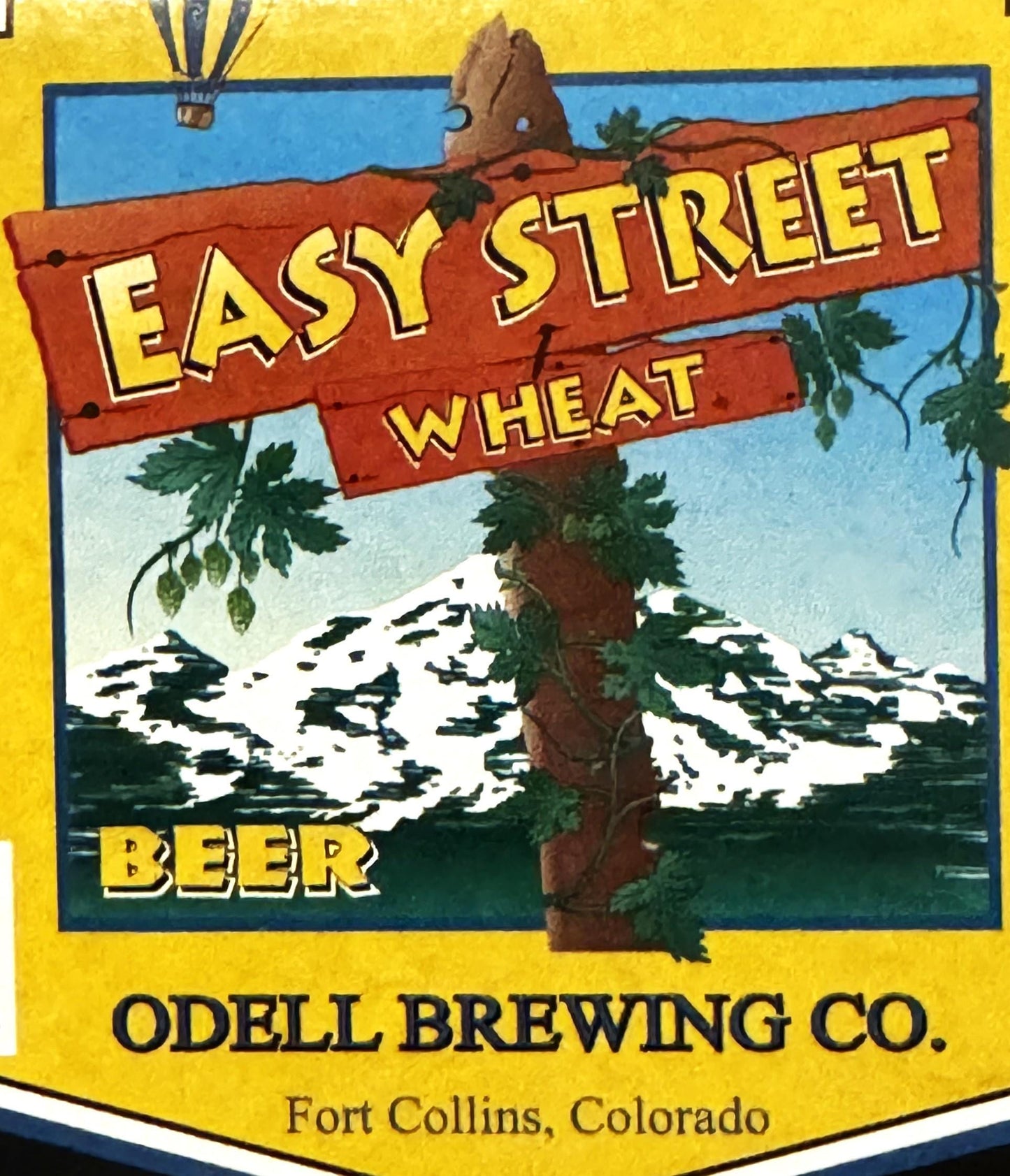
Vintage Odell Easy Street Wheat Beer Label 🍺 Odell Brewing Co. Fort Collins Colorado Collectible American Made

Regular price 5.00 USD
Regular price Sale price 5.00 USD
Sale Sold out
Shipping calculated at checkout.

Description

Does a Four-Inch Rectangle of Printed Paper Actually Hold the Soul of a Movement? 🍺

Sometimes the most consequential things come in the smallest packages. A folded note slipped under a door. A handshake at the end of a bar. A label peeled from a bottle that somebody, somewhere, thought to save. This is one of those things — a vintage New Old Stock beer label from Odell Brewing Company's Easy Street Wheat, printed around the year 2000, measuring just five and a half inches wide and four inches tall. It weighs almost nothing. And yet, if you know what you're holding, it carries the full weight of a story that changed the way Americans think about the beer in their glass. Fort Collins, Colorado. A converted grain elevator. A recipe perfected in a home kitchen. A family with a vision. Hold this label up to the light and you are holding the paper record of all of it.

There is a particular kind of pleasure that belongs exclusively to the collector who finds New Old Stock — items that were made and stored, never used, never damaged, never subject to the wear and tear of ordinary life. This label never saw a bottle. It never sat in a recycling bin or got soaked off with hot water. It has been waiting, as NOS items always seem to have been waiting, for exactly the right person to come along and understand what it represents. That patience is part of what makes it worth something. The other part is the story.


🌾 What You're Actually Holding: The Object Itself

This is a genuine vintage beer label issued by Odell Brewing Company of Fort Collins, Colorado, dating to approximately the year 2000. It is New Old Stock — unused, unaffixed, and surviving in the condition in which it left the printer, making it a far rarer artifact than a label recovered from a bottle. The label measures five and a half inches by four inches, a classic rectangular format that fits the proportions of the period's standard longneck and bomber bottles. The printing reflects the graphic sensibility of late-1990s and early-2000s craft beer design: warm tones, hand-crafted visual weight, and typography that suggests both tradition and a certain Coloradan ease. The paper itself, the ink register, the physical dimension of the thing — these are details that matter to collectors and to historians alike. Labels of this era were produced in press runs that seemed enormous at the time and now feel vanishingly small, because nobody imagined that a regional Colorado brewery would one day be considered a founding institution of an American cultural movement.


🏔️ Fort Collins, Colorado: The Quiet Capital of American Craft Beer

To understand why this label matters, you have to understand where it came from. Fort Collins sits at the base of the Front Range of the Rocky Mountains, about an hour north of Denver, in the shadow of peaks that turn gold in the late-afternoon light of a Colorado September. It is a university town — Colorado State University has anchored its identity for generations — and it carries the particular energy of a place where people have always been inclined to make things themselves. The altitude, the water running cold out of the mountains, and that DIY spirit combined to make Fort Collins one of the most fertile brewing cities in North America.

By the time Odell Brewing opened its doors in 1989, Fort Collins already had a brewing history that stretched back to the nineteenth century, when German and Czech settlers brought their lager traditions to the high plains and mountain valleys of Colorado. That heritage went underground during Prohibition and was slow to reassemble afterward, but when the craft beer revival arrived — first as a whisper in the late 1970s, then as a roar through the 1980s and 1990s — Fort Collins was ready. Today the city is routinely cited as one of the great brewing destinations on the continent, home to a remarkable concentration of independent breweries for a city of its size. Odell Brewing was not just part of that story. Odell was, in a very real sense, the beginning of it.

Local lore holds that in the early days, Doug and Wynne Odell would load kegs into the back of a pickup truck and make deliveries themselves, knocking on bar doors and restaurant back entrances, pouring samples out of a cooler, trying to explain to skeptical owners why a wheat beer made by a couple in a former grain elevator was worth giving a tap handle to. Whether every detail of that legend is precisely as it's been told, the spirit of it rings true to everyone who knew the Fort Collins scene in those years. The city rewarded them. The industry rewarded them. And now, a quarter century on, that story is the kind that gets written up in books.


🏗️ A Grain Elevator Becomes a Brewery: The Odell Origin Story

The building where Odell Brewing first made beer is itself a piece of American architectural history. The structure at the edge of downtown Fort Collins was originally built in 1915 as a grain elevator — the kind of tall, utilitarian building that once defined the skyline of every agricultural town on the plains. Grain elevators were the cathedrals of the American wheat economy: designed for function, built to last, smelling perpetually of the earth's abundance. When Doug and Wynne Odell and Doug's sister Corkie took over the space in 1989, they were not simply finding a cheap place to make beer. They were, knowingly or not, completing a kind of poetic circle. The building had been built to store wheat. Now it would be used to transform wheat — specifically the wheat in Easy Street Wheat — into something people would drive across town, and then across the state, and eventually across the country, to taste.

Easy Street Wheat was not a recipe the Odells invented when they opened the brewery. That is the part of the story that collectors and craft beer historians find so compelling. Doug Odell spent years — close to a decade by most accounts passed down among beer devotees — perfecting the recipe in his home kitchen. Long before there was a building, a logo, or a label, there was a beer. It was ready before the brewery was. When Odell Brewing finally opened as only the second craft brewery in the state of Colorado, Easy Street Wheat was one of the first two beers poured. It was not an opening-day experiment. It was a finished work waiting for its stage.

And Doug Odell's relationship with craft beer stretched back even further than that kitchen laboratory. In the 1970s, he worked at Anchor Brewing Company in San Francisco — one of the true founding institutions of the American craft beer revival, the brewery that Fritz Maytag rescued from oblivion in the mid-1960s and rebuilt into a model for everything that followed. What a young brewer absorbed in those years at Anchor, watching the revival take shape from inside its birthplace, became the foundation on which Odell Brewing was eventually built. There is a direct, traceable line from Anchor's San Francisco brewing floor in the 1970s to a Fort Collins grain elevator in 1989 to the label in your hands right now.


🍺 Easy Street Wheat: The Beer That Became a Touchstone

American wheat beers occupy a particular and beloved place in the craft beer canon. Lighter than an IPA, more complex than a lager, softly hazy and approachable while still carrying real craft character — a great wheat beer is what you reach for when you want something that feels like a Colorado afternoon in a glass. Easy Street Wheat became the standard against which other Colorado wheat beers were measured, not because it shouted for attention but because it quietly, consistently delivered exactly what it promised. For many beer drinkers in the 1990s and early 2000s, Easy Street Wheat was their first craft beer — their gateway out of mass-market lager and into the wider world of what American brewing could be.

That cultural role is embedded in this label. Every element of its design — the color palette, the typography, the name itself — was chosen to communicate something about ease, about pleasure without pretension, about the particular joy of a cold wheat beer on a warm day at altitude. "Easy Street" is a name that does real work. It is not aggressive. It does not demand that you understand hops or yeasts or fermentation temperatures before you enjoy it. It invites you in. And that invitation, extended from a converted grain elevator in Fort Collins, eventually reached every corner of the country and helped build the market for the craft brewing industry as we know it today.

Lore passed down among collectors holds that Easy Street Wheat's label design went through several iterations in the late 1990s and early 2000s as the brewery grew and its distribution expanded — making any specific-era NOS label from that period a snapshot of a particular moment in the brand's visual evolution, not just its commercial history. A label from approximately 2000 sits right at the inflection point: the brewery was no longer a scrappy two-person operation, but it had not yet become the regional institution it would grow into over the following decade. It is, in collector terms, an early piece from the critical period.


📜 New Old Stock and the Particular Pleasure of Paper Ephemera

Beer label collecting has a long and serious history that runs parallel to the history of brewing itself. The hobby — sometimes called labology when it extends to all bottle labels — encompasses everything from nineteenth-century patent medicine labels to mid-century brewery graphics to the explosion of hand-crafted, limited-run labels that the craft beer era produced. Within that world, New Old Stock labels occupy a special category. They are the labels that never completed their intended journey — never wrapped a bottle, never sat in a six-pack, never wound up in a recycling bin. Their survival is a small accident of fortune, a miscount at the printer, an overrun that got tucked in a box and forgotten. When they surface, they surface in the condition the press intended: clean, crisp, with color that hasn't faded from the condensation of a beer bottle or the humidity of a back-bar refrigerator.

For the serious collector, NOS is the preferred state. For the casual collector or the brewery enthusiast who simply wants a beautiful, authentic piece of Fort Collins and Odell history on a wall or shelf, NOS means the item will display as it was designed to display. No restoration required. No apologies necessary. Just the object itself, as close to its original moment as it is possible to get.


🖼️ Display Ideas

  • 🪵 Rustic float frame: Mount the label on natural kraft board inside a slim walnut or barnwood float frame — the warm grain tones echo the wheat and the Colorado mountain palette of the label's design.
  • 🍺 Tap room gallery wall: Group with other Colorado craft beer ephemera — vintage coasters, tap handles, bottle caps, bar menus — for a home tap room display that documents the history of a scene.
  • 🏔️ Colorado-themed shelfscape: Pair with a vintage Fort Collins postcard, a Colorado State University pennant, and a small piece of Rocky Mountain mineral specimen for a layered regional display.
  • 📋 Shadow box with story card: Present the label in a deep shadow box alongside a printed card telling the grain elevator and kitchen-recipe origin story — a conversation piece that does its own narrating.
  • 🎂 Framed gift presentation: A label in a simple clip frame with a handwritten note about the brewery's founding makes a thoughtful, deeply personal gift for the Fort Collins native, the craft beer devotee, or the Colorado homebrewer in your life.
  • 🗂️ Archival sleeve in a collector's binder: For the serious labologist, this belongs in a Mylar sleeve in a dated, annotated binder of American craft beer ephemera — documented, protected, and properly catalogued for future reference.

🎁 Who Collects These — and Why They Look for Exactly This Kind of Piece

The world of vintage beer label and brewery ephemera collecting is larger and more serious than most people outside it realize. At one end of the spectrum are the passionate casuals — craft beer enthusiasts who have a strong feeling for a particular brewery, region, or era and want a tangible, authentic object to anchor that feeling. For them, an Odell Easy Street Wheat label from around 2000 is not a trivial decorative impulse; it is a piece of the story they carry with them, the years they spent discovering Colorado craft beer, the first time they had a wheat beer that actually tasted like something, the road trip through Fort Collins that they still talk about.

At the other end of the spectrum are the dedicated collectors and archivists — people who document American brewing history the way others document political history or military history, with serious attention to provenance, condition, era, and significance. For these collectors, an NOS label from Odell Brewing's early-to-mid period is a primary source document. It is evidence of what the brewery looked like at a specific point in its visual and commercial evolution. It belongs in an archive or a carefully curated collection, protected and labeled and available for reference.

Between those two poles you find brewiana enthusiasts, Colorado history collectors, Fort Collins locals and alumni, homebrewers who admire the Odell origin story, Anchor Brewing history devotees who want to trace the lineage forward, and gift-givers looking for something that is genuinely meaningful rather than generically decorative. This label serves all of them. It is specific enough to be significant and approachable enough to be loved without expertise.


❓ Collector FAQ: Odell Easy Street Wheat Vintage Beer Label, c. 2000

What exactly does "New Old Stock" mean for a paper beer label, and why does it matter?

New Old Stock — NOS — refers to items that were manufactured for a specific purpose, never used in that purpose, and have survived in essentially original, unissued condition. For a beer label, this means the label was printed as part of a press run, was never applied to a bottle, and has been stored since its production without the damage that an applied label would inevitably sustain — moisture from bottle condensation, tearing during removal, fading from refrigerator light, or deterioration from adhesive bleed. An NOS label is the label as the printer and the brewery intended it to look. For collectors, this is the gold standard: you are not working with a recovered artifact, you are working with an original, unaltered example. It displays better, preserves better, and represents the design intent more completely than any bottle-pulled equivalent.

How do I know this label is genuinely from around the year 2000 and not a later reprint?

Dating vintage beer labels requires attention to several converging details: the printing technology evident in the label (offset lithography characteristics, ink texture, registration quality), the graphic design conventions of the period (typography, color palette, layout sensibility), and what is known about Odell Brewing's label history during that era. Labels from approximately 2000 reflect the visual language of late-1990s craft beer design — a distinct aesthetic period that differs meaningfully from labels produced after the mid-2000s redesign cycles that most growing breweries undertook. Additionally, the physical characteristics of the paper and ink are consistent with commercial printing of the late 1990s and early 2000s. Taken together, these indicators place this label confidently in the stated period.

Is this a rare item, or were these labels produced in large quantities?

Odell Brewing in 2000 was a regional Colorado brewery — not a national brand — and its label print runs, while not trivial, were a fraction of what a major national brand would have ordered. More importantly, the survival rate of NOS brewery labels from this era is low. Labels were consumables: they were ordered, applied, used, and discarded. The idea that they would become collectible was not on anyone's radar in the production room. Labels that survived unused from this period did so by accident — a miscounted run, a forgotten box, a change in packaging that left a batch unneeded. Finding an NOS example from a specific early-era Odell label in good condition is genuinely uncommon, which is precisely what places it in the collectible category rather than the novelty category.

How should I store or display this label to preserve it long-term?

Paper ephemera from this era benefits from a few straightforward archival practices. If you are displaying it framed, use UV-filtering glass or acrylic to protect against light degradation — the enemy of printed paper color over decades. Mount it on acid-free backing board rather than standard mat board, which off-gasses acids over time and can yellow and damage paper. If you are storing it flat in a collection, a Mylar or polypropylene archival sleeve (not PVC) will keep it clean and protected without chemical interaction. Keep it away from high humidity environments and direct light. In the case of this label, the provenance is unusually rich. Doug Odell worked at Anchor Brewing Company in San Francisco in the 1970s, during the period when Anchor, under Fritz Maytag's ownership, was essentially inventing the template for American craft brewing. What Odell absorbed at Anchor shaped his philosophy, his recipes, and his approach to running an independent brewery. When he opened Odell Brewing in Fort Collins in 1989, he was not working in isolation — he was extending a lineage that ran from Anchor's revival of traditional brewing methods directly into the Colorado mountains. This label is, in a very real sense, a downstream artifact of that original craft beer revival. For collectors who care about the intellectual and cultural history of American brewing, that lineage matters.

Does Easy Street Wheat still exist, and how does that affect the vintage label's collectibility?

Easy Street Wheat has remained a core offering of Odell Brewing throughout the brewery's history — it is one of the foundational beers of the brand and has never been retired. For collectors, the continued existence and beloved status of the beer actually enhances rather than diminishes the value of early-era labels. This is not an artifact from a defunct brewery or a discontinued product — it is a vintage document of a living institution at an early and formative moment. Think of it the way you might think of an early label from a now-famous winery, or a first-edition piece of packaging from a brand that grew into something significant. The beer's ongoing cultural presence means there is a continuous community of enthusiasts who understand exactly what they are looking at when they see this label.

Is this the kind of piece that would work as a gift for someone who isn't a serious collector?

Absolutely — and in many ways this is one of the most versatile kinds of gifts in the vintage ephemera world precisely because it sits at the intersection of several different enthusiast communities. For the craft beer lover, it is an artifact of a brewery they almost certainly admire. For the Colorado native or Fort Collins resident (current or former), it is a piece of home. For the homebrewer, it is a connection to an origin story — a kitchen recipe, years of refinement, a grain elevator, a family dream — that resonates deeply. For the person who simply loves beautiful, authentic, story-laden objects, it is all of that without requiring any specialist knowledge to appreciate. A small frame, a clean wall, and this label make a gift that will prompt a conversation every time someone notices it.

Shipping

🚚 Shipping & Handling

  • Shipping costs and timing are calculated at checkout.
  • Items curated and shipped directly by me include U.S. shipping at no additional cost, professionally packed to ensure safe arrival of your artifact.

Items from Vetted Pro Collectors
Shipping for items offered by vetted Pro Collectors is determined at checkout. All Pro Collector listings are reviewed to ensure fair, reasonable shipping practices.

For full details, please refer to our Shipping Policy.

Returns & Exchange

Product Page Return Policy

  • 60-Day Returns – Items must be in original condition.
  • Refunds – Issued after inspection (excluding shipping costs).
  • Return Shipping – Customer is responsible unless item is damaged or incorrect.
  • Damaged/Incorrect Items – Contact us within 48 hours for a replacement or refund.
  • Easy Returns – Email [email protected] or call 802-356-9872 to initiate a return.

For full details, visit our Refund Policy.

View full details