Skip to product information
1 of 10

Vintage and Antique Gifts

Antique 1913 New York Central Railroad Gold Bond 🚂 $1000 Consolidation Mortgage, American Bank Note Co

Antique 1913 New York Central Railroad Gold Bond 🚂 $1000 Consolidation Mortgage, American Bank Note Co

Regular price 17.00 USD
Regular price Sale price 17.00 USD
Sale Sold out
Shipping calculated at checkout.
Style
Quantity

🚂 What did it cost to build an empire on steel rails and gold-backed promises?

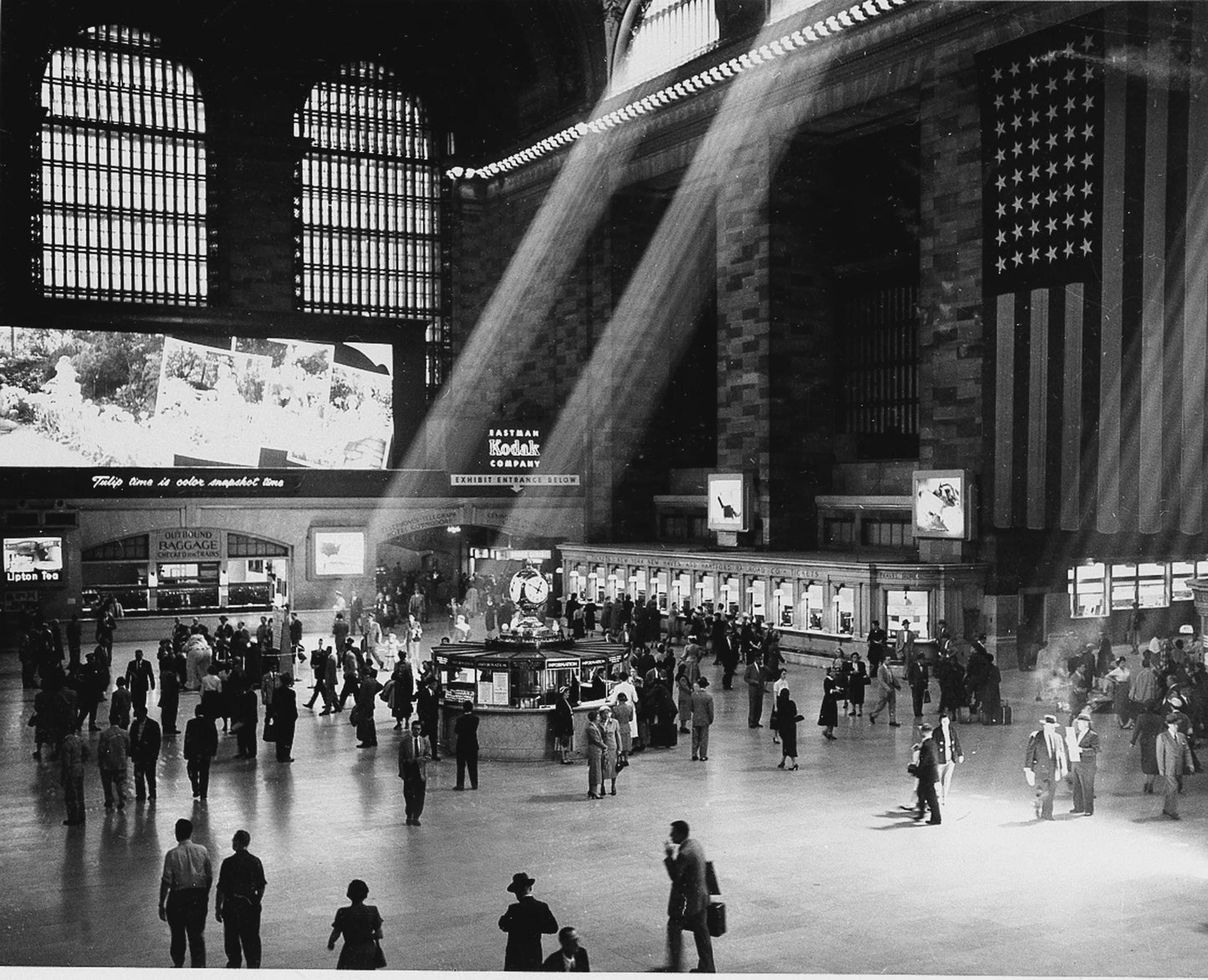
Long before "infrastructure" was a headline word, it was a handshake between a railroad and the investors who trusted it with their gold. Picture New York City in 1913: Grand Central Terminal rising in its full Beaux-Arts glory, steam locomotives threading the Hudson Valley past stone viaducts and tall-masted sailing ships still working the river trade, and somewhere in a boardroom on lower Manhattan, officers of one of America's most powerful railroads putting their names to a promise stretching all the way out to the year 1998. That promise is exactly what you're holding here.

This is a genuine 4% Consolidation Mortgage Gold Bond, Series A, in the $1,000 denomination, issued by The New York Central Railroad Company of New York, New York, and dated as of August 1, 1913. It was engraved by the American Bank Note Company of New York, the premier security printer of its age, and carries Bankers Trust Company as trustee. Measuring approximately 15 x 10 inches (examples that retain their original attached coupon sheet run larger overall), the certificate is a striking piece of financial engraving — dense black intaglio printing on cream stock, wrapped in an elaborate scalloped border and crowned by an arched banner reading "United States of America" and "Series A." At its center sits a beautifully rendered vignette: New York Central locomotive No. 3404, headlamp gleaming, hauling a line of passenger cars past a great stone viaduct, with a full-rigged sailing ship drifting on the water beside it — steam and sail sharing the same frame, old world and new world captured in a single engraving. Bold lettering across the base spells out "THE NEW YORK CENTRAL RAILROAD COMPANY," and the body text below lays out, in dense legal script, the full terms of the mortgage. Neat cancellation punches are visible across the face of the certificate, the trustee's own mark that this particular bond completed its working life and was redeemed rather than simply lost to time — a small detail, but a meaningful one for anyone who appreciates that a piece of paper like this actually did its job in the world of American finance.


🚂 The Road That Vanderbilt Built

The New York Central's story doesn't begin in a boardroom — it begins on the towpath of the Erie Canal. In 1853, a cluster of ten small New York State railroads, most of them built to parallel the canal between Albany and Buffalo, were stitched together into a single company under an act of the state legislature. The earliest of those little lines was the Mohawk and Hudson Railroad, New York's very first railway, and the man who pulled the whole consolidation together was Erastus Corning — an Albany industrialist who served four terms as the city's mayor and led the Utica and Schenectady Railroad for two decades before becoming the New York Central's first president. Old railroad histories still credit Corning as the "moving spirit" behind the merger, the man who saw that a dozen short lines competing with each other made far less sense than one long line working together.

Control of that railroad changed hands dramatically in 1867, when shipping magnate Cornelius Vanderbilt — famously nicknamed "the Commodore" — battled the Central's stock down and then bought his way into control, joining it to his own New York and Hudson River lines running down to Manhattan. Vanderbilt wasn't finished. He folded in the Lake Shore and Michigan Southern Railway in 1873 and the Michigan Central in 1871, stretching his railroad's reach clear from Buffalo to Chicago. His son, William H. Vanderbilt, kept building, adding the New York, West Shore and Buffalo Railroad on the far side of the Hudson in 1885. By the system's peak, the New York Central commanded some 10,000 miles of track, linking New York with Boston, Montreal, Chicago, and St. Louis — one continuous ribbon of steel tying together the industrial heart of the country.

By the time this bond was dated, the man at the helm was Chauncey M. Depew — a former United States Senator and one of the most celebrated orators of his era, whose facsimile signature graces bonds of this exact 1913 issue. Under Depew's leadership the railroad was simultaneously electrifying its approach into Manhattan and finishing construction on Grand Central Terminal, which opened its doors that very year. The timing is not a coincidence worth glossing over: this bond was raised to help fund exactly that kind of long-term capital improvement — the tunnels, the terminal, the rolling stock — that turned the New York Central into a symbol of American engineering and financial muscle in the years just before the First World War.

There's one wrinkle in the corporate paperwork worth telling plainly, because it's part of the real history rather than a mistake to smooth over. The underlying mortgage behind this bond was actually executed on June 20, 1913, by the railroad's immediate predecessor, "The New York Central and Hudson River Railroad Company," with Bankers Trust Company as trustee — a fact confirmed in library archive records of the original indenture. Shortly afterward, in 1914, that company consolidated with the Lake Shore and Michigan Southern Railway and a number of smaller lines into what became "The New York Central Railroad Company" — the very name printed boldly across this certificate. So this bond captures a company literally mid-transformation: financed under one name, issued and circulated under the name it would carry for the rest of its history.


🏙️ New York City, and the Reach into Illinois

The New York Central was headquartered in New York City, and both its trustee and its printer were New York City institutions as well — this was very much a Manhattan-financed enterprise, even as its rails stretched a thousand miles west. That westward reach explains one of the more curious details printed right into the top arch of the certificate: an authorization referencing the "State Public Utilities Commission of Illinois." It looks out of place on a bond for a New York-chartered railroad until you remember that the Vanderbilt-era expansion had already carried the Lake Shore & Michigan Southern and Michigan Central lines straight into Chicago decades earlier. Any railroad doing business across state lines in this period often had to satisfy state utility regulators wherever its rails ran, and Illinois was very much New York Central territory by 1913. The precise regulatory mechanics behind that specific authorization number are a genuine open question — one of those small mysteries that scripophily collectors love turning over — but the Illinois connection itself lines up perfectly with a railroad whose reach had grown, by then, into a true Eastern-Midwestern giant.


🖋️ American Bank Note Company — Engraving the Nation's Trust

Whoever engraved that locomotive vignette and that dense, unforgeable lettering worked for one of the most storied security printers in American history. The American Bank Note Company traced its lineage back to 1795, to a firm founded by Robert Scot — the very first official engraver of the United States Mint. After the financial Panic of 1857 rattled the industry, seven of the country's leading security printing houses banded together, and on April 29, 1858, they formally adopted the name American Bank Note Company. From that point on, if a piece of American paper needed to be trusted — a bond, a stock certificate, a currency note — there was a very good chance it ran through their presses.

The company's Bronx plant and its headquarters building, both completed in 1908, grew into genuine industrial landmarks, so significant to New York City history that both structures were later designated official City Landmarks. At its height, that Bronx facility was turning out more than five million documents a day, and at various points was responsible for printing half of all the securities traded on the New York Stock Exchange. It's a striking thought: the same presses producing the paperwork behind Wall Street's biggest trades were also engraving the very bond in front of you. The firm carried on for generations, changing its name to American Banknote Corporation in 1995 for its bicentennial, before the rise of electronic recordkeeping — the slow disappearance of paper stock and bond certificates altogether — brought the company to a Chapter 11 filing by 1999. That collapse is really the epitaph for an entire category of American craftsmanship: the ornate, hand-engraved financial document, made obsolete by a keystroke.


💰 Bankers Trust and the Business of Trust Itself

Named right on the certificate as trustee under the mortgage, Bankers Trust Company occupied a specific and important role in this transaction — not a lender exactly, but the neutral party charged with holding the underlying collateral and enforcing the mortgage's terms on behalf of every bondholder who owned a piece of this debt. Library archive records of the original 1913 indenture independently confirm Bankers Trust Company as trustee of this exact mortgage, matching the trustee's certificate printed on the bond itself almost word for word. In an era before federal securities regulation as we know it today, a respected corporate trustee like this was often the only real guarantee an investor had that a railroad would honor its obligations across decades.


📉 From American Empire to Penn Central — the Irony of 1998

Here's where the story takes its turn, and it's worth telling honestly because it's what makes a piece like this so compelling to hold. This bond promised repayment on February 1, 1998 — an eighty-five-year commitment, the kind of long horizon only a company that considered itself permanent would dare put in writing. The New York Central spent the following decades living up to that confidence, remaining one of the great transportation empires in the country. But the postwar years were unkind to American railroading generally, and the Central was no exception: between 1946 and 1958 alone, it dropped four of its six fastest daily passenger runs between New York and Chicago, as automobiles and airplanes ate into the business that had built Grand Central Terminal in the first place.

By the early 1960s, the Central and its longtime rival, the Pennsylvania Railroad, both ailing, began circling a merger as a survival strategy. Legal delays dragged the process out until 1968 — by most accounts, far too long. The resulting Penn Central Transportation Company is remembered today as one of the great corporate disasters in American business history: the merger failed to fix what ailed either railroad, and Penn Central collapsed into bankruptcy in June 1970, at the time one of the largest corporate bankruptcies the country had ever seen. Passenger service was handed off to the newly created Amtrak in 1971, and in 1976 the federal government folded what remained of Penn Central, along with several other failed railroads, into the Consolidated Rail Corporation — Conrail.

Which means the eighty-five-year promise printed right across the face of this certificate — payable February 1, 1998 — was never actually honored by the company that made it, in any meaningful corporate sense. The New York Central Railroad Company, the proud name engraved across the top of this bond, had already ceased to exist as an independent entity decades before its own bond would have come due. What began in 1825 as the tiny Mohawk & Hudson Railroad, grew into a 10,000-mile Vanderbilt empire, and financed Grand Central Terminal itself, ultimately dissolved into a government rescue operation. That arc — from Erie Canal towpath to Conrail — is the whole sweep of American railroading captured in one company's rise and fall, and this bond was issued right near its peak.


🖼️ Display Ideas

  • 🖼️ Framed on its own as a striking piece of early-20th-century financial engraving for a home office or study
  • 📚 Displayed in a library or reading room alongside old railroad maps and Hudson Valley photography
  • 🚂 A centerpiece for a dedicated railroad or "train room" collection, paired with other New York Central memorabilia
  • 💼 Hung in a finance professional's office as a conversation piece on the history of American corporate debt
  • 🗽 Grouped with other early American stock and bond certificates to build a broader scripophily wall display
  • 🎁 Given as a milestone or retirement gift for anyone with a career in banking, finance, or the railroad industry

🎁 Who Collects These

Certificates like this sit right at the crossroads of two serious collecting worlds: railroadiana enthusiasts chasing anything tied to the great American lines, and scripophilists — collectors of historic stock and bond certificates — who prize pieces exactly like this one for their engraving quality, their maker, and the story behind the company that issued them. Add in Americana and antique paper collectors drawn to the ornate Beaux-Arts styling of the era, and gift-givers looking for something with real substance for a history buff, a finance professional, or anyone who loves the romance of the steam railroad, and you have a piece with genuinely broad appeal well beyond a single niche.


❓ FAQ

Is this a real financial document, or a reproduction made to look old?
This is a genuine bond certificate issued by The New York Central Railroad Company, engraved by the American Bank Note Company and dated as of August 1, 1913, with Bankers Trust Company named as trustee — all details confirmed against the certificate's own printed text and independent archival records of the underlying 1913 mortgage.

Can this bond still be redeemed for cash or interest?
No. The New York Central Railroad Company ceased to exist as an independent corporation decades ago, absorbed first into Penn Central in 1968 and ultimately into the government-created Conrail in 1976. The value of a certificate like this today is historical and collectible, not financial.

What do the punched holes in the certificate mean?
Those cancellation punches are the trustee's own mark that this bond completed its working life and was formally redeemed — evidence that the certificate did exactly what it was printed to do, rather than simply surviving unused.

Why does the certificate mention Illinois when the railroad was based in New York?
The New York Central's rail network reached all the way to Chicago through its Lake Shore & Michigan Southern and Michigan Central lines, so the railroad operated well within Illinois. The exact regulatory reasoning behind the specific Illinois authorization number printed on the certificate remains an open question, though the underlying Illinois connection itself is well documented.

Who was Chauncey Depew?
A former United States Senator and celebrated public speaker, Depew led the New York Central during the years this bond was issued, overseeing both the electrification of its Manhattan approach and the completion of Grand Central Terminal in 1913.

What is scripophily?
It's the hobby of collecting historic stock and bond certificates for their artistry, history, and the stories of the companies that issued them — a field where a piece like this, tied to the New York Central, Vanderbilt-era railroading, and one of America's great security printers, is considered a genuinely desirable find.

Do all examples of this bond include the coupon sheet?
Some surviving examples retain their original attached interest coupon sheet, showing the sequence of semi-annual coupons investors would have clipped and redeemed over the years, while others survive as the main certificate alone — both are authentic pieces of this 1913 issue.

Coupons were made to be clipped away, and most bonds of this age lost theirs one payment at a time until only the certificate was left, so a sheet that came through the decades still attached is the exception rather than the rule. When a road went under, holders commonly taped the last coupon back onto the bond and held on in hope of collecting what they were owed, so a bond that still carries that taped final coupon is the better one to end up with. The coupon count can run a few more or a few fewer than what is pictured.

An issued certificate picks up the marks of its working life: endorsements and signatures on the reverse, transfer-agent and registrar stamps, revenue or documentary tax stamps, punch or cut cancellations at redemption, staple holes from being bound into a transfer book, and pencil ledger notations. Those marks are the paper trail of a financial instrument that actually did its job.

Shipping

🚚 Shipping & Handling

  • Shipping costs and timing are calculated at checkout.
  • Items curated and shipped directly by me include U.S. shipping at no additional cost, professionally packed to ensure safe arrival of your artifact.

Items from Vetted Pro Collectors
Shipping for items offered by vetted Pro Collectors is determined at checkout. All Pro Collector listings are reviewed to ensure fair, reasonable shipping practices.

For full details, please refer to our Shipping Policy.

Returns & Exchange

Take your time — you've got a full six months. If a piece isn't right for you, send it back the way it reached you and we're good.

In the first 30 days your money goes straight back the way you paid. After that it's store credit, so you can put it toward something you'd rather have.

Return shipping we sort out between us, case by case. I don't make this difficult.

If something arrives damaged, or it isn't what I said it was, send me a photo within 48 hours and I'll make it right.

Email info@vintageantiquesgifts.com or call 802-356-9872 — that's me answering, not a call center.

The only things I can't take back are custom or special-order pieces and gift cards.

View full details
  • 5 stars: 11 (100%)
  • 4 stars: 0 (0%)
  • 3 stars: 0 (0%)
  • 2 stars: 0 (0%)
  • 1 star: 0 (0%)
o
o***i (480)

Item was just as described. Fast shipping hope to do more business with this Awesome seller A++

f
f***s (259)

Neat bit of railroad history. Thanks.

7
7***3 (125)

Excellent service and fast delivery would do business again and package was well secure and the item was as described. Excellent seller and great communication.

i
i***p (2195)

receive my stocks and believe me it was a steal

D
Douglas

Thank you for the reasonable prices....Thanks !

a
apeygee1

Another great item and great shop to deal with!

Thank you so much for your kind words and for choosing our shop! We're thrilled to hear that you had a great experience with us and love your purchase! Hope to see you again soon!

J
Jennifer

Great item. I love it.

Hello Jennifer! We're so happy to receive your 5-star rating ! We're so pleased to know the Gold Bond Certificate has found a new home with yourself, an antique lover. Your support adds a big smile to our day. We're excitedly waiting for your next antique treasure hunt with us!

M
Martin

Shipped quickly and looks wonderful.

Hello Martin! We're immensely joyful to see your 5-star rating ! We're thrilled that our 'Gold Bond Certificate' has made another customer happy. Your support means everything to us and our small team. We look forward to being a part of your future antique treasure hunts!

c
cadethwaite

Beyond helpful and amazingly generous, proficient, well-versed and honestly, so worth it! Exceptional shipping, packaging, service and product. Top-Notch! AAAA++++++!!!!!!

Hello Velma! We're so delighted with your 5-star rating . To know that the Bond Certificates have found a home with an antique lover makes us truly delighted. Your support means the world to us! Can't wait to embark on more antique adventures with you!

J
Joshua

Thank you very much I appreciate it!!

Hello Joshua! Thank you very kindly for your 5-star rating! It does really bring joy to us knowing that our cherished 'Gold Bond Certificate' found a home with someone who understands its historical value. We're genuinely grateful for your support. Your next treasure hunt awaits!

J
Jeffrey

Excellent seller! Fast shipper! Arrived in excellent condition! A+++ Will do business with again!