
Skip to product information
1 of 4

Vintage and Antique Gifts

Antique McCurdy Brand Pears Crate Label 🔭 — 1920s-30s Sweetbrier Orchards San Jose California, Lick Observatory Night Art

Antique McCurdy Brand Pears Crate Label 🔭 — 1920s-30s Sweetbrier Orchards San Jose California, Lick Observatory Night Art

Regular price $9.00 USD
Regular price Sale price $9.00 USD
Sale Sold out
Shipping calculated at checkout.

Size: 10 1/2" x 7 1/2"

🚚 Free US Shipping — ships within one business day. International shipping calculated at checkout.

Quantity

Who Grew McCurdy Pears? 🔭 McCurdy Pears: The Observatory That Watched Over the Orchards

Size: 10 1/2" x 7 1/2"

Before anyone called it Silicon Valley, a San Jose pear grower could look east across the Santa Clara Valley to Mount Hamilton and the Lick Observatory on its summit. This crate label puts that mountain on paper, at night. A slim crescent moon hangs in a mauve sky, the mountain rises in deep blue, the observatory's two domes and glowing windows sit on the ridge, and a string of tiny lights climbs the slope toward them. Across the middle, McCURDY runs in tall cream letters striped with green and outlined in gold, and two ripe golden pears on a leafy stem break out over the border at lower right. The label even names its landmark, in four lines of dark capitals in the upper corner.

🏷️ What Is Printed on the Label

  • LICK OBSERVATORY / MOUNT HAMILTON / SANTA CLARA COUNTY / CALIFORNIA
  • McCURDY
  • EXTRA FANCY SANTA CLARA VALLEY
  • CALIFORNIA PEARS
  • U.S. No 1
  • GROWN AND PACKED BY SWEETBRIER ORCHARDS, SAN JOSE, CALIF., U.S.A.
  • CONTENTS 4/5 BUSHEL

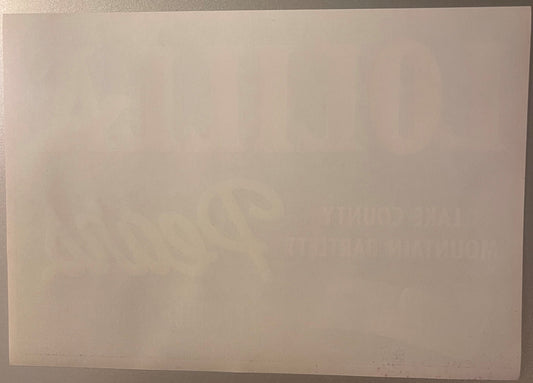
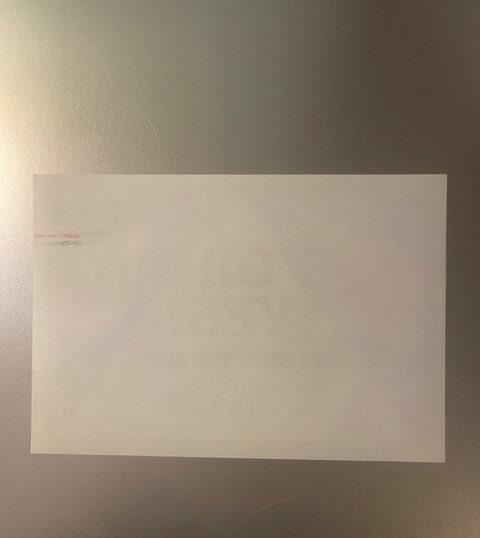
The border is two bands, crimson outside and bronze-gold inside. It is a lithographed paper label, printed to be pasted on the end of a wooden pear box. This one never was: the back is blank paper, with the big McCURDY lettering faintly showing through in reverse.

🍐 Sweetbrier Orchards, San Jose

"Grown and packed" is the phrase that matters. Sweetbrier was a grower, not a broker buying other men's fruit: the pears came off its own Santa Clara Valley trees, were sorted to the U.S. No. 1 grade and the Extra Fancy pack, and went into boxes holding four-fifths of a bushel under the McCurdy brand. The orchard ran more than one brand name. Its pears also went to market under SANCLAR, a second San Jose pear label carrying the Sweetbriar Orchard name. A copy of this McCurdy label is cataloged in Calisphere, the University of California's digital library, under the spelling Sweetbriar; the label itself prints SWEETBRIER.

🌸 The Valley of Heart's Delight

Before the microchip, the Santa Clara Valley was known as the Valley of Heart's Delight. By 1900 it grew most of California's prunes and shipped them around the world. In the 1920s and 30s the valley held 18 canneries, 13 dried-fruit packing houses and 12 fresh-fruit and vegetable shipping firms, and until the 1960s it was the largest fruit-producing and packing region in the world, with 39 canneries. Pears, prunes, apricots and cherries covered the valley floor around San Jose. Then the transistor arrived. A high-tech industry grew up around Stanford University, and from the 1960s the farmland was turned into densely populated cities. The name the world uses now is Silicon Valley. A pear label from a San Jose orchard is a small relic of the country that was built over.

🔭 James Lick and His Telescope

James Lick was a carpenter and piano maker who landed in San Francisco in late 1847, a few months before gold turned up at Sutter's Mill. He made his fortune in California and gave $700,000 of it for an observatory. It was built on the summit of Mount Hamilton between 1876 and 1887 and handed to the Regents of the University of California in May 1888: the world's first permanently occupied mountaintop observatory. Its great lens, 36 inches across, was ordered from Alvan Clark & Sons in 1880 for $51,000 and delivered on December 29, 1886. At first light on January 3, 1888, it was the largest refracting telescope on Earth, and it held that title until Yerkes Observatory was built in 1897.

Lick never looked through it. He died before it was finished, and in 1887 his body was laid to rest beneath the site of the telescope, under a brass tablet that reads "Here lies the body of James Lick." Five years later, in 1892, the astronomer E. E. Barnard used the observatory to find Amalthea, the fifth moon of Jupiter, the first new Jovian moon discovered since Galileo.

🛣️ The Road of 365 Turns

Every beam, brick and lens went up the mountain by horse and mule. Santa Clara County built the road first, in 1875 and 1876, and laid it out so the grade stayed under 6.5 percent, which meant switching back and forth across the slope over and over. Old postcards sold the climb as "365 turns in seven miles," and tradition still holds that the road has exactly 365 curves, one for every day of the year. Count the stretch from Smith Creek to the summit and the tally comes to 367, but the legend of 365 has outlived every recount.

📦 Why Labels Like This Survive Unused

Lithographed crate labels were the fruit industry's advertising from the 1910s until wooden boxes went out of use. In the wholesale auction yards and the crowded East Coast auction halls, the picture on the end of a box was how a buyer knew at a glance whose fruit he was looking at, which is why growers paid for art like this night scene. Between the end of World War II and the late 1950s, packers switched to cheaper corrugated cardboard boxes printed with the brand, and the paper labels were suddenly useless. Stacks of them stayed behind in packing sheds and print shops. Those leftovers are where unused labels like this McCurdy come from today.

🖼️ Living With It

  • 🔭 Frame it for a stargazer: the observatory is named right on the sheet.
  • 🍐 Hang it in a kitchen or on a fruit-label wall, where its night sky stands apart from the daylight labels around it.
  • 🌉 Give it to someone from San Jose or Silicon Valley, as a picture of the valley before the tech industry arrived.
  • 🎁 A flat paper antique frames easily and ships flat.

❓ Questions People Ask

Who grew and packed these pears?

Sweetbrier Orchards of San Jose, California, a Santa Clara Valley grower that packed its own fruit under the McCurdy brand and also used a SANCLAR label.

What is the building on the mountain?

The Lick Observatory on Mount Hamilton in Santa Clara County, finished in 1888 with the largest refracting telescope in the world at the time. The label prints its name.

How old is the label?

It dates to the 1920s–30s, from the orchard-and-packing-house days of the valley, before cardboard boxes replaced wooden crates. It carries no ZIP code, which fits a label printed long before ZIP codes arrived in 1963.

Was it ever used?

No. The back is clean paper that was never pasted to a box; the only marks are the front lettering faintly showing through.

What does "Contents 4/5 Bushel" mean?

The box it was made for held four-fifths of a bushel of pears.

Shipping

🚚 Shipping & Handling

  • Shipping costs and timing are calculated at checkout.
  • Items curated and shipped directly by me include U.S. shipping at no additional cost, professionally packed to ensure safe arrival of your artifact.

Items from Vetted Pro Collectors
Shipping for items offered by vetted Pro Collectors is determined at checkout. All Pro Collector listings are reviewed to ensure fair, reasonable shipping practices.

For full details, please refer to our Shipping Policy.

Returns & Exchange

Take your time — you've got a full six months. If a piece isn't right for you, send it back the way it reached you and we're good.

In the first 30 days your money goes straight back the way you paid. After that it's store credit, so you can put it toward something you'd rather have.

Return shipping we sort out between us, case by case. I don't make this difficult.

If something arrives damaged, or it isn't what I said it was, send me a photo within 48 hours and I'll make it right.

Email info@vintageantiquesgifts.com or call 802-356-9872 — that's me answering, not a call center.

The only things I can't take back are custom or special-order pieces and gift cards.

View full details

Preserving History: Authentic Objects Across Eras

— Curated by Travis Weigel