Skip to product information
1 of 3

Vintage and Antique Gifts

🎨 Antique Pennsylvania Dutch Label NOS 1910s-20s Gold Embossed Colonial Couple Drummer Chromolithograph Folk Art Ephemera

🎨 Antique Pennsylvania Dutch Label NOS 1910s-20s Gold Embossed Colonial Couple Drummer Chromolithograph Folk Art Ephemera

Regular price 5.00 USD
Regular price Sale price 5.00 USD
Sale Sold out
Shipping calculated at checkout.

Description

🎨 When Folk Art Met Gold

There's something precious about this label.

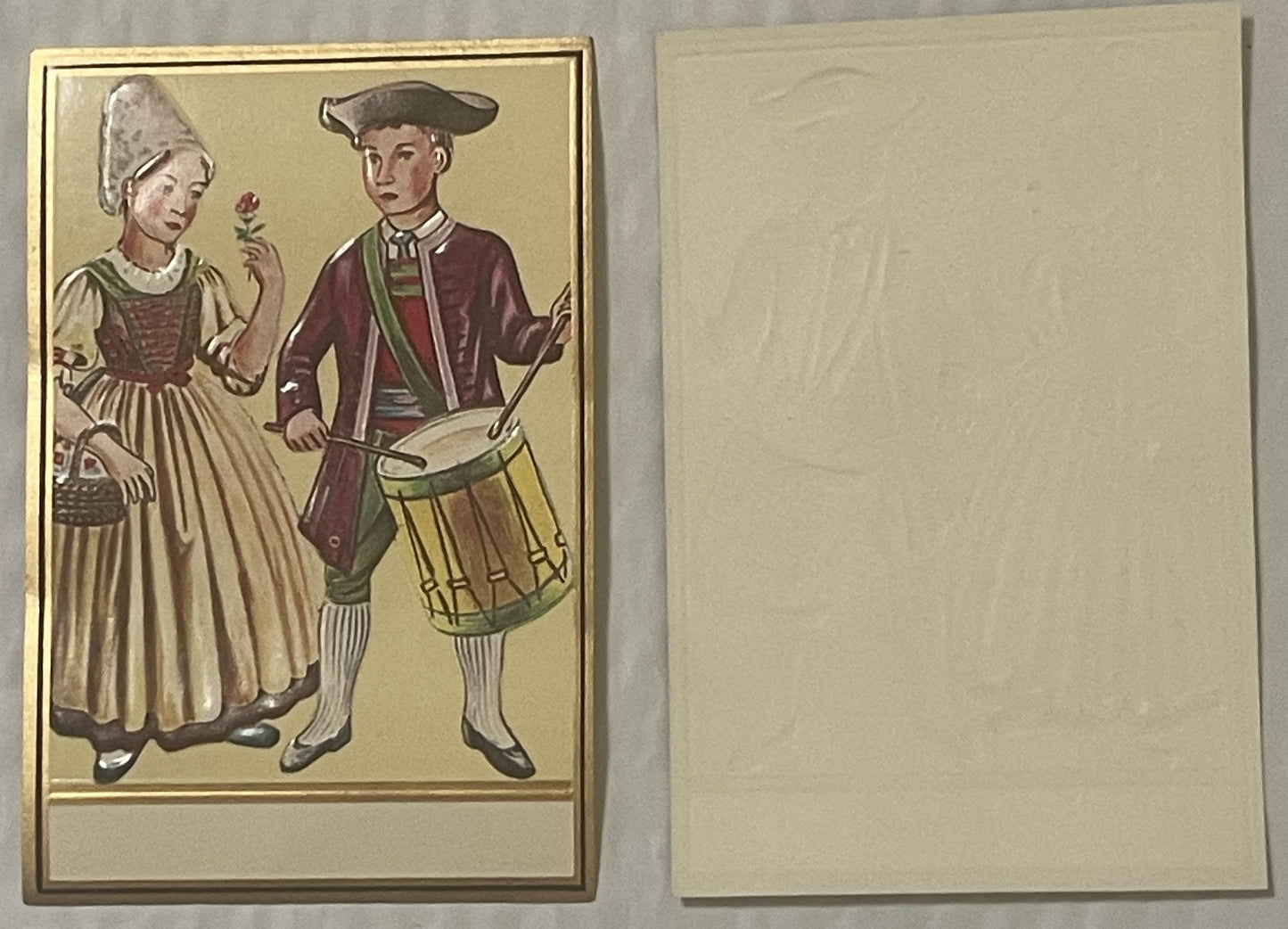
Maybe it's that delicate gold embossed border — raised, gleaming, catching light after 100+ years. Maybe it's the gentle folk art rendering of the colonial couple — her white bonnet and flower basket, his tricorn hat and drum. Maybe it's the muted pastel palette — burgundy coats, cream dress, soft greens and yellows — colors that whisper "early 20th century" before vivid aniline dyes took over.

Or maybe it's the way this label represents a specific moment in American manufacturing — the 1910s-1920s — when chromolithography was still premium, when gold embossing still signaled quality worth the extra cost, when Pennsylvania Dutch folk art imagery sold products with charm and tradition.

This is an antique product label from the 1910s-1920s — likely intended for household products (brooms, soaps, foods) that wanted to communicate Old World quality, folk tradition, and premium craftsmanship.

And this label was never used. It sat bundled with others for 100-110 years, completely untouched, preserving that gold embossed border, those soft colors, that moment when folk art still sold American products.

Will you be the one to give it the home it deserves? 🎨✨


🏷️ What Makes This Label Extraordinary

✨ 100% Authentic Original — Printed in the 1910s-1920s using chromolithography with gold embossed border. This is NOT a reproduction, reprint, or modern copy. This is genuine antique American commercial art.

🆕 Mint New Old Stock (NOS) Condition — Unused. Untouched. Bundled and stored for 100-110 years. The gold embossing is still raised and visible. The colors remain soft and intact. Little to no age-related wear.

📏 Compact Display Size — Measuring approximately 3.5" x 2.5", this label is perfect for smaller frame displays, collages, or ephemera collections.

🎨 Pennsylvania Dutch Folk Art Imagery — Colonial/folk costume couple: woman in white bonnet holding rose and flower basket, man in tricorn hat playing drum with drumsticks. This represents Old World tradition, craftsmanship, and folk charm.

💛 Gold Embossed Border — The rectangular border frame is die-stamped with raised gold embossing — a premium, expensive detail that proves early 20th century production (gold embossing was largely abandoned by the 1930s-40s for cost reasons).

🎨 Soft Pastel Color Palette — Burgundy/maroon coats, cream/yellow dress, green sash and trim, flesh tones — muted, gentle colors typical of 1910s-1920s chromolithography before intense aniline dyes became standard.

🖨️ Multi-Color Chromolithography — Hand-registered color printing requiring separate plates for each hue. The gentle color saturation is characteristic of early 20th century printing.

📝 Blank Footer Space — The cream-colored space at the bottom was left blank, suggesting this was generic stock label that could be customized for different products or manufacturers.

🖼️ Blank Back, Ready for Display — The reverse side is clean and unmarked, perfect for framing or album mounting.


📅 Dating Evidence: Why This Is 1910s-1920s

Multiple production clues prove this label dates to the 1910s-1920s (NOT later):


🔍 CLUE #1: Gold Embossing Technology

💰 Gold embossing required expensive die-stamping — a separate process AFTER chromolithographic printing where heated metal dies pressed metallic foil into the paper, creating raised texture.

📅 Timeline:

  • 1880s-1920s: Gold embossing was common on premium labels — cigar boxes, fancy soaps, high-end household products

  • 1930s: Economic Depression made gold embossing too expensive for most products

  • 1940s+: Gold embossing largely abandoned except for ultra-premium items (replaced by cheaper gold ink printing)

✅ The presence of REAL raised gold embossing (not printed gold ink) = pre-1930s production

This label's embossed border proves it's 1930s or EARLIER.


🔍 CLUE #2: Color Palette & Ink Technology

🎨 The muted, pastel color palette — soft burgundy, gentle cream/yellow, muted green — is characteristic of early chromolithography (1890s-1920s).

📅 Timeline:

  • 1890s-1920s: Chromolithographic inks were oil-based, producing softer, more muted tones

  • 1920s-1930s: Introduction of brighter aniline dyes created more vivid colors

  • 1940s+: Bold, saturated colors became standard (think bright reds, electric blues, intense yellows)

✅ This label's SOFT color palette = 1920s or EARLIER

Compare to 1940s-60s labels: Those have PUNCH. Vivid reds, bright blues, eye-popping yellows. This label has GENTLENESS — the color aesthetic of the 1910s-1920s.


🔍 CLUE #3: Pennsylvania Dutch Folk Art Style

🎨 Pennsylvania Dutch/colonial folk art imagery peaked in popularity during the Colonial Revival movement (1890s-1930s).

📅 Timeline:

  • 1876 Centennial: Sparked American interest in colonial heritage

  • 1890s-1920s: Pennsylvania Dutch folk art became HUGE in home decor, advertising, product branding

  • Colonial Revival peak: 1910s-1920s when every household product wanted to signal "Old World quality"

  • 1930s-1940s: Art Deco and streamlined modern design replaced folk imagery

  • 1950s-1960s: Mid-century modern pushed folk art to the margins

✅ This folk art style + colonial costumes = Colonial Revival era (1890s-1930s)

Most likely: 1910s-1920s when Pennsylvania Dutch branding was at its commercial peak.


🔍 CLUE #4: Costume & Fashion Details

👗 The clothing styles depicted help narrow the dating:

Woman:

  • White bonnet (18th century colonial style)

  • Full-skirted dress with fitted bodice (colonial era recreation)

  • Flower basket (folk tradition symbol)

  • Rose in hand (romantic folk symbolism)

Man:

  • Tricorn hat (18th century military/colonial)

  • Drum with drumsticks (colonial militia/folk tradition)

  • Coat with crossbelt sash (colonial military style)

  • Knee breeches (18th century fashion)

These are NOT historically accurate 18th century costumes. They're early 20th century INTERPRETATIONS of colonial fashion — slightly romanticized, simplified, folk-art-ified.

✅ This romantic folk interpretation = 1910s-1920s Colonial Revival aesthetic

By the 1940s-60s: Colonial imagery became more historically accurate or completely abandoned for modern designs.


🔍 CLUE #5: Chromolithography Production Methods

🖨️ The printing technique shows hand-registered chromolithography typical of 1900s-1920s:

Evidence:

  • Soft edges on color transitions (not crisp offset printing)

  • Slight registration variations (visible if you look closely — hand-registered plates)

  • Oil-based ink sheen (characteristic of stone lithography)

  • Muted color saturation (pre-aniline dye era)

📅 Timeline:

  • 1870s-1920s: Stone lithography (chromolithography) was THE premium printing method

  • 1920s-1930s: Offset lithography began replacing stone lithography

  • 1940s+: Offset printing dominated; stone lithography obsolete

✅ This printing quality = stone lithography era (pre-1930s)


🔍 CLUE #6: Blank Generic Stock

📝 The blank footer space suggests this was generic stock label produced for multiple potential uses:

Common in the 1910s-1920s:

  • Label manufacturers printed attractive generic designs in bulk

  • Individual companies could add their brand name/product info via overprinting or hand-stamping

  • OR labels were sold as-is for small producers who couldn't afford custom printing

✅ This generic stock approach = early 20th century production model

By the 1940s-60s: Most labels were custom-printed for specific brands from the start.


📊 DATING CONCLUSION

All evidence points to 1910s-1920s:

💰 Gold embossing (expensive process abandoned by 1930s)
🎨 Muted pastel colors (pre-aniline dye era)
🎨 Pennsylvania Dutch folk art peak (Colonial Revival 1910s-1920s)
👗 Romanticized colonial costumes (early 20th century interpretation)
🖨️ Stone chromolithography quality (pre-offset era)
📝 Generic blank stock (common 1910s-1920s practice)

Most likely date: 1915-1925

This label is 100-110 years old — genuine antique American commercial art.


🎨 Pennsylvania Dutch Imagery & The Colonial Revival

Why did colonial couples sell products in the 1910s-1920s?

The Colonial Revival movement (1890s-1930s) made Americans OBSESSED with their 18th century heritage:

🏛️ After the 1876 Centennial: Americans romanticized the Revolutionary era
🎨 Pennsylvania Dutch folk art boomed: Hex signs, fraktur, folk imagery became trendy
👗 Colonial fashion revivals: Women wore colonial-style dresses to parties
🏡 Colonial-style furniture & decor: Every middle-class home wanted "Early American" charm
📦 Product branding: Companies used colonial imagery to signal "Old World quality" and "American tradition"

Pennsylvania Dutch folk art specifically communicated:

✅ Honest craftsmanship (Pennsylvania Dutch = quality workmanship)
✅ Old World tradition (European heritage, time-tested methods)
✅ American heritage (Pennsylvania Dutch were early American settlers)
✅ Folk charm (simple, honest, trustworthy)

A label showing a colonial couple = instant communication:

"This product is made with Old World quality, American tradition, and honest craftsmanship."


💛 Gold Embossing: The Premium Detail

Gold embossing was EXPENSIVE in the 1910s-1920s.

The process required:

🎨 Original label printed via chromolithography (multiple color plates, hand-registered)

💰 Custom die created — A metal die was engraved with the border design

🔥 Die-stamping process — The die was heated, gold foil was positioned, and the die pressed into the paper under extreme pressure, transferring gold and creating raised texture

⏱️ Slow, labor-intensive — Each label had to be individually stamped

💸 Costly materials — Real gold foil (even though very thin) was expensive

Why companies paid for gold embossing:

✅ Signaled premium quality — Only expensive products got gold embossing
✅ Stood out on shelves — Gold caught light, drew the eye
✅ Felt luxurious — Customers could FEEL the raised texture
✅ Prevented counterfeiting — Gold embossing was hard to fake

By the 1930s Depression: Most companies abandoned gold embossing to cut costs.

By the 1940s: Gold was printed (flat ink), not embossed (raised foil).

This label's REAL raised gold embossing proves it's pre-1930s production.


🎨 The Folk Art Details

Look closely at the imagery:

Woman (Left):

  • White bonnet with ribbon ties — classic Pennsylvania Dutch/colonial headwear

  • Burgundy vest/bodice over cream dress — folk costume styling

  • Full gathered skirt in cream/yellow — 18th century silhouette (as interpreted in 1920s)

  • Flower basket in left hand — symbol of abundance, harvest, domestic care

  • Single rose in right hand — romantic folk symbolism, gift-giving, courtship

  • Soft facial features — gentle, simplified rendering typical of folk art

Man (Right):

  • Black tricorn hat — 18th century military/colonial headwear

  • Burgundy coat with green crossbelt sash — colonial militia/military styling

  • Drum and drumsticks — colonial militia tradition, Revolutionary War imagery

  • Cream/white knee breeches — 18th century fashion

  • White stockings — period-appropriate legwear

  • Black shoes with period-style buckles

Together they represent:

💑 Colonial courtship — The rose suggests he's courting her or they're a married couple
🎺 Folk tradition — The drum = community celebration, militia service, civic pride
🌸 Domestic harmony — She tends flowers (home), he serves community (drum)
🇺🇸 American heritage — Colonial era = Revolutionary roots, founding values

This is romanticized folk art, NOT historical accuracy. It's how the 1910s-1920s IMAGINED the colonial era — charming, simple, honest, traditional.


🖨️ The Chromolithography Process (1910s-1920s)

Creating this label required serious craftsmanship:

🎨 Artist designs label — Draws the colonial couple, composes the layout, specifies colors

🖨️ Lithographic stones prepared — One stone for each color (at least 5-6 stones for this label)

🎯 Hand registration — Each color layer printed separately and aligned by eye and registration marks

✨ Oil-based inks mixed — Achieving those soft burgundy, cream, green tones

🖼️ Each label printed — Multiple passes through the press, one color at a time

💰 Gold embossing die created — Custom engraved metal die for the border design

🔥 Die-stamping — Each label individually stamped with heated die and gold foil

🌟 Quality inspection — Labels bundled and stored

The result is a miniature work of folk art — hand-printed, hand-embossed, preserving 1910s-1920s American commercial design.


💛 Why Collectors Treasure This Label

🎨 Pennsylvania Dutch folk art — Captures Colonial Revival aesthetic at its peak

💰 Gold embossed border — Premium detail rarely seen on labels after 1920s

📅 Genuine antique — 100-110 years old (1915-1925 most likely)

🖨️ Stone chromolithography — Hand-registered printing from the pre-offset era

👗 Colonial Revival imagery — Woman with flower basket, man with drum

🎨 Muted pastel palette — Soft colors proving early 20th century production

📝 Blank generic stock — Versatile label for multiple product uses

🆕 NOS condition — Unused, pristine after a century

💰 Affordable antique — Accessible price for genuine 100+ year old ephemera


🎁 Perfect For

🎨 Folk Art Collectors — Pennsylvania Dutch, Colonial Revival, early American imagery

📚 Ephemera Enthusiasts — Antique labels, commercial design, printing history

🖼️ Framing & Display — Small size perfect for shadowboxes, collages, vintage frames

🏛️ American History Buffs — Colonial era romanticization, 1910s-1920s culture

💰 Gold Embossing Admirers — Premium antique printing technique

👗 Costume & Fashion Historians — Colonial costume interpretation in early 20th century

🎁 Thoughtful Gift Givers — Unique antique for anyone who loves folk art or Pennsylvania heritage


🖼️ Display Ideas

Antique Frame:
🖼️ Small vintage frame with mat, hung in a grouping of early 20th century ephemera

Shadowbox Collection:
📦 Combine with other 1910s-1920s labels, postcards, or Pennsylvania Dutch items

Folk Art Wall:
🎨 Display with hex signs, fraktur, or other Pennsylvania Dutch folk art

Ephemera Album:
📖 Mount in a vintage ephemera album or scrapbook for preservation

Colonial Revival Display:
🏛️ Pair with other early 20th century colonial-themed items


🌟 Why Buy From Us

We're not just sellers — we're preservationists and design historians with a mission.

We rescue antique ephemera from estate sales, warehouse clearances, and forgotten storage, then carefully catalog and share each piece with collectors who will appreciate and preserve it for future generations.

Our Promise:

✅ Every item is 100% authentic — We never sell reproductions, and we stand behind every piece

🏛️ New England-based — Deep knowledge of American antiques, design history, and vintage collecting

📦 Museum-quality handling — Your label arrives in pristine condition

⚡ We believe in preserving artistry — This label represents 1910s-1920s folk art and premium printing craftsmanship


🎯 The Bottom Line

This isn't just a piece of old paper with a colonial couple on it.

It's proof that even in the 1910s-1920s, even in the age of mass production, American manufacturers still invested in beauty — gold embossing, hand-registered chromolithography, charming folk art imagery. It's a window into the Colonial Revival movement when Americans romanticized their Revolutionary heritage and Pennsylvania Dutch folk tradition sold products with the promise of Old World quality.

It's evidence that premium details like gold embossing mattered enough to justify the extra cost — because quality, beauty, and craftsmanship still had value.

The product this label was meant for is long gone. The lithographer who hand-registered those color plates has passed on. The artisan who stamped that gold border is part of history. The company that might have ordered these generic stock labels has been forgotten.

But this label remains — gold still gleaming, colors still soft, folk art couple still frozen in their 1920s interpretation of colonial charm, waiting.

It's been preserved for 100-110 years to find someone who will appreciate its antique status, honor its folk art heritage, celebrate its gold embossed craftsmanship, and give it the home it deserves.

Will that someone be you? 🎨✨

Shipping

🚚 Shipping & Handling

  • Shipping costs and timing are calculated at checkout.
  • Items curated and shipped directly by me include U.S. shipping at no additional cost, professionally packed to ensure safe arrival of your artifact.

Items from Vetted Pro Collectors
Shipping for items offered by vetted Pro Collectors is determined at checkout. All Pro Collector listings are reviewed to ensure fair, reasonable shipping practices.

For full details, please refer to our Shipping Policy.

Returns & Exchange

Product Page Return Policy

  • 60-Day Returns – Items must be in original condition.
  • Refunds – Issued after inspection (excluding shipping costs).
  • Return Shipping – Customer is responsible unless item is damaged or incorrect.
  • Damaged/Incorrect Items – Contact us within 48 hours for a replacement or refund.
  • Easy Returns – Email info@vintageantiquesgifts.com or call 802-356-9872 to initiate a return.

For full details, visit our Refund Policy.

View full details