Skip to product information
1 of 4

Vintage and Antique Gifts

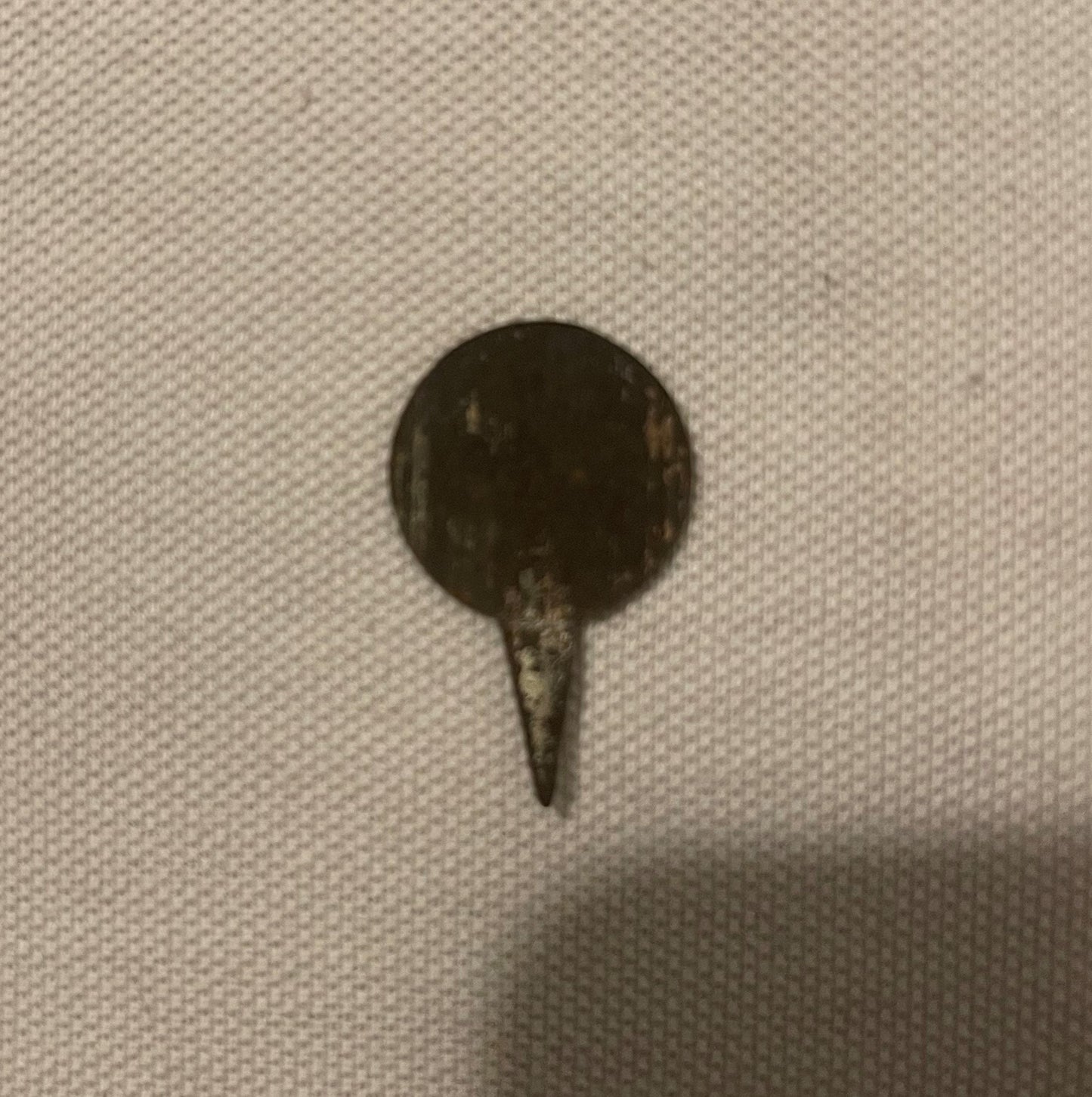
Antique Hamptons Home Spun Tobacco Tin Tag Embossed Advertising Pin Tack 1 Inch Original Chewing Tobacco Label 🚬

Antique Hamptons Home Spun Tobacco Tin Tag Embossed Advertising Pin Tack 1 Inch Original Chewing Tobacco Label 🚬

Regular price 14.00 USD
Regular price Sale price 14.00 USD
Sale Sold out
Shipping calculated at checkout.
Quantity

Size: 1.12 x 0.75 inches

Have You Ever Held Something So Specific It Felt Like It Was Waiting for You? 🏷️

There is a particular kind of quiet that settles over you when you pick up a piece of tobacciana that no one else seems to have found. Not the loud, familiar quiet of a well-documented antique — the kind whose provenance has been catalogued a hundred times over, whose comparables stretch across page after page of auction records. No. This is a different silence entirely. It is the silence of something genuinely rare, something that slipped through the cracks of history with almost no paper trail, no competing listings, no one loudly claiming to own its twin. That is exactly what you are holding when you hold a Hampton's Home Spun tobacco tin tag from the R. C. Owen Company of Gallatin, Tennessee. It is small. It is modest. It is embossed brick red and no larger than a silver dollar. And it is, by every meaningful measure of the collector's world, extraordinary.

I have been collecting tobacciana for a long time — long enough to know the difference between a scarce piece and a truly rare piece. Scarce pieces surface occasionally, given patience and persistence. Rare pieces make you stop what you're doing. They make you set everything else aside and look. Hampton's Home Spun made me stop. I searched Etsy. I searched eBay. I pulled up every tobacciana database and collector forum I trust. Nothing. No active listings. No sold comparables. No record of one having changed hands in any traceable, documented way in the modern collector market. That kind of absence — after a thorough search — is not a gap in the research. It is the research. And it tells you something important about what this little disc of stamped, painted metal actually is.


🏷️ What This Piece Is — Brand, Maker, Era, and Form

This is an antique Hampton's Home Spun tobacco tin tag — a New Old Stock survivor from a chewing tobacco brand produced by the R. C. Owen Company of Gallatin, Tennessee, dating to approximately the 1947 era. The tag measures roughly one inch across its disc face. Embossed lettering arches across the upper portion of the face: HAMPTON'S curving above, HOME SPUN set in two clean lines across the center. Below the disc, a pointed tack stem extends downward in the classic tobacco tag form that any serious tobacciana collector will recognize immediately — designed to be pressed directly into a plug of chewing tobacco before it ever left the factory floor.

That form factor is important context. Tobacco plug tags — sometimes called tin tobacco tags, tack tags, or plug tags — were one of the great small-scale advertising media of American manufacturing from roughly the 1870s through the mid-twentieth century. Every plug of chewing tobacco that left a respectable factory was identified by one of these embossed metal discs, pressed in at the point of production. They served simultaneously as branding, as quality certification, and as a kind of tactile advertisement — something the buyer could touch, examine, and associate with a specific name and taste. Thousands of brands produced them. The overwhelming majority of those brands are long gone. The tags, being metal, survived where the paper catalogs and the cardboard signs did not. And New Old Stock examples like this one — never pressed into a plug, never handled at the counter, still carrying their original paint in honest antique condition — are the rarest survivors of all within an already scarce category.


🏭 The R. C. Owen Company — A Small Tennessee Operation in Tobacco Country

The R. C. Owen Company was not a national giant. It was not American Tobacco. It was not Liggett & Myers or Reynolds or any of the consolidated corporate behemoths that came to dominate the twentieth-century tobacco landscape. It was a family-run operation, rooted in the soil of Middle Tennessee, producing chewing tobacco for a regional market that knew what it wanted and trusted the names it had grown up with. The Owen family operation in Gallatin served exactly that community — a company scaled to its town, not to a stock exchange.

What that means for the collector is significant. Large national brands — Bull Durham, Mayo's, Star, Horse Shoe — produced their tags in enormous quantities. They survived in correspondingly large numbers. They are well-documented, widely traded, and while certainly collectible, they are anything but rare. A small regional operation like R. C. Owen produced its tags in modest runs, for a limited geography, and when the company eventually wound down, those tags did not scatter across the national market in the way that a major-brand surplus might have. They stayed close to home — in old storerooms, in the backs of tobacco warehouses, in the drawers and tins of families who never thought to catalog what they had. The collecting world largely missed them. And that is exactly why a piece like this one carries the weight it does today.


🌿 Gallatin, Tennessee — Middle Tennessee's Tobacco Heritage

Gallatin sits in Sumner County, in the rolling heart of Middle Tennessee — a region that was, for well over a century, as serious about tobacco cultivation and processing as any place in the American South. The dark-fired and burley tobacco traditions of Middle Tennessee shaped the economy of dozens of small towns, and Gallatin was firmly part of that world. Tobacco warehouses, leaf dealers, plug manufacturers, and the whole ecosystem of trade that supported them were a living part of the commercial fabric of this corner of the state through the late nineteenth century and deep into the twentieth.

For a company like R. C. Owen, Gallatin was not just an address — it was a supply chain, a workforce, a customer base, and a culture all at once. The tobacco that went into Hampton's Home Spun plug was, in all likelihood, grown within a reasonable radius of the town itself, bought at the local leaf market, processed by workers who lived in the surrounding neighborhoods, and sold to buyers who had been chewing regional plug tobacco their entire lives. There was a directness to that economy — a local integrity — that the national brands, for all their marketing power, simply could not replicate.

Local legend has it that in the smaller Middle Tennessee tobacco towns, brand loyalty among plug chewers ran so deep that a man would walk past a general store rather than buy a brand he didn't recognize, even if it was the only option on the shelf. Whether or not every version of that story is literally true, it speaks accurately to something real about the relationship between these small regional brands and their customers. Hampton's Home Spun was not competing with the national giants for shelf space at a chain retailer. It was competing for the loyalty of men who had been buying from their local supplier for thirty years. That is a different kind of brand equity entirely — and the tag that represented it carried that weight every time it was pressed into a plug.

Lore passed down among Southern tobacciana collectors holds that many of the small Middle Tennessee plug operations ran lean enough that their advertising materials — tags, signs, caddies — were ordered in modest lots and kept on hand at the factory rather than warehoused in bulk. When production stopped, whatever remained simply stayed where it was, often for decades, until an estate was settled or a building changed hands. That pattern of survival — slow, local, accidental — is almost certainly what preserved examples like this Hampton's Home Spun tag into the twenty-first century. Not a collector's deliberate rescue, but the ordinary inertia of a small-town building holding its contents quietly for fifty, sixty, seventy years.


🔴 The Tag Itself — Reading the Object Closely

Part of what makes a piece like this rewarding to own is the conversation you can have with the object itself — the way a careful, close look reveals the decisions and the craft that went into something most people would dismiss as a simple scrap of metal. The brick red paint on a Hampton's Home Spun tag is not a random color choice. Red was a consistently strong performer in plug tobacco tag production — visible, bold, and associated in the regional trade with a certain straightforward confidence. Not fancy. Not trying to be anything it wasn't. Just clear and present on the counter or on the plug.

The embossing itself — the raised lettering that spells out HAMPTON'S above and HOME SPUN below — required a die, a press, and a skilled hand setting the blank correctly. These were not hand-stamped one at a time by a craftsman with a hammer. They were produced with modest industrial equipment, the same basic tooling that tag manufacturers across the South and Midwest used to turn out the hundreds of regional brands that populated the American plug tobacco market from the 1870s-1910s onward. But the dies had to be cut specifically for each brand. Hampton's Home Spun had its own die. Someone paid to have it made. Someone cared enough about the name — about the brand — to invest in the physical infrastructure of identity. And that investment is what you are holding today.

The tack stem below the disc is the detail that most clearly roots this object in its original function. This is not a decorative pin. It is not a lapel badge or a souvenir. It is a working implement, designed for a specific industrial purpose: to be driven into a pressed plug of dark tobacco before wrapping, identifying the product at the point of sale and tying the experience of opening that plug directly to a brand name. The fact that this example survives with its stem intact and its face in honest antique condition — the red paint holding its character, the embossing crisp and readable — is a testament to the care of whatever storage preserved it for the better part of a century.


🖼️ Display Ideas

  • 🪵 Shadow box with regional context: Mount the tag at center in a shallow shadow box alongside a vintage Tennessee map clipping centered on Sumner County and a small label noting Gallatin and the 1947 era — a self-contained piece of Middle Tennessee tobacco history.
  • 🧲 Magnetic display board for a tobacciana tag collection: Collectors who work with plug tag collections often display them pinned or magnetically mounted on a dark felt or burlap board — the brick red of Hampton's Home Spun reads beautifully against deep navy or charcoal backgrounds.
  • 🏪 General store vignette: Pair with a vintage tin, an antique tobacco caddy, or a period general store price card for a tabletop vignette that evokes the actual retail environment where plug tobacco once lived and breathed.
  • 📦 Riker mount display: A standard coin-sized Riker mount gives this tag a proper museum-quality presentation, protecting the face and paint while keeping it fully visible — ideal for rotating into a display cabinet alongside related tobacciana.
  • 🗺️ Tennessee tobacciana regional map display: Tobacciana collectors who focus on the upper South often build geographic displays — a framed county map with pins at each town that produced a documented brand, with a representative tag or image at each location. Gallatin and Hampton's Home Spun deserve their pin on that map.
  • 🔍 Magnified display for close reading: Given the quality of the embossed lettering and the depth of the brick red finish, a small display magnifier or jeweler's loupe presentation — the kind sometimes used for coin and medal display — allows the full craft of the tag's production to be appreciated at a level the naked eye alone doesn't quite capture.

🎁 Who Collects These

Tobacciana is one of the oldest and most established branches of American advertising collectibles, and plug tobacco tags occupy a particularly devoted corner of that world. The people drawn to tags like Hampton's Home Spun tend to fall into a few overlapping categories — and if you are reading this listing carefully, you probably recognize yourself in at least one of them.

There is the serious tobacciana collector who has been building a tag collection for years or decades, who already owns examples from the major national brands and is now focused on filling in the regional and hyper-local gaps that are genuinely difficult to find. For this collector, a documented New Old Stock tag from a brand with zero market presence is not just a nice addition — it is a meaningful acquisition, the kind that advances a collection rather than simply adding to it.

There is the Tennessee history enthusiast — the person who cares about Gallatin, about Sumner County, about Middle Tennessee's agricultural and commercial past, and who wants objects that connect to that specific place and era. Hampton's Home Spun, as an R. C. Owen Company product from Gallatin in the 1947 era, is as specific a piece of Tennessee material culture as you are likely to find in the tobacciana world.

There is the advertising and Americana collector who is drawn to the design language of pre-war and mid-century small-batch manufacturing — the embossed lettering, the trade colors, the industrial craft of something made to be used and not especially to be preserved. These collectors understand that the most honest objects from that era are the working ones, not the display pieces made for show.

And there is the gift-giver — perhaps the most important audience of all — who has a father, a grandfather, an uncle, or a dear friend with deep Tennessee roots or a lifelong interest in Americana and wants to give them something genuinely uncommon. Not another reproduction sign, not another mass-market antique-store find. Something that took real searching to locate and that carries a story worth telling.


❓ Frequently Asked Questions

What exactly is a tobacco tin tag, and how was it used?

A tobacco tin tag — also called a plug tag, tack tag, or tin tobacco tag — is a small stamped metal disc with an attached pointed stem, produced specifically to be pressed into a plug of chewing tobacco before it left the manufacturing facility. The tag identified the brand, served as a quality marker, and functioned as a point-of-sale advertisement — the buyer could see and touch the brand name on the plug itself. Tags were produced from roughly the 1870s through the mid-twentieth century by hundreds of regional and national tobacco manufacturers, and they were made in enormous variety: different shapes, colors, embossed designs, and materials. Today, intact examples — particularly from small regional brands like Hampton's Home Spun — are genuine collector's items within the tobacciana and American advertising antiques communities.

What does "New Old Stock" mean for this tag, and why does it matter?

New Old Stock, or NOS, refers to merchandise that was produced for its original commercial purpose but was never actually used — in this case, a tobacco tag that was manufactured and stored but never pressed into a plug of chewing tobacco before reaching the collector market. For a tag like this Hampton's Home Spun example, NOS status is significant for two reasons. First, it means the paint, the embossing, and the tack stem are in their original, unworked condition — not softened, bent, or stained by being driven into and removed from a tobacco plug. Second, it tells you something about the survival story: this tag outlasted its brand because it sat undisturbed in storage for decades rather than going through the normal commercial lifecycle. NOS tobacciana pieces with honest original paint and intact stems represent the top tier of the tag-collecting market.

How do I know this is genuinely from the 1947 era and not a later reproduction?

The dating to the 1947 era is based on research into the R. C. Owen Company's operational history in Gallatin, Tennessee, and the characteristics of the tag's physical production — the stamping method, the paint application, and the form of the tack stem are consistent with mid-century American plug tag manufacturing. Reproductions of regional plug tags from small Tennessee manufacturers are, frankly, not a meaningful concern in the current market: the brands are too obscure and too low-profile to attract the kind of reproduction activity that sometimes shadows more famous tobacciana. No collector has any commercial incentive to fabricate a Hampton's Home Spun tag. For display purposes, this is exactly what collectors want: a piece that reads as genuinely antique without paint loss severe enough to compromise the legibility of the embossed design. The lettering — HAMPTON'S above, HOME SPUN across the center — remains crisp and fully readable. Treat it with the same care you would give any antique painted metal surface: avoid abrasive cleaning, avoid moisture, and display it where it is not handled frequently.

Why does this tag have essentially no market comparables, and how should a collector think about value?

The absence of comparable sold listings on Etsy, eBay, or any other major resale platform is not a sign that this piece has no collector value — it is a sign that it has never reached the collector market in any documented way. Hampton's Home Spun was a small regional brand from a family operation in Middle Tennessee. Its tags were produced in limited quantities, distributed in a limited geography, and when the company closed, they did not enter the national antiques trade in any organized way. The collecting world has essentially no price history for this specific tag because examples have not surfaced for sale in modern traceable channels. For a collector, that situation cuts both ways: it means there is no established "ceiling" to argue against, but it also means this is genuinely uncharted territory — a documented New Old Stock tag from a brand with zero market presence, which is precisely the definition of a discovery piece in serious tobacciana collecting.

What is the best way to store this tag if I am adding it to an existing collection?

For long-term storage, the same principles that apply to coin and small metal antiques collecting serve tobacciana well. Keep the tag away from humidity and temperature extremes — both accelerate paint deterioration and can promote oxidation on the metal body. Acid-free storage materials are preferable if the tag is going into a box or drawer rather than on display. If you are incorporating it into a display, a Riker mount or a sealed shadow box keeps dust and handling to a minimum while keeping the piece visible. Hampton's Home Spun and the R. C. Owen Company of Gallatin, Tennessee appear to have left an extremely thin paper trail in the published tobacciana collector literature — which runs deep for major national brands but becomes quite sparse for small regional operations, particularly those from states other than Virginia and Kentucky where much of the major documentation has concentrated. The seller's research turned up no active or completed marketplace listings of any kind for this brand. That absence in the literature is part of what makes a physical survivor like this tag so valuable as a primary source — the object itself, with its documented provenance as Gallatin, Tennessee, R. C. Owen Company, circa 1947, may be among the best documentation of this brand's existence that currently survives in collector hands. Owning it is, in a modest but real sense, an act of preservation.

Shipping

🚚 Shipping & Handling

  • Shipping costs and timing are calculated at checkout.
  • Items curated and shipped directly by me include U.S. shipping at no additional cost, professionally packed to ensure safe arrival of your artifact.

Items from Vetted Pro Collectors
Shipping for items offered by vetted Pro Collectors is determined at checkout. All Pro Collector listings are reviewed to ensure fair, reasonable shipping practices.

For full details, please refer to our Shipping Policy.

Returns & Exchange

Take your time — you've got a full six months. If a piece isn't right for you, send it back the way it reached you and we're good.

In the first 30 days your money goes straight back the way you paid. After that it's store credit, so you can put it toward something you'd rather have.

Return shipping we sort out between us, case by case. I don't make this difficult.

If something arrives damaged, or it isn't what I said it was, send me a photo within 48 hours and I'll make it right.

Email info@vintageantiquesgifts.com or call 802-356-9872 — that's me answering, not a call center.

The only things I can't take back are custom or special-order pieces and gift cards.

View full details