Skip to product information
1 of 8

Vintage and Antique Gifts

Antique Orphan Boy Smoking Tobacco Label 🫏 John Weisert Tob. Co. St. Louis MO Fine Carolina NOS

Regular price 4.50 USD
Regular price Sale price 4.50 USD
Sale Sold out
Shipping calculated at checkout.

Description

What kind of tobacco company puts a mule on the label instead of a general, a beauty queen, or an eagle? 🫏

Turn-of-the-century tobacco men reached for all kinds of imagery to sell a pouch of smoking tobacco — presidents, generals, Native chiefs, racehorses, locomotives, eagles with wings spread wide. The John Weisert Tobacco Company of St. Louis, Missouri, reached for something humbler and, in its own way, far more memorable: a plain brown Missouri mule, standing alone and unbothered in a sunlit farmyard. That confident little animal became Orphan Boy, one of the more charming and enduring brand names to come out of a city that, in its heyday, was absolutely thick with tobacco manufacturers competing for the same tin of loose-leaf on the same corner store shelf.

This is an original Orphan Boy Smoking Tobacco — Fine Carolina label, produced by the John Weisert Tobacco Company of St. Louis, Missouri, in the 1910s–1920s era of the brand's long run. It is a chromolithograph — a dense, multi-run color print built up in red, yellow, black, blue, green, brown, and cream — measuring approximately 2.75 x 1.75 inches. The upper register carries the farm scene the brand was built around: that sturdy brown mule standing in an open sunlit yard, ears alert, in front of a wooden outbuilding with a green roof, with trees along a fence line and a pair of birds swept across a blue sky behind him. An arched red banner across the top spells out ORPHAN BOY in bold white block lettering with a drop shadow, the kind of dimensional, hand-lettered display type that lithographers of the era were justly proud of. Below the pastoral scene, set against black, SMOKING TOBACCO runs in oversized cream lettering, followed by a brown ribbon reading FINE CAROLINA, and at the bottom a bright yellow panel spells out MADE BY JOHN WEISERT TOB. CO. ST. LOUIS, MO. in red and black. Tucked at the very bottom is a small oval seal reading ALLIED PRINTING TRADES UNION COUNCIL LABEL ST. LOUIS MO. — a printer's union mark that tells its own quiet story about labor and craft in that era, which we'll get into below. This example is New Old Stock (NOS) — printed, never applied to a pouch, and held back from the shop floor before it ever went to work.


🫏 The Legend of the Mule Himself

Here is the story the way it has been passed down through tobacciana and advertising-collector circles for decades — told plainly as lore, because that is exactly what it is, and because a story like this deserves to survive even when the paper trail behind it has thinned with time. The legend holds that Orphan Boy was named for an actual Missouri-bred jack — a male donkey — who became something of a local sensation when he swept the mule competitions at the 1904 St. Louis World's Fair, the great Louisiana Purchase Exposition that put St. Louis on the world stage for a season. The story goes that this animal came up without the pedigree and formal backing his rivals carried into the ring — no fancy bloodline, no deep-pocketed owner standing behind him — and he won anyway. He was the underdog. He was, as the old-timers told it, the orphan. And a stubborn, proud Missouri mule who beat the odds without a name behind him is exactly the kind of story a tobacco man in a crowded, competitive market would want stamped on his brand.

Whether every detail of that tale holds up to strict scrutiny is the sort of thing collectors still debate over a coffee table full of old labels — but that argument is itself part of the charm, and it is not this label's job to settle it. What is not in question is the image the Weisert company chose to put front and center on every tin and pouch: a mule standing alone, calm, sturdy, entirely unbothered, exactly as an underdog who has already proven his point would stand. Missouri has long called itself the "Show-Me State," and a Missouri mule who showed up and simply won is about as fitting a mascot as that state ever produced for a homegrown product.


🏙️ St. Louis, Tobacco Capital, Before the Arch

Long before the Gateway Arch defined its skyline, St. Louis was known nationally for something else entirely — tobacco. Collectors who dig into the city's manufacturing history often cite a figure that sounds almost impossible today: more than four hundred tobacco companies reportedly operated in St. Louis around the turn of the twentieth century. That is not a typo, and it is not an exaggeration collectors invented for flavor — St. Louis genuinely was one of the great American tobacco manufacturing centers, alongside Richmond, Durham, and Louisville, and the competition among its firms for shelf space, storefront loyalty, and brand recognition was fierce, colorful, and deeply local.

Into that crowded field stepped the John Weisert Tobacco Company with a lineup that, judging from surviving advertising, leaned hard into memorable names and mascots: alongside Orphan Boy, the company also produced "Big John," "54," and, under an earlier "Weisert Bros." banner, brands called "Brilliant" and "Checkers." A surviving sign pairing "Big John," "54," and "Orphan Boy" together under the phrase "Smokers Dream" suggests these brands were marketed as a family, each with its own personality but all sharing a common house style — a company betting that a good mascot could carry a brand as far as the tobacco itself.

The label's own "Fine Carolina" designation is a small piece of real tobacco-trade history in itself. Carolina-grown bright leaf was one of the most prized smoking-tobacco sources in the country by this period, and naming it right on the label — the way a modern label might call out a single-origin coffee bean — was a standard way for a manufacturer to signal quality to a customer standing at a counter deciding between a dozen brightly printed tins.


🏭 The Weisert Family Behind the Name

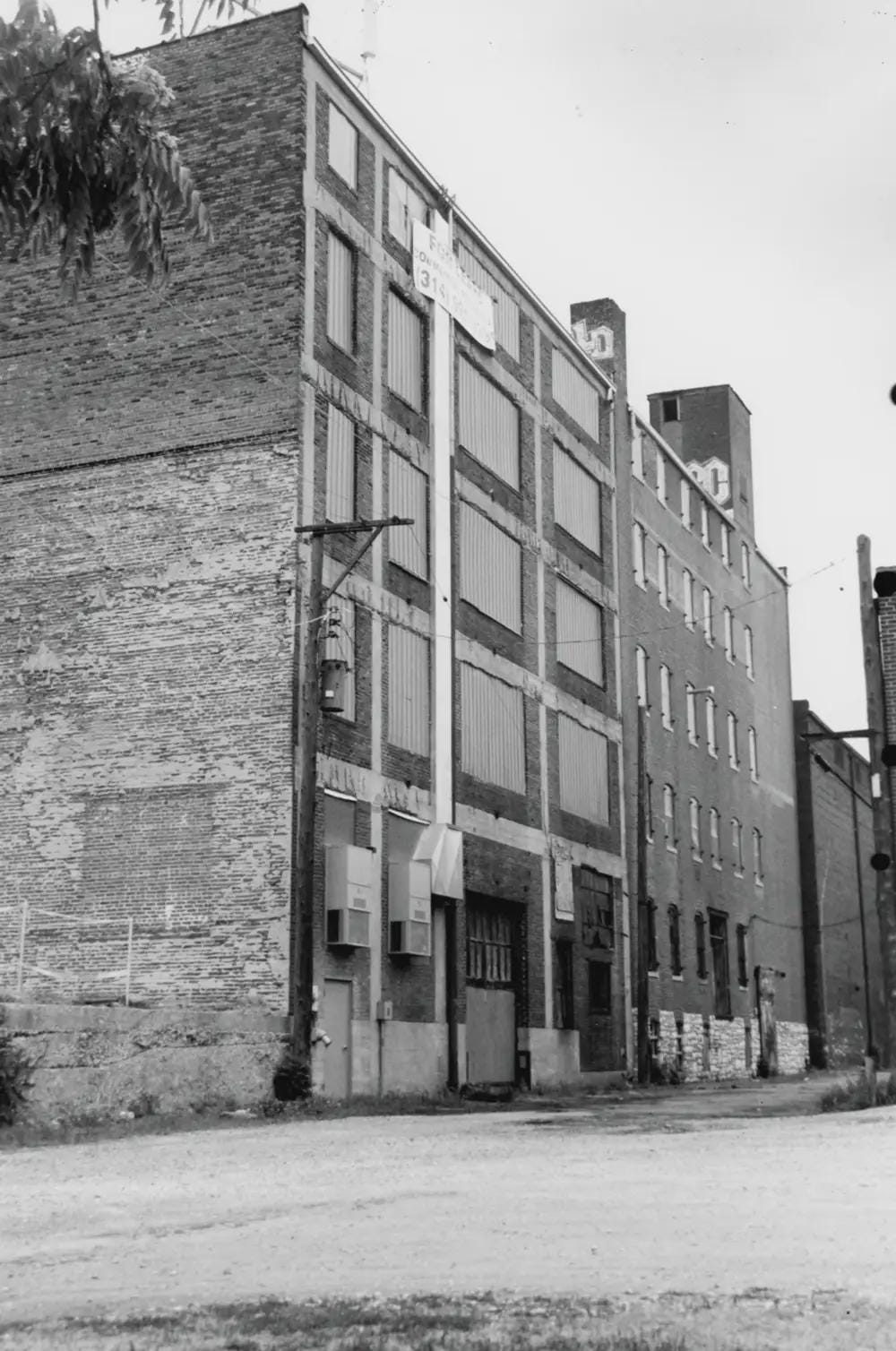
The company itself appears to have run as a family enterprise across at least two generations. Records show a John Weisert Jr. (1887–1940), which strongly implies a senior John Weisert before him — consistent with a firm that began, by the naming convention of its earlier "Weisert Bros." brands, as a partnership among brothers before consolidating under the John Weisert Tobacco Co. name that appears on this very label. The company was substantial enough to occupy its own dedicated building at 1120 South Sixth Street in St. Louis — a structure significant enough in the city's manufacturing history that it is today recognized on the National Register of Historic Places. That same building survives and now operates under a name that keeps the Weisert family in the conversation more than a century later: "The Weisert Building."

It's worth pausing on that detail, because so few tobacco firms of this size left anything behind at all beyond scattered paper. The bricks and mortar that once housed the presses, the leaf, and the packing tables where labels like this one were pasted onto pouches of Fine Carolina blend are still standing in St. Louis today — repurposed, but recognizably the same building, carrying the family name forward into the twenty-first century.


🖨️ The Union Bug — A Small Seal With a Big Story

Down at the bottom of this label sits a small oval mark easy to overlook: Allied Printing Trades Union Council Label, St. Louis, MO. This is what printing-trade historians and paper collectors call a "union bug" — a mark unionized print shops of the era stamped onto their work to signal to consumers, retailers, and fellow union members that the piece in hand had come off union presses, set by union labor. These small seals were a genuine point of pride in the printing trade during the early twentieth century, when trade unionism was consolidating its footing in American manufacturing cities, and finding one intact on a piece this old is a nice little bonus for anyone who collects not just tobacco ephemera but the broader story of American organized labor and commercial printing side by side on a single scrap of paper.

The label itself is a small showcase of what chromolithography could do in skilled hands during this period — dense, layered color separations, halftone dot shading giving the mule's coat and the farmyard scene real depth and texture, and ornate, drop-shadowed display lettering that turns a simple product name into something closer to a small poster. This was commercial art built to stop a customer's eye on a crowded shelf, and more than a century on, it still does exactly that.


📦 The Legacy Today

Four hundred tobacco companies once called St. Louis home. Almost none of them left a mascot as immediately likeable, or a story as good, as a stubborn Missouri mule who is said to have beaten the odds at a World's Fair. Today, surviving Weisert material — labels, unused boxes, tins, and the occasional store sign — turns up in the antique advertising world as a genuine touchpoint for collectors of Americana, tobacciana, Missouri and St. Louis regional history, and early commercial lithography alike. The brand outlasted its own factory building's original purpose, and the mule on this label remains one of the more distinctive mascots to survive out of a crowded, long-vanished American industry.


🖼️ Display Ideas

  • 🖼️ Framed alone under glass, letting the chromolithograph colors do the talking on a wall of early American advertising
  • 🏠 Grouped with other St. Louis or Missouri-made advertising pieces for a regional history corner
  • 🫏 Paired with other mule, donkey, or farm-animal mascot advertising for a themed collection
  • 🚬 Displayed alongside other tobacciana — tins, tags, and cigar box labels — to show the range of the trade
  • 🏛️ Set near a small placard noting the 1904 World's Fair for anyone building a Louisiana Purchase Exposition display
  • 🎁 Given as a gift to a collector of labor history, given the union council seal printed at the bottom

🎁 Who Collects These

This label finds its people among several overlapping crowds: collectors of tobacciana and early American advertising ephemera, regional historians and collectors focused on St. Louis and Missouri manufacturing history, folks who collect animal-mascot advertising of any kind — mules, dogs, eagles, roosters — and collectors of American labor and printing-trades history drawn in by the union council seal. It also appeals to anyone simply chasing a bright, well-composed piece of early-twentieth-century commercial lithography for the wall, no deeper collecting habit required.


❓ FAQ

Is this label New Old Stock, or was it removed from a tobacco pouch?

It is New Old Stock (NOS) — printed inventory that was never applied to a product and was held back before it ever went into use.

What company made this, and where were they located?

The John Weisert Tobacco Company, based in St. Louis, Missouri, which operated out of a building at 1120 South Sixth Street now recognized on the National Register of Historic Places.

How old is this label?

Based on its printing style — dense chromolithographic color work, halftone dot shading, and the union bug design conventions of the period — this label dates to the 1910s–1920s era of the Orphan Boy brand, which itself had roots reaching back further in the company's history.

What does "Fine Carolina" mean on the label?

It refers to Carolina-grown bright leaf tobacco, a well-regarded smoking-tobacco source at the time, and calling it out on the label was a common way manufacturers signaled quality to shoppers.

What is the small seal at the bottom of the label?

That is an Allied Printing Trades Union Council label from St. Louis — a union bug marking the piece as the product of a unionized print shop, a common and meaningful mark on commercial printing of this era.

Is the mule story about the 1904 World's Fair confirmed history or legend?

It's told here plainly as lore passed down through tobacciana and collector circles — a colorful piece of the brand's local reputation that deserves to be preserved and retold, even where the finer details are impossible to fully verify at this distance.

What size is the label?

It measures approximately 2.75 x 1.75 inches.

Shipping

🚚 Shipping & Handling

  • Shipping costs and timing are calculated at checkout.
  • Items curated and shipped directly by me include U.S. shipping at no additional cost, professionally packed to ensure safe arrival of your artifact.

Items from Vetted Pro Collectors
Shipping for items offered by vetted Pro Collectors is determined at checkout. All Pro Collector listings are reviewed to ensure fair, reasonable shipping practices.

For full details, please refer to our Shipping Policy.

Returns & Exchange

Product Page Return Policy

  • 60-Day Returns – Items must be in original condition.
  • Refunds – Issued after inspection (excluding shipping costs).
  • Return Shipping – Customer is responsible unless item is damaged or incorrect.
  • Damaged/Incorrect Items – Contact us within 48 hours for a replacement or refund.
  • Easy Returns – Email [email protected] or call 802-356-9872 to initiate a return.

For full details, visit our Refund Policy.

View full details