Skip to product information
1 of 5

Vintage and Antique Gifts

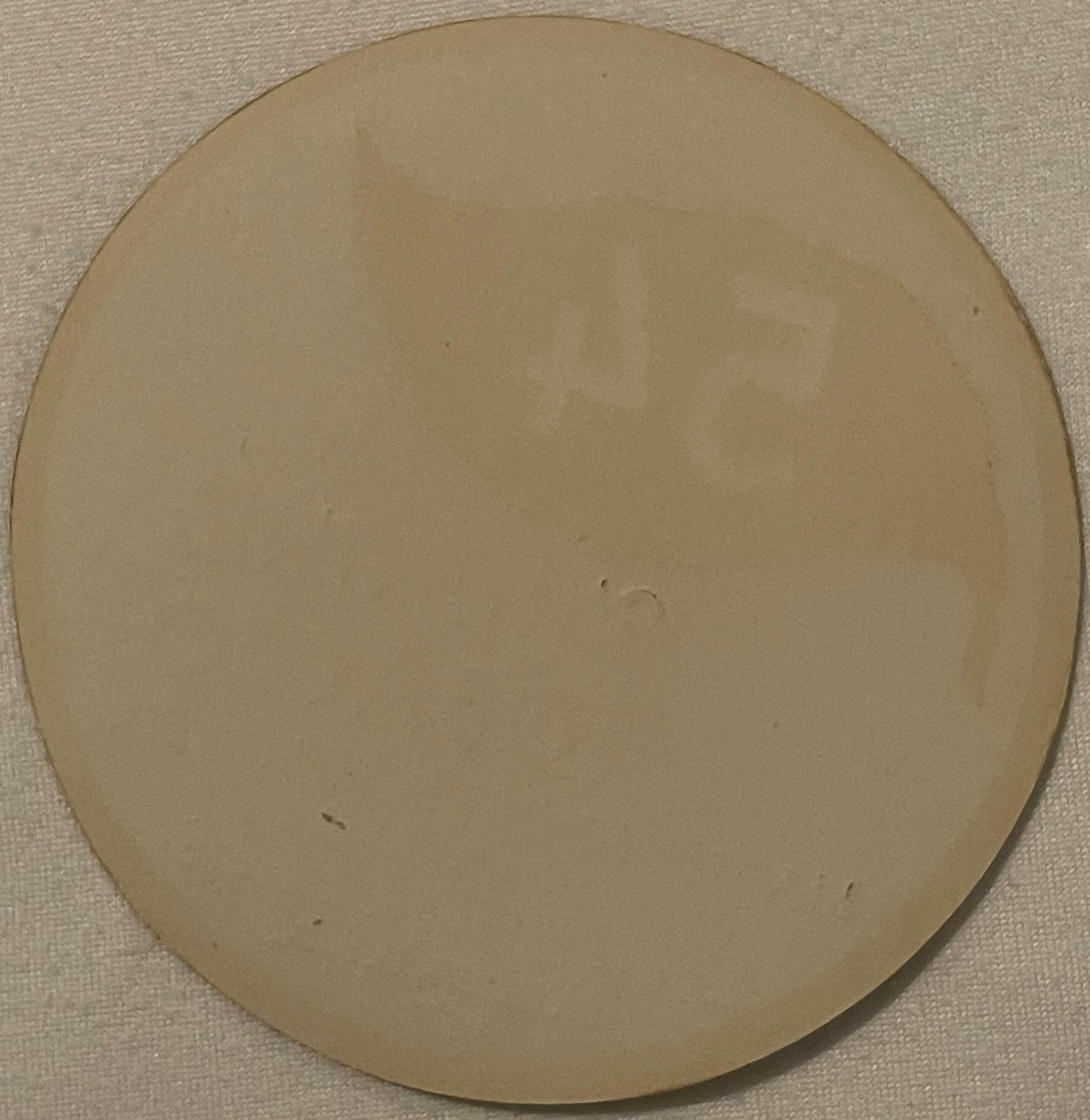
Antique 54 Smoking Tobacco Label 🍂 John Weisert Tobacco Co. St. Louis, Missouri – 1910s–1930s Collectible

Antique 54 Smoking Tobacco Label 🍂 John Weisert Tobacco Co. St. Louis, Missouri – 1910s–1930s Collectible

Regular price 5.50 USD
Regular price Sale price 5.50 USD
Sale Sold out
Shipping calculated at checkout.
Quantity

What If the Art on Your Wall Was Made by a Ghost? 🍂

There is a particular kind of silence that settles over you when you hold something genuinely old — not old the way a decade-old phone feels old, but old the way a great-great-grandmother's handwriting feels old. You sense the hands. You sense the room. You sense a whole world that no longer exists, preserved somehow in paper and ink and pigment. That is exactly what you are holding when you hold this Vintage 54 Smoking Tobacco Label from the John Weisert Tobacco Company of St. Louis, Missouri. It is not a reproduction. It is not a licensed reprint. It is a surviving fragment of an American industry, an American city, and an American artistic tradition that, taken together, will never happen again in quite this way. And that is precisely why it belongs on your wall.

I have been collecting antique advertising ephemera for a long time, and I will tell you plainly: tobacco labels from the golden era of American manufacturing are among the most underappreciated pieces of graphic art that survive from the early twentieth century. The chromolithography, the hand-lettering, the compositional confidence — these were not accidents. They were the work of skilled commercial artists laboring under deadlines, under pressure, and often under near-poverty wages, producing imagery so enduring that we are still looking at it a hundred years later and calling it beautiful. That matters. That is worth preserving.


🏷️ What This Piece Is — Brand, Maker, Era, and Format

This is an antique Vintage 54 Smoking Tobacco Label produced by the John Weisert Tobacco Company, headquartered in St. Louis, Missouri. Dating to the 1910s through 1930s, this label measures approximately 3¼ inches — a compact, tightly composed format that was standard for the cut-plug and smoking tobacco packaging of the era. Labels of this type were printed in quantity for commercial application to tobacco tins and pouches, meant to be seen on shop countertops and behind general-store glass cases across the Midwest and beyond.

What makes this particular example remarkable from a collector's standpoint is its New Old Stock (NOS) status — meaning it was never used in commercial application, never pasted to a tin, never subjected to the glue and humidity and handling that destroyed the vast majority of labels produced in this period. It survived in the condition in which it left the printer, which is an extraordinary thing to say about a piece of paper from the nineteen-teens or twenties. The colors, the linework, the surface integrity — all of it reflects the original production, not a century of use and decay. For collectors of antique advertising and tobacco memorabilia, NOS status is not a minor detail. It is the detail.

The printing technology of the era typically involved lithographic and chromolithographic processes — labor-intensive, multi-plate color printing that required skilled pressmen and significant capital investment. Each color in a design required a separate pass through the press, and registration had to be precise. The result, when done well, was a richness and depth of color that modern offset printing rarely matches for warmth. Hold one of these labels at an angle to the light and you will often see the slight relief of the ink, the texture of the impression. It is printing as craft, not printing as commodity.


🏭 The John Weisert Tobacco Company — A St. Louis Institution, 133 Years in the Making

To understand what this label represents, you have to understand what the John Weisert Tobacco Company was — and what St. Louis was — during the years this label was produced. Because this is not a label from a minor regional operation. This is a label from one of the most significant tobacco manufacturing enterprises in American history, located in a city that, for a remarkable stretch of the early twentieth century, was producing nearly forty percent of the total national tobacco supply. Not forty percent of the Midwest's supply. Forty percent of the entire country's. St. Louis was, by any honest accounting, the tobacco capital of the United States during this period, and John Weisert was a defining name within that industry.

The company carried an extraordinary portfolio — at its peak, over one hundred individual brands bore the Weisert name or operated under its manufacturing umbrella. Building that kind of brand diversity required not only production capacity but creative capacity: label designers, copywriters, pressmen, tinsmiths, and salesmen, all working in concert to put tobacco into the hands of American consumers from the general store to the hotel lobby. Vintage 54 was one thread in a very large tapestry, but every thread had its own identity, its own visual language, its own customer.

The John Weisert Tobacco Company Building still stands in St. Louis and has been recognized as a historic landmark. Visitors to the city can still see the company's name painted on the antique brick — that faded ghost-sign tradition that urban history enthusiasts and photographers now travel specifically to document. There is something quietly powerful about a name painted on brick outlasting the business itself by decades. The paint stays. The company closes. The city remembers.

And close it did — but not quietly, and not quickly. The company endured for 133 years before finally shuttering in 1989. By that point, the workforce had dwindled to a single employee: the grandson of the company's founder, carrying on a family legacy in a building that had once employed scores of craftspeople.

The story of its final chapter is bound up with one of the most poignant details in American manufacturing history: the company was forced to cease cigar production when Louis Applestein, the last hand-roller of cigars in all of St. Louis, passed away at the age of eighty-three. When Applestein's hands went still, a craft tradition that had required years to master and decades to perfect simply ceased to exist in that city.

There was no one to replace him. There was no school that still taught it. The knowledge left with the man. Weisert carried on in diminished form, but the heart of the operation — the hand-rolled cigar, the living connection to old-world tobacco craft — was gone. When the founder's grandson finally closed the doors in 1989, it was not merely the end of a family business.

It was St. Louis's final exit from tobacco manufacturing altogether. A chapter that had defined the city's economy and identity for well over a century simply ended.

For those who want to go deeper into the documented history, the Missouri State Historic Preservation Office maintains a detailed National Register nomination at the Missouri DNR — a thorough resource that speaks to the architectural and industrial significance of the Weisert operation.


🌆 St. Louis and the Tobacco Belt — A Geography of Industry

It is worth lingering on what St. Louis represented in the tobacco world, because the city's role tends to be overshadowed in popular history by Kentucky's bourbon country or Virginia's plantation legacy. But St. Louis was something different — it was a processing and manufacturing center, not a growing region. The leaf came in from across the South and Border States via the Mississippi River and the great rail networks that converged on the city, and it was transformed in St. Louis warehouses and factories into the finished products that stocked American shelves. The city was a hub in the truest sense: a place where raw material and skilled labor and commercial distribution all met.

That position made St. Louis home to dozens of tobacco concerns, but Weisert stood among the largest and most enduring. The company's longevity — from its founding through the post-Civil War boom years, through the progressive era, through Prohibition, through the Depression years that this very label may have been produced in, through the mid-century transformation of American consumer habits, and all the way to 1989 — is remarkable by any industrial standard. Most family businesses do not survive a single generation, let alone the social and economic upheaval of the twentieth century. Weisert survived all of it, until it simply could not.

Local legend has it that the Weisert building was something of a neighborhood institution in its surrounding St. Louis blocks — that the scent of tobacco processing was so embedded in the air of the district that longtime residents used it as a kind of atmospheric compass, orienting themselves by smell the way sailors orient by wind. Whether or not that lore holds literal truth, it speaks to how deeply the company was woven into the texture of everyday St. Louis life. Lore passed down among collectors holds that Weisert labels from the Depression-era years are among the most visually inventive the company ever produced — the theory being that with budgets tightened, the company leaned harder on graphic identity to distinguish its many brands from one another and from competitors, making the label itself do the selling that salesmanship alone could no longer accomplish.


🎨 The Artists Behind the Label — Beautiful Work, Invisible Names

This is the part of the story that I find most affecting, and I want to make sure it is said clearly and preserved here. The artists who created labels like this one were, by all accounts, genuinely skilled. The compositional knowledge required to design for a small, tightly formatted label — where every element must read at a distance, every color must register through multiple press passes, and the whole must feel complete and inviting in a fraction of a second — is not trivial. These were not apprentice assignments. They required professional training and real talent.

And yet the commercial artists of this era, particularly those working for printing houses and tobacco companies, were paid very little and received no formal recognition for their contributions. The brands became famous. The products became famous. The artists remained anonymous. Their signatures do not appear on these labels. Their names were not published in trade papers. Their work was considered functional, not artistic — a distinction that history has not been kind enough to correct. The vast majority of the people who designed the American tobacco label canon of the early twentieth century will, in all likelihood, remain forever unknown.

What we can do — what collectors do, what I believe deeply in doing — is keep their art alive. When a label like this one is preserved, displayed, and valued, it is a small act of justice. It says: this work mattered. This eye and this hand and this training produced something that outlasted the product it was designed to sell, outlasted the company, outlasted the city's entire relationship with an industry. That is not nothing. That is, in fact, everything.


🖼️ Display Ideas — Making This Piece Part of Your Space

  • 🪵 Framed in a shallow shadow box with kraft paper backing — the warm neutral tones of natural paper complement the earthy tobacco-era palette and let the label breathe without overwhelming it.
  • 🏠 Grouped with other antique American advertising labels in a salon-style wall arrangement — tobacco, seed, whiskey, patent medicine — for a curated general-store aesthetic that works in dens, offices, and dining rooms.
  • 🍺 Anchoring a bar cart or home bar vignette alongside vintage tins, antique glassware, and period barware — this label reads as quintessentially mid-American and masculine in the best, most nostalgic sense.
  • 📚 Displayed in a collector's flat file or archival sleeve for those who prefer the preservation-first approach — proper Mylar or archival polyester sleeves allow the label to be displayed face-forward in a drawer or standing in a frame without adhesive contact.
  • 🏛️ As part of a Missouri or St. Louis local history display — paired with maps, postcards, or other St. Louis ephemera from the same era for a geographically coherent tribute to a city at its industrial peak.
  • 🎁 Presented as a thoughtfully framed gift for the history lover, the Missouri native, the antique advertising collector, or anyone who appreciates the intersection of American commerce and folk art — framed and ready to hang, it arrives as a complete, considered gift rather than a mere object.

🎁 Who Collects These — and Why They Keep Coming Back

Antique tobacco labels occupy a fascinating middle ground in the collector world. They are pursued by advertising ephemera collectors who focus on the graphic design traditions of American commerce. They are sought by tobacco memorabilia specialists who are assembling brand-specific collections — Weisert's one hundred-plus brands mean there is always another label to find. They attract St. Louis and Missouri regional history enthusiasts who want tangible artifacts from the city's industrial golden age. They appeal to antique paper and chromolithography collectors who value the printing process itself as much as the subject matter.

And then there is a broader, growing audience: the home decorator and interior history enthusiast who has discovered that genuine antique advertising ephemera creates a depth of atmosphere that reproduction art simply cannot replicate. When guests ask about a framed piece and you can tell them it is an actual label from an actual company that operated for 133 years in a city that once produced forty percent of the country's tobacco — that conversation is part of the value. The story is part of the object.

NOS labels in particular are pursued by collectors who understand condition. A label that was never applied, never glued, never handled in production retains not only its visual integrity but its structural integrity — the paper has not been stressed by adhesive or humidity cycles, the surface has not been abraded by removal. For a collector building a serious reference collection or a display-quality acquisition, NOS status is the standard worth seeking.


❓ Frequently Asked Questions

Is this label genuinely from the 1910s–1930s, or is it a later reproduction?

This is a genuine antique label from the John Weisert Tobacco Company of St. Louis, Missouri, produced during the 1910s through 1930s timeframe. It is not a reproduction, reprint, or licensed facsimile. The paper stock, printing method, and visual language are consistent with chromolithographic commercial printing of the early twentieth century. Its NOS status means it was never applied to a tin or pouch — it survived in unissued condition, which is itself an authentication marker, since reproduction labels would have no legitimate reason to exist in unused commercial inventory form.

What does NOS mean, and why does it matter for a paper label?

NOS stands for New Old Stock — meaning this label was produced for commercial use but was never actually used. It was never adhered to a tobacco tin, never subjected to the glue, moisture, heat, and mechanical handling of production-line application. For paper ephemera, this is enormously significant. Applied labels typically survive only in fragmentary or damaged form — torn at edges during removal, stained by adhesive bleed-through, faded by light exposure on store shelves, or otherwise compromised by a century of contact with the world. A NOS label has experienced none of that. What you see is what left the printer.

How should I store or display this label to protect it?

For display, framing behind UV-filtering glass or acrylic is the standard approach for antique paper — it protects against light-induced fading while allowing full visibility of the piece. A shallow shadow box with an archival mat creates appropriate depth without pressure on the surface. For storage without display, archival-quality polyester (Mylar) or polypropylene sleeves are the collector standard — acid-free, inert, and sized for ephemera. Avoid storing in areas of temperature fluctuation or high humidity, and keep away from direct sunlight even when framed with UV glass. Treated with reasonable care, a piece that has already survived a century is well-equipped to survive another.

What is the significance of the Weisert company specifically — is this a notable brand?

John Weisert Tobacco Company is genuinely historically significant, not merely locally notable. Operating for 133 years, maintaining over 100 active brands, and functioning within a city that produced nearly 40% of the nation's tobacco supply places Weisert firmly in the upper tier of American tobacco manufacturing history. The company's building is a recognized historic landmark in St. Louis, and its story — including the poignant ending tied to the passing of Louis Applestein, the last hand-rolling cigar craftsman in the city — has been documented by the Missouri State Historic Preservation Office. A label bearing the Weisert name is not generic tobacco ephemera. It is a specific artifact from a specific, documented, historically consequential operation.

Is the 3¼-inch size standard for tobacco labels of this era?

Yes — the approximately 3¼-inch format is consistent with the standard sizing used for smoking tobacco and cut-plug packaging labels of the 1910s through 1930s. These labels were designed to fit the faces and lids of standardized tins and the paper pouches used for loose smoking tobacco, which were themselves produced to fairly consistent industry dimensions. Within that compact format, label designers worked with considerable skill — every square inch had to carry visual weight and brand identity that would read legibly behind glass or across a shop counter. The size constraint, if anything, is part of what makes the design tradition impressive.

Can I find out more about who the artist was, or what printing company produced this label?

This is one of the genuinely affecting aspects of tobacco label collecting: in the vast majority of cases, the artists who designed these labels remain unidentified. Commercial printing houses of the era did not typically attribute design work to individual artists, and the craftspeople themselves — often working on piece rates, often working within tight constraints set by the client company — left no public record attached to specific labels. Printing firms sometimes appear in very small type on label backs or margins, which can provide a production lead, but the designers themselves are almost universally lost to the record. Part of collecting and preserving these labels is acknowledging that we are the only audience their work will ever find.

Would this make a good gift for someone interested in St. Louis history or Midwest Americana?

It makes an exceptional gift precisely because it operates on multiple levels simultaneously. For someone with a St. Louis connection — a native, a current resident, a family historian, or simply an admirer of the city's industrial heritage — it is a tangible artifact from the era when St. Louis was arguably the most important tobacco manufacturing city in the country. For a broader Americana or advertising art enthusiast, it represents the chromolithographic golden age of American commercial design. For an antique collector, it is a genuine NOS piece with documented provenance from a historically significant company. Framed simply and accompanied by a brief note of its history, it becomes not just a gift but a story — which is, in the end, what the best gifts always are.

Shipping

🚚 Shipping & Handling

  • Shipping costs and timing are calculated at checkout.
  • Items curated and shipped directly by me include U.S. shipping at no additional cost, professionally packed to ensure safe arrival of your artifact.

Items from Vetted Pro Collectors
Shipping for items offered by vetted Pro Collectors is determined at checkout. All Pro Collector listings are reviewed to ensure fair, reasonable shipping practices.

For full details, please refer to our Shipping Policy.

Returns & Exchange

Take your time — you've got a full six months. If a piece isn't right for you, send it back the way it reached you and we're good.

In the first 30 days your money goes straight back the way you paid. After that it's store credit, so you can put it toward something you'd rather have.

Return shipping we sort out between us, case by case. I don't make this difficult.

If something arrives damaged, or it isn't what I said it was, send me a photo within 48 hours and I'll make it right.

Email info@vintageantiquesgifts.com or call 802-356-9872 — that's me answering, not a call center.

The only things I can't take back are custom or special-order pieces and gift cards.

View full details
  • 5 stars: 3 (100%)
  • 4 stars: 0 (0%)
  • 3 stars: 0 (0%)
  • 2 stars: 0 (0%)
  • 1 star: 0 (0%)
t
toprev-0
\

Delivered as described! Very thorough and great attitude.

Thank you so much for your kind words. Happy Holidays to you and your family! We can't wait to work with you again.

t
toprev-0

Delivered as described! Very thorough and great attitude.

Thank you so much for your kind words. Happy Holidays to you and your family! We can't wait to work with you again.

d
delvento

A +

Thank You!