Skip to product information
1 of 4

Vintage and Antique Gifts

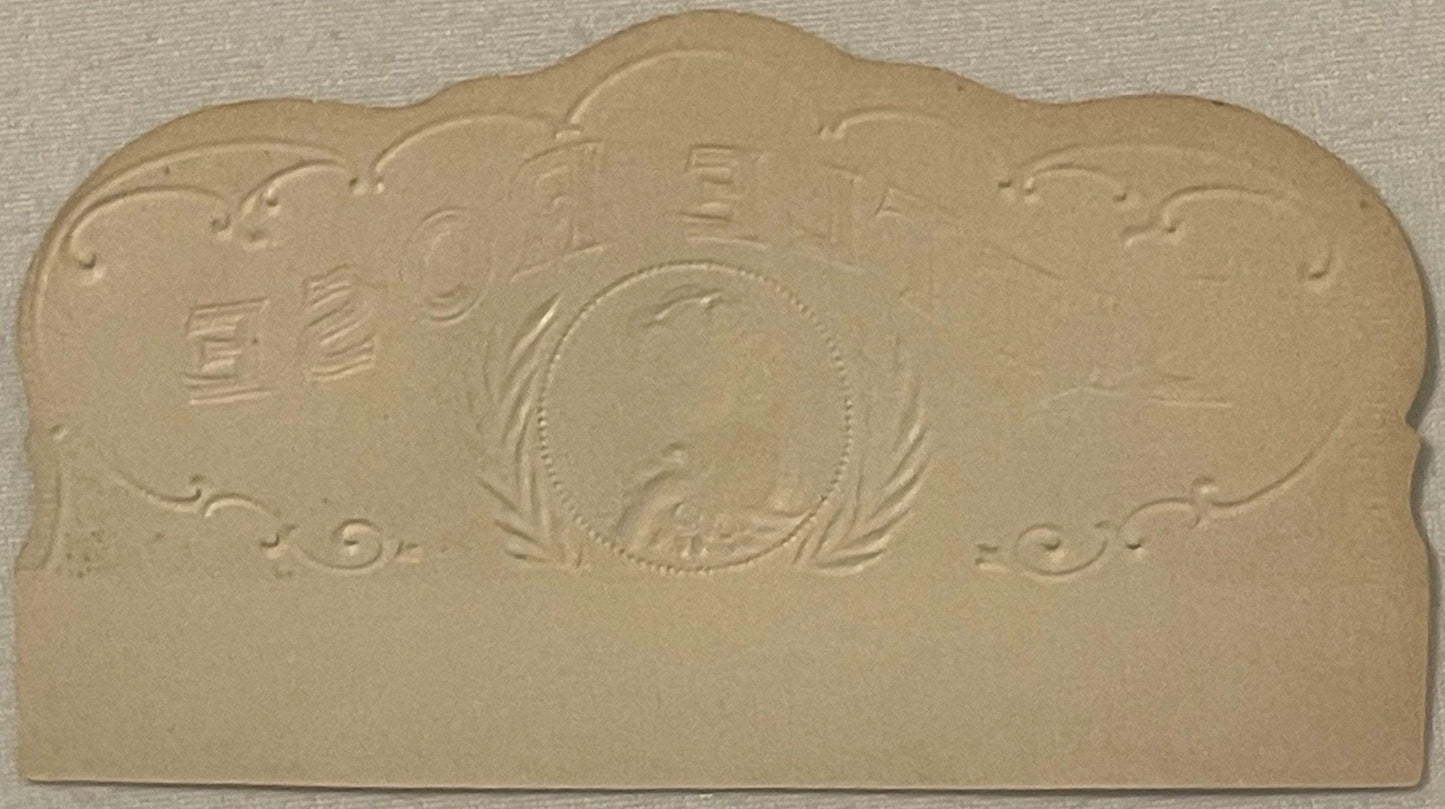
Antique 1900s Little Rose Cigar Box Label 🌹 Gold Embossed Chromolithograph NOS Art — A. Rau, St. Louis

Antique 1900s Little Rose Cigar Box Label 🌹 Gold Embossed Chromolithograph NOS Art — A. Rau, St. Louis

Regular price 6.00 USD
Regular price Sale price 6.00 USD
Sale Sold out
Shipping calculated at checkout.
Quantity
# What Happens When You Tilt a 120-Year-Old Label Toward the Light? 🌹 There is a moment every serious collector knows. You are holding something small — something that by all practical measure should be unremarkable, a scrap of printed paper no bigger than a playing card — and you shift it, just slightly, toward the nearest window. And the gold comes alive. Not the flat, printed simulation of gold you see everywhere today, but *actual* raised embossed gilt, tooled and pressed into the paper itself, catching the light at every micro-angle the way a faceted stone catches it. Your breath catches a little. You understand, in that instant, why people have been chasing these things for decades. This antique *Little Rose* cigar box label is exactly that kind of object. It was made in St. Louis, Missouri, in the early 1900s for a tobacconist named A. Rau — produced at the absolute peak of American chromolithographic label craft, when the men running the presses still understood that a cigar box was a *promise*, and the label on its face was the first and most important word of that promise. It has sat, unissued and unfaded, as New Old Stock through more than a century of American history. It arrives to you in the same vivid, gilt-edged condition it left the lithographer's workshop. That is not a casual claim. That is what New Old Stock means, and it is increasingly rare to say it honestly about anything from this era. At 4 × 2.5 inches, the label is die-cut into a shaped silhouette — a scalloped crown form, rising and falling in a series of arched lobes along its top edge — giving the piece a sculptural presence before you have even registered the printing. The border is rich, warm gilt against that shaped perimeter. The subject is the rose: rendered in the lush, almost theatrical botanical style that chromolithography enabled and that no photographic or digital process has ever quite replicated. This is stone-crayon printing, applied color by color, stone by stone, in a process that disappeared from American commercial printing by the mid-1920s. You are holding the end product of that vanished craft, intact, vivid, and entirely original. --- ## 🌹 The Art of the Cigar Box Label — An American Craft That Peaked and Disappeared To understand what this label *is*, you have to understand what the cigar box label industry *was* — because it was one of the most remarkable, most fiercely competitive, and most artistically accomplished chapters in the entire history of American commercial printing, and almost nobody outside the collector world remembers it. The golden age of the American cigar box label ran roughly from the 1870s through the early 1920s. During those five decades, hundreds of American tobacco brands competed not just on the quality of their leaf but on the splendor of their packaging. A cigar was a luxury purchase — a daily ritual for millions of men across every class of American life — and the box it came in was a display object. It sat on the counter at the tobacconist. It sat on the desk at the office. It sat on the parlor table. The label had to earn its place in that visible, social world. The result was an arms race of ornament. Lithographers — working primarily out of New York, Philadelphia, Chicago, and the great printing houses of the Midwest — competed to produce labels of ever-increasing complexity and visual richness. The technique was chromolithography: a process in which each color was drawn separately onto a limestone slab with greasy crayons or tusche, then inked and pressed onto paper in careful, precisely registered sequence. A complex label might require a dozen or more separate stone passes. Then came the embossing — a separate mechanical process in which the dried, printed sheet was pressed between engraved dies to raise the border, the lettering, or the decorative elements into physical relief. And then, for the finest labels, came the gilt application: real metallic powder or foil, applied to the raised embossed areas, catching light in three dimensions. This was skilled, time-intensive, expensive craft. It was also astonishingly beautiful. And it ended. Offset lithography, photoengraving, and the mechanization of the printing trade made stone-drawn chromolithography economically nonviable by the 1920s. The presses were broken up or mothballed. The stones were polished down and reused or discarded. The craftsmen retired and were not replaced. What remained were the labels themselves — and the New Old Stock that survived in warehouse drawers, printer's sample books, and the back rooms of old tobacco distributors, waiting for collectors to find them. **Lore passed down among label collectors holds** that the finest surviving NOS stocks were discovered not in printing houses but in the back offices of regional tobacco wholesalers — men who had ordered labels in bulk quantities that their accounts never fully drew down, then simply never threw them away. Whether this one came from such a cache, or from a printer's own sample drawer, its condition speaks for itself. --- ## 🏙️ St. Louis, Missouri — A Tobacco Town With a Lithographer's Soul St. Louis in 1900 was one of the great industrial and commercial cities of the American interior — the fourth-largest city in the country by the 1900 census, a hub of river trade, rail freight, and manufacturing that positioned itself as the gateway between the established East and the expanding West. The 1904 World's Fair, the Louisiana Purchase Exposition, would cement St. Louis's sense of its own importance to the world stage. But the city's commercial ambitions ran much deeper than a single exhibition. The tobacco trade was woven deeply into St. Louis's commercial fabric. The city's position on the Mississippi River made it a natural distribution point for leaf tobacco moving up from the Kentucky and Tennessee growing regions. Wholesale tobacconists, cigar manufacturers, and distributors operated throughout the city's dense commercial core — many of them clustered in the neighborhoods around the riverfront and the central business district that would have been, in 1900, humming with exactly the kind of trade activity that generated demand for fine box labels. A. Rau was one of those St. Louis tobacco merchants — a name that appears on labels of this era as a mark of local commercial identity, a proprietor whose brand was distinctive enough to warrant a named, custom-designed label with a subject as carefully chosen as the Little Rose. The rose as a cigar brand was not an accidental choice. In the tobacco trade of this era, floral imagery — particularly the rose — carried specific connotations of quality, refinement, and the kind of mild, smooth smoke that was being marketed to a broadening consumer base. The name *Little Rose* is itself a studied piece of commercial positioning: intimate, feminine in its gentleness, suggesting a cigar not brutish but cultivated. **Local legend has it** that several St. Louis tobacco merchants of this era commissioned their labels from Chicago and Cincinnati printing houses rather than local lithographers, preferring the larger shops' capacity for the most elaborate embossed and gilt work — and that the labels often arrived by rail freight in flat, tissue-interleaved printer's reams, warehoused until needed. Whether A. Rau's Little Rose labels came down from a Chicago shop or from a St. Louis lithographer operating in the city's own printing trade, the quality of the embossing and the chromolithographic registration speaks to a printer working at the top of their game. The St. Louis of 1900 was also a city that took its visual culture seriously. The great department stores, the exposition grounds, the advertising hoarding along the trolley lines — all of it reflected a commercial culture that understood beauty as persuasion. A label like this one was not merely functional. It was a piece of that visual culture, scaled down to hand-size, made to be looked at and admired at close range. --- ## 🖨️ Why Collectors Prize Chromolithography — and What NOS Actually Means Collectors who come to chromolithographic labels from a fine art background sometimes have to recalibrate their instincts. This is not naive folk art, and it is not mass-produced ephemera in the dismissive sense. The best American cigar box labels from this period represent the application of highly skilled commercial artistry — figure drawing, botanical illustration, architectural ornament, portrait miniature technique — to a functional object. The artists who drew the original designs, and the craftsmen who translated those designs stone by stone onto the lithographic press, were trained, professional, and operating within a visual vocabulary that drew on European academic painting, Art Nouveau decorative arts, and American vernacular ornament simultaneously. The embossing is the element that consistently stops new collectors in their tracks. When you run your fingertip across this label, you can feel the border. The gilt catches the light differently at every angle because it is physically raised above the surface plane of the paper. This is not a visual trick or a printing illusion — it is a physical fact of the manufacturing process, and it is one of the things that makes original period labels from this era impossible to reproduce convincingly. Modern embossing can approximate the effect, but it cannot replicate the specific depth and profile of dies cut by hand in the early 1900s. New Old Stock is the other critical term here, and it is worth being precise about what it means and why it matters. NOS, in the context of antique paper ephemera, refers to stock that was produced but never used — never applied to a box, never exposed to the adhesives, handling, moisture, and wear of retail life. It has spent its existence in storage, protected from the elements that destroy paper over time. The result, when the storage conditions were reasonably good, is a piece that presents today in condition close to what it looked like when it came off the press. The colors have not faded under fluorescent retail lighting. The gilt has not been abraded by handling. The embossed relief has not been flattened by stacking. What you see is what the printer made, more than a century ago. For a piece this age, that is genuinely extraordinary. --- ## 🖼️ Display Ideas - 🪞 **Frame it as a standalone miniature.** A small, deep-profile shadow box frame — 5×7 or 4×6 — with an archival mat that echoes the gilt border color lets this label read as the piece of graphic art it is, without diminishing its intimacy. - 📚 **Incorporate it into a vintage tobacco or Americana vignette.** Pair it with a period tobacco tin, an old pipe, or a vintage matchbox holder on a small tray or collector's shelf for a layered, narrative display. - 🌹 **Group it with other floral-themed antique ephemera.** Seed catalog covers, Victorian trade cards with botanical subjects, and other rose-themed advertising art from the same era make a cohesive, visually rich wall grouping. - 🗺️ **Display it as part of a St. Louis or Missouri Americana collection.** Collectors focusing on regional commercial history will find this pairs beautifully with period maps, postcards, and advertising items from the same city and era. - 🎨 **Use it as an artist's reference and inspiration piece.** Illustrators, graphic designers, and lettering artists working in period styles keep pieces like this as tangible reference for color, embossing technique, and the proportional relationships of gilded ornamental borders. - 🏡 **Place it under a glass cloche or display dome.** The die-cut silhouette reads beautifully in three dimensions when the label is displayed slightly elevated — the shaped crown profile is itself a sculptural element that rewards display from multiple angles. --- ## 🎁 Who Collects These The world of antique cigar box label collecting is broader, more serious, and more knowledgeable than most outsiders expect. At one end of the spectrum are the dedicated ephemera specialists — collectors who have built comprehensive archives of American tobacco advertising art, organized by brand, by printer, by era, and by subject. For these collectors, a piece like the Little Rose represents a specific data point in a mapped and documented field, and NOS condition is the qualification that moves a label from "interesting" to "essential." Antique paper and chromolithography collectors — people who come to this world through trade cards, seed catalog art, Victorian advertising, or early poster collecting — find that cigar box labels offer an unusually high density of craftsmanship in a very small format. The embossing, the gilt work, the multi-stone color printing: all of it is present and accessible in a piece you can hold in your hand. Graphic designers and illustrators working in heritage, vintage, and Americana styles prize original chromolithographic labels as irreplaceable source material. The color relationships, the border treatments, the lettering forms — all of it predates the homogenization of commercial printing and carries a visual specificity that contemporary design is actively trying to recapture. St. Louis and Missouri history collectors — people building archives of their city's and state's commercial past — find pieces like this meaningful as primary documents of local business culture. A. Rau was a real St. Louis merchant, and this label is a surviving artifact of that commercial identity. Gift-givers searching for something genuinely original for the person who has strong aesthetic instincts, a love of Americana, or a connection to Missouri history will find this is the kind of gift that surprises and delights in a way that mass-market antique reproductions simply cannot. It is old. It is real. It is beautiful. And there is only one. --- ## ❓ Frequently Asked Questions ### How old is this label, exactly, and how do we know? The label dates to the early 1900s — most likely the first decade of the twentieth century, with the range extending plausibly from the late 1890s through approximately 1915. The dating is established by several converging factors: the chromolithographic printing technique (stone-drawn, multi-color, with hand embossing and gilt application), which was the standard process for premium cigar box labels during this specific window; the die-cut shaped silhouette style, which was characteristic of the high-production period before World War One; and the graphic style of the rose subject and border treatment, which reflects the late Victorian and early Edwardian decorative vocabulary. By the mid-1920s, offset printing had displaced stone lithography from this market segment, and the distinctive look of these labels — including the specific quality of their embossing and gilding — was no longer being produced. ### What does NOS mean, and does this label really qualify? New Old Stock means the item was manufactured but never put into use — in this case, never applied to a cigar box. It has existed in storage since it was printed, rather than passing through the retail distribution chain. This label qualifies genuinely: the colors are vivid, the gilt is bright and physically intact, the embossing retains its full relief, and the paper has the clean, uncompromised surface of a piece that has been stored rather than used. After more than a century, that condition is something to take seriously. ### Is the gold on the border real gilt, and will it stay that way? The gold is applied metallic material — either fine bronze powder or metallic foil — laid onto the embossed border areas as part of the printing and finishing process. It is real in the sense that it is a physical metallic layer, not a yellow ink simulating gold, and it catches and reflects light accordingly. Over more than a century of NOS storage, it has retained its brightness, which is the best evidence of its stability. To preserve it going forward, the same rules that apply to all antique paper apply here: avoid prolonged exposure to direct sunlight or strong UV sources, control humidity (extremes in either direction are harder on paper than moderate stable humidity), and handle by the edges rather than the decorated face. Framing behind UV-filtering glazing, if you display it, will protect it for another century. ### What size is this, and will it fit standard frames? The label measures 4 × 2.5 inches at its widest points — but because it is die-cut into a shaped silhouette, the actual outline is not a simple rectangle. The scalloped crown profile along the top edge gives it its distinctive sculptural character but also means it will not fill a rectangular frame edge-to-edge. This is generally an asset for display: the shaped outline reads beautifully when matted in a small standard frame (4×6 or 5×7 are natural choices), with the mat providing visual breathing room around the die-cut perimeter. Many collectors display labels like this unmounted in small tabletop frames or under glass, allowing the shaped outline to remain visible as part of the piece's identity. ### Is this a good investment piece, or purely a decorative one? The honest answer is: it is both, and the two are not in tension. Antique NOS chromolithographic labels from named, documented American tobacco brands have maintained and grown collector interest for decades, precisely because the supply is finite and continues to shrink as pieces are purchased, framed, and absorbed into collections. A label in this condition — NOS, embossed, gilt, with a clear brand attribution to a named St. Louis merchant — occupies the upper tier of what the market for this category produces. Whether you are buying it to display, to give, to study, or to hold as part of a collection, you are acquiring something that cannot be made again and is not becoming more common. ### How should I store this if I am not displaying it right away? Flat storage in a clean, acid-free sleeve or envelope, placed horizontally in a stable, low-humidity environment away from direct light, is the appropriate method. Avoid plastic sleeves that off-gas plasticizers over time — archival polyester or acid-free paper envelopes are the preferred options among serious ephemera collectors. Do not roll, fold, or store under weight in a way that would compress the embossing. The raised relief is part of what makes this piece what it is, and it is worth protecting. If you are stacking with other paper items, interleave with clean acid-free tissue rather than allowing surfaces to contact each other directly. ### Can you tell me more about A. Rau as a tobacco merchant? A. Rau was a St. Louis, Missouri tobacco figure operating in the early 1900s — one of the many regional tobacco merchants and cigar manufacturers who operated throughout the Midwest during the golden age of the American cigar trade. St. Louis's position as a major Mississippi River trade hub and rail distribution center made it a natural location for tobacco wholesaling and cigar manufacturing, with proximity to leaf-growing regions to the south and east and a substantial local consumer market. The *Little Rose* brand name reflects the careful commercial positioning that characterized this era's cigar marketing — a name chosen to suggest refinement and mild quality, appealing to the broadened cigar-buying public of the early twentieth century. Detailed business records for smaller regional tobacco merchants of this era are not always fully preserved in public archives, which makes surviving branded artifacts like this label among the best primary evidence of their commercial existence.

Shipping

🚚 Shipping & Handling

  • Shipping costs and timing are calculated at checkout.
  • Items curated and shipped directly by me include U.S. shipping at no additional cost, professionally packed to ensure safe arrival of your artifact.

Items from Vetted Pro Collectors
Shipping for items offered by vetted Pro Collectors is determined at checkout. All Pro Collector listings are reviewed to ensure fair, reasonable shipping practices.

For full details, please refer to our Shipping Policy.

Returns & Exchange

Take your time — you've got a full six months. If a piece isn't right for you, send it back the way it reached you and we're good.

In the first 30 days your money goes straight back the way you paid. After that it's store credit, so you can put it toward something you'd rather have.

Return shipping we sort out between us, case by case. I don't make this difficult.

If something arrives damaged, or it isn't what I said it was, send me a photo within 48 hours and I'll make it right.

Email info@vintageantiquesgifts.com or call 802-356-9872 — that's me answering, not a call center.

The only things I can't take back are custom or special-order pieces and gift cards.

View full details