Skip to product information
1 of 3

Vintage and Antique Gifts

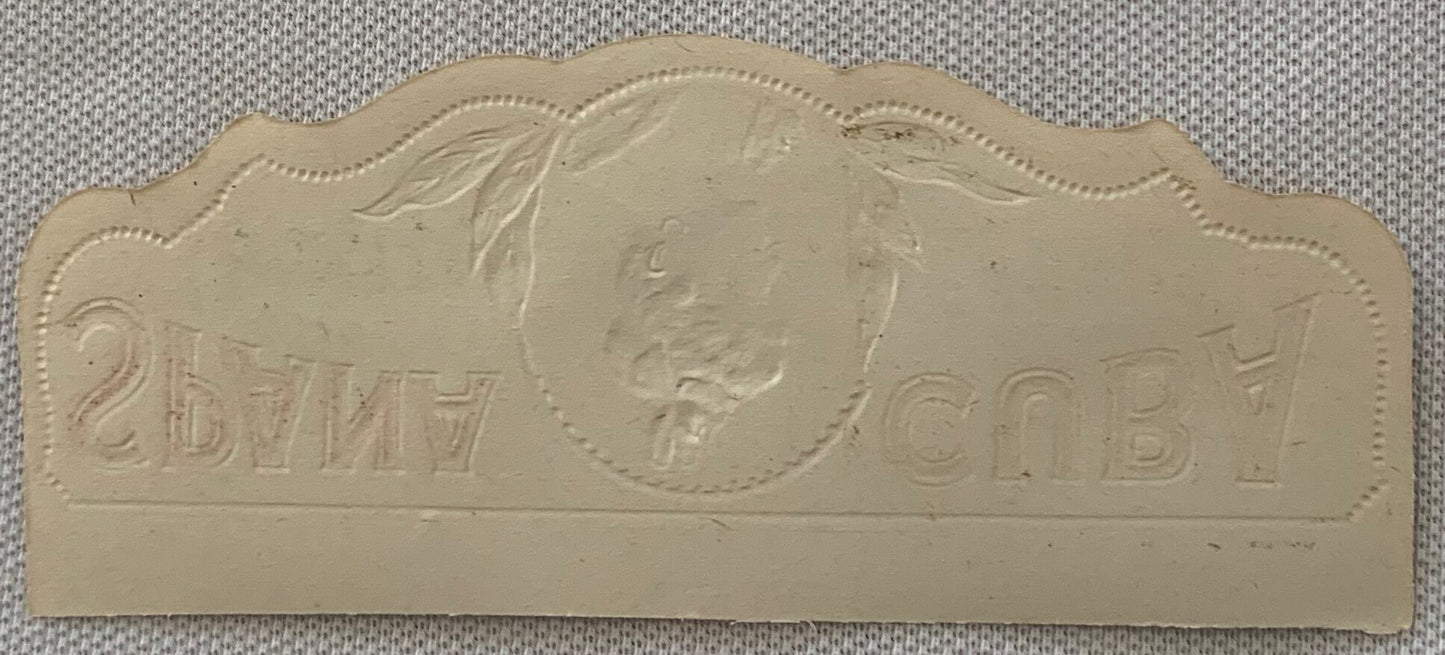
Antique Spana Cuba Quality Cigars Embossed Label Early 1900s NOS Cigar Box Lithograph Tobacco Ephemera Cigar Label 🚬

Antique Spana Cuba Quality Cigars Embossed Label Early 1900s NOS Cigar Box Lithograph Tobacco Ephemera Cigar Label 🚬

Regular price 6.00 USD
Regular price Sale price 6.00 USD
Sale Sold out
Shipping calculated at checkout.
Quantity

Can a Piece of Paper Be a Time Machine? 🎩 The Spana Cuba Label and the Lost Art of Selling a Dream in Two Inches

There is a particular kind of object that stops you cold the moment you hold it — not because it is large or loud, but because it is so precisely, so completely itself. The antique Spana Cuba Quality Cigars embossed chromolithograph cigar box label is exactly that kind of object. It is smaller than your palm. It weighs almost nothing. And yet it carries the full atmospheric weight of a world that no longer exists: the corner tobacconist with his glass humidor, the barbershop with its cedar-lined cabinet, the gentleman pausing to read a label before committing to a box of twenty, half-persuaded already by the name, fully persuaded by the time the lithography was done with him. These labels were not decoration. They were the entire sales force. They were the brand, the promise, the destination, and the story — all pressed into four and a quarter inches of beautiful embossed paper. What you are holding, or what you are about to hold, is one of those labels, untouched, pristine, and very much alive.


🌿 What This Label Is — Brand, Format, Era, and the Remarkable Fact of Its Survival

This is an original antique cigar box label for Spana Cuba Quality Cigars, produced in the early 1900s and classified as New Old Stock — NOS, in collector shorthand. That designation matters enormously. NOS means this label was printed, counted, bundled, and set aside before it ever met a cigar box. It was never pasted. It was never smoked over. It was never exposed to the cedar-and-tobacco oils that gradually migrate into everything stored inside a working cigar factory. What came out of old printer's or manufacturer's stock is what you receive: the label as it left the lithographer's press, remarkably preserved across what is now approaching one hundred and twenty years.

The dimensions are 4¼ × 2 inches — the classic inner lid or side panel format used by American cigar manufacturers in the decades flanking the turn of the twentieth century. At that size, a label had to work hard and work fast. There was no room for timidity. The ground of this label is a warm cream-white, a period printing stock that has taken on the gentle, honeyed patina you only get from genuine age — not distressing, not artificial antiquing, but the slow, honest oxidation of a century of quiet storage. The border and background carry that warmth visibly. Across the full width, the brand name appears in bold red letterpress capitals, the kind of confident, no-apologies typography that American commercial printers of the era understood better than anyone. And then there is the chromolithography itself — layered, precise, quietly spectacular in the way only the genuine early process can be. The embossing gives the whole composition a tactile dimension: run a fingertip across it and you feel the raised surfaces, the deliberate architecture of a design that was meant to be seen and felt.

The name Spana Cuba is a masterwork of turn-of-the-century brand strategy that nobody in 1905 would have called strategy — they would have called it common sense. Press the two words together and they do exactly what the maker needed them to do: they gesture toward Spain, toward Cuba, toward the long tobacco tradition of the Caribbean and the Mediterranean world that American smokers already associated with quality, romance, and a certain cultivated ease. The label doesn't claim to be an imported Cuban cigar. It simply opens a door and lets the imagination walk through. That is a subtler, more durable kind of persuasion, and it is why these labels are still speaking to people a hundred and twenty years after the cigars they once dressed have long since turned to ash.


🏭 The American Cigar Industry at Its Apex — The World These Labels Were Born Into

To understand what this label meant when it was new, you have to understand what the American cigar industry was in the early 1900s. It was, without exaggeration, one of the dominant consumer industries on the continent. By the peak years around 1905 to 1907, American manufacturers were producing somewhere in the neighborhood of seven billion cigars annually — a figure that still lands with a kind of pleasant absurdity when you say it aloud. Seven billion. For a population of roughly eighty million people. The cigar was not a luxury item for the Edwardian American male; it was closer to a daily staple, as ordinary and expected as a hat or a newspaper.

That volume created an extraordinary competitive ecosystem. Thousands of brands competed for the same humidor shelf space, the same barbershop display case, the same five cents in a workingman's pocket. In that environment, the cigar box label was not a minor design consideration — it was the primary differentiator. Before radio advertising, before the billboard age reached into every county, before the national magazine campaign was accessible to a mid-sized cigar maker in a Midwestern or Mid-Atlantic city, the label was the only marketing instrument the brand possessed. It had to carry the entire weight of aspiration, trust, and identity in a rectangle of printed paper. The result was an industry of label-making that represented some of the finest commercial printing work ever produced in this country.

The great American lithography firms — operating out of New York, Cincinnati, Philadelphia, and Chicago, among other cities — employed artists and craftsmen who had trained in the European tradition and understood how to layer colors, build depth through embossing, and create a visual hierarchy that guided the eye through a composition in under two seconds. Cigar label work was considered prestigious within the trade. The technical demands were exacting: tight registration on multiple color passes, embossing dies that had to align precisely with the printed image, and a final product that had to survive handling by salesmen, storage in warehouses, and the humid microclimate of a working cigar factory without losing its crispness. That this label has survived all of that and more — and arrived in the twenty-first century as NOS, never applied — is the kind of survival story that makes paper ephemera collectors genuinely emotional.


🌍 Spain, Cuba, and the Geography of Desire — What "Spana Cuba" Was Really Selling

The choice of a Spanish-Cuban hybrid name for an American cigar brand was not accidental, and it was not unique — but the particular way Spana Cuba executed it has an elegance that repays attention. By the early 1900s, the American consumer's mental map of great tobacco was firmly anchored in two places: Havana, for the finest aged leaf and the tradition of hand-rolling that Cuban craftsmen had built over generations; and the broader Spanish-Caribbean world, for the agricultural and cultural lineage that underpinned all of it. The Spanish-American War of 1898 had made Cuba a household name in ways it had never quite been before, and the romance of the island — the heat, the leaf, the rhythm of the rolling room — was alive in the popular imagination precisely when this label was designed.

A brand that could situate itself within that geography, even obliquely, was borrowing centuries of credibility. "Spana Cuba" does this with compact brilliance. It is not "Havana Gold" or "Cuban Queen," names that make an explicit claim that must be defended. It is a compression, a suggestion, a name that rewards the imaginative smoker without making a promise the manufacturer could be held to. Lore passed down among paper ephemera collectors holds that many of the most successful cigar brand names of this era were developed not by the tobacco men themselves but by the lithography houses, whose sales representatives understood that a beautiful label selling a mediocre name was a wasted asset — and that the name and the image had to work together or neither would work at all. Whether the Spana Cuba name came from the maker or the printer is not recorded, but the integration between the bold red typography and the warm, confident visual composition suggests a shop where name and image were conceived as a single unit.


📜 NOS Tobacco Ephemera — Why Condition Is Everything and What "Never Applied" Actually Means

Collectors of antique cigar box labels operate on a condition scale that can be ruthless. A label pulled from an old box, even carefully, carries the evidence of its working life: adhesive shadows, offset tobacco oils, humidity waves from the wood, the faint ghost of the box's cedar grain pressed into the paper over decades of contact. These are loved objects, and they have their own beauty, but they are not NOS. NOS — New Old Stock — means the label was printed, gathered, and stored before it entered the production chain. It never did the job it was designed to do. In one sense, that is a small melancholy. In another — the collector's sense — it is everything. NOS means the chromolithography is exactly as the press delivered it. The embossing has never been flattened by a box lid. The colors have never been muted by indirect exposure to tobacco smoke. The paper has never been stressed by adhesive application. What you see is what the lithographer's customer approved from the proof sheet in 1905 or thereabouts, and that is a genuinely extraordinary thing to be able to say about printed paper at this age.

Local legend in the paper ephemera trade holds that the great NOS hoards — the caches of unissued labels that periodically surface at estate sales, at old print shop liquidations, at the bottom of warehouse lots purchased blind — represent the overruns and samples that every print job generated. Printers routinely produced a small surplus against spoilage, and the samples kept for the salesman's book were never charged to the client. When a brand discontinued, those samples and overruns simply stayed where they were, sometimes for generations. It is from these quiet accumulations, undisturbed in flat files and dry storage rooms, that NOS labels like this one emerge, blinking, into a world that is newly equipped to appreciate them.


🖼️ Display Ideas — Showing This Label the Way It Deserves to Be Seen

  • 🎨 Float-mounted in a deep shadow box — mount the label on acid-free mat board with a slight gap between label and backing so the embossing reads three-dimensionally under raking light; the result is closer to miniature sculpture than flat art.
  • 🗂️ Gallery grouping with period tobacco ephemera — pair with other early 1900s cigar labels, tobacco trade cards, or a vintage tax stamp to build a small curated wall display that tells the full story of the golden age of American tobacco marketing.
  • 🖼️ Slim profile frame with UV-filtering glass — a tight mat and slim frame in aged brass or dark walnut honors the label's scale without overpowering it; UV glass protects the chromolithography from light fade while keeping the colors fully visible.
  • 📚 Archival sleeve display in a collector's album — for the serious paper ephemera collector, a top-loading archival polyester sleeve in a flat binder displays the label without any adhesive contact and allows easy comparison with related pieces.
  • 🧳 Styled vignette with period smoking accessories — set alongside a vintage cigar cutter, a worn leather cigar case, or a small antique humidor for a desk or bookshelf vignette that captures the atmosphere of the Edwardian smoking room without a word of explanation.
  • 🎁 Matted as a gift-ready presentation — pre-matted on period-appropriate cream stock and slipped into an envelope with a brief note about the label's history, it becomes an immediate, thoughtful gift for the cigar aficionado, the history collector, or the lover of early American graphic design.

🎁 Who Collects These — The People Who Understand What a Cigar Label Actually Is

The audience for antique cigar box labels is broader and more varied than you might expect, and it has been growing steadily for decades as the world of paper ephemera collecting has matured into a recognized discipline with its own scholarship, its own auction records, and its own deeply knowledgeable community of practitioners.

At one end of the spectrum are the dedicated tobacco ephemera collectors — people who have spent years assembling comprehensive collections of cigar labels, tobacco trade cards, tin tags, and related material, and who approach condition, rarity, and historical documentation with the same rigor a numismatist brings to coins. For this collector, a NOS label in this condition is not a decorative purchase; it is a primary document, and it is evaluated accordingly.

Then there are the chromolithography and printing history enthusiasts — a community with significant overlap with the first group but a distinct focus. For these collectors, the label is primarily an artifact of American graphic arts history, evidence of a printing tradition that was technically sophisticated, commercially vital, and aesthetically extraordinary, and that has never received the canonical art-historical attention it deserves. Every NOS label rescued from obscurity is, for this collector, a small act of preservation.

Cigar and smoking culture collectors represent a third and substantial constituency — people who collect the full material culture of the golden age of American tobacco: humidors, cutters, lighters, advertising tins, ashtrays, and the labels that dressed the boxes holding it all together. For this collector, Spana Cuba sits in a very specific chapter of that story: the brand-building era, when hundreds of regional makers were competing on imagination and print quality as much as on the tobacco itself.

And then — perhaps the fastest-growing group in the ephemera market — are the interior stylists and vintage aesthetic collectors who have discovered that antique paper, properly displayed, brings a warmth and specificity to a room that no reproduction can replicate. A chromolithograph cigar label from 1905, floated in a shadow box or grouped with other period pieces, does something to a wall that a poster cannot: it introduces genuine age, genuine craft, and a genuine story into the space. These buyers are often newer to ephemera collecting but frequently become its most enthusiastic advocates once they hold a piece like this in their hands and feel the embossing under their fingertips.


❓ Frequently Asked Questions — What Collectors Ask About This Label

What does "NOS" mean for a cigar box label, and why does it matter so much to condition?

NOS stands for New Old Stock, and in the context of antique cigar box labels it carries a very specific and consequential meaning. A NOS label is one that was printed but never applied to a cigar box — it went from the lithographer's press into storage, where it remained until it surfaced as old stock, sometimes generations later. The significance for condition is direct and substantial: applied labels absorb adhesive, pick up cedar oils and tobacco resins from the box wood, flatten under the pressure of stacked boxes, and are exposed to the humidity fluctuations of a working manufacturing or storage environment. NOS labels experience none of this. They remain in the state the printer delivered them: colors unmuted, embossing fully three-dimensional, paper uncreased and unstressed. For a collector or a buyer purchasing with display in mind, NOS is the highest possible condition category for antique paper ephemera, and it is relatively uncommon at this age — which is precisely why it is noted prominently here.

How old is this label, and how is that age estimated?

This label is dated to the early 1900s — a range that spans approximately 1900 to about 1915, based on a combination of factors that paper ephemera specialists use to bracket production dates. These include printing technique (the chromolithography process and the specific character of the embossing work are consistent with American commercial lithography of this era), paper stock and aging characteristics (the warm cream-white ground and the particular way the stock has aged are consistent with period American printing papers), and the general typographic and compositional conventions of the label itself, which align closely with the dominant style of American cigar label design in the first decade and a half of the twentieth century. The cigar industry's great label era ran from roughly 1880 through about 1920, after which offset printing began to displace traditional lithography and the visual character of labels shifted noticeably. This piece sits confidently in the earlier, more labor-intensive period of that tradition.

Is the embossing on this label original to the printing process, or was it added separately?

The embossing is integral to the original production process — it is not a later addition or a restoration effect. Cigar box labels of this quality were produced through a multi-stage process in which the chromolithographic printing passes (each color requiring a separate stone or plate) were followed by die embossing, in which a matched pair of metal dies pressed the printed sheet from front and back to create raised and recessed areas in precise registration with the printed design. The embossing both enhanced the visual dimensionality of the label and added a tactile richness that distinguished premium labels from simpler flat-printed ones. On NOS examples, the embossing is at full height — it has never been compressed by contact with a box surface or by stacking pressure over time. Running a fingertip across this label reveals the full depth of that original die work, which is one of the most direct sensory connections available to the modern collector with early American commercial printing.

How should I store or display this label to protect it long-term?

For long-term preservation, the two primary concerns with antique paper ephemera are light exposure and acid contact. For display, UV-filtering glass or acrylic in a frame, or archival polyester sleeves for flat storage, are the standard recommendations among paper conservators. If you are matting or mounting the label, use only acid-free materials — standard mat board and mounting papers can be acidic and will gradually damage paper over years of contact.

The label should not be mounted with any permanent adhesive; archival corners or a sleeve mount allow the piece to be removed from its mat in the future without damage. For display away from direct light sources, even standard indoor light exposure is manageable with UV-filtering glazing. A complex chromolithograph could require a dozen or more separate color passes, and the craft lay in the preparation of each stone — artists and craftsmen called lithographic artists did this work, drawing each separation by hand or transferring it photographically in later years.

The process produced a depth and richness of color that later photomechanical offset printing, which became dominant by the 1920s and 1930s, could not initially replicate. Chromolithographic labels have a particular visual character — a warmth, a slight granularity in the color fields, and a luminosity in the highlights — that is immediately recognizable to collectors who have handled enough period material.

Combined with embossing, as on the Spana Cuba label, the result is something that functions as much as miniature relief art as it does as commercial printing, and that is why these labels have been seriously collected since at least the mid-twentieth century.

This label is quite small — does it display well, or is it better suited to a collection album?

The 4¼ × 2 inch format is the classic cigar inner lid label size, and while it is indeed compact, it displays with a presence that consistently surprises first-time buyers when they see it properly presented. The key is scale relationship: a slim frame with a generous cream or period-toned mat — say, a finished frame size of 2 × 4.25 inches — gives the eye enough surrounding space to appreciate the label as a discrete object, and the embossing, visible under even modest directional light, gives the piece a dimensionality that reads clearly across a room. In a shadow box with a slight float mount, the effect is even more striking. That said, for the serious collector, a well-organized flat album in archival sleeves is equally valid — there is a particular pleasure in being able to handle and compare multiple labels at once, and the album format also offers the best long-term protection. It is part of what makes the piece visually warm and unmistakably genuine. The chromolithography and the bold red letterpress typography are clear and present. The embossing retains its full three-dimensional relief. It is listed exactly as it is, and the condition is a genuine pleasure.

Shipping

🚚 Shipping & Handling

  • Shipping costs and timing are calculated at checkout.
  • Items curated and shipped directly by me include U.S. shipping at no additional cost, professionally packed to ensure safe arrival of your artifact.

Items from Vetted Pro Collectors
Shipping for items offered by vetted Pro Collectors is determined at checkout. All Pro Collector listings are reviewed to ensure fair, reasonable shipping practices.

For full details, please refer to our Shipping Policy.

Returns & Exchange

Take your time — you've got a full six months. If a piece isn't right for you, send it back the way it reached you and we're good.

In the first 30 days your money goes straight back the way you paid. After that it's store credit, so you can put it toward something you'd rather have.

Return shipping we sort out between us, case by case. I don't make this difficult.

If something arrives damaged, or it isn't what I said it was, send me a photo within 48 hours and I'll make it right.

Email info@vintageantiquesgifts.com or call 802-356-9872 — that's me answering, not a call center.

The only things I can't take back are custom or special-order pieces and gift cards.

View full details