Skip to product information
1 of 10

Vintage and Antique Gifts

Vintage GoldKey Iron Padlock 🧷 1970s Gumball & Vending Machine Lock NOS

Vintage GoldKey Iron Padlock 🧷 1970s Gumball & Vending Machine Lock NOS

Regular price 12.00 USD
Regular price Sale price 12.00 USD
Sale Sold out
Shipping calculated at checkout.
Quantity

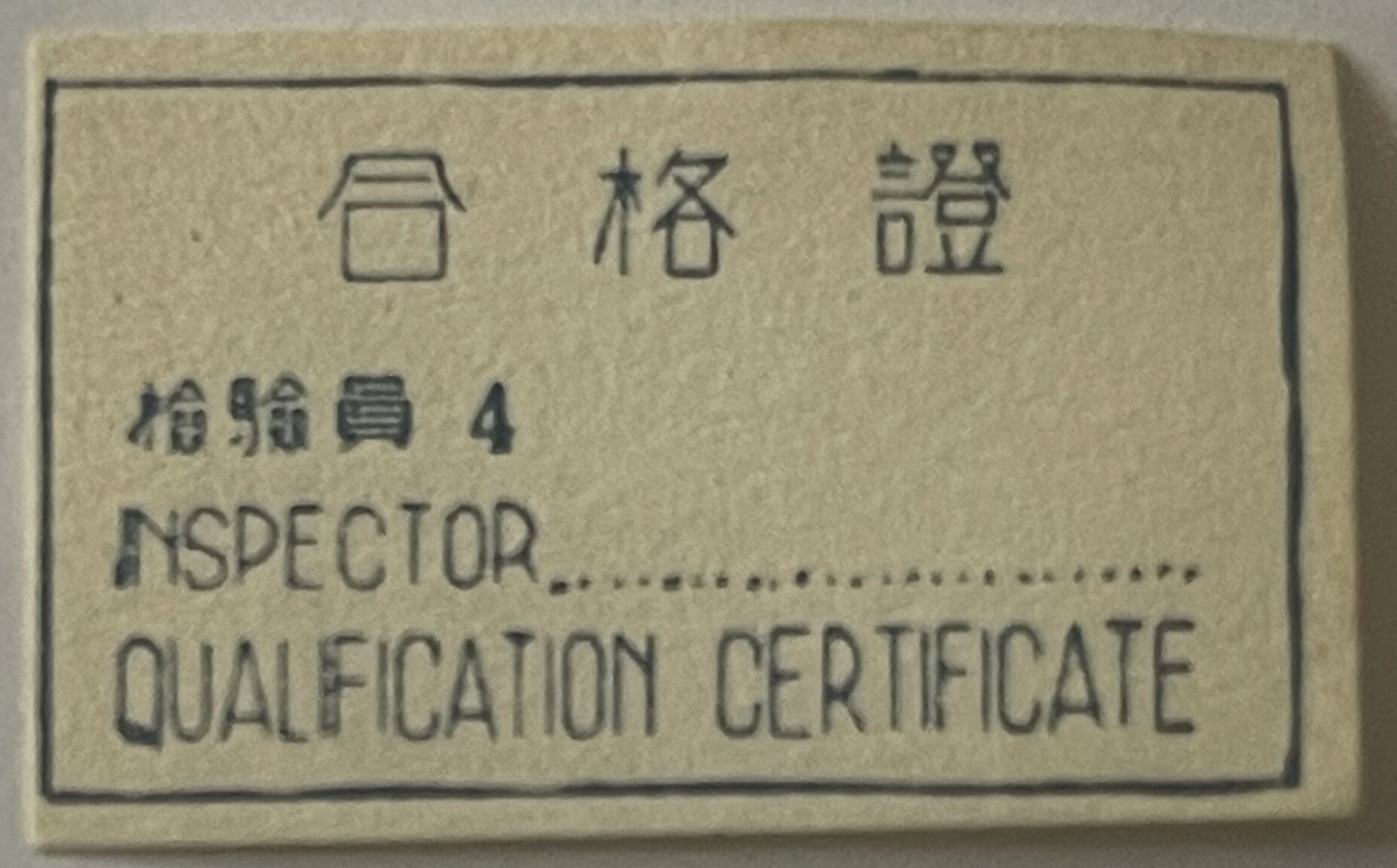
🧷 Flip the little black-and-yellow box over and read its end flaps. One is printed MADE IN CHINA. The next names a Sole Agent: Kenco Development Co., Ltd. (Hong Kong). A third wears a yellow sticker reading ART. IP-330. Those three lines are the fingerprints of a trade route — mainland factory, Hong Kong agent, buyer abroad — the same route that kept Chinese goods moving through the long years America refused them. Inside the box sits the reason anyone opens it: a GoldKey iron padlock, new old stock, with both of its keys, built for vending and gumball machines.

The GoldKey Padlock Up Close

The body is a squared block of iron under a pebbled, textured paint, shown here in red; one photograph lines it up beside the same lock in green and in gray. Set into the face is a cream medallion stamped GOLDKEY, with a key above the name and a padlock outline below it. The shackle is a thick, bright chrome-finished loop, and at the base a brass keyway takes the keys. Both keys ride a split ring, and each is stamped GK on the bow. Pick it up and it has the dense, solid weight of a real tool rather than a novelty.

  • Brand: GoldKey
  • Type: keyed iron padlock
  • Keys: two, on a split ring, stamped GK
  • Box: original black-and-yellow cardboard, printed GOLDKEY and IRON PADLOCK
  • Box markings: Made in China; Hong Kong sole agent; article number IP-330
  • Size: 2" tall x 1¼" wide x ½" thick
  • Condition: new old stock, unused

Route Men, Penny Machines and the Lock on the Coin Box

America's vending story starts with gum. In 1888 the Thomas Adams Gum Co. set Tutti-Frutti machines on the elevated train platforms of New York City, and the country's first vending machines were selling chewing gum. The round, candy-coated gumball arrived in 1907. Two years later Emerson A. Bolen founded the Northwestern Novelty Company to build penny matchstick machines; his company brought out its Model 33 gumball machine in 1933, then the Models 60 and 80 that are still sold. In 1913 Ford Mason, who started with 102 machines, began an operation that grew to more than 500,000. His Ford Gum and Machine Company is based in Akron, New York, and gum sold from its shiny chrome machines went to local service clubs such as the Lions and Kiwanis.

The trade those machines built is called bulk vending, and it runs on operators: the route men who place machines in stores, diners and laundromats, split the take with the owner or give it to charity, then come back to empty the coin boxes and refill the globes. Experienced vendors reckon a full-time living takes about 300 locations. Oak Manufacturing opened in 1948, and in 1950, when the U.S. Treasury tried to impose gambling excise taxes on the machines, the National Bulk Vendors Association lobbied the tax away.

Every one of those coin boxes needed a lock, and the lock was a matter of trust. Vending manufacturers hand out key codes at random across the country for a reason: two operators working the same town should never carry the same key, so a competitor cannot open your machine and walk off with your coins. Collectors restoring an old gumball or peanut machine today are just as particular, hunting a period-looking padlock instead of a shiny modern one.

Why a Padlock Box Names an Agent in Hong Kong

In early December 1950, after Chinese troops entered the Korean War, the U.S. Commerce Department cut off exports to China. On December 16 President Truman declared a national emergency, and the Treasury issued Foreign Assets Control Regulations under the Trading With the Enemy Act. By August 1951 the rules barred any import containing Chinese raw materials.

Hong Kong paid for it first. The colony's trade with the mainland fell 45 percent in 1952 alone. On January 9, 1953 it published Certificate of Origin regulations so its own factories could prove to Washington that nothing Chinese was inside their goods, and a U.S. Foreign Assets Control representative was posted in the colony. Yet the port also became the mainland's commercial window on the world. China Resources, which began in Hong Kong in 1938 as Liow & Company and took its present name in 1948, served from 1952 as the general agent there for China's import and export companies, and at its height handled a third of the nation's foreign trade. On April 25, 1957 the first Canton Fair opened in Guangzhou, created in answer to the embargo, and more than 1,200 foreign buyers from 19 countries and regions came to it.

"Sole agent" is trade language for the one firm holding the exclusive right to sell a maker's goods in its markets, and Hong Kong's place as go-between for mainland factories is the story behind the name on this box. Lock makers were part of that push outward. A works in Yantai, in Shandong province, founded in 1930 as the Shun Kee Lock Factory making bicycle locks, registered its "Ring" trademark in 1952 and in 1957 sent its brass padlocks into the international market for the first time, exporting 44,000 of them.

From Spring Locks to Keyed Iron Padlocks

For centuries the Chinese padlock was a box of brass or iron worked by springs inside, and some old iron types show Arabian influence. Modern padlocks came to China with foreign troops during the Second World War. After the Western-style pin tumbler lock arrived in the 1950s, traditional Chinese locks lost favor and disappeared from the market; in the lock-making town of Yuekou the old shops closed and surviving locksmiths turned to repair work.

What Changed

On May 7, 1971 Washington lifted the currency controls on dealing with China, and on June 11, 1971 commercial imports from China were allowed for the first time since the embargo began. A padlock boxed MADE IN CHINA could not enter the United States as commercial stock from December 1950 until that day, so new old stock like this GoldKey points to the years after trade reopened. Richard Nixon's visit to Beijing in February 1972 and the Shanghai Communiqué set the terms for the trade that followed. That opening changed what Americans could buy, and the padlock business shows it: today more than a thousand Chinese companies make padlocks, and huge numbers of them are exported to Europe and beyond.

The Lore of the Lock

In China a lock has long meant more than security. The chang ming suo, or longevity lock, is a lock-shaped charm with no moving parts, presented to a baby at its hundredth-day or first-year celebration. The belief behind it is that the lock fastens the child to the earth so nothing can carry it away too soon, and silver ones were thought to draw out toxins. Auspicious charms go back to the Han dynasty, longevity charms grew more common in the Six Dynasties and the Yuan, and the piece also goes by the name Hundred Families Lock.

The gumball machine carries folklore of its own. Generations of children who turned a crank were warned that swallowed gum stays in your stomach for seven years. The legend never came from medical literature; it spread as a parents' warning, and Duke Health and McGill University's Office for Science and Society both explain that swallowed gum passes through in a few days.

Good For

  • Finishing a restored gumball, candy or peanut vending machine
  • A collection of vintage locks, keys and hardware
  • Anyone drawn to Hong Kong and Cold War trade history
  • A small toolbox, cabinet or locker hasp that deserves a lock with some heft

Questions People Ask

What is this GoldKey padlock for?

It is an iron padlock for vending and gumball machines, and it is just as handy on a toolbox, cabinet or locker.

Where was it made?

In China, as the box states. The firm named on the box as sole agent, Kenco, was based in Hong Kong.

How old is it?

No date is printed on the lock, the box or the slip. The United States allowed commercial imports from China again only on June 11, 1971, so a box printed MADE IN CHINA puts this stock no earlier than the 1970s.

What does ART. IP-330 mean?

ART. is the trade abbreviation for article, so IP-330 is the catalogue number a buyer would quote when ordering this lock.

Is it new?

Yes. It is unused new old stock, with its two GK keys and the original box.

Why does a Chinese-made lock name a Hong Kong agent?

Through the Cold War, Hong Kong was the mainland's nearest free port and its busiest door to foreign markets, where agents such as China Resources arranged the sale of Chinese goods abroad.

What is a Chinese longevity lock?

A lock-shaped charm for an infant, meant to hold the child's life fast to the earth; it is one of the oldest good-luck traditions in China.

Shipping

🚚 Shipping & Handling

  • Shipping costs and timing are calculated at checkout.
  • Items curated and shipped directly by me include U.S. shipping at no additional cost, professionally packed to ensure safe arrival of your artifact.

Items from Vetted Pro Collectors
Shipping for items offered by vetted Pro Collectors is determined at checkout. All Pro Collector listings are reviewed to ensure fair, reasonable shipping practices.

For full details, please refer to our Shipping Policy.

Returns & Exchange

Take your time — you've got a full six months. If a piece isn't right for you, send it back the way it reached you and we're good.

In the first 30 days your money goes straight back the way you paid. After that it's store credit, so you can put it toward something you'd rather have.

Return shipping we sort out between us, case by case. I don't make this difficult.

If something arrives damaged, or it isn't what I said it was, send me a photo within 48 hours and I'll make it right.

Email info@vintageantiquesgifts.com or call 802-356-9872 — that's me answering, not a call center.

The only things I can't take back are custom or special-order pieces and gift cards.

View full details