
Skip to product information
1 of 4

Vintage and Antique Gifts

Vintage 1990s NKOTB Red Logo Dangle Earrings 🎤 New Kids on the Block Boston Boy Band

Vintage 1990s NKOTB Red Logo Dangle Earrings 🎤 New Kids on the Block Boston Boy Band

Regular price 12.00 USD
Regular price Sale price 12.00 USD
Sale Sold out
Shipping calculated at checkout.
Quantity
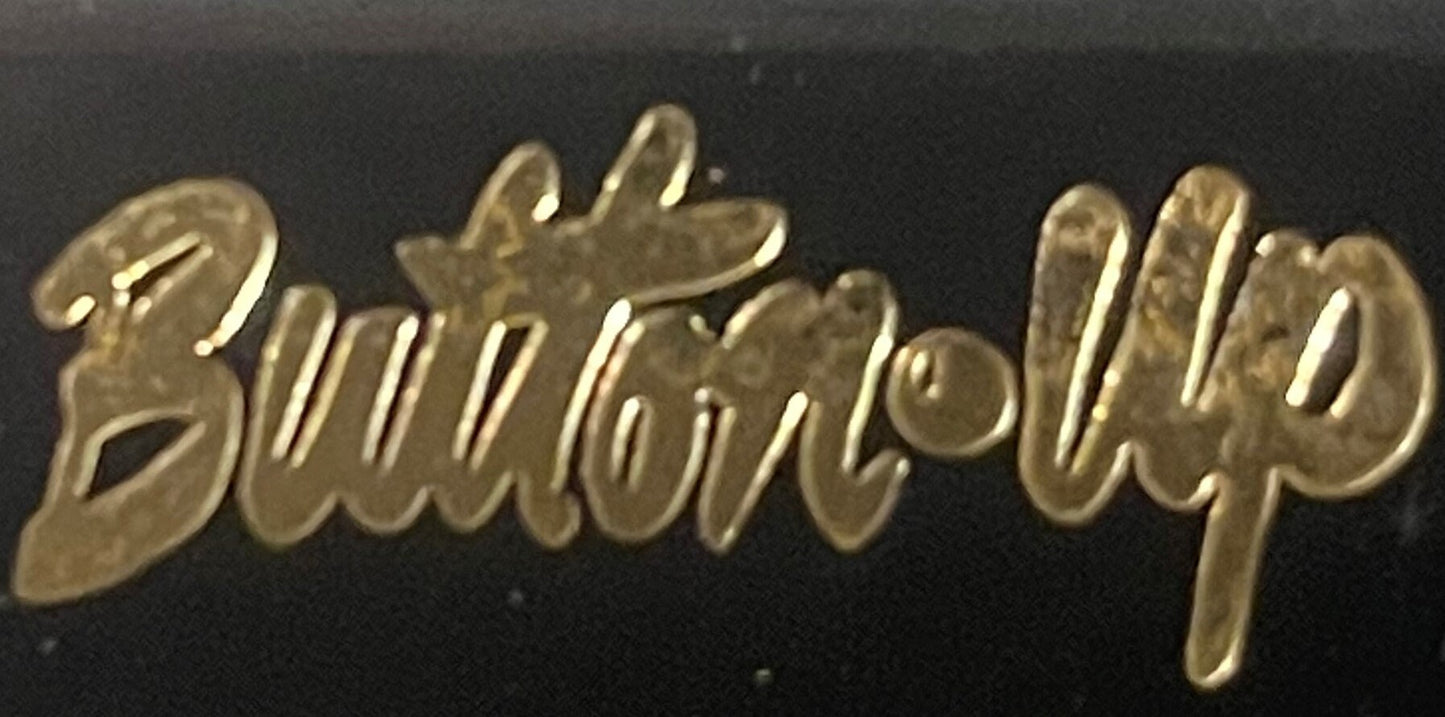
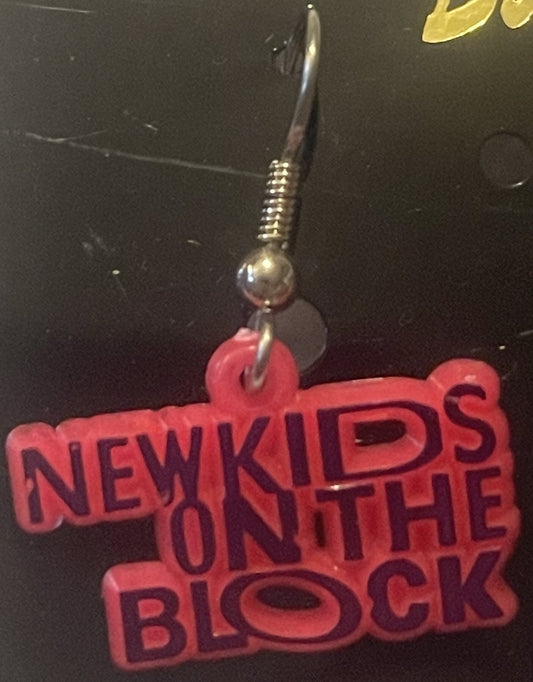
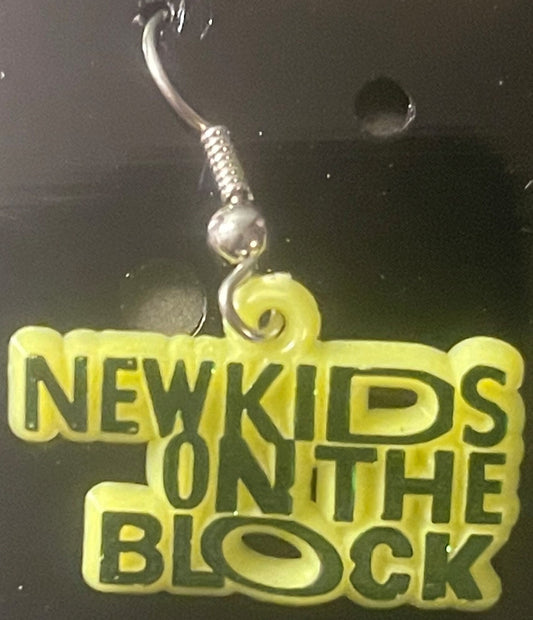
Remember when a bedroom wall wasn't complete without at least one poster of five guys from Boston? 🎤 Before Bieber, before *NSYNc, before the Backstreet Boys ever stepped on a stage, there was a scrappy group of teenagers from working-class Boston neighborhoods who taught the music industry that boy bands could sell out arenas — and sell out mall kiosks right along with them. This little pair of dangle earrings is a piece of that world: the "Blockhead" merch craze that turned bedroom walls, denim jackets, and yes, earlobes, into shrines to New Kids on the Block. Pull the card out of a drawer today and it's like a cassette single dropping out of a shoebox — the whole scream of 1990 comes rushing back. What you're looking at is a pair of pierced dangle earrings, each one a die-cut "New Kids on the Block" logo charm finished in glossy red enamel over a black backing, hung from silver-tone fish-hook wires. They're mounted on their original header card from a jewelry brand called Button-Up , with the Button-Up name stamped across the top in gold foil script against black — the same kind of small-batch card stock that carried a hundred different licensed pop-culture novelties through drugstore spinner racks and concert-venue tables during the band's fame. The card even carries a little bit of accidental charm of its own: two small round accessory dots and the wire hooks are arranged so the whole thing reads, at a glance, like a smiley face looking back at you. This is a piece of new old stock (NOS) — meaning it was produced, carded, and never sold or worn, sitting in inventory rather than on an ear, and it's being offered today exactly as it left that inventory decades ago. No manufacture mark on the card is legible enough to pin an exact production date, so rather than guess, we place it honestly within the band's documented merchandising boom — the late 1980s stretching into the early 1990s — which is the only period this style of licensed logo jewelry was actually being made and sold. 🎸 The Band, the Boom, and the Man Who Built Them New Kids on the Block didn't happen by accident. The group was assembled in Boston in 1984 by producer Maurice Starr — born Larry Curtis Johnson, who'd relocated to Boston in the early 1970s — with a plan that he stated to the New York Times almost as bluntly as a business memo: "If New Edition was as big as they were, I could imagine what would happen if white kids were doing the same thing." Starr had already had a hand in New Edition's success, and he wanted to run the formula again with a new lineup: Jordan Knight, Jonathan Knight, Joey McIntyre, Donnie Wahlberg, and Danny Wood. The early going was rough. Columbia Records released the group's self-titled debut in 1986, and the first single, "Be My Girl," barely moved the needle outside greater Boston. It took a second album, Hangin' Tough , to change everything — that record is the one that detonated, launching the group into the kind of mass stardom that fills stadiums and licenses lunchboxes. By the time their holiday record Merry, Merry Christmas hit shelves, it climbed into the Top Ten and went double-platinum, and the band's name was on more products than most companies could track. This little pair of earrings is a direct descendant of that moment — the merchandising engine at full throttle, running not just albums and tour tickets but dolls, lunchboxes, posters, apparel, and small-batch novelty jewelry like this Button-Up card. Collectors and old-timers who lived through it will tell you the licensing was so relentless that in 1991, Forbes ranked New Kids on the Block as the single highest-paid act in American entertainment, with earnings reported at $115 million — ahead of Michael Jackson, Madonna, and Prince. If that sounds almost unbelievable now, it says everything about how completely the "Blockhead" economy had taken over. The Button-Up name on this card is itself a small mystery worth being honest about. No period trade record, trademark filing, or costume-jewelry maker directory turns up an independent history for "Button-Up" as a company — it appears in the resale world attached to exactly this style of card, which tells us it was a real packaging brand actively producing licensed pop-culture jewelry during the era, even if its own corporate story has faded from the record. That's not unusual for the mall-kiosk jewelry trade of the time — dozens of small carding houses churned out officially licensed novelty pieces for teen idols and cartoons alike, and most left no trace beyond the cards themselves. Which makes a surviving, uncirculated example like this one part of the only record that's left. 🏙️ Boston: The City That Made the "Kids" Part of what makes New Kids on the Block different from the boy bands that followed is how tightly their story is tied to one specific city. This wasn't a manufactured act plucked from anywhere convenient — talent scout Mary Alford was sent out into Boston's toughest neighborhoods in the summer of 1984 looking for teenagers who could sing, rap, or dance, and it was in Dorchester that she found a 14-year-old named Donnie Wahlberg. The rest of the lineup came together from the same working-class streets — Jamaica Plain, Dorchester, the kind of Boston neighborhoods that don't usually get credited as pop-music incubators. Local legend among longtime fans holds that the timing of the group's formation is inseparable from Boston's school desegregation busing crisis of the 1970s, one of the most turbulent chapters in the city's modern history. Several of the future bandmates grew up in the middle of it. One member later reflected on those years in words that have circulated through fan history ever since: "Outside of school, it was a very controversial time. We were surrounded by chaos, but in school it was amazing. We didn't feel all that." The busing era, painful as it was for the city, is credited by fans and biographers alike with putting these kids in the same classrooms and neighborhoods years before Maurice Starr ever came looking — an unlikely thread connecting hard civic history to a bedroom-poster phenomenon. 📞 The People, the Hotline, and the Scandal At the height of the craze, being a "Blockhead" meant more than owning the albums. Longtime collectors still talk about the group's fan hotline — 1-900-909-5KIDS — which by some accounts was pulling in roughly 100,000 calls a week at the peak of the mania, a staggering number for pre-internet fandom and a testament to just how consuming the obsession was for teenage fans nationwide. Fame that size also attracts trivia that sticks around for decades. One favorite among pop-culture collectors: a young Jennifer Lopez once appeared as a backup dancer for the group before she launched her own solo career — a fun reminder of how many future stars passed through the New Kids' orbit on their way up. The fall was as public as the rise. In January 1992, in the shadow of the Milli Vanilli lip-synching scandal that had rocked the industry, an associate producer named Gregory McPherson accused the group of lip-synching during live performances and filed a breach-of-contract suit against Maurice Starr. The band fought back hard and publicly, even interrupting the Australian leg of their tour to fly home and perform live on The Arsenio Hall Show to prove themselves. The momentum never fully returned to its earlier peak — 1994's grittier Face the Music struggled against the rising tide of grunge, and the band broke up that year, having shortened their billing to simply "NKOTB" at their label's request in their final chapter. They would reunite in 2007–2008, proving that a good comeback story is one more thing this band knows how to write. 📼 Why This Era Still Sells Out Arenas New Kids on the Block never actually left — they just went quiet for a while. The reunion tours of the 2000s introduced the group to a new generation of fans standing next to the original Blockheads who'd kept every cassette single since 1989. In 2022, the band leaned all the way into that nostalgia with the "Bring Back the Time" video, bringing along Salt-N-Pepa, Rick Astley, and En Vogue for a full-throttle celebration of everything the era represented — proof that the 90s, in the words of longtime fans, never really left. Pieces like this earring card are the physical fossils of that first wave — small, wearable, and inseparable from cassette singles, bedroom posters, and the particular thrill of a hotline that never stopped ringing. 🖼️ Display Ideas 🎵 Pin the card upright inside a shadow box alongside a cassette single or concert ticket stub for an instant 90s pop shrine. 💄 Prop it on a vanity tray next to other vintage costume jewelry for a rotating "throwback drawer" display. 🖼️ Frame it flat under glass to protect the card while keeping the gold foil script and red charms fully visible. 👂 Wear the earrings themselves for a themed concert night, retro party, or 90s-decade dress-up event. 📚 Tuck it into a scrapbook or memory box dedicated to boy-band or teen-idol memorabilia. 🛍️ Style it on a small easel stand as part of a rotating collectibles shelf alongside other band merchandise. 🎁 Who Collects These This is a natural fit for lifelong Blockheads who've kept every piece of NKOTB memorabilia since the beginning, as well as 90s-nostalgia collectors building out a shelf of teen-idol and boy-band ephemera from that specific licensing gold rush. Costume jewelry collectors who specialize in licensed pop-culture novelty pieces will appreciate the maker card itself as a small, undocumented piece of the era's packaging history. And because they're genuinely wearable, they also appeal to anyone looking for a fun, conversation-starting accessory for a retro night, themed party, or everyday nod to the era that gave us the first modern boy band. ❓ FAQ Are these authentic vintage New Kids on the Block merchandise? Yes — this style of card is a documented piece of licensed NKOTB merchandise from the band's peak commercial era, matching examples confirmed in the secondary collectibles market. As with any licensed novelty jewelry of the period, the strongest confirmation comes from the card and charms themselves rather than any single seller's description. What are the earrings made of? The logo charms are enamel-filled — red lettering over a black backing — mounted on silver-tone fish-hook earring wires, a common and durable combination for licensed costume jewelry of the era. Can these actually be worn, or are they for display only? They're built as functional pierced dangle earrings on standard fish-hook wires, so they can absolutely be worn — many collectors choose to display the card instead to preserve the packaging, but the choice is entirely up to the wearer. Exactly how old are these earrings? No manufacture date is legible on the card, so we won't guess at a specific year. The style, packaging, and licensing tie it to the band's major merchandising boom, which ran from the late the period into the early 1990s. What is "Button-Up," the brand on the card? Button-Up appears to have been a jewelry-carding brand active during the licensed pop-merchandise boom of the era. No independent corporate trademark or trade-press record for the company has surfaced, which is common for the many small novelty-jewelry packagers of the time — most of what survives of them today is the cards themselves. Is this a new pair, or has it been worn? This is new old stock — meaning it was produced and carded decades ago but never sold or worn, so it's being offered today just as it sat in original inventory. Do all the cards look exactly the same? Every card shares the same Button-Up gold foil branding, the same red enamel logo charm design, and the same fish-hook earring style — the example provided is representative of this consistent design and era.

Shipping

🚚 Shipping & Handling

  • Shipping costs and timing are calculated at checkout.
  • Items curated and shipped directly by me include U.S. shipping at no additional cost, professionally packed to ensure safe arrival of your artifact.

Items from Vetted Pro Collectors
Shipping for items offered by vetted Pro Collectors is determined at checkout. All Pro Collector listings are reviewed to ensure fair, reasonable shipping practices.

For full details, please refer to our Shipping Policy.

Returns & Exchange

Take your time — you've got a full six months. If a piece isn't right for you, send it back the way it reached you and we're good.

In the first 30 days your money goes straight back the way you paid. After that it's store credit, so you can put it toward something you'd rather have.

Return shipping we sort out between us, case by case. I don't make this difficult.

If something arrives damaged, or it isn't what I said it was, send me a photo within 48 hours and I'll make it right.

Email info@vintageantiquesgifts.com or call 802-356-9872 — that's me answering, not a call center.

The only things I can't take back are custom or special-order pieces and gift cards.

View full details
  • 5 stars: 6 (100%)
  • 4 stars: 0 (0%)
  • 3 stars: 0 (0%)
  • 2 stars: 0 (0%)
  • 1 star: 0 (0%)
B
BongoJohnson

We love these. Thank you

k
ky5q18dc3v2oxrrn

I love them so much thank you

a
a***0 (341)

Great seller. Item arrived well packaged, quickly and as described. The note was a lovely touch. Would recommend this seller. 5⭐️

s
s***0 (1091)

Great seller. Awesome customer service. A really unique shopping experience. Very satisfied with purchase ✨️ will definitely buy from again.

A
Allison

Was exactly what I expected

u
u***u (353)

Tyvm