
Skip to product information
1 of 4

Vintage and Antique Gifts

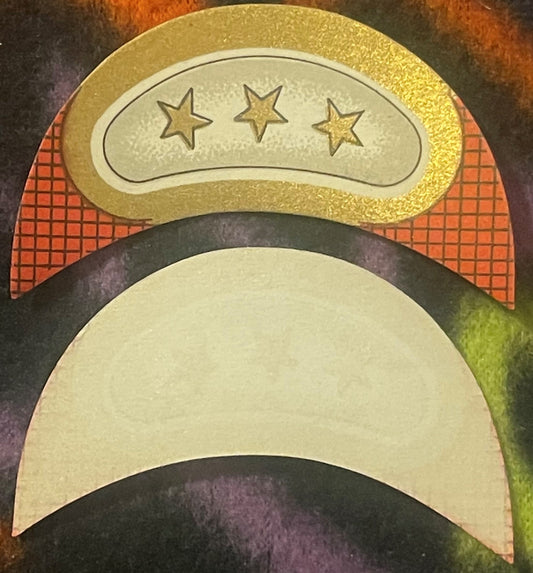
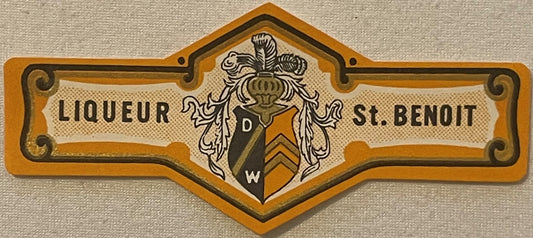
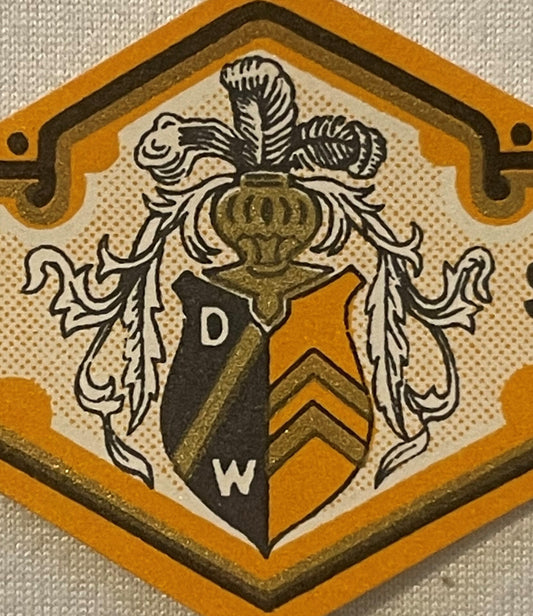
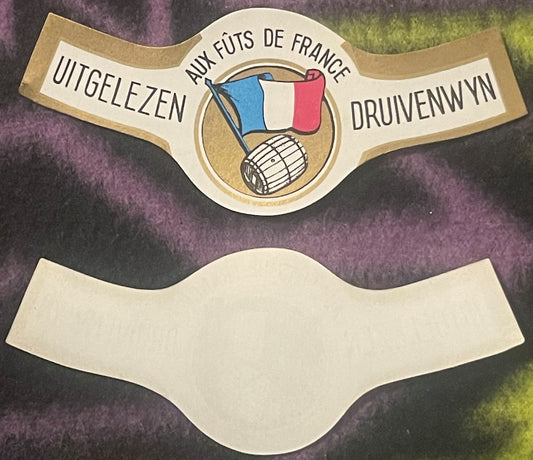
Antique Belgian Wine Neck Label 🥃 Grande Fine Mont Doré Maison Desmet-Maertens 1920s - 1930s New Old Stock Ephemera

Antique Belgian Wine Neck Label 🥃 Grande Fine Mont Doré Maison Desmet-Maertens 1920s - 1930s New Old Stock Ephemera

Regular price $5.50 USD
Regular price Sale price $5.50 USD
Sale Sold out
Shipping calculated at checkout.

Size: 4 1/4" x 1 3/4"

🚚 Free US Shipping — ships within one business day. International shipping calculated at checkout.

Quantity

What Was Grande Fine Mont Doré? Grande Fine Mont Doré: Brandy's Grandest Words, From the Country That Banned Spirits in Its Cafés

Size: 4 1/4" x 1 3/4"

For sixty-four years you could not buy a glass of brandy in a Belgian café. The Vandervelde Law, in force from 29 August 1919 until 1 January 1984, forbade the sale, serving and even the free pouring of spirits anywhere the public could walk in, and anyone who wanted a bottle for home had to buy at least two liters at once. This neck label speaks the language of exactly the drink that law went after. It names its bottle Grande Fine, the top rung of French brandy grading, and Mont Doré, a volcanic mountain in the heart of France. It is one label, never pasted to a bottle.

The Label

A die-cut neck label in a shallow crescent, shaped to curve around the shoulder of a bottle, with gold scrollwork along the banner. Across the top it reads GRANDE FINE MONT DORÉ, with the accent on the last E, and from the center hangs a shield carrying five stars. The back is plain paper.

No date, printer or maker is printed anywhere on it. The house name Maison Desmet-Maertens that it is listed under does not appear on the neck label itself, which carries only the brand, so what this label tells you, it tells you through its words and its stars.

What "Grande Fine" Means

"Fine" runs all through the names of French brandy: Fine Champagne cognac, Fine Bretagne cider brandy. On a cognac label, Grande Fine Champagne means every drop came from Grande Champagne, the most highly rated of Cognac's six growing areas. That "Champagne" has nothing to do with sparkling wine; it comes from the Latin campania, open countryside. A house that printed Grande Fine on its bottle was borrowing the grandest words on that ladder. The label itself does not say whether its bottle held grape brandy or wine.

Five Stars on a Shield

Stars on a brandy label have a story of their own. Beginning in 1865, Hennessy put stars on its cognac to show how old it was: one star for two years, two stars for four, three stars for six. The rest of the cognac trade soon followed, and Hennessy's Three Star is the bottle sold today as V.S. The shield on this label carries five, and in the trade whose words it borrowed, stars had meant age for generations.

Mont Doré: The Golden Mountain

On the label the name wears an accent, Doré, the French word for golden. The Monts Dore themselves are real: a volcanic massif in the Auvergne, crowned by the Puy de Sancy, the highest peak in the Massif Central. The Dordogne river begins there, 1,885 meters up the flanks of the Sancy, where two mountain torrents called the Dore and the Dogne run together. The story everyone tells is that the river took its name from the pair, Dore plus Dogne. The etymologists say otherwise: the name grew from an ancient word for a torrent, Durānius, which had become Dordonia by the ninth century, and only looks like the two streams joined.

Below the peak, the spa town of Le Mont-Dore sits on hot springs that come out of the volcanic rock at 36 to 44 °C, carrying more silica than any other thermal water in France. People bathed there in Gallo-Roman times. In 1817 the architect Louis-Charles François Ledru set to work on a proper bath house built on the very spot of the Roman remains, and parts of it are now classified as a historic monument.

The Dordogne ties the mountain on this label straight to Belgium. From the Sancy it winds west through the Corrèze and on past Libourne before it meets the Garonne north of Bordeaux. For generations Belgian buyers got their Bordeaux through the Libourne merchants, a good many of them Corrèze men, and those wines went out on the Dordogne, not on the Garonne like the Bordeaux city trade. That helps explain why Belgians favor the Right Bank, Saint-Émilion and Pomerol. While the great Left Bank châteaux were shipping to London, Pomerol found its buyers in France, Holland and above all Belgium, and British merchants did not wake up to it until the 1950s. Another Corrèze man, Jean Gaye-Bordas, sold Bordeaux across the north of France as "Meymac-près-Bordeaux", Meymac near Bordeaux, cheerfully ignoring that Meymac sits way off in the Corrèze, and the Corrèze salesmen who followed him carried that name on into Belgium. I love that, because it tells you how freely a good French name traveled on a label. Some Belgians went further than drinking it. Georges Thienpont, from a Flemish family who had been wine merchants at Etikhove since 1842, bought Château Troplong Mondot in Saint-Émilion in 1921 and Vieux Château Certan in Pomerol in 1924, and Vieux Château Certan is still in the family. By 2016 Belgians were the second-biggest foreign owners of Bordeaux châteaux after the Chinese, with just under fifty.

Belgium's Sixty-Four-Year Ban on Spirits

The law carried the name of Emile Vandervelde, Belgium's minister of justice, a Socialist and a passionate campaigner against alcohol. It banned the consumption, sale and supply of spirits, even free of charge, in every place open to the public: cafés, hotels, stations. Spirits could still be bought for home, but only two liters or more at a time.

A popular story says the ban is why Belgian brewers turned to strong beer. Beer historians who went back to the figures found otherwise: the average Belgian beer held 3.29 percent alcohol at the start of the century and 3.40 percent on the eve of the Second World War. Dubbels and tripels stayed uncommon until after 1950, and Belgium's famous heavy beers mostly came later still. What the law really did was take spirits off the café table for sixty-four years.

Display

At 4.25 x 1.75 inches it fits a small shadow box or a narrow frame, and the orange crescent reads well floated on a dark mat. It belongs with brandy and cognac collections, French and Belgian advertising, home-bar walls, and anyone gathering old European bottle labels.

Shipping

🚚 Shipping & Handling

  • Shipping costs and timing are calculated at checkout.
  • Items curated and shipped directly by me include U.S. shipping at no additional cost, professionally packed to ensure safe arrival of your artifact.

Items from Vetted Pro Collectors
Shipping for items offered by vetted Pro Collectors is determined at checkout. All Pro Collector listings are reviewed to ensure fair, reasonable shipping practices.

For full details, please refer to our Shipping Policy.

Returns & Exchange

Take your time — you've got a full six months. If a piece isn't right for you, send it back the way it reached you and we're good.

In the first 30 days your money goes straight back the way you paid. After that it's store credit, so you can put it toward something you'd rather have.

Return shipping we sort out between us, case by case. I don't make this difficult.

If something arrives damaged, or it isn't what I said it was, send me a photo within 48 hours and I'll make it right.

Email info@vintageantiquesgifts.com or call 802-356-9872 — that's me answering, not a call center.

The only things I can't take back are custom or special-order pieces and gift cards.

View full details

Preserving History: Authentic Objects Across Eras

— Curated by Travis Weigel