Skip to product information
1 of 4

Vintage and Antique Gifts

Antique 1920s - 1930s Aux Vignes de France Alcohol Label "In The Vineyards of France" ✨

Antique 1920s - 1930s Aux Vignes de France Alcohol Label "In The Vineyards of France" ✨

Regular price 5.50 USD
Regular price Sale price 5.50 USD
Sale Sold out
Shipping calculated at checkout.
Quantity

Size: 4.5 x 1 inches

🍇 Antique "Aux Vignes de France" French Wine Label — Pre-AOC Era, 1920s–1930s

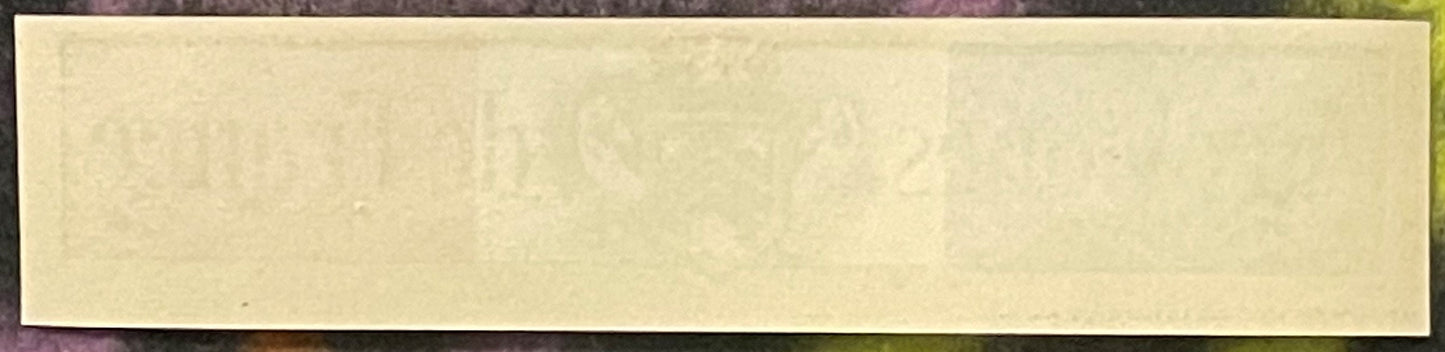
This is an antique French wine trade label reading Aux Vignes de France — "In the Vineyards of France" — produced during the pre-AOC era of the 1920s to 1930s, when generic négociant branding flourished across France before the appellation control system was formally established in 1936. The label is formatted horizontally and displays the tricolor bands of the French flag — blue, white, and red — overlaid with bold serif text and centered with a heraldic coat of arms topped by a crown, all enclosed in a gold border. It is a piece of printed paper ephemera from one of the most consequential and chaotic chapters in French wine history, when merchants bottled and sold wine under sweeping patriotic trade names rather than strictly regulated regional designations. New Old Stock (NOS), this label survives in the collector condition that printed paper ephemera from this era rarely achieves.

🕰️ Pull it from its century of quiet storage and you're holding a snapshot of French wine culture at a crossroads. The 1920s and 1930s were not a peaceful time for French viticulture. Decades of widespread fraud and adulteration had left consumers — and governments — deeply skeptical of what was actually in the bottle. A 1919 law had begun delimiting wine-growing regions by referencing usages locaux, local customs, as the guiding principle. But full regulatory teeth wouldn't come until Baron Pierre Le Roy, founder of France's wine regulatory board INAO, formalized the AOP/AOC system in 1936. In the years between those two milestones, labels like this one were everywhere — bold, patriotic, and gloriously unspecific.

🍷 Aux Vignes de France. Say it aloud and it sounds like poetry. It evokes rolling hillsides in Burgundy, stone-walled caves in Bordeaux, sun-warmed terraces in the Rhône. That was precisely the intent. A négociant — a wine merchant who purchased grapes or finished wines from multiple growers and bottled them under a house label — didn't need to specify which vineyard, which appellation, or which harvest. The phrase "Vineyards of France" said everything the buyer needed to feel confident: this is French wine, and France makes the best wine in the world. The tricolor itself was the certificate of authenticity.

🏛️ No single founding estate, named proprietor, or registered parent company has been documented behind the Aux Vignes de France name. That absence is itself historically significant. This label belongs to the class of generic trade labels that proliferated precisely because the regulatory vacuum allowed it. Before the AOC walls went up, any merchant with a bottle, a cork, and a lithographer could drape themselves in the French flag and sell wine under a sweeping patriotic banner. It was legal. It was common. And it produced some of the most visually striking paper ephemera of the early twentieth century.

🎨 The label itself is a study in deliberate visual authority. The horizontal rectangle is divided into three vertical fields — deep blue on the left, white in the center, and a warm orange-red on the right — directly mirroring the proportions of the French tricolor. In the blue field, the words Aux Vignes appear in a dark, commanding serif typeface. In the red field, de France answers in the same hand. Centered on the white field, splitting the phrase across the flag, sits a heraldic shield bearing a chevron device, flanked by scrolled supporters and surmounted by a detailed crown rendered in warm tones. The entire composition sits inside a gold rectangular border that gives the piece the weight of an official document. The gold frame catches light differently at different angles — a quiet flex of the lithographer's craft that was entirely standard for prestige trade labels of this era.

🗺️ Old-timers in the French paper ephemera trade tell of négociant houses that kept warehouses stacked with printed labels, commissioning them in large runs from commercial lithographers in Paris and Lyon. The story goes that a single print run might produce thousands of identical labels to be applied to whatever wine the merchant had available that season — a Bordeaux one month, a Rhône blend the next, perhaps a Midi table wine the month after. The label was the brand. The wine was almost secondary. Whether Aux Vignes de France was one merchant's exclusive house label or a generic design sold to multiple buyers is a question the historical record has not answered — and that ambiguity is part of what makes surviving examples so fascinating to collectors of French paper ephemera.

🚢 A rumor from the era, passed along in collector circles, holds that generic patriotic labels like this one were produced in especially large quantities specifically for export markets — destinations where French regional names like Pomerol or Gevrey-Chambertin carried no recognition but where "France" itself was still the ultimate credential. The English-speaking world, the American market especially, responded to the sweep of the French flag in a way it might not have responded to a small village appellation on an unfamiliar label. Aux Vignes de France was, in that reading, a translation device as much as a brand — it converted French wine into the idea of France, portable and universally legible.

🍾 Some collectors who specialize in Prohibition-era American ephemera have circulated the suggestion — framed always as lore rather than documented fact — that labels of this type occasionally adorned bottles that made their way through underground import channels into the United States during the Prohibition years of 1920 to 1933. Whether that story applies to any specific batch of Aux Vignes de France labels cannot be verified. What is true is that French wine, classified as a foreign product and therefore subject to different legal treatment than domestically produced spirits, did move through certain channels during those years, and that patriotic French labels were prized precisely because they projected legitimacy. The lore is plausible. The specific connection is unconfirmed. But the story gives the label an additional layer of historical texture that serious collectors appreciate.

🖨️ The lithographic printing quality on this label reflects the commercial standard of the pre-war French print trade at a capable level. The color registration across the three flag sections is clean. The serif lettering is crisp and well-inked. The heraldic device at center — the shield, crown, and flanking scrollwork — is rendered with the kind of detail that required skilled stone lithography or early offset work rather than a simple one-color stamp. Labels produced at this standard cost money to print, which tells you something about the merchant or house behind them: this was not a back-of-house improvisation. Someone invested in the look of authority.

🗓️ Dating this label to the 1920s–1930s is supported by the style of the typography, the tricolor flag format, and the generic négociant naming convention — all hallmarks of the pre-AOC era before the 1936 formalization of appellation controls changed how French wine was labeled and marketed. Comparable labels from this class have been documented by collectors and ephemera specialists as consistent with that window. The label's format and condition are entirely coherent with that era of French wine trade printing.

📜 For collectors of French paper ephemera, vintage wine labels, and pre-war printed Americana and Europiana, a surviving example like this carries genuine appeal. Labels from the négociant era were designed to be used — applied to bottles, handled by merchants and buyers, and ultimately discarded. The ones that survived did so because they were never applied, left in a printer's or merchant's stock, often stored in bundles or flat files. New Old Stock (NOS) survival is how the pre-AOC label world is preserved at all. Without it, almost nothing from this era of French wine marketing would exist in collectible condition.

🖼️ Display possibilities for a piece like this are genuinely varied. The horizontal format and strong color field — blue, white, red against gold — make it a natural candidate for framing. A simple gilt or dark wood frame against a neutral wall gives it the reading of a period French commercial art piece. Grouped with other French wine labels or paper ephemera from the same era, it reads as part of a curated collection. Framed near a wine display, a bar, or a kitchen with French country aesthetics, it functions as a piece of living historical decoration that actually has a story worth telling. The label's proportions make it a natural horizontal accent in gallery walls or shelf displays where vertical pieces dominate.

🧩 Collectors of French paper ephemera increasingly treat pre-AOC wine labels as primary historical documents — artifacts that record not just what wine looked like on the shelf but what the entire commercial culture of French wine marketing was before regulation standardized it. The tricolor as a branding device. The heraldic shield as a substitute for regional credentialing. The sweeping patriotic name as a marketing argument. All of it is readable in this single label. That is the quiet power of well-preserved paper ephemera: it tells you not just what people sold, but how they thought about selling it, and what they believed buyers needed to feel in order to buy.

🇫🇷 France was changing rapidly in the 1920s and 1930s. The aftermath of the First World War had reshaped the economy and the culture. The wine industry specifically was fighting for its reputation and its regulatory future. Baron Pierre Le Roy was building the framework that would become the AOC system, and by 1936 the world of Aux Vignes de France generic labels would begin to give way to a new world of controlled appellations, registered estates, and documented provenance. This label is a survivor from the moment just before that transition — from the last era when you could put the whole country on the label and call it a credential.


❓ Questions Collectors Ask

What exactly is an "Aux Vignes de France" wine label, and what was it used for?

Aux Vignes de France — "In the Vineyards of France" — is a French wine trade label produced in the négociant tradition, in which a wine merchant purchased grapes or finished wine from growers and bottled it under a proprietary house brand rather than a specific estate or regional appellation name. Labels of this type were printed in bulk and applied to bottles for retail or export sale. No single documented estate, proprietor, or founding company behind this specific brand name has been confirmed in historical records, identifying it as a generic patriotic trade label of the pre-AOC era.

How do you date a French wine label like this to the 1920s–1930s?

The primary dating evidence for pre-AOC French wine labels is the naming convention itself: generic patriotic branding such as "Vineyards of France" flourished before France's appellation control system was formalized in 1936 by Baron Pierre Le Roy and the founding of INAO. A 1919 law had begun delimiting wine regions but left wide latitude for generic trade names; the window between that law and the 1936 AOC formalization is when labels of this class were most common. Typography style, lithographic technique, and the tricolor flag format are consistent with commercial printing of the 1920s–1930s.

Why did French wine merchants use generic patriotic labels instead of regional names?

Before the AOC system established protected appellations, French wine law did not require or reliably enforce regional labeling. A négociant who sourced wine from multiple growing regions had practical and commercial reasons to use a broad, patriotic label — it covered blended or variable stock, required no appellation certification, and communicated "French wine" as a category credential to buyers unfamiliar with specific village or regional names. Export markets in particular responded to the French flag as a quality signal in a way that regional names like Pomerol or Saint-Émilion could not reliably achieve without consumer education.

What is the heraldic device shown at the center of this label?

The central element of the label is a heraldic coat of arms featuring a shield bearing a chevron device, flanked by scrolled supporters, and surmounted by a decorative crown. Heraldic imagery was commonly deployed on French wine labels of the négociant era to convey tradition, prestige, and aristocratic association — even when no actual noble house or documented armorial grant was connected to the brand. The specific shield and crown shown on this label have not been traced to a verified armorial registration, making them consistent with the decorative commercial heraldry common to printed wine trade labels of this period.

How can I tell this is an authentic pre-AOC era label and not a later reproduction?

Authentic pre-AOC labels from the 1920s–1930s typically display characteristics of period lithographic or early offset printing: subtle ink texture, a particular warmth in the color fields, and printing register that reflects hand-guided stone or plate work rather than modern digital reproduction. The paper stock, aging characteristics, and overall weight of an original are distinct from modern reprints. Collectors also look for the absence of modern barcodes, regulatory codes, or post-1936 AOC designation language, none of which appear on this label. Consulting a specialist in French paper ephemera or wine label collecting is the most reliable authentication path for any specific example.

How should I display or store a vintage French wine label like this?

For display, horizontal framing under UV-protective glass or acrylic in a sealed frame prevents light degradation while showcasing the tricolor design and gold border to full effect. Archival mat board that is acid-free protects the paper from chemical contact with framing materials. For storage without framing, flat storage in acid-free sleeves or folders in a stable, low-humidity environment preserves paper ephemera indefinitely. Avoid exposure to direct sunlight, moisture, and temperature fluctuations, all of which accelerate paper aging and color fading in lithographic inks.

Why do collectors seek out pre-AOC French wine labels as paper ephemera?

Pre-AOC wine labels occupy a specific and documented niche in paper ephemera collecting because they are primary artifacts of a transitional moment in food and beverage regulatory history — the period when France's wine trade operated without the appellation controls that now define how French wine is understood and sold worldwide. Labels from this era record commercial design, patriotic branding strategies, heraldic visual language, and lithographic craft that disappeared after 1936 as the AOC system standardized label formats. Because these labels were intended to be applied to bottles and discarded, surviving New Old Stock examples are proportionally uncommon in the ephemera market relative to the number originally printed.

Shipping

🚚 Shipping & Handling

  • Shipping costs and timing are calculated at checkout.
  • Items curated and shipped directly by me include U.S. shipping at no additional cost, professionally packed to ensure safe arrival of your artifact.

Items from Vetted Pro Collectors
Shipping for items offered by vetted Pro Collectors is determined at checkout. All Pro Collector listings are reviewed to ensure fair, reasonable shipping practices.

For full details, please refer to our Shipping Policy.

Returns & Exchange

Take your time — you've got a full six months. If a piece isn't right for you, send it back the way it reached you and we're good.

In the first 30 days your money goes straight back the way you paid. After that it's store credit, so you can put it toward something you'd rather have.

Return shipping we sort out between us, case by case. I don't make this difficult.

If something arrives damaged, or it isn't what I said it was, send me a photo within 48 hours and I'll make it right.

Email info@vintageantiquesgifts.com or call 802-356-9872 — that's me answering, not a call center.

The only things I can't take back are custom or special-order pieces and gift cards.

View full details
  • 5 stars: 1 (100%)
  • 4 stars: 0 (0%)
  • 3 stars: 0 (0%)
  • 2 stars: 0 (0%)
  • 1 star: 0 (0%)
c
chigui58

Thank you Prompt delivery fast servicel thank you 😊 absolutely nice 👍🏽 as always  thank you again

Thank you for your review!