Skip to product information
1 of 6

Vintage and Antique Gifts

🥤 Vintage 1985 Coca-Cola Plastic Can Pamphlet — Biggest Flop in Soda History? NOS Die-Cut Brochure

🥤 Vintage 1985 Coca-Cola Plastic Can Pamphlet — Biggest Flop in Soda History? NOS Die-Cut Brochure

Regular price 8.00 USD
Regular price Sale price 8.00 USD
Sale Sold out
Shipping calculated at checkout.

Description

🥤 Vintage 1985 Coca-Cola Recyclable Plastic Can Pamphlet — NOS, Die-Cut Brochure 🥤

You're looking at a promotional pamphlet for one of the most fascinating failures in the history of the world's most famous brand.

In 1985, Coca-Cola tried to replace the aluminum can with a clear, recyclable plastic can. It was supposed to revolutionize the soda industry. It didn't. And this pamphlet — a die-cut brochure shaped like the plastic can itself — is the proof that it happened.

Most people have never heard of this. The plastic can has been completely overshadowed by the other 1985 Coca-Cola disaster — New Coke. But this one might be even more interesting, because while New Coke was a formula mistake, the plastic can was an engineering failure. A multi-billion-dollar corporation missed something so basic it's almost hard to believe.

━━━━━━━━━━━━━━━━━━━━

🏭 WHAT HAPPENED — THE FULL STORY

In the fall of 1985 — the very same year Coca-Cola launched and then killed New Coke after just 79 days — the company quietly rolled out another experiment: a 12-ounce recyclable plastic can.

The cans were manufactured by the Petainer Development Company, a venture of three international packaging companies based in Switzerland, in a joint partnership with Coca-Cola. Petainer was simultaneously building a factory in Atlanta to mass-produce the plastic cans if the test succeeded. The machinery was being installed. The plant was scheduled to be completed by December 1985. They were all-in.

The test market? Columbus, Georgia — just a short drive from Coca-Cola's headquarters in Atlanta. Starting in October 1985, the plastic cans appeared on shelves at selected food stores in Columbus, filled with Coca-Cola, Coca-Cola Classic, Diet Coke, and Sprite.

No other soft drink in the United States had ever been sold in a plastic can. This was a first.

━━━━━━━━━━━━━━━━━━━━

📋 WHAT THIS PAMPHLET SAYS

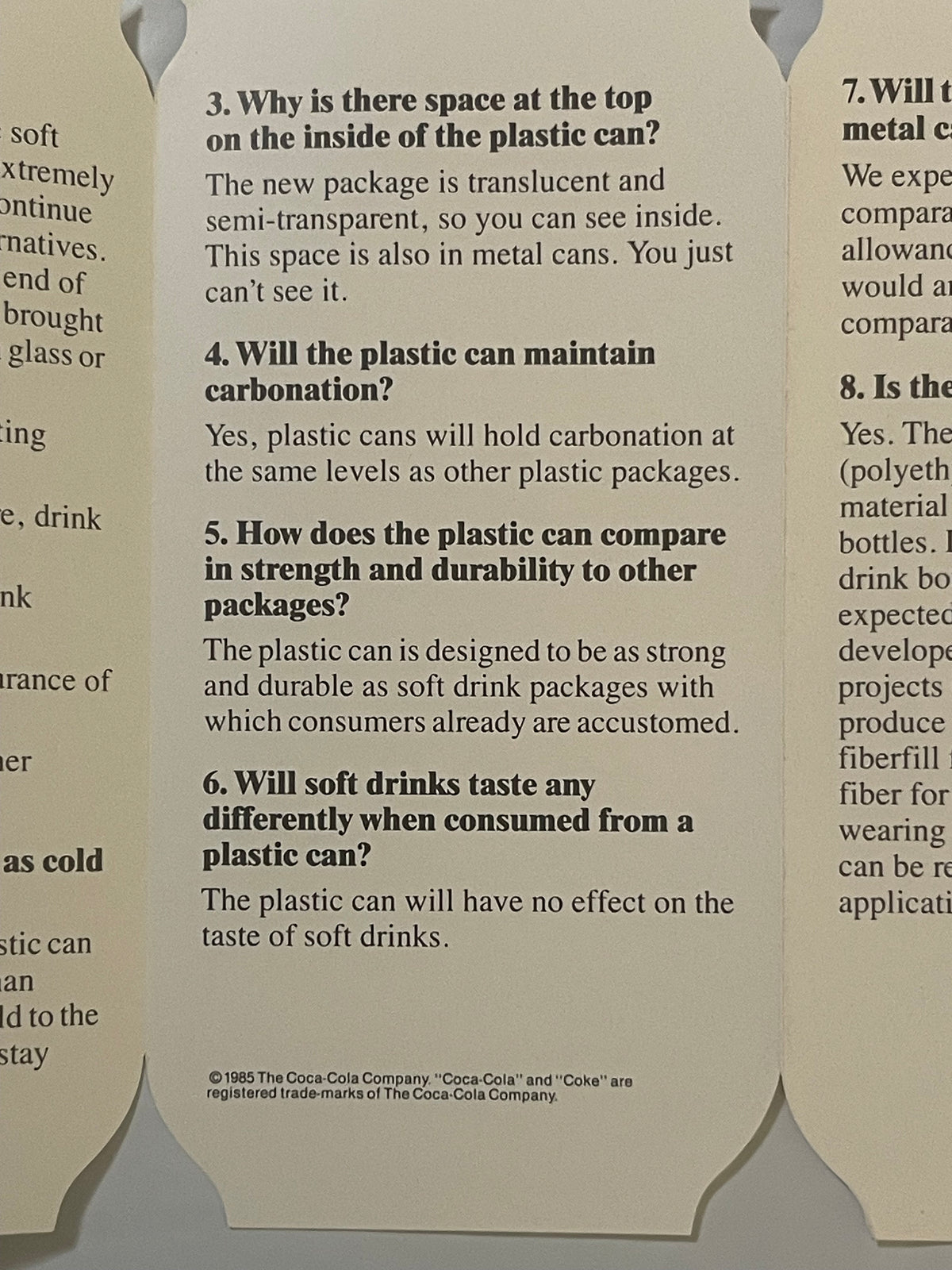
This pamphlet was Coca-Cola's attempt to get ahead of consumer questions about the new plastic can. It's a die-cut brochure shaped like the can itself, and when you open it, it answers 8 questions:

1️⃣ Why a plastic can? — "Since the early seventies, plastic soft drink bottles have proved to be extremely popular with consumers."

2️⃣ Will the plastic can remain as cold as other packages? — "It takes a little longer to chill a plastic can because plastic insulates better than metal. On the other hand, it will stay colder longer."

3️⃣ Why is there space at the top on the inside of the plastic can? — "The new package is translucent and semi-transparent, so you can see inside."

4️⃣ Will the plastic can maintain carbonation? — "Yes, plastic cans will hold carbonation at the same levels as other plastic packages."

5️⃣ How does the plastic can compare in strength and durability? — "The plastic can is designed to be as strong and durable as soft drink packages with which consumers already are accustomed."

6️⃣ Will soft drinks taste any differently when consumed from a plastic can? — "The plastic can will have no effect on the taste of soft drinks."

7️⃣ Will the plastic can cost the same as metal cans? — "We expect cost of plastic cans to be comparable to metal cans."

8️⃣ Is the plastic can recyclable? — "Yes. The plastic can is made of PET (polyethylene terephthalate), the same material used for plastic soft drink bottles."

Reading these answers now, over 40 years later, is like reading the confident reassurances of a company that had no idea what was about to go wrong.

━━━━━━━━━━━━━━━━━━━━

💥 WHY IT FAILED

The plastic cans couldn't hold up to being stacked. At retail, cans get stacked on shelves and in warehouse pallets — sometimes three or four pallets high. Metal cans handle this without issue. The plastic cans buckled under the weight. They caused messes in warehouses across the Columbus test market. The structural problem was fundamental, and it killed the entire program.

A multi-billion-dollar corporation, with a factory already being built in Atlanta, missed one of the most basic requirements of beverage packaging: it has to survive being stacked.

The plastic can quietly disappeared. Petainer's Atlanta factory — scheduled to be completed by December 1985 — never went into full production. The whole thing was over before most Americans even knew it had started.

━━━━━━━━━━━━━━━━━━━━

📅 1985 — COCA-COLA'S WORST YEAR

To fully appreciate this pamphlet, you have to understand what 1985 was for Coca-Cola.

On April 23, 1985, the company launched New Coke — changing the formula of the most popular soft drink on Earth. The backlash was immediate and ferocious. Consumers hoarded cases of the original. Protest groups formed. The company received over 40,000 angry letters and phone calls. After just 79 days, on July 11, 1985, Coca-Cola brought back the original as "Coca-Cola Classic" in what became one of the most famous corporate retreats in history.

And then, just three months later — in October 1985 — the same company that had just survived the New Coke debacle rolled out plastic cans in Columbus, Georgia.

Two massive gambles in one year. Both failed. New Coke became a cautionary tale taught in every business school in America. The plastic can was forgotten entirely — which is exactly what makes this pamphlet so rare and so fascinating. It's a piece of the story that almost nobody remembers.

━━━━━━━━━━━━━━━━━━━━

📋 DETAILS

🔹 Item: 1985 Coca-Cola Recyclable Plastic Can promotional pamphlet / die-cut brochure
🔹 Copyright: © 1985 The Coca-Cola Company
🔹 Size: 6" x 3" when closed; opens to reveal 8-question Q&A
🔹 Condition: NOS — New Old Stock. Never used or distributed. Clean, vibrant, original fold intact.
🔹 Format: Die-cut in the shape of the plastic can — classic red and white Coca-Cola design

━━━━━━━━━━━━━━━━━━━━

✨ WHY THIS MATTERS

This pamphlet is a piece of corporate history that almost no one knows exists.

New Coke gets all the attention. The plastic can has been forgotten — which is exactly what makes this collectible. It's the other 1985 Coca-Cola disaster, the one that failed so quietly it disappeared before the rest of the country even noticed.

The physical plastic cans from this test are now (2025) selling for $18–$250 depending on condition. Sealed six-packs go for $175+. The promotional materials — like this pamphlet — are the paper trail of a failed revolution.

40 years from now, when someone asks "what was the biggest flop in soda history?" — New Coke gets the headline. But this pamphlet tells the other story. The one most people have never heard.

History doesn't always survive. This piece did.

━━━━━━━━━━━━━━━━━━━━

Thank you for helping preserve a story worth remembering. 🙏

Shipping

🚚 Shipping & Handling

  • Shipping costs and timing are calculated at checkout.
  • Items curated and shipped directly by me include U.S. shipping at no additional cost, professionally packed to ensure safe arrival of your artifact.

Items from Vetted Pro Collectors
Shipping for items offered by vetted Pro Collectors is determined at checkout. All Pro Collector listings are reviewed to ensure fair, reasonable shipping practices.

For full details, please refer to our Shipping Policy.

Returns & Exchange

Product Page Return Policy

  • 60-Day Returns – Items must be in original condition.
  • Refunds – Issued after inspection (excluding shipping costs).
  • Return Shipping – Customer is responsible unless item is damaged or incorrect.
  • Damaged/Incorrect Items – Contact us within 48 hours for a replacement or refund.
  • Easy Returns – Email info@vintageantiquesgifts.com or call 802-356-9872 to initiate a return.

For full details, visit our Refund Policy.

View full details