Skip to product information
1 of 4

Vintage and Antique Gifts

Antique 1920s-1930s French Wine Collarette Label 🍷 Cuvée Spéciale Crowned Heraldic Crest Lithograph NOS

Antique 1920s-1930s French Wine Collarette Label 🍷 Cuvée Spéciale Crowned Heraldic Crest Lithograph NOS

Regular price $5.50 USD
Regular price Sale price $5.50 USD
Sale Sold out
Shipping calculated at checkout.

Size: 7" x 3"

🚚 Free US Shipping — ships within one business day. International shipping calculated at checkout.

Quantity

What Did Cuvée Spéciale Mean? 🍷 The Bottle Spoke First: CUVÉE SPECIALE

Size: 7" x 3"

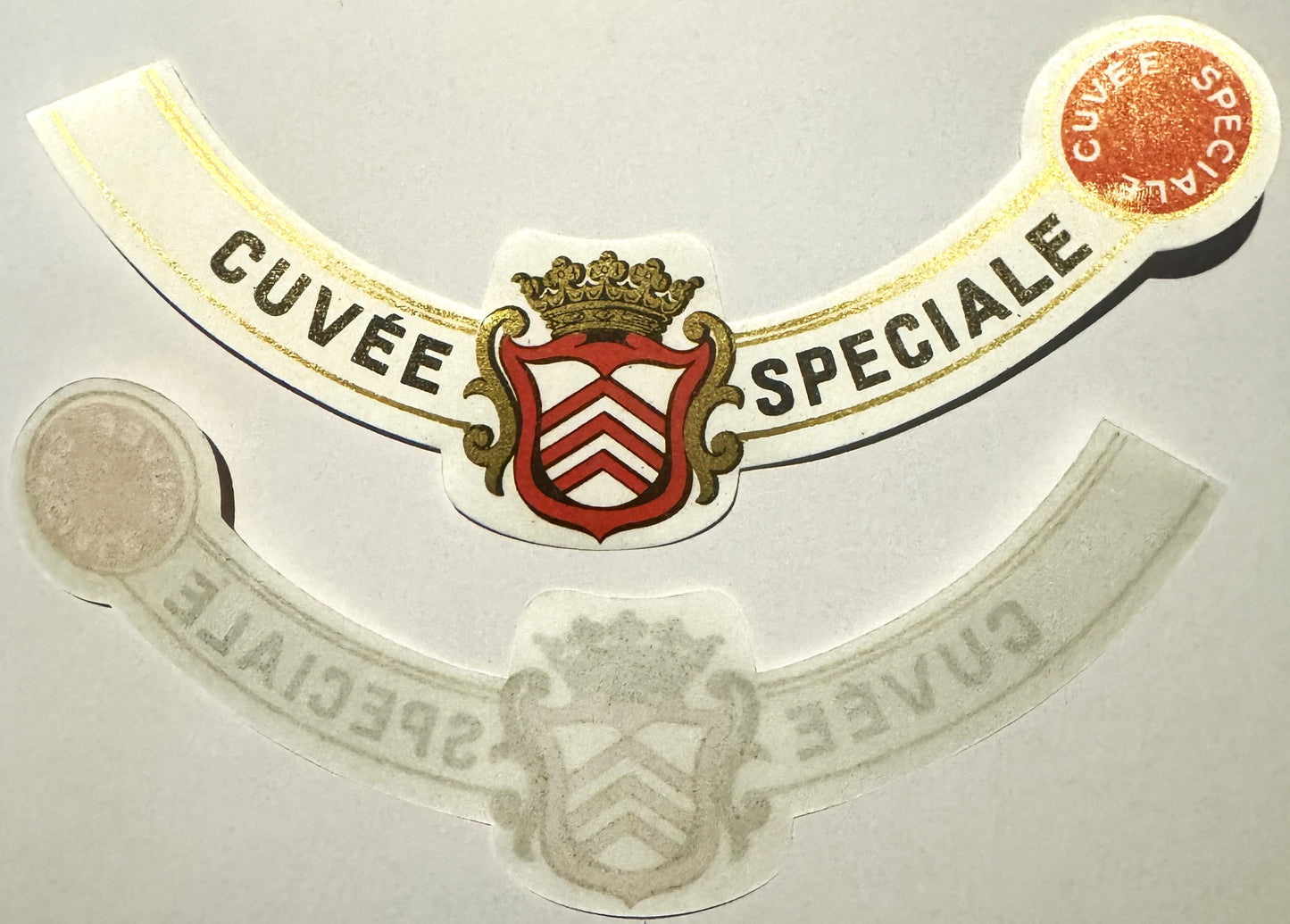
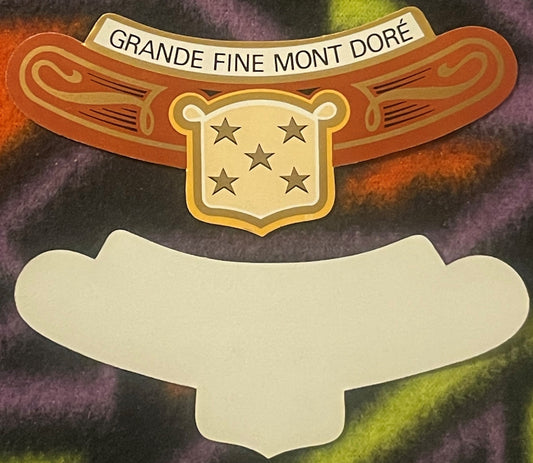
Before a cork came out, the neck of a fine bottle had already said its piece. The French called that little curved band a collerette, a small collar, and when the Champagne houses shaped their labeling tradition in the nineteenth century the collar was their nod to the scarves, lanyards and neck decorations people of the day loved to wear. Bottling machines have since made the collar a rarity. This one never met a bottle at all: a New Old Stock French wine collarette from the 1920s-1930s, lithographed in black, red and metallic gold, announcing CUVÉE SPECIALE twice, with a crowned shield of three red chevrons rising from the middle of the band.

🔎 What Is on It

  • Shape: a curved band that arcs like a sickle, a shield-shaped tab rising at its center, and a round tab at the right-hand end
  • Words: CUVÉE SPECIALE in bold black capitals across the band, and the same two words again in white capitals circling a red roundel on the end tab
  • Shield: a white field carrying three stacked red chevrons inside a red border, outlined in black
  • Crown: a gold coronet sitting on top of the shield
  • Ornament: gold scrolls curling out from both sides of the shield, and twin gold rules running the length of the band
  • Back: plain paper, thin enough that the printing shows faintly through in reverse
  • Unprinted: no house, bottler, town or vintage appears anywhere on it

📜 Cuvée: From the Vat to the Neck

The word starts in the cellar. Cuvée comes from cuve, the French word for a vat or tank, and on a label it means wine of a particular blend or batch. In Champagne it has a stricter sense still: the finest juice of a gentle pressing, the first 2,050 liters from 4,000 kilograms of grapes. Add spéciale and the promise goes up a step. Like tête de cuvée, "cuvée spéciale" is meant to signal a higher-quality selection set apart from a producer's everyday wine.

What the words never did was carry the force of law. The term is largely unregulated, so the word on the label is a producer's own boast rather than a guarantee. With no house name printed anywhere on this collar, the boast is all it makes: this bottle is the special one.

🛡️ Reading the Shield

Heraldry gave the label its authority. The chevron, the wide inverted V on a shield, takes its name from Old French chevron, the mark so called because it looks like the rafters of a shallow roof. The word runs back through Vulgar Latin to Latin caper, goat, and the likely link between goats and rafters is the animal's horns. Heraldic tradition reads the rafter-shaped chevron as a sign of protection and faithful service, and the old story goes that it was granted to those who had built churches or fortresses or carried out some notable enterprise. This shield stacks three of them in red on white, which heralds would describe in their old tongue as gules on argent.

Above it sits a gold coronet. In France, coronets on a coat of arms were strictly regulated and used to show rank within the nobility, from duke and marquis down through count, viscount and baron. On a label with no family name, the crown and chevrons borrow that whole language of lineage to dress a bottle of wine, and the gold scrolls on either side finish the effect.

⚖️ The Years France Wrote Its Wine Laws

A collar like this was printed while France was still building the rules that govern its wine names today. The first French law determining viticultural designations of origin dates to 1 August 1905. On 6 May 1919 the Law for the Protection of the Place of Origin followed, specifying the region and commune where a given product must be made. On 30 July 1935, at the initiative of Joseph Capus, the Comité National des appellations d'origine was created by government representatives and the major winegrowers to run the new appellation d'origine contrôlée system.

Those laws were about where a wine came from. CUVÉE SPECIALE says nothing about place. It speaks the older language of the cellar and the blend, which is why a collar like this one could ride the neck of a bottle from any house that thought its wine deserved it.

🖨️ How Paper Came to Dress the Bottle

Wine labels as we know them needed two things to happen: glass bottles becoming the standard container for wine, and a cheap way to print color on paper. The second arrived when the Bavarian Alois Senefelder invented lithography in 1796, and it was carried into full color in 1837 with Godefroy Engelmann's chromolithography. French label printers sold ready-made designs from salesmen's sample books: generic wine and liqueur labels, each marked with a stock number and a price, waiting for a merchant's name to be added. The Champagne houses led the way in dressing their bottles, and the full outfit of body label, neck band and collar that became traditional there set the look a bottle of any quality was expected to wear. The Champagne houses are credited with being the first to dress their labels in gold, silver and bronze, and at the neck of a Champagne bottle the collerette often carried the house's name or its coat of arms. Veuve Clicquot's Yellow Label has marked that house's style since 1876. Collectors also tell that bottling hands fitted the collar last, as the finishing touch that crowned the dressed bottle.

That outfit is what the machines ended. Standard Champagne bottles are now labeled at 900 to 8,000 an hour on automated lines, with hand labeling kept mostly for special prestige formats. A loose, never-used collar from the days of paper finery is the part of that world that did not get glued down and thrown away.

🖼️ Living With It

  • Frame it on a dark mat so the curve of the band, the gold and the red shield stand out.
  • Pair it with an antique body label, a corkscrew or an old wine map in a kitchen, dining room or cellar.
  • Tuck it into a cellar book or wine journal as a keepsake.
  • Give it with a bottle of French wine to someone who loves wine, France, heraldry or old printing.

❓ Questions People Ask

Was it ever on a bottle? No. It is New Old Stock, a 1920s-1930s collar that was never applied.

What does Cuvée Spéciale mean? A special blend or batch. Cuvée comes from the vat, and "spéciale" marks a selection the producer set above its everyday wine.

Which winery used this label? None is named. The collar prints only CUVÉE SPECIALE, the crowned shield and the gold ornament.

What is the round red tab? A roundel at the end of the band repeating CUVÉE SPECIALE in white letters, a second place for the words to be read.

Is the coat of arms a real family's? No family, town or house is printed with it. The shield uses the classic heraldic chevron and a coronet to give the wine the look of noble credentials.

Shipping

🚚 Shipping & Handling

  • Shipping costs and timing are calculated at checkout.
  • Items curated and shipped directly by me include U.S. shipping at no additional cost, professionally packed to ensure safe arrival of your artifact.

Items from Vetted Pro Collectors
Shipping for items offered by vetted Pro Collectors is determined at checkout. All Pro Collector listings are reviewed to ensure fair, reasonable shipping practices.

For full details, please refer to our Shipping Policy.

Returns & Exchange

Take your time — you've got a full six months. If a piece isn't right for you, send it back the way it reached you and we're good.

In the first 30 days your money goes straight back the way you paid. After that it's store credit, so you can put it toward something you'd rather have.

Return shipping we sort out between us, case by case. I don't make this difficult.

If something arrives damaged, or it isn't what I said it was, send me a photo within 48 hours and I'll make it right.

Email info@vintageantiquesgifts.com or call 802-356-9872 — that's me answering, not a call center.

The only things I can't take back are custom or special-order pieces and gift cards.

View full details
  • 5 stars: 1 (100%)
  • 4 stars: 0 (0%)
  • 3 stars: 0 (0%)
  • 2 stars: 0 (0%)
  • 1 star: 0 (0%)
V
Victoria

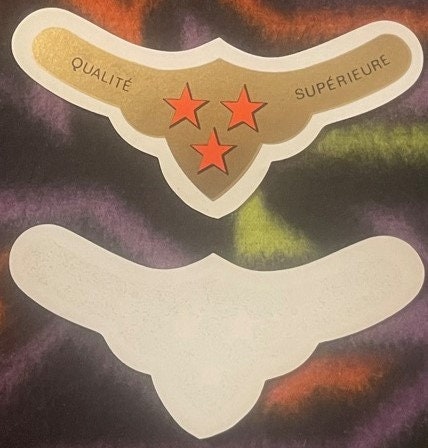
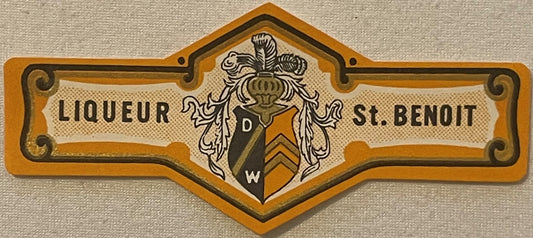
Just as described and vendor was kind enough to send a few extra labels!

Preserving History: Authentic Objects Across Eras

— Curated by Travis Weigel