Skip to product information
1 of 3

Vintage and Antique Gifts

Antique Spana Cuba Quality Cigars Embossed Label 🚬 Early 1900s NOS Cigar Box Lithograph Tobacco Ephemera Cigar Label

Antique Spana Cuba Quality Cigars Embossed Label 🚬 Early 1900s NOS Cigar Box Lithograph Tobacco Ephemera Cigar Label

Regular price $5.50 USD
Regular price Sale price $5.50 USD
Sale Sold out
Shipping calculated at checkout.

Size: 4 1/4" x 2"

🚚 Free US Shipping — ships within one business day. International shipping calculated at checkout.

Quantity

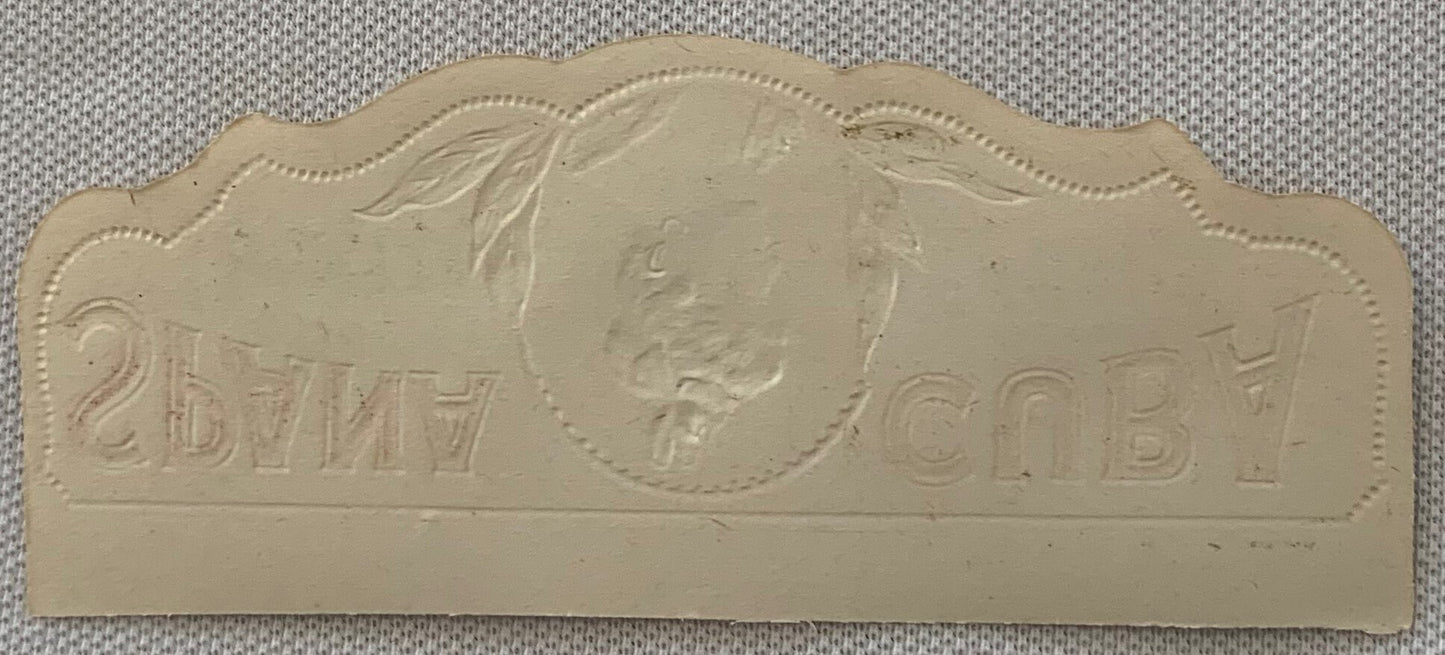
Spain and Cuba, From Reading, Pennsylvania? 🎩 An Antique Spana Cuba Quality Cigars Embossed Label, Yocum Bros.

Size: 4 1/4" x 2" ~ NOS unused stock, little to no storage wear.

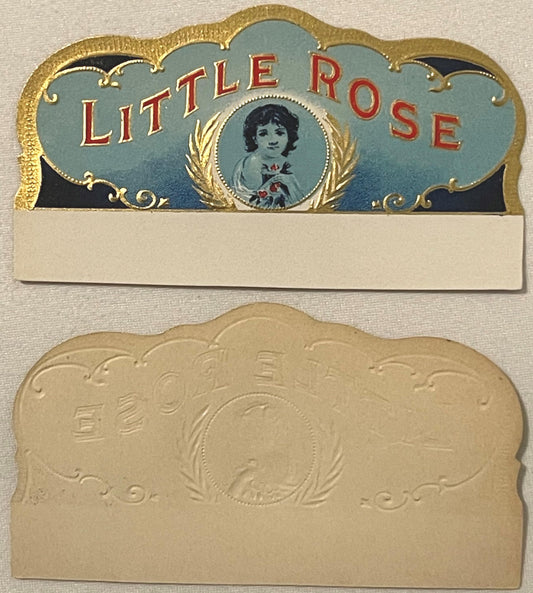
SPANA on one side, CUBA on the other, and between them a lady in profile, her hair piled up high, in a gold-rimmed medallion on pale green, with gold tobacco leaves curling up around her and QUALITY CIGARS split on either side. This little die-cut label, scalloped into arches along the top and bottom, went on the back flap of a cigar box, and the embossing is pressed in so deep you can read the whole design backward from behind. These are unused, new old stock - never glued to a box - and in raking light the gilding practically glows.

🏭 Who made Spana Cuba? Yocum Bros. of Reading, Pennsylvania

Nothing on the label names the maker, but everything else with the brand on it does. Spana-Cuba was a Yocum Bros. cigar out of Reading, Pennsylvania - the Spana-Cuba cigar boxes and tins carry the Yocum name, and there's a little cigar-box bottle opener stamped "Yocum Spana Cuba Y-B Cigars Reading PA".

It's a Berks County story start to finish. Back in 1881 William H. Yocum was rolling cigars in the little village of Stouchsburg; when his brother James W. joined him at the start of 1885, the firm became Yocum Bros. A move into Reading followed in 1893, to a factory at the corner of Seventh and Walnut, and by 1897 the place employed 350 hands and turned out fifteen million cigars in a year. The business was known as Y-B Cigar in its later life, DWG Cigar Corporation took it over in 1956, and production was over by 1966.

And it grew fast. At Stouchsburg William went from working by himself to sixty people by 1885, and in 1884 he had already bought out the Glaser & Lehr cigar business in Reading and run it with about a hundred hands. The brothers had to move the factory three times before they built for keeps at Seventh and Walnut, a big four-story brick building, and wholesale houses sold Yocum cigars all over the country. They had plenty of company, too: in March 1898 Reading counted 110 cigar manufacturers with about 3,200 people at work, and by 1923 the Reading district was turning out more than 180 million cigars a year.

Here's the part I never would have guessed. When doctors started warning about cigars and smokers drifted to cigarettes, DWG trimmed its cigar business, then sold or closed the last of it in 1966 and became a holding company - and today's Wendy's/Arby's Group traces its lineage back to DWG. So a Reading cigar factory has a branch on the fast-food family tree.

🌍 Why a Pennsylvania cigar was called Spain and Cuba

Because that's what a smoker wanted to hear. Havana meant the finest leaf in the world, Spain meant the old tobacco tradition behind it, and after the Spanish-American War of 1898 every American knew where Cuba was. Spana Cuba doesn't claim to be an imported Havana - it just puts the two words side by side and lets the smoker's imagination do the rest. A Pennsylvania Dutch cigar factory dressing its box in Spain and Cuba is about as American as it gets.

🚬 When everybody smoked cigars

In the peak years around 1905 to 1907, American factories turned out something like seven billion cigars a year, for a country of about eighty million people. Thousands of brands fought for the same humidor shelf and the same nickel, and the box label was how you won - which is why a back-flap label this small got gold, embossing and full color. Old-timers in the trade used to say the band sold the first cigar and the blend sold the second, and a pretty face in gold on the box flap did the same job. The big label printers in New York, Philadelphia, Cincinnati and Chicago hired engravers and artists trained in the European tradition, and the color, the gilding and the embossing each took their own pass through the press. By the 1920s cheaper printing had mostly taken over, and work like this was on its way out.

📦 Where unused labels come from

Local legend in the paper trade has it that the big hoards of unused cigar labels that turn up - at estate sales, print-shop cleanouts, the bottom of a warehouse lot bought blind - are the overruns and salesman's samples every print job left behind. Printers ran a little extra against spoilage, the samples went in the salesman's book, and when a brand was dropped the leftovers just stayed put, sometimes for generations. That's how labels like this one are still flat, bright and unused.

🖼️ About these labels

Every one I have is unused, 4 1/4 by 2 inches, with full color and crisp embossing. No date is printed on it, but Spana Cuba goes back a long way: in 1895 the labor paper The American Federationist, reporting a dispute over a pay cut at the factory behind Spana Cuba and the Y.B. brands, called it the "principal brand ... on which fully two-thirds of the hands are employed," and an Indiana druggists' association book from the 1900s carries an ad for "Y.B. 10c and SPANA-CUBA 5c Cigars." The stone-printed embossing and gilding belong to the early 1900s too. It's a beauty floated in a shadow box where the light can rake across the gold, framed with other cigar labels, or tucked into a collection of Reading and Berks County tobacco history.

Shipping

🚚 Shipping & Handling

  • Shipping costs and timing are calculated at checkout.
  • Items curated and shipped directly by me include U.S. shipping at no additional cost, professionally packed to ensure safe arrival of your artifact.

Items from Vetted Pro Collectors
Shipping for items offered by vetted Pro Collectors is determined at checkout. All Pro Collector listings are reviewed to ensure fair, reasonable shipping practices.

For full details, please refer to our Shipping Policy.

Returns & Exchange

Take your time — you've got a full six months. If a piece isn't right for you, send it back the way it reached you and we're good.

In the first 30 days your money goes straight back the way you paid. After that it's store credit, so you can put it toward something you'd rather have.

Return shipping we sort out between us, case by case. I don't make this difficult.

If something arrives damaged, or it isn't what I said it was, send me a photo within 48 hours and I'll make it right.

Email info@vintageantiquesgifts.com or call 802-356-9872 — that's me answering, not a call center.

The only things I can't take back are custom or special-order pieces and gift cards.

View full details

Rescuing American History Since 2007

— Travis & the Kids