Skip to product information
1 of 1

Vintage and Antique Gifts

Antique Lily Broom Label 🌸 NOS Litho | Art Deco Floral Advertising Print #21

Antique Lily Broom Label 🌸 NOS Litho | Art Deco Floral Advertising Print #21

Regular price 9.00 USD
Regular price Sale price 9.00 USD
Sale Sold out
Shipping calculated at checkout.
Quantity

Could a Broom Label Be the Most Honest Piece of Art in Your Collection? 🌸

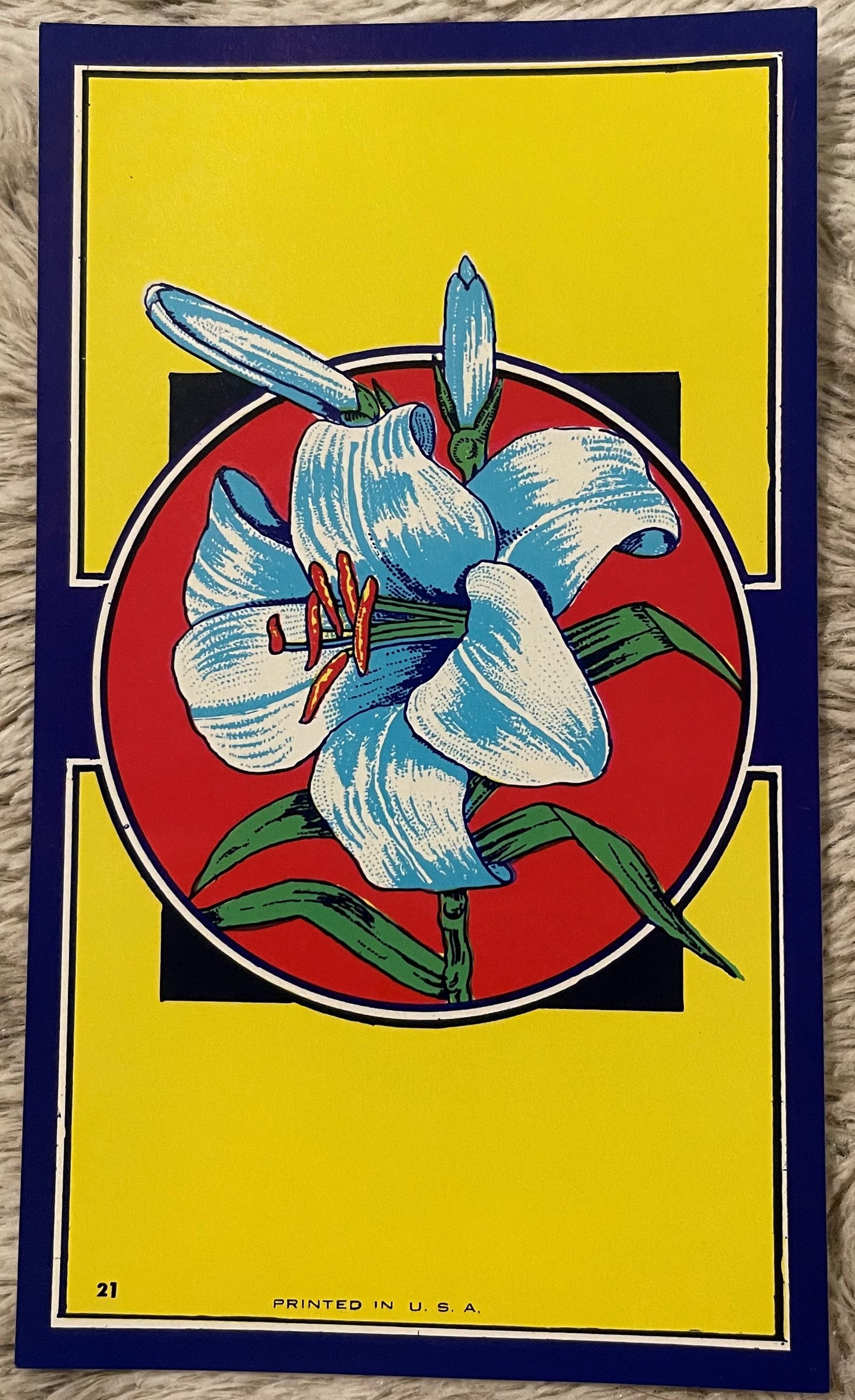
There's something quietly remarkable about holding a piece of printed paper that was designed to sell a broom — and finding yourself genuinely moved by it. Not by irony, not by kitsch, but by the real thing: a draftsman's careful hand, a lithographer's meticulous registration, a color palette chosen by someone who understood that a customer standing in a hardware store in 1930 needed to feel something in the half-second before they reached for a broom. That's what this Lily broom label does. It doesn't whisper. It sings. And it has been waiting, in new old stock condition, to be discovered by someone who recognizes exactly what it is.

Welcome to the world of antique broom labels — one of the most underappreciated corners of American commercial printing history, and one of the most rewarding things a vintage graphic collector can chase.

---

What Exactly Is This Piece? 🔍

This is an original, unused antique Lily broom label — a piece of new old stock (NOS) commercial lithography from the early to mid-twentieth century, almost certainly printed between the 1910s and the 1940s. It was never applied to a broom. It never saw a store shelf. It survived in the kind of quiet, accidental preservation that collectors dream about: tucked away in a printer's flat file, a warehouse shelf, or a paper merchant's back room, untouched while the decades rolled past. The design centers on a white lily and buds rendered inside a bold red circle, set against a vivid yellow and blue background — a composition that is as confidently graphic today as it was when it rolled off the press. It was printed in the United States using the multi-color lithographic process that was the gold standard of American commercial printing during that era, and it shows: the color registration is sharp, the pigments remain bright, and the paper has the heft and surface quality of a piece that was meant to do a real job in the real world.

NOS condition means exactly what it sounds like. This label was never used. It is as close to the moment of its printing as anything you will find. For collectors of antique advertising, paper ephemera, and American graphic design, NOS is the designation that separates a display-ready treasure from a relic. This is a treasure.


🏭 The Broom Industry and Why It Produced Such Beautiful Art

To understand why a broom label could be this visually ambitious, you have to understand the world that made it. The American broom industry in the early twentieth century was genuinely competitive — intensely, locally, regionally competitive in ways that are hard to imagine in the era of big-box retail. Hardware stores, general stores, and dry goods merchants carried brooms from multiple manufacturers, and those brooms were often stacked together in a barrel or leaning against a wall in a jumble. There were no online ads, no television spots, no influencer campaigns. The only marketing that happened at the point of sale was the label itself.

This meant that broom manufacturers invested real money in their labels. They hired commercial lithographers — skilled craftsmen who worked with stone or metal plates, mixing inks by hand and pulling proofs until the color balance was exactly right. The design choices were deliberate: bold color fields to catch the eye from across a dim store, floral or nature motifs to evoke freshness and cleanliness, and a central image strong enough to be remembered. The Lily label does all of this with what looks like effortless confidence. The red circle anchors the composition. The white lily reads as purity and domesticity. The yellow and blue background is practically electric. Someone knew what they were doing.

The heyday of these elaborate labels ran roughly from the 1900s through the early 1940s. Broom corn — the primary raw material for traditional brooms — was grown extensively across the American Midwest, particularly in Illinois and Kansas, and the processing and manufacturing operations that grew up around it supported dozens of regional broom companies. Many of these operations were modest in scale: a few workers, a local clientele, a relationship with a regional printing house. The labels they ordered were not afterthoughts. They were the face of the brand.

After World War II, the calculus changed. The vacuum cleaner, which had existed in expensive form since the early 1900s, became genuinely affordable for the American middle class in the late 1940s and through the 1950s. Broom sales declined. Smaller manufacturers consolidated or closed. And the elaborate, lithographed broom label — that little rectangle of printed art — quietly disappeared from production. The molds and stones were broken down. The printing plates were melted. The leftover stock, if it wasn't thrown away, drifted into the unsorted corners of old buildings, waiting.


🌿 The Lithographer's Craft — How These Labels Were Actually Made

Multi-color lithography in the early-to-mid twentieth century was not a quick process. Each color in a design required a separate plate, and each pass through the press had to be carefully registered so the colors aligned. For a label like this one — with its distinct red, yellow, blue, white, and presumably black or dark outline elements — the printing process likely involved four to six separate press runs. The craftsmen who managed this work were specialists. Many had learned their trade through formal apprenticeships, working their way up from stone grinders and ink mixers to pressmen and color separators over the course of years.

The paper used for broom labels was chosen for durability as much as printability. It needed to accept ink evenly, but it also needed to survive the application of paste glue and the rough handling of a broom handle. NOS examples like this one, which never went through that application process, often show the paper in a condition that is simply not achievable any other way. The surface is clean. The colors are saturated. The piece looks, in the best possible sense, like it just came off the press.

Lore passed down among collectors of American paper ephemera holds that some of the finest broom labels were printed by small, regional lithography shops that also handled seed packets, cigar bands, and canning labels — the full range of American commercial printing that required both precision and artistry. These shops, many of them family operations, kept their craft knowledge close. The specific printing house behind this Lily label may be lost to time, but the quality of the work speaks clearly to a tradition of professional pride.


🌸 The Lily as Symbol — What This Image Meant Then and Means Now

Flowers have been the language of domestic advertising for as long as domestic advertising has existed, but the lily carries specific freight. In the vocabulary of early twentieth century American commercial art, the lily meant cleanliness, purity, and the well-kept home. It was a flower associated with Easter, with spring, with renewal — associations that mapped beautifully onto the idea of sweeping out the old and bringing in the fresh. A broom named Lily wasn't just a broom. It was a small promise about the kind of home you could have if you chose it.

The graphic treatment here takes that soft symbolism and gives it a backbone. The white lily is rendered with real botanical attention — the buds, the stem, the suggestion of leaf — but it's framed inside that bold red circle, which is itself set against the unapologetic contrast of yellow and blue. This is not a timid piece of design. It is Art Deco sensibility applied to a utilitarian product, and the result is something that feels simultaneously of its era and entirely contemporary. Collectors of vintage graphics who encounter this label for the first time often report a double-take: it looks like it could have been designed last year by someone mining the twenties and thirties for inspiration. It wasn't. It is the original.

Local legend has it — and this is the kind of story that circulates at paper shows and among longtime ephemera dealers — that floral broom labels like the Lily were occasionally saved by the women who bought the brooms, cut from the handle before the broom was put to work, and tucked into the pages of household ledgers or recipe books as a kind of accidental art collection. Whether or not this particular label traveled that route, the impulse it describes is real: these were objects that people recognized as beautiful, even in a context that wasn't asking them to.


🖼️ Display Ideas — Bringing This Label Into Your Space

  • 🖼️ Frame it as a mini poster. The graphic weight of the Lily label — that red circle, the vivid ground colors — means it holds its own in a simple frame. A small black or natural wood frame on a white mat lets the design breathe and gives it the gallery treatment it deserves.
  • 🌿 Anchor a cottage-core or vintage botanical gallery wall. Grouped with pressed botanical prints, other vintage advertising ephemera, or antique seed packet labels, this piece becomes a colorful, unexpected focal point that pulls a whole wall together.
  • 🎨 Use it as the centerpiece of a craft journal or altered book spread. Scrapbookers and mixed-media artists know that NOS labels like this one — with their intact surfaces and saturated colors — photograph brilliantly and take adhesive cleanly when the time comes.
  • ✉️ Incorporate it into handmade card-making projects. Cut, layered, or used whole as an accent element, the Lily label brings authentic vintage graphic energy to handmade stationery and greeting card projects in a way that reproductions simply cannot match.
  • 🏡 Display it propped on a plate stand or in a small easel on a shelf. Not everything needs to be framed immediately. Propped in a small display easel on a bookshelf or kitchen counter, this label functions as a rotating accent piece — easy to move, easy to enjoy, easy to share with guests who will inevitably ask about it.
  • 🌸 Pair it with other antique floral ephemera for a themed vignette. Alongside vintage seed packets, antique greeting cards with botanical motifs, or other period advertising labels featuring flowers, the Lily creates a cohesive, visually rich still-life arrangement that rewards close looking.

🎁 Who Collects These — and Why This One Matters

The community of collectors who seek out antique broom labels and American commercial lithography is smaller and more devoted than you might expect — and for good reason. These pieces exist at the intersection of several serious collecting disciplines. Graphic design historians prize them for what they reveal about the evolution of American commercial art. Advertising ephemera collectors value them as authentic examples of point-of-sale marketing from an era before mass media. Vintage paper collectors love the quality of the printing and the survivability of NOS examples. And a growing community of home decorators, craft artists, and visual storytellers has discovered that original antique labels like this one carry a visual authority that no reproduction can approximate.

This particular label will appeal strongly to anyone drawn to Art Deco graphic sensibility — the bold geometry, the confident color contrasts, the willingness to treat a utilitarian object as an opportunity for genuine design. It will resonate with collectors of Americana who focus on domestic goods and the material culture of the early-to-mid twentieth century American home. It belongs naturally in collections of antique floral advertising, alongside vintage seed packets, canning labels, and household product packaging from the same era. And it will find an enthusiastic home with the growing community of cottagecore and vintage-aesthetic decorators who are discovering — correctly — that the real thing is almost always more satisfying than the inspired-by version.

New old stock condition makes this piece accessible in a way that worn or applied examples are not. You don't need to be a paper conservator to display it. You don't need to make apologies for condition. You simply need to recognize what it is: a small, genuine, beautifully preserved piece of American design history that has been waiting a very long time for the right home.


❓ Frequently Asked Questions

Is this label a reproduction or a modern reprint?

This is an original antique Lily broom label — not a reproduction, not a modern reprint, not a digital facsimile printed on aged-looking paper. It is new old stock from the early to mid-twentieth century, meaning it was produced during the original period of manufacture and has been preserved unused since then. The printing quality, the paper stock, and the ink saturation are consistent with American commercial lithography from that era, and the NOS designation means it went directly from production storage into the collectibles market without being applied to a broom or otherwise used. When you hold it, you are holding something that was printed between approximately seventy and one hundred years ago. That provenance is not replicable.

What does "new old stock" actually mean for a paper label like this?

New old stock — NOS — refers to inventory that was manufactured during a product's original production run and has remained unused and unissued since then. For a broom label, this means the piece was never glued to a broom handle, never exposed to the moisture and rough handling of retail display, and never subjected to the stresses of actual use. NOS paper ephemera typically survives in significantly better condition than examples that went through the retail chain, and the difference is visible: brighter colors, cleaner paper, crisper printing. For collectors and display purposes, NOS condition is essentially the ceiling of what's achievable for antique commercial labels, and it makes this piece genuinely displayable without any restoration or remediation.

How do I frame or display this label without damaging it?

For display, the most important principle is to keep the label away from direct sunlight, which can fade even well-preserved vintage lithography over time. UV-filtering glazing — either glass or acrylic — is the collector's standard choice for framing antique paper ephemera and will protect the color saturation that makes this piece so visually compelling. When matting, use archival (acid-free) mat board to prevent the slow chemical damage that standard mat board can cause over decades. If you prefer not to frame immediately, a rigid backing sleeve or archival polyester sleeve will keep the label protected and flat. The label should not be stored in direct contact with non-archival materials, rubber bands, or anything acidic. Treated with basic archival care, a piece in this condition will remain beautiful for another century.

What period of American history does this label represent?

This label dates to the early-to-mid twentieth century — most likely somewhere in the range of the 1910s through the 1940s. This was a period of enormous energy in American commercial design, spanning the transition from Victorian decorative excess through the clean, geometric confidence of Art Deco and into the streamlined modernism of the late 1930s. Broom labels from this period reflect all of these influences, and the Lily label sits comfortably in the Art Deco tradition: bold color fields, a strong central motif, geometric framing (the red circle), and a color palette chosen for maximum visual impact rather than naturalistic fidelity. It is also a document of a specific moment in American domestic material culture, when the traditional corn broom was still the primary floor-cleaning tool in most American homes and manufacturers competed vigorously for shelf space and consumer attention.

Is the lithography on this label typical of the period, or is it especially fine work?

Multi-color commercial lithography from this era ranged from competent to genuinely exceptional, and the Lily label sits toward the exceptional end. The color registration — the precise alignment of each separate color pass through the press — is sharp, which indicates both careful plate preparation and skilled press operation. The palette choices are confident and show an understanding of color theory: the red circle creates visual tension against the yellow field that pulls the eye directly to the lily, while the blue provides a grounding contrast that keeps the composition from feeling chaotic. This is not accidental. Commercial lithographers in the early-to-mid twentieth century were trained professionals who understood both the technical demands of their process and the visual goals of effective advertising design. The Lily label is a credit to whichever printing house produced it.

Can this label be used in craft or mixed-media projects?

Absolutely — and it's one of the genuine pleasures of NOS commercial ephemera that it remains fully usable as well as displayable. The intact surface accepts adhesive cleanly if you choose to incorporate it into a scrapbook, journal, or mixed-media project. The vivid color palette photographs beautifully under natural light, making it excellent source material for craft projects where the label itself will be documented rather than consumed. Many collectors choose to enjoy their antique labels in exactly this way — using them as the authentic vintage element that anchors a handmade project and gives it a visual and historical depth that modern papers simply cannot provide. If you're working with the label in a craft context, standard paper craft adhesives work well on lithographed labels of this type.

What makes broom labels collectible compared to other antique advertising ephemera?

Broom labels occupy a particularly interesting niche in the world of antique advertising ephemera because they combine genuine scarcity with remarkable graphic ambition. Unlike cigar labels or seed packets — categories that were produced in enormous quantities and have robust collector markets — broom labels were made in smaller runs, for more regional audiences, and were almost always applied directly to the product, meaning that surviving unused examples are genuinely uncommon.

The graphic investment that broom manufacturers made in their labels — hiring skilled lithographers, commissioning multi-color designs, choosing bold and distinctive imagery — means that the surviving pieces are often visually striking in ways that exceed their modest original purpose. Collectors who specialize in American advertising art, domestic material culture, or vintage botanical and floral graphics find broom labels rewarding precisely because they are undervalued relative to their actual quality and historical interest.

The Lily label, in particular, is the kind of piece that tends to stop people at paper shows and antique markets — vivid, confident, and immediate in its visual impact — which is exactly what it was designed to do more than half a century ago.

Shipping

🚚 Shipping & Handling

  • Shipping costs and timing are calculated at checkout.
  • Items curated and shipped directly by me include U.S. shipping at no additional cost, professionally packed to ensure safe arrival of your artifact.

Items from Vetted Pro Collectors
Shipping for items offered by vetted Pro Collectors is determined at checkout. All Pro Collector listings are reviewed to ensure fair, reasonable shipping practices.

For full details, please refer to our Shipping Policy.

Returns & Exchange

Take your time — you've got a full six months. If a piece isn't right for you, send it back the way it reached you and we're good.

In the first 30 days your money goes straight back the way you paid. After that it's store credit, so you can put it toward something you'd rather have.

Return shipping we sort out between us, case by case. I don't make this difficult.

If something arrives damaged, or it isn't what I said it was, send me a photo within 48 hours and I'll make it right.

Email info@vintageantiquesgifts.com or call 802-356-9872 — that's me answering, not a call center.

The only things I can't take back are custom or special-order pieces and gift cards.

View full details
  • 5 stars: 2 (100%)
  • 4 stars: 0 (0%)
  • 3 stars: 0 (0%)
  • 2 stars: 0 (0%)
  • 1 star: 0 (0%)
J
James

Absolutely beautiful labels! Far exceeded my expectations! THANKS!

Hi James, thank you so much for the 5-star reviews! We're thrilled that you enjoyed the Labels. Your support greatly contributes to our passion for vintage and antique pieces. Thank you again, we hope to serve you with more unique finds soon!

t
tattman45

nice vintage label, completely satisfied

Thank you, we appreciate your support!