Skip to product information
1 of 5

Vintage and Antique Gifts

Vintage Special Police Badge Pin 🦅 Hong Kong Imitation Jewellery Eagle Novelty on Original Card

Vintage Special Police Badge Pin 🦅 Hong Kong Imitation Jewellery Eagle Novelty on Original Card

Regular price 7.00 USD
Regular price Sale price 7.00 USD
Sale Sold out
Shipping calculated at checkout.
Quantity

What Does a Hong Kong "Special Police" Badge Pin Tell Us About the World That Made It? 🦅

There is something quietly extraordinary about holding a piece of history that was never meant to outlast its own era. This vintage "Special Police" eagle badge pin — still mounted on its original cream card, exactly as it sat on a dime-store counter or novelty rack — is precisely that kind of object. Small enough to rest in the center of your palm, vivid enough to stop a collector cold. It arrived in the world as an inexpensive plaything, a dress-up badge for the child who wanted to be the law, the cowboy sheriff, the beat cop striding down Main Street. It survives today as a perfectly intact window into one of the most fascinating chapters in postwar manufacturing history — the extraordinary rise of Hong Kong as the world's novelty and toy capital — and into the particular brand of earnest, wide-eyed American childhood that made such objects so deeply necessary and so universally beloved.

What makes this piece genuinely special — beyond the beauty of the object itself — is that it is New Old Stock (NOS). It was never separated from its original retail card. The badge remains mounted exactly as it left whatever counter or rack it graced, and the whole assembly presents today in the manner of something that simply waited, with great patience, for the right collector to come along. The card itself reads, plainly and honestly, "Imitation Jewellery — Made in Hongkong", which is part of what makes this piece such an honest and authentic artifact. No pretense. No inflation. The maker knew exactly what this was, labeled it accordingly, and sent it out into the world. That straightforwardness is itself a kind of integrity that I find deeply appealing in an era when so much was sold with breathless hyperbole.

The badge measures approximately 1.5 inches and is mounted on its original cream card — together, a complete retail presentation unit, original to each other, undisturbed. This is an excellent early example of mid-century popular culture ephemera, a piece where the graphic traditions of American law-enforcement iconography, the craft traditions of Hong Kong's postwar export industry, and the universal childhood fantasy of wearing a badge all converge into something genuinely singular.


🔍 Every Detail — Because the Craft Deserves It

Let's slow down and really look at this thing, because the people who made it brought real skill to the work, and that deserves attention. The badge itself is a beautifully rendered embossed metal piece, worked in silver tones with warm gold accents at its base — colors that read immediately as official, as authoritative, as the visual grammar of law and order. The silvertone finish catches the light the way a sworn officer's badge would, and that is entirely by design. Whoever modeled this understood the iconography they were working with and executed it with genuine confidence.

At the very top of the badge sits a spread eagle — wings extended, head forward — rendered with enough sculptural detail that you can read individual feathers in the wing plumage. This is the same heraldic eagle that appears on the Great Seal of the United States, on federal insignia, on generations of actual police and marshal badges across the American West and the urban East alike. Below the eagle, a small oval cartouche carries a starburst-and-cross device that reads like a service medallion or honor mark. The whole upper register of the badge is framed by those outstretched wings, which gives it the same visual authority as a full-scale shield badge worn by a working officer.

The center of the badge carries its circular ring inscription in raised, embossed lettering: SPECIAL POLICE along the upper arc and POLICE continuing below, encircling a central medallion that depicts what appears to be a classical civic seal — a standing or enthroned figure, rendered in fine relief, surrounded by a beaded border that mimics the engraving style of a genuine official seal. It is a remarkably detailed casting for a piece at this scale. At the bottom of the shield form, a five-pointed star in warm gold anchors the composition. The overall form is the classic American shield-and-eagle badge silhouette — every element in its right place, every proportion balanced, the whole thing as immediately readable as the real thing it celebrates.

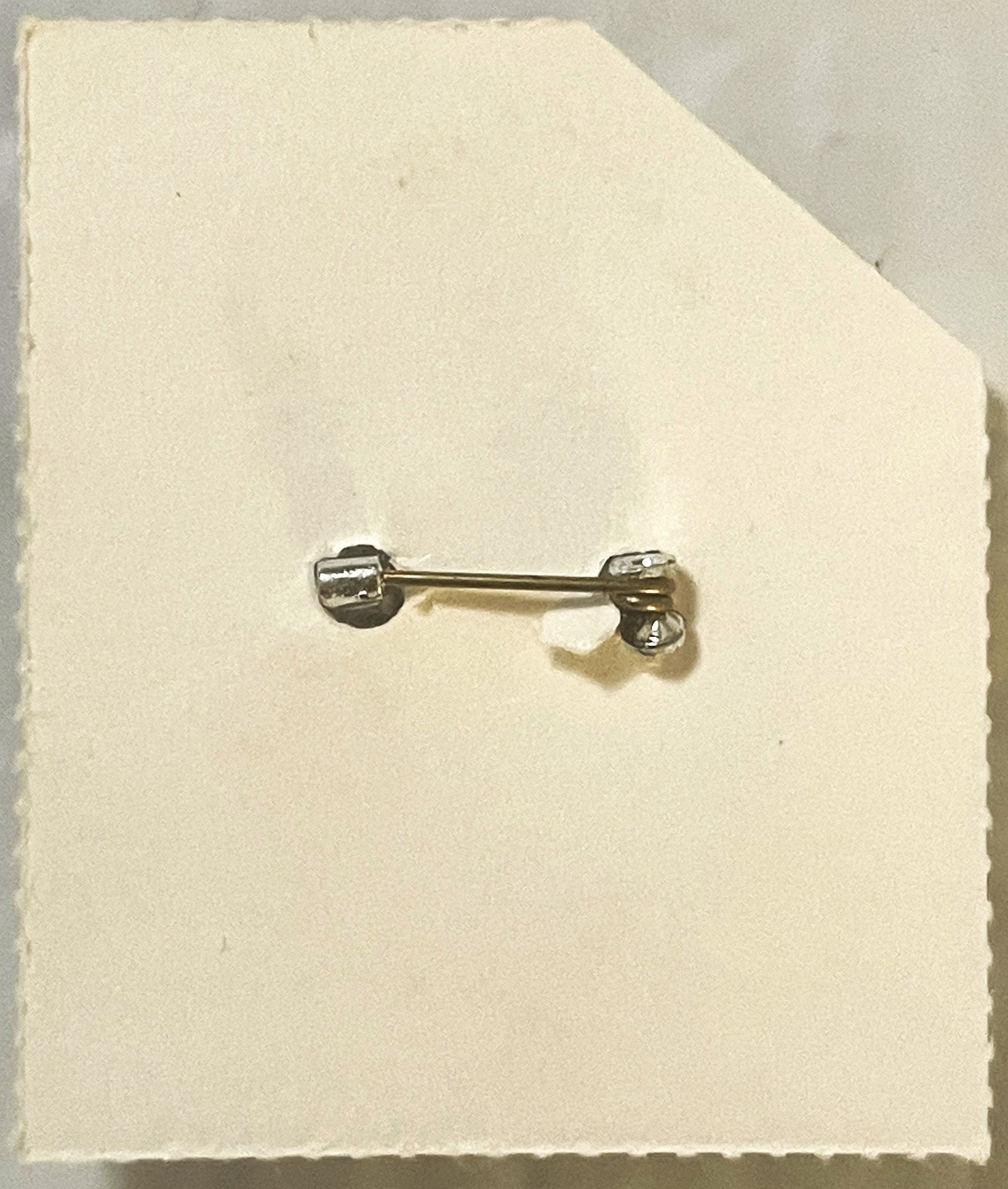
The original card is cream-colored, with the manufacturer's text printed cleanly in dark ink: Imitation Jewellery — Made in Hongkong. The card has the characteristic pin-perforated edge of a retail display card from the period — that familiar scalloped border that tells you this was punched from a rack card or hung on a peg hook in some variety store, five-and-dime, or novelty shop. The reverse of the card shows the simple pin-back mechanism: a straight bar pin with a locking clasp, functional and neat. This was made to be worn — on a shirt pocket, a jacket lapel, a Halloween costume — and it would have held just fine.


🏭 The Industry Behind It — Hong Kong's Extraordinary Postwar Rise

To really understand what you are holding, you need to understand the world that made it, because that world is one of the most remarkable manufacturing stories of the twentieth century. The label reads simply "Made in Hongkong" — four words that, to a collector's trained eye, carry an enormous amount of historical information.

Hong Kong's transformation from a British colonial entrepôt into a global manufacturing powerhouse happened with remarkable speed in the years following World War II. The territory had long served as a trading hub — goods flowed through it, but most of the actual making happened elsewhere. What changed everything, in ways no one fully anticipated at the time, was the combination of two seismic events: the establishment of the People's Republic of China in 1949 and the outbreak of the Korean War not long after. The U.S. embargo on mainland China that followed the Korean War effectively severed Hong Kong's traditional entrepôt trade almost overnight. The re-export business that had sustained the colony collapsed. Something had to replace it.

What replaced it was manufacturing — and the labor to power that manufacturing came flooding in from the mainland in the form of an enormous wave of refugees. Skilled workers, factory managers, entrepreneurs, and craftspeople who had operated in Shanghai and Guangzhou and Canton arrived in Hong Kong with expertise and drive and very little else, and they built, in an astonishingly short span of years, one of the most productive light-industrial economies the world had ever seen. Textiles came first. Then plastics. Then metal goods. Then jewelry — including exactly this category of embossed-metal costume and novelty jewelry that your badge pin represents.

By the early 1970s, Hong Kong had become the largest toy and novelty exporter in the world. That is not a small claim. It means that more of the dime-store playthings, dress-up accessories, novelty pins, costume jewelry pieces, and inexpensive gift items sold in American variety stores, five-and-dimes, carnival prize booths, and mail-order catalogs came from Hong Kong than from anywhere else on earth. The "Special Police" badge pin is a direct product of that moment — a piece of that vast, industrious, ingenious export economy, made specifically for the American market, designed around American iconography, and sold through exactly the distribution channels that mid-century American retail depended on.

The phrase "Made in Hongkong" — written as one word, which is how it commonly appeared on goods exported before the territory's handover — is itself a dating marker. It places this piece within the window of Hong Kong's peak as a colonial British territory and as the reigning capital of inexpensive American-market novelties. Collector lore and the broader documented record of comparable pieces places badges of this exact type — eagle-topped "Special Police" shield pins on original retail cards — firmly within the mid-century style and manufacturing tradition, consistent with Hong Kong's novelty export boom.

The manufacturer is not identified by name on the card, which is entirely typical of this class of Hong Kong export novelty. These were generic export goods, produced by factories whose names rarely appeared on the finished product. The "brand," such as it was, was effectively the design itself — the eagle, the shield, the words Special Police. Lore passed down among collectors of Hong Kong dime-store novelties holds that many of these pieces were produced by small family-run metalwork shops in Kowloon and the New Territories, operations that might make toys one week, costume jewelry the next, and novelty pins the week after — adapting rapidly to whatever American importers were ordering. That flexibility and responsiveness to market demand was a defining characteristic of Hong Kong's export industry at its peak.

It is also worth noting that a nearly identical sibling piece exists in the collector record marked "Made in Japan" rather than Hong Kong, which situates this whole family of novelty police badges within a broader mid-century Asian export tradition — Japan leading the way in the early postwar years, Hong Kong following and eventually surpassing as the decade of the 1960s rolled on and Hong Kong's industrial capacity matured. The two countries traded primacy in the American novelty market back and forth during these years, and pieces marked one or the other are often near-identical in design, which tells you a great deal about how global this supposedly "local" dime-store culture actually was.


👮 The Object's Life — The American Childhood That Needed This Badge

You cannot fully appreciate a piece like this without thinking about the child who would have worn it. The mid-century American child — the one growing up in the years when television was new, when Westerns dominated Saturday morning programming and prime-time alike, when every kid on the block knew the name of Marshal Dillon and had strong opinions about which deputy was the best — that child lived in a world saturated with law-enforcement iconography. Cowboys and sheriffs and city cops and G-men: the culture was absolutely awash in them. And for a child who wanted to participate in that world, who wanted to strap on a badge and become, for an afternoon, the keeper of order on whatever stretch of sidewalk or backyard constituted their jurisdiction, a piece like this "Special Police" pin was the portal.

There is a particular genius in the design of these badges, and it is easy to overlook because it looks so simple. The eagle at the top is the exact same visual vocabulary as a federal marshal's badge. The circular seal in the center mimics, at miniature scale, the same kind of civic seal that appeared on genuine department badges in cities from coast to coast. The shield form, the starburst, the five-pointed star at the base — every element was drawn from the real visual grammar of American law enforcement, scaled down and rendered in embossed metal, and placed in the hands of a child for a few cents. It was a costume that cost less than a candy bar. And it worked. It absolutely worked.

Local legend among collectors of mid-century toy ephemera holds that these "Special Police" badges were among the most popular items in the dime-store novelty racks of the period — that they moved faster than almost anything else in the play-badge category, and that they were frequently given out by parents, grandparents, and candy-store owners as small rewards, consolation prizes, and spontaneous gifts. The specificity of "Special Police" as the chosen wording — rather than "Sheriff" or "Marshal" or "Deputy" — reflects the urban civic vocabulary of the postwar era, the moment when city police departments were growing rapidly and the figure of the beat cop was as romanticized in popular culture as any Western lawman.


🖼️ Display Ideas

  • 🗂️ Framed shadowbox display — mount the badge on its original card inside a small shadowbox frame alongside other mid-century Hong Kong dime-store novelties, creating a curated tableau of postwar popular culture.
  • 👕 Worn as a lapel pin — the functional pin-back means this piece is entirely wearable; a vintage denim jacket, a wool blazer lapel, or a canvas tote bag all become conversation pieces the moment this badge is pinned to them.
  • 🧸 Toy and ephemera collection anchor — display alongside vintage tin toy cars, cap guns, lithograph tin toys, and other mid-century play objects to build a cohesive visual narrative of postwar childhood material culture.
  • 🏪 Vintage retail display recreation — pair with other NOS items still on their original cards to recreate the look of a mid-century variety store peg display; a striking and genuinely evocative arrangement for a study, shop, or collector's room.
  • 🦅 Americana and law-enforcement memorabilia collection — displayed alongside real vintage badge replicas, sheriff star pins, and Western ephemera, this piece reads as a vivid and charming piece of the broader iconographic tradition it draws on.
  • 🎄 Collector gift presentation — still on its original card and undisturbed, this is a piece that arrives ready to gift; no additional framing or presentation required, just a genuinely wonderful find for the right recipient.

🎁 Who Collects These

The collector world for mid-century Hong Kong novelty and dime-store ephemera is broader and more passionate than most people outside it realize. At one end you have the dedicated toy and badge collectors — people who specifically chase the complete family of mid-century novelty police, sheriff, marshal, and deputy badge pins, hunting for every variant and every maker's mark, building reference collections that document the full range of what was produced. For these collectors, a NOS example still on its original retail card is the prize above prizes — the piece that documents not just the object but its original commercial context, the complete artifact rather than the artifact alone.

At another end you have the broader Americana and popular culture collectors — people drawn to mid-century material culture in all its forms, who find in a piece like this a perfect, portable encapsulation of a specific cultural moment. These are the collectors who hang vintage tin signs alongside NOS novelty cards, who mix dime-store ephemera with advertising art and packaging design, who see the graphic sensibility and the manufacturing history as the real story the object tells.

Then there are the gift-givers — the people who recognize immediately that a perfectly preserved piece like this, still on its original card, is the ideal gift for the person who has always loved law enforcement, who grew up playing cops and robbers, who has a nostalgic connection to the dime-store culture of their own childhood or their parents' childhood. This piece has been given as a gift and received with genuine delight, because it carries that quality that the best vintage finds always carry: it feels both discovered and inevitable, like something that was always meant to end up in exactly this person's hands.

Police and law-enforcement memorabilia collectors form another natural home for this piece — not because it was ever an official badge, but because it participates so fully and so skillfully in the visual vocabulary of American law-enforcement iconography. It is a piece of that tradition, viewed through the lens of play and popular culture, and collections that trace that tradition benefit from having it represented.


❓ Frequently Asked Questions

Is this a real police badge, or a toy?

This is a novelty costume badge — and the manufacturer told you so, right on the card: "Imitation Jewellery." That label is not a disclaimer added later; it is the manufacturer's own original description of what they made, printed directly on the retail card that this badge has never left. It is a dime-store novelty, a dress-up badge, a play piece made for children who wanted to participate in the visual world of law enforcement they saw on television and in the movies. That is its honest identity, and it is a genuinely wonderful identity — because it means this object carries the full weight of mid-century American childhood fantasy, the specific earnestness of a culture that took its play seriously enough to render a child's badge with a heraldic eagle, a civic seal, and embossed Latin precision. It is not a real badge. It is, in its own way, something more interesting.

What does "Made in Hongkong" tell us about when this was made?

Quite a bit, actually — though it gives us a range rather than a precise date, and I want to be honest about that distinction. The "Made in Hongkong" mark — written as one word, which was the common export convention of the British colonial era — places this piece within Hong Kong's peak years as the world's leading novelty and toy exporter. The research I've done on comparable examples, combined with what is known about Hong Kong's manufacturing history, points to a mid-century vintage period consistent with the height of Hong Kong's export boom. Comparable "Special Police" eagle badge pins are documented in the collector market from this same era and style tradition. I describe this piece as vintage, mid-century in style — which is the honest, defensible characterization based on everything I can verify. What I can tell you with confidence is that this is genuinely old, genuinely original, and part of a well-documented tradition of mid-century novelty production.

Is the badge still on its original card? Has anything been separated or replaced?

Yes — the badge is still mounted on its original retail display card, exactly as it would have presented on a dime-store peg rack or novelty counter. This is New Old Stock: the assembly was never broken apart for use. The card, the badge, and the pin-back mechanism are all original to each other and original to the piece's retail presentation. That completeness — the badge and its card together, undisturbed — is a significant part of what makes this a collector-quality find rather than just a loose badge pin. It documents the complete commercial artifact.

Can this actually be worn, or is it purely for display?

The pin-back mechanism on the reverse is fully functional — it is a straight bar pin with a locking clasp, exactly the hardware this type of novelty badge was made to use. So yes, this can be worn. The question of whether to wear it or display it is entirely a personal collector decision. Many buyers choose to display it on its original card, treating the card as an essential part of the artifact. Others pin it to a lapel, a denim jacket, or a bag and enjoy it as a wearable piece of Americana. Both are legitimate uses, and the piece is entirely suited to either.

Who made this — is there a known manufacturer?

This is one of the genuinely interesting mysteries of this category of mid-century novelty, and I want to give you a straight answer rather than a confident-sounding guess. No specific factory, company name, or importer is identified on the card or badge — which is entirely typical of Hong Kong export novelties of this era. These were generic export goods, produced by small-to-medium metalwork and novelty manufacturers whose names rarely appeared on the finished product. The "brand" was effectively the design: the eagle, the shield, the words Special Police. Collector lore holds that many of these pieces came from small family-run shops in Kowloon and the surrounding areas, operations that were nimble enough to produce whatever American importers needed. The honest answer is: the maker is not documented, and I would rather tell you that plainly than attach a name I cannot verify.

Is this a good gift for someone who collects law-enforcement memorabilia or vintage toys?

It is an excellent gift for exactly those collectors — and also for a broader range of people than you might initially think. Anyone who grew up in the mid-century era of television Westerns and police procedurals will have an immediate, visceral recognition response to a piece like this. Anyone who collects dime-store ephemera, mid-century popular culture objects, or novelty pin-backs will appreciate both the object and its condition as NOS on the original card. Law-enforcement professionals and enthusiasts who appreciate the iconographic history of badge design will find it charming and meaningful. And anyone with a personal connection to childhood play, to the specific imaginative world of "Special Police" and sheriff stars and marshal badges, will find this piece genuinely moving in the way that the best vintage finds always are. It arrives on its original card, undisturbed — a complete gift, requiring nothing additional to present beautifully.

Are there other versions of this badge — different markings, different materials?

Yes, and the broader family of these mid-century novelty police badges is itself a fascinating collector topic. A closely related version of the "Special Police" eagle badge is documented in the collector market marked "Made in Japan" rather than Hong Kong — almost certainly from an earlier point in the postwar Asian export cycle, when Japan led the novelty market before Hong Kong took primacy. There are also variant designs in the sheriff star, deputy marshal, and police chief formats, some in goldtone rather than silvertone finishes, some with different central seal designs. The eagle-and-shield silhouette was a template that multiple manufacturers in multiple countries worked with, adapting it with minor variations while keeping the essential visual grammar constant. Your Hong Kong example sits within that well-documented family, and its "Imitation Jewellery — Made in Hongkong" card is one of the more complete and honest retail presentations in the group.

Shipping

🚚 Shipping & Handling

  • Shipping costs and timing are calculated at checkout.
  • Items curated and shipped directly by me include U.S. shipping at no additional cost, professionally packed to ensure safe arrival of your artifact.

Items from Vetted Pro Collectors
Shipping for items offered by vetted Pro Collectors is determined at checkout. All Pro Collector listings are reviewed to ensure fair, reasonable shipping practices.

For full details, please refer to our Shipping Policy.

Returns & Exchange

Take your time — you've got a full six months. If a piece isn't right for you, send it back the way it reached you and we're good.

In the first 30 days your money goes straight back the way you paid. After that it's store credit, so you can put it toward something you'd rather have.

Return shipping we sort out between us, case by case. I don't make this difficult.

If something arrives damaged, or it isn't what I said it was, send me a photo within 48 hours and I'll make it right.

Email info@vintageantiquesgifts.com or call 802-356-9872 — that's me answering, not a call center.

The only things I can't take back are custom or special-order pieces and gift cards.

View full details
  • 5 stars: 3 (100%)
  • 4 stars: 0 (0%)
  • 3 stars: 0 (0%)
  • 2 stars: 0 (0%)
  • 1 star: 0 (0%)
7
7***7 (907)

Outstanding

R
Ruby

Great product. Just as described. Fast shipping

S
StephenStephen

All great including fast shipping