
Skip to product information
1 of 3

Vintage and Antique Gifts

Retro 2000s Circus Clown Popcorn Bag 🍿 Classic Carnival‑Style Design

Retro 2000s Circus Clown Popcorn Bag 🍿 Classic Carnival‑Style Design

Regular price $5.50 USD
Regular price Sale price $5.50 USD
Sale Sold out
Shipping calculated at checkout.

Size: 8 1/2" x 4 1/2"

🚚 Free US Shipping — ships within one business day. International shipping calculated at checkout.

Quantity

Remember Popcorn at the Circus? 🍿 Retro 2000s Circus Clown Popcorn Bag, Unused

Size: 8 1/2" x 4 1/2" flat ~ NOS unused stock, little to no storage wear.

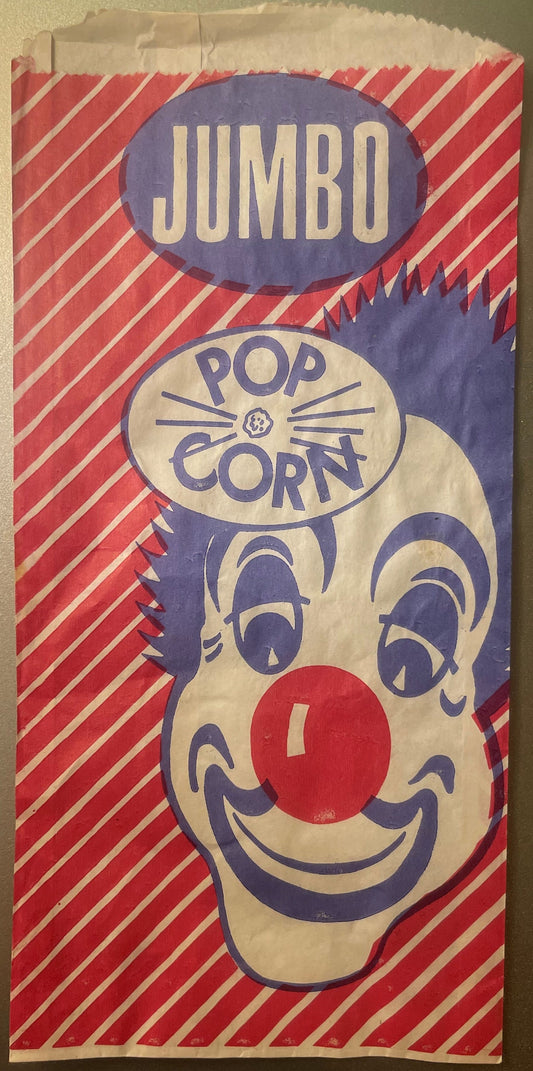
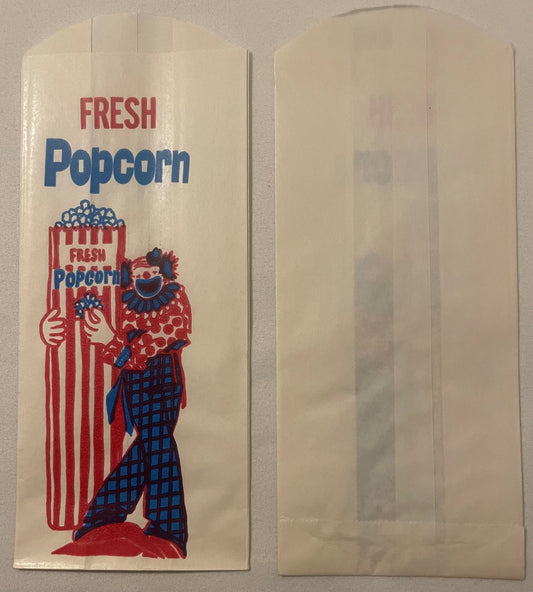
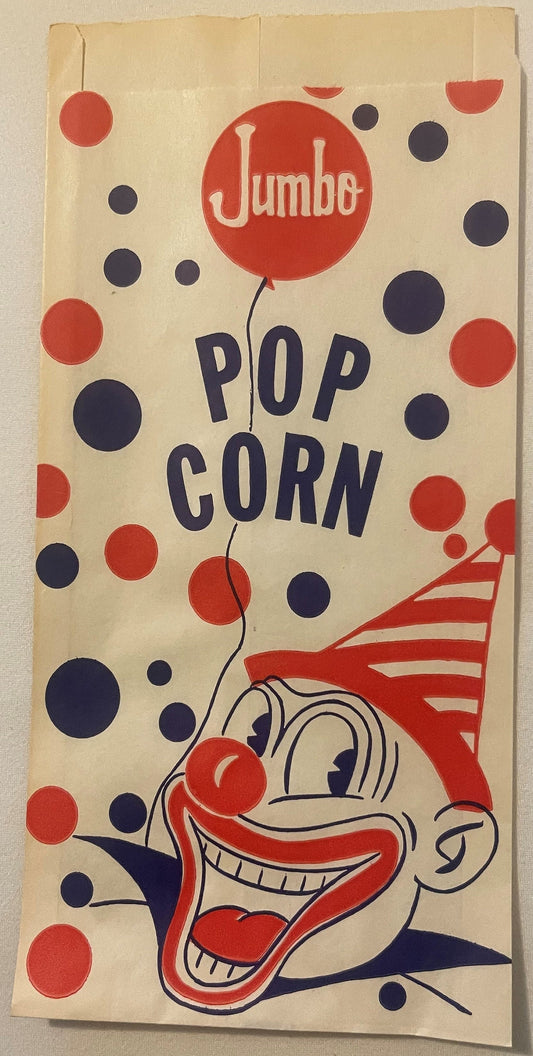
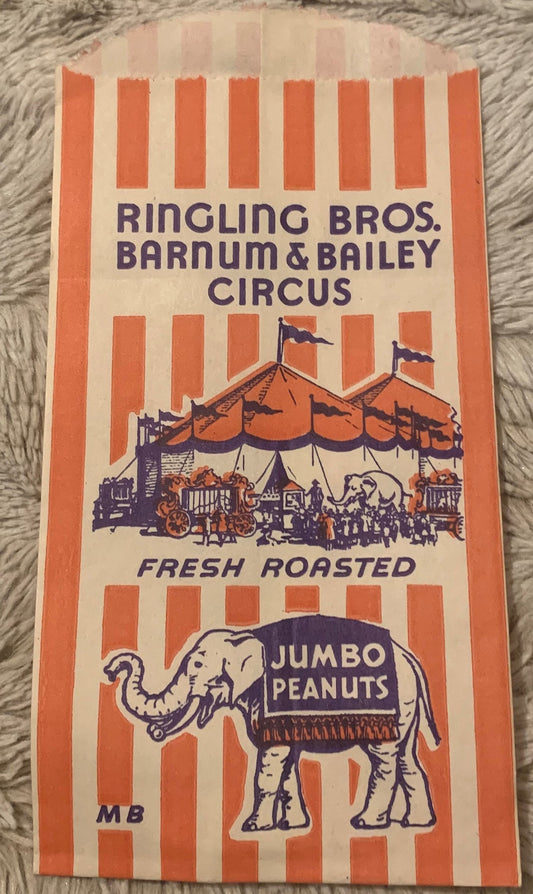
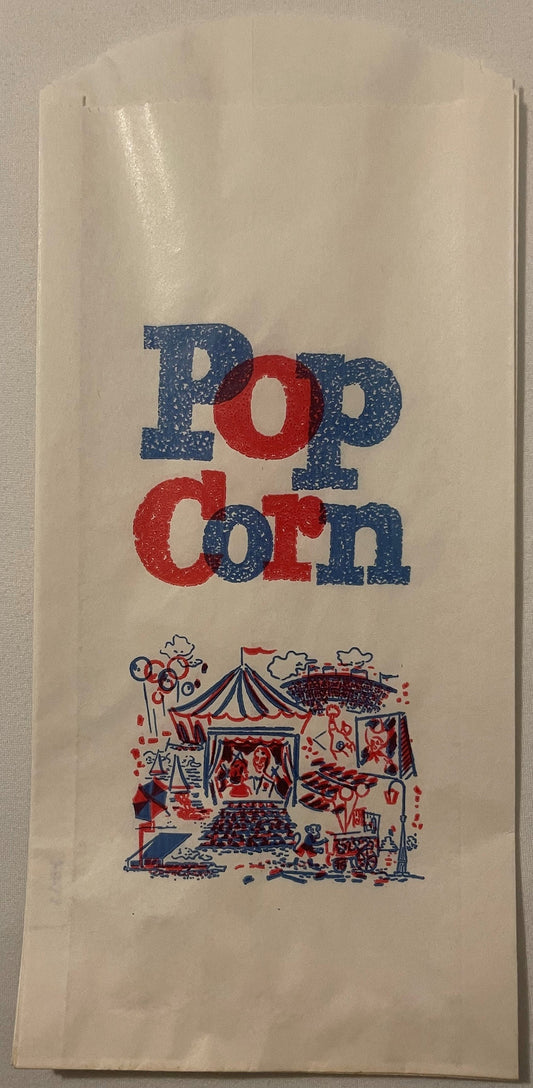
🎪 Step right up! A classic circus clown popcorn bag, flat and unused, in red, white and blue. Delicious in script up top, a red pennant flag lettered POP CORN, and FRESH and CRISP down the side, all framed in circus-tent stripes. Holding the flag is a grinning clown in a polka-dot suit and ruffled collar, a battered little top hat with a flower sprouting out of it, a patch on his knee and big floppy shoes, strutting along like he's leading the parade. The back is plain white with the stripes carried around the bottom band.

🍿 How popcorn got to the midway

That whole look goes back to Chicago. Charles Cretors opened a shop there in 1885, patented a corn popper and peanut roaster, and in 1893 took his new steam-powered popcorn wagon to the World's Columbian Exposition, handing out free samples of hot buttered popcorn until people were lining up to buy it. That fair's mile-long amusement strip, the Midway Plaisance, home of the world's first Ferris wheel, is where the word "midway" got its carnival meaning; every county fair and amusement park strip since has borrowed it.

In 1900 Cretors put out a big horse-drawn popcorn wagon, and from circus midways to neighborhood theaters popcorn became the snack that goes with a show. Vendors parked their carts outside the movie houses, Charles and his son Hazael Cretors patented a way to run their poppers on an electric motor instead of a steam engine, and popcorn stayed popular right through the Depression because it was cheap, a nickel or a dime a bag. In 1938 a Midwestern theater owner put popcorn machines right in the lobbies of his Dickinson theaters and found the popcorn made him more money than the tickets did. Then came World War II: sugar rationing cut candy production, and Americans made up for it by eating three times as much popcorn as they had before. Ever since, a striped bag with a clown on it has meant one thing: the show's about to start.

As for the fellow holding the flag, he's pure big top. P.T. Barnum and James Bailey pretty much set the picture of the circus Americans still carry around, clowns and all, and after the Ringling brothers bought the Barnum & Bailey show in 1907 and folded it into their own in 1919, Ringling Bros. and Barnum & Bailey, "The Greatest Show on Earth," spent decades rolling from town to town by train. One of its clowns, Lou Jacobs, even got his face on a U.S. postage stamp in 1966: the 5-cent American Circus stamp, first sold on May 2, 1966, in Delavan, Wisconsin, and it made him the first living person ever pictured on a U.S. stamp. I love that the first living American to make it onto a stamp was a circus clown.

🏭 The Bag Maker

There's no maker's name on the bag, but the design is easy to trace: this same clown, pennant and striping is printed today on Bagcraft's one-pound pinch-bottom popcorn bag, packed a thousand to the case for concession stands. Bagcraft is a Chicago paper-bag company whose federal trademark (registration No. 602,576) says it first put the BAGCRAFT name on its bags in November 1947 and first shipped them under it on December 15, 1947, and it's part of the Novolex packaging group now. It's a design that has never really gone away, which tells you how well it works.

Bagcraft's founder was Albert A. Meister, and he was a mover in the business. On July 19, 1950, he was one of the men who incorporated the National Flexible Packaging Association in Chicago, and he served as its first Chair; Jan Meister also served as Bagcraft's Chair. The company ended up as BagcraftPapercon under Packaging Dynamics, and on November 10, 2014, Novolex signed the deal to buy Packaging Dynamics.

🤡 Lou Jacobs

The clown on that 1966 stamp, Lou Jacobs, was born Johann Ludwig Jacob in Bremerhaven, Germany, on January 1, 1903, and came to America in 1923 by steamship with about two dollars in his pocket and no English. He spent more than sixty years with Ringling Bros., famous for squeezing his long frame out of a tiny clown car, a twenty-three-inch car that took him about four years to get right before it debuted in 1946. When Irvin Feld started Clown College in 1968, Jacobs taught there, and the students called him "Papa Lou." He was one of the first six clowns put into the Clown Hall of Fame in 1989, and he died in Sarasota, Florida, on September 13, 1992, at 89. The Greatest Show on Earth gave its last performance under the big top in May 2017, then came back on tour in 2023 without the animal acts.

Frame it for your home theater, style it in a game room, or use it as a prop for circus and clown‑themed parties, movie nights, and popcorn‑bar setups. 🍿🤡 This listing is for one (1) popcorn bag.

  • 🤡 One (1) circus clown popcorn bag, 8 1/2" x 4 1/2" flat, unused
  • 🎟️ Classic carnival‑style design in red, white, and blue
  • 🖼️ Great for framing, shadow boxes, and gallery walls
  • 📦 Ships flat with protective packaging

Please note: Sold as a décor/collectible item, not intended for food use. 🚫🍽️

Shipping

🚚 Shipping & Handling

  • Shipping costs and timing are calculated at checkout.
  • Items curated and shipped directly by me include U.S. shipping at no additional cost, professionally packed to ensure safe arrival of your artifact.

Items from Vetted Pro Collectors
Shipping for items offered by vetted Pro Collectors is determined at checkout. All Pro Collector listings are reviewed to ensure fair, reasonable shipping practices.

For full details, please refer to our Shipping Policy.

Returns & Exchange

Take your time — you've got a full six months. If a piece isn't right for you, send it back the way it reached you and we're good.

In the first 30 days your money goes straight back the way you paid. After that it's store credit, so you can put it toward something you'd rather have.

Return shipping we sort out between us, case by case. I don't make this difficult.

If something arrives damaged, or it isn't what I said it was, send me a photo within 48 hours and I'll make it right.

Email info@vintageantiquesgifts.com or call 802-356-9872 — that's me answering, not a call center.

The only things I can't take back are custom or special-order pieces and gift cards.

View full details

Rescuing American History Since 2007

— Travis & the Kids