



Skip to product information
1 of 3

Vintage and Antique Gifts

Vintage 1940s Dixie Boy Crate Label 🍊 Waverly, FL, Adorable Child!

Vintage 1940s Dixie Boy Crate Label 🍊 Waverly, FL, Adorable Child!

Regular price $10.00 USD
Regular price Sale price $10.00 USD
Sale Sold out
Shipping calculated at checkout.

Size: 9" x 9"

🚚 Free US Shipping — ships within one business day. International shipping calculated at checkout.

Quantity

Is the Waverly Growers Cooperative Still Going? 🍊 A Vintage 1940s Dixie Boy Brand Citrus Crate Label, Waverly Growers Cooperative, Waverly, Florida

Size: 9" x 9" ~ little to no storage wear

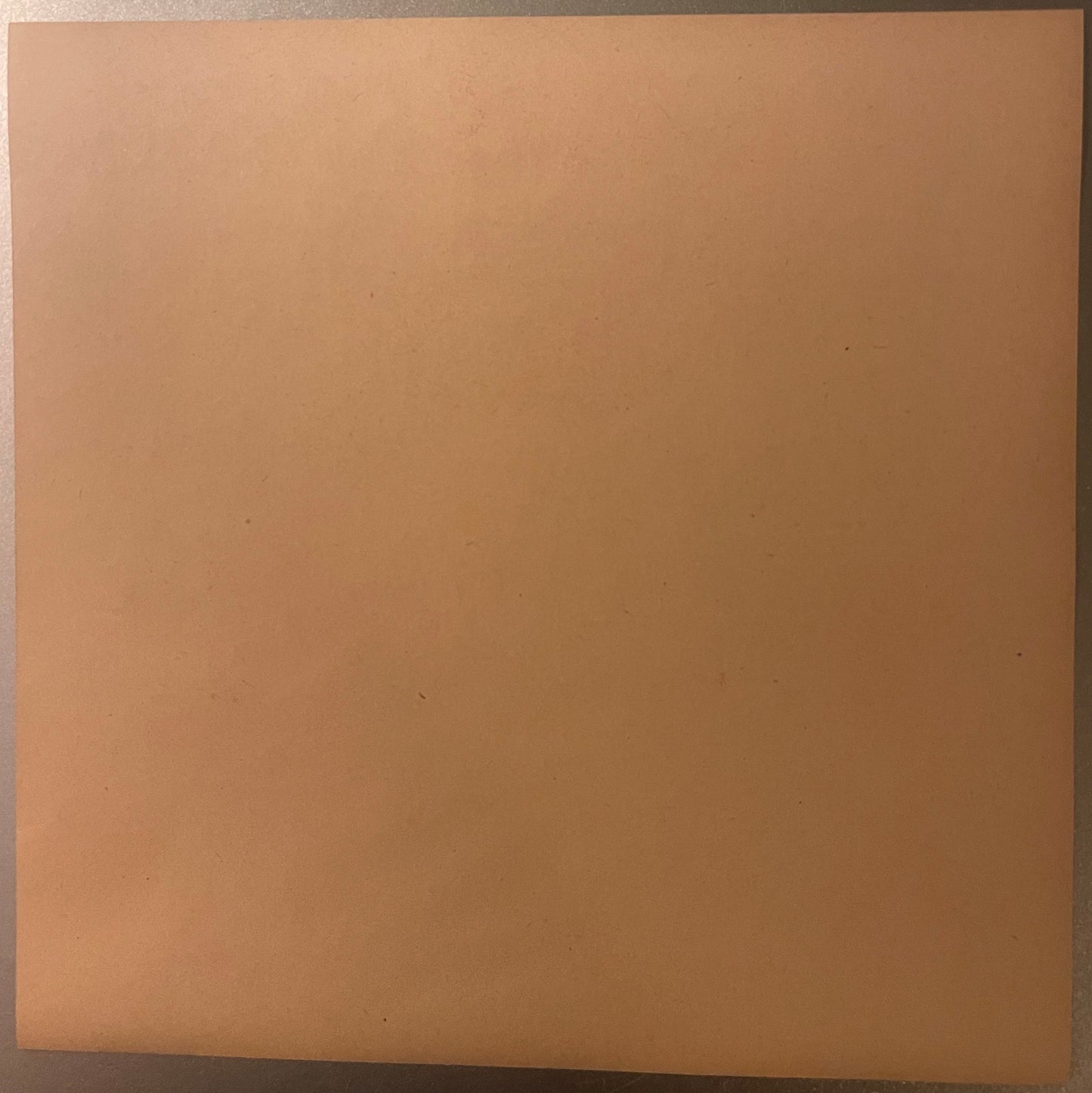
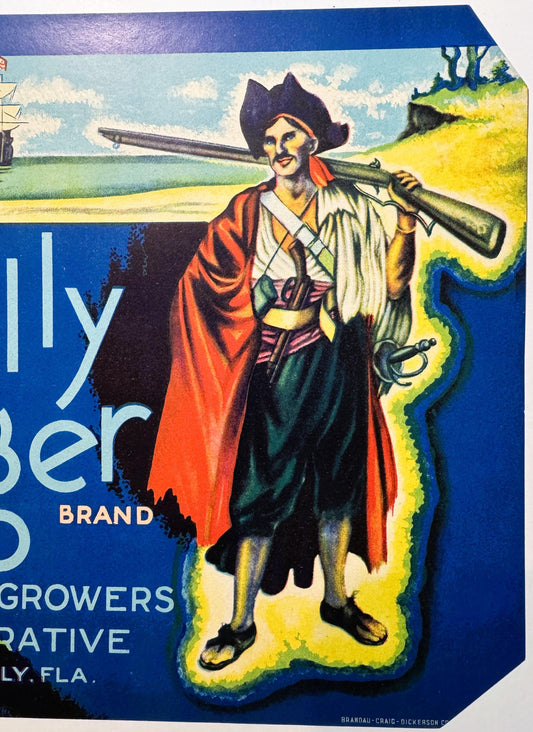
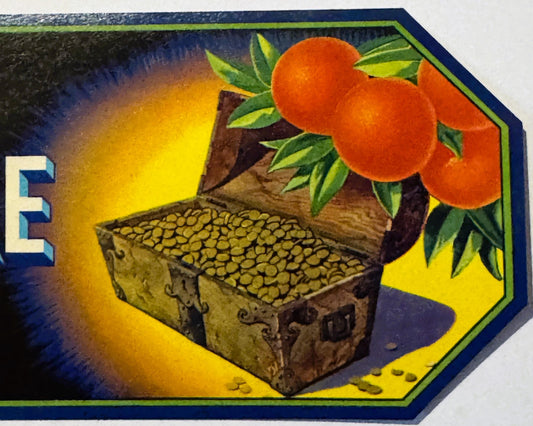
A little boy in a light blue collared shirt with both hands wrapped around half a grapefruit, taking a big bite and cutting his eyes off to the side like somebody might want some. DIXIE BOY runs across the top in huge cream letters with a green drop shadow, Brand in red script, and down the side in red, Waverly with a long swash, GROWERS COOPERATIVE and Waverly, Florida, all on a deep near-black ground with a green and yellow zigzag along the top edge. The picture is a hand-tinted photograph, and the back is plain. These were never pasted on a crate.

Adorable child eating a piece of grapefruit! My pictures seriously don't do it justice. Even a university library out in California, the Pfau Library at Cal State San Bernardino, files its copy of this Dixie Boy label under grapefruit.

🍊 What could turn a plain wooden shipping crate into a tiny billboard bright enough to stop a produce buyer in his tracks? Long before refrigerated trucks, barcodes, and printed cardboard cartons, that job fell to paper labels just like this one — pasted onto the end of a rough pine crate and asked to do a big job in a small space: announce whose fruit this was, where it came from, and why a buyer standing in a noisy produce house should reach for this crate instead of the one next to it. This Dixie Boy Brand citrus crate label, issued by the Waverly Growers Cooperative of Waverly, Florida, is one of those small paper ambassadors of Florida's citrus belt — bold, cheerful, and built to be seen from across a warehouse floor.

It measures a true 9 x 9 inches (about 22.9 x 22.9 cm), and I place this label in the 1940s; its printing style and lettering sit comfortably there. The massive, dimensional DIXIE BOY lettering with its heavy drop shadow is a hallmark of the bolder, more graphic label styles that came into fashion as the crate label era matured, and the image bleeds right to the trimmed edge with no border at all. Read the printed words and you'll find that's all there is: the brand, the word Brand, and the co-operative's attribution down the left edge. No fruit or commodity word, no net weight, no count, no size, no grade, no "Produce of U.S.A.", no printed date, no printer's imprint and no Exchange device — which is why the fruit has to be read off the picture rather than off the sheet.

🍊 Waverly Growers Cooperative

Waverly is a little town in east-central Polk County, up in Florida's ridge country, started in 1882 by Asa Gibbons, sixteen years before Lake Wales was incorporated. The groves around it had to be replanted after the great freeze of 1895, and in 1914 a group of local growers led by Charles Hillery Walker and a Danish immigrant named W. L. Pedersen founded the Waverly Citrus Growers' Association, and a small packing shed went up beside the railroad tracks that grew into one of the most modern packinghouses in the state. A second packing house followed in 1920 and a third after that, and the State Archives of Florida still has photographs of both, plus an aerial view of the whole plant. Pedersen (1864-1950) brought what he knew about the cooperatives back in Denmark, and his 1950 obituary in a Lakeland newspaper, the Lakeland Ledger, credited him with the Waverly plan that made it one of the best-run citrus plants in Florida. The members put up a plaque to him in the co-op's formal garden, and I love what they had carved on it: "Every successful organization is the shadow of some man." His son, W. C. "Bill" Pedersen, started out in the packinghouse, became general manager in 1921, ran it for 24 years, was elected president in 1945, and he's in the Florida Citrus Hall of Fame.

Walker and Pedersen were the kind of grower-turned-businessmen who built Florida's citrus cooperatives from the ground up — men who knew their own trees personally and who banded together with their neighbors because a lone grower had little leverage against the big packing and shipping interests, but a cooperative speaking for dozens of groves at once had real bargaining power. The cooperative grew into one of the more prominent shipping operations in Polk County, packing its grower-members' citrus and moving it out by rail and truck to markets across the country.

An old Waverly brochure, quoted in Citrus Industry magazine's history column, bragged about it in numbers, and they are big numbers for a little ridge town: continuous operation since 1915, owned and managed by the grower-members, about 7,000 acres of their groves kept at over two million boxes a year, a packinghouse that could pack 6,000 standard boxes every eight-hour working day, and about 465 people on the payroll, many of them growers themselves. Sixteen of them had been there more than 25 years each. That's a place people stayed.

In 1936 the association changed its name to Waverly Growers Cooperative - the name on this label - so this printing can't be older than that. The Museum of Florida History dates its copy of the Dixie Boy label to about 1937-38, and the State Archives of Florida dates its copy to about 1941, so it was likely printed more than once.

🌸 The show window of Waverly

For much of the twentieth century, the town's identity and its economy were the cooperative's — the packinghouse was Waverly, in the way that a mill town is its mill. The packinghouse sat on Route 540 between Cypress Gardens and the Bok Singing Tower on the old Orange Blossom Trail, and it was a tourist stop. The Welcome House was born under Bill Pedersen's leadership, and the Waverly Welcome House billed itself as The Show Window of Waverly Growers, with a formal garden and picnic grounds, postcards inviting people in to watch the fruit being sorted, washed and packed, and hostesses dressed as Southern belles like the ones over at Cypress Gardens. Thousands came through in its heyday — a bit of showmanship dressed over the very real, very hardworking business of getting a grapefruit from a grove to a grocer's shelf hundreds of miles away.

🏭 Still going

Waverly was one of the founding members of the Florida Citrus Canners Cooperative in 1933, along with Hunt Bros. and the Winter Haven Citrus Growers Association. Decades later, the postwar boom in ready-to-drink and frozen concentrate orange juice pulled many of Florida's independent grower cooperatives together into larger marketing organizations, and that co-op became Citrus World in 1969 and Florida's Natural Growers in 1998 - and Waverly Growers Cooperative is still one of its members. It's a lineage that ties this small, cheerful crate label directly to one of the biggest names in Florida citrus juice still on grocery shelves right now. The Haines City Citrus Growers Association took over the packinghouse operations in 2005. Labels like this one are among the few colorful pieces of that whole operation still circulating outside Polk County's own local archives.

📦 The 9 by 9 label

Nine inches square was the standard Florida citrus label, made for the end of the Florida crate, which was a different box from California's. Florida labels ran 9 by 9, 7 by 7 and 3 1/2 by 9, with 6-inch squares and 3 by 9s for half boxes and gift boxes, while California's bigger boxes took 11 by 10, and 11 by 9 for the smaller fruit. From the late nineteenth century through the middle of the twentieth, wooden shipping crates were the standard way fruit traveled from Florida and California groves to markets across the country, and every crate needed a label pasted to its end so buyers could tell one grower's fruit from another's on a crowded auction floor. What started as fairly plain identifying labels evolved, decade by decade, into an entire school of commercial design, produced by lithography houses competing for the attention of cooperatives just like Waverly's.

Early labels were stone lithographs, color by color; by the time of this one the printers were working from photographs — photographic halftone screens combined with color offset lithography, real photographs blended with hand-tinted color and bold hand-lettered type — which is why this little boy looks so real. Cheerful imagery of children clearly enjoying the fruit was a favorite device of citrus cooperatives trying to catch a buyer's eye and suggest freshness, and it remains one of the most charming visual traditions of the whole crate label era. When cardboard cartons took over in the 1950s, the labels went away with the wooden crates — the branding could simply be printed straight onto the box — which is exactly why surviving examples have gone on to be collected, framed, and displayed by museums and folk art institutions as a genuine slice of American commercial design history.

Florida takes these seriously now. The State Archives of Florida keeps a whole crate-label collection from the 1920s to the 1950s, the University of Florida holds the Jerry Chicone Jr. Citrus Crate Label Collection, Florida Southern College has put up its own online exhibit of them, and there's a Florida Citrus Label Collectors Association - and the Museum of Florida History has this very brand in its index.

📦 What This Little Label Represents Today

It's easy to overlook how much history is folded into a nine-inch square of printed paper. This one label carries the story of a Danish immigrant grower, a cooperative that outlasted its own founding name, a tourist-trail packinghouse with Southern belle hostesses greeting travelers off the highway, and a lineage that runs all the way to a well-known Florida juice brand still selling cartons in grocery stores today. For collectors of Florida citrus memorabilia and American advertising art alike, that density of real, traceable local history — company, town, people, and craft all bound up in one bright square of paper — is exactly what makes crate labels like this one worth holding onto.

🖼️ Display Ideas

  • 🍊 Framed on its own as a bold, graphic focal point in a kitchen or breakfast nook
  • 🌴 Grouped with other Florida citrus labels for a gallery wall celebrating the old grove country
  • 🏡 Displayed in a Florida vacation home or lake house as a nod to the region's citrus heritage
  • 📖 Matted and kept with vintage postcards or citrus advertising ephemera in a themed collection
  • 🛋️ Used as a punchy accent piece in a farmhouse or mid-century-styled living space
  • 🎨 Hung alongside other pieces of vintage American commercial art to highlight the crate label era

🎁 Who Collects These

Citrus crate labels draw a wonderfully varied crowd of collectors. Florida memorabilia enthusiasts and Polk County local historians seek them out for the direct link to their own region's citrus-farming past. Americana and vintage advertising collectors prize them as a distinct, self-contained genre of commercial art with real museum credibility. Kitchen and farmhouse decorators love the bold color and nostalgic charm they bring to a wall. And gift-givers looking for something with genuine regional character — for a Florida transplant, a citrus grower's descendant, or anyone who grew up around the old groves — find that a crate label like this one lands with a kind of instant, sunny recognition.

🍊 About these

Every one I have is unused, 9 by 9 inches. It looks wonderful framed in a kitchen, with other Florida crate labels, or for anybody with Polk County roots. The supply is finite - nobody's printing Dixie Boy labels for Waverly again, and once these last unused ones are framed, they'll be very difficult to acquire.

Shipping

🚚 Shipping & Handling

  • Shipping costs and timing are calculated at checkout.
  • Items curated and shipped directly by me include U.S. shipping at no additional cost, professionally packed to ensure safe arrival of your artifact.

Items from Vetted Pro Collectors
Shipping for items offered by vetted Pro Collectors is determined at checkout. All Pro Collector listings are reviewed to ensure fair, reasonable shipping practices.

For full details, please refer to our Shipping Policy.

Returns & Exchange

Take your time — you've got a full six months. If a piece isn't right for you, send it back the way it reached you and we're good.

In the first 30 days your money goes straight back the way you paid. After that it's store credit, so you can put it toward something you'd rather have.

Return shipping we sort out between us, case by case. I don't make this difficult.

If something arrives damaged, or it isn't what I said it was, send me a photo within 48 hours and I'll make it right.

Email info@vintageantiquesgifts.com or call 802-356-9872 — that's me answering, not a call center.

The only things I can't take back are custom or special-order pieces and gift cards.

View full details

Rescuing American History Since 2007

— Travis & the Kids