Skip to product information
1 of 3

Vintage and Antique Gifts

Antique 1930s Shamrock Brand Navel Orange Crate Label ☘️ — Placentia Mutual Orange Ass'n, Sunkist Wrap Art

Antique 1930s Shamrock Brand Navel Orange Crate Label ☘️ — Placentia Mutual Orange Ass'n, Sunkist Wrap Art

Regular price $10.00 USD
Regular price Sale price $10.00 USD
Sale Sold out
Shipping calculated at checkout.

Size: 11" x 10"

🚚 Free US Shipping — ships within one business day. International shipping calculated at checkout.

Quantity

Who Packed Shamrock Brand Navels in Placentia? ☘️ Shamrock Brand Navels, Placentia Mutual Orange Ass'n., Placentia, Orange County, California

Size: 11" x 10" ~ NOS unused stock, little to no storage wear.

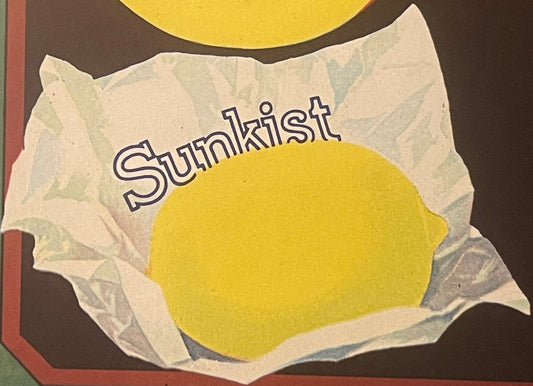
A big green shamrock looks out over a valley full of orange groves on this one. Anybody with a little Irish in them will love it. This is an antique 1930s Shamrock Brand navel orange crate label from the Placentia Mutual Orange Association: a giant green three-leaf shamrock floating in a blue sky that fades to pale yellow, over two rows of orange trees loaded with fruit and a range of lavender and rust-colored mountains. Down in the corner sits an orange in its Sunkist tissue wrapper. My pictures seriously don't do it justice!

🔍 What's on it

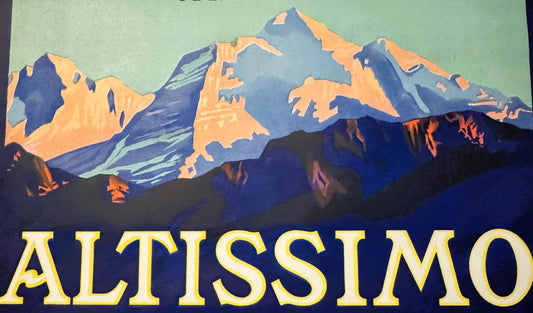
SHAMROCK arches across the top in big cream letters with a dark outline, with BRAND tucked in small under the K. NAVELS sits at the upper left, and Sunkist is written in script across the wrapped orange at the lower right. Along the navy band at the bottom: PACKED BY, PLACENTIA MUTUAL ORANGE ASS'N., PLACENTIA ORANGE COUNTY CALIFORNIA, a tiny REG U.S. PAT OFF 1915, and GROWN IN U.S.A. in red. There's a line of very small type at the far lower right, right where the printer usually signed, but it's too small to read in my photos. It's unused, never pasted on a crate, and the back is plain.

🍀 Why a shamrock?

You'd think the men behind Shamrock were Irish, but they weren't! The Bowers Museum in Santa Ana has this same label in its collection, and its curators looked into it for a St. Patrick's Day post in 2018. Placentia Mutual was run by its founding president, John C. Tuffree, and by Samuel Kraemer, who built the association's first packing house in 1911. Kraemer came from a family of German immigrants, and Tuffree's name was French in origin and his mother was from Peru. So where did the shamrock come from? The Bowers' answer is that by the 1930s the idea was to design labels that spoke to the shopper, not the grower. In the 1930s Placentia Mutual had a whole set of brands named for the countries of the United Kingdom, Albion for England, Caledonia for Scotland and Cambria for Wales, and Shamrock looks like the fourth of the set. It turned out to be the luckiest of the bunch, the association's most popular brand, and it sold best in New York, where so many Irish immigrants had settled. The shamrock itself goes back to Saint Patrick, who by tradition used the three leaves to explain the Holy Trinity when he brought Christianity to Ireland.

The Bowers also points out that one brand could carry as many as six different designs, one for each kind of fruit being packed, and on Shamrock the fruit on the trees changes to match what's in the crate. This one says NAVELS, and it's navel oranges hanging on those trees. Navels, not Valencias - a real glimpse into the golden age of California's citrus industry.

🍊 The men of Placentia

Samuel Kraemer was born in Illinois on July 9, 1857. His father brought the family to Orange County in 1867, and they were the first English-speaking settlers in Placentia. In 1886 he married Angelina Yorba, a descendant of José Antonio Yorba, and joined parts of the Yorba lands to his own. In 1914 he put up the Kraemer Building on Bradford Avenue, the first two-story building in Placentia, which still has a historical marker on it. When Union Oil struck oil on his property around 1919, he became one of the richest men in Southern California. Kraemer Boulevard, running through Anaheim, Brea, Placentia and Orange, is named for him.

John Cropper Tuffree was born in Orange County in 1878, the son of Col. John Kendall Tuffree, one of the county's early pioneers (Placentia's Tuffree Middle School is named for the Colonel), and of Carolina Borromeo Polhemus, who was born in Paita, Peru, in 1850. That's the Peruvian mother the Bowers mentions.

Placentia Mutual outlasted the label era, too. In 1963 the town's other Exchange house, the Placentia Orange Growers Association, founded in 1908 with its packing houses on Bradford Avenue, merged into Placentia Mutual, and from then on all the business went through Mutual. Placentia grew up around the orange. The core of the town was developed around 1910, and it became a major stop on the Santa Fe Railroad for shipping oranges. Just down the road, on what's now the Cal State Fullerton campus, the Native Daughters of the Golden West put up a marker in 1934 for the first Valencia orange orchard in California, planted by R. H. Gilman on Placentia Fruit Company land. The marker says 1880, while Orange County historian Phil Brigandi put the planting at 1875.

🥄 That Sunkist wrapper

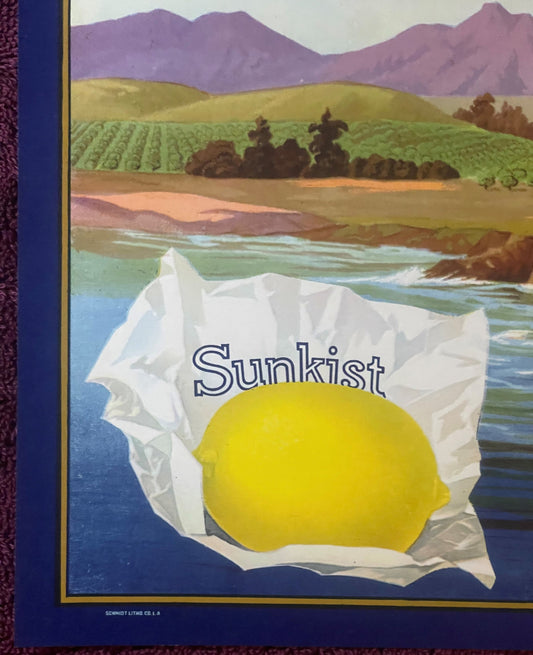
The little wrapped orange in the corner is a real piece of history too. Placentia Mutual was one of the associations in the California Fruit Growers Exchange, the cooperative that sold its fruit as Sunkist and wrapped each orange in tissue printed with the name. The Exchange started out in 1893 in Claremont as the Southern California Fruit Exchange, took the California Fruit Growers Exchange name in 1905, first used the Sunkist name in a 1907 advertising campaign, and finally renamed itself Sunkist Growers in 1952. In 1909 the Exchange offered a free Sunkist spoon to anybody who mailed in twelve wrappers, and a million spoons were claimed in the first year. Folks say plenty of brides of that era started their silverware with orange wrappers!

🖼️ Who drew it

The Bowers credits its copy of this label to the Western Lithograph Company of Los Angeles and dates it 1930 to 1939, and the Boston Public Library's copy, same NAVELS wording, carries a Western Litho Co. line and is dated the 1930s too. Western Litho started in Los Angeles in 1899, made California citrus crate labels its main business, and kept at it until Brown & Bigelow bought the company in 1953. It was one of the two big printing houses in Los Angeles at the turn of the century, and collectors remember its artists for some of the finest citrus labels Southern California ever produced. The Bowers says more than 8,000 crate label designs were made between 1880 and 1955.

🏡 Display

Crate labels come from a time that's long gone. Nobody's matched that old lithography since. There are museum and art institute galleries just for crate labels, and more collectors every year are tracking them down to save that history. Why should a museum have all the fun? Hang this one in any room of your house! It's a natural for St. Patrick's Day, an Irish family, or anybody from Placentia, Fullerton and Orange County. The supply is finite - nobody's packing Placentia navels under the Shamrock again, and once these last unused ones are gone, they'll be very difficult to acquire.

Shipping

🚚 Shipping & Handling

  • Shipping costs and timing are calculated at checkout.
  • Items curated and shipped directly by me include U.S. shipping at no additional cost, professionally packed to ensure safe arrival of your artifact.

Items from Vetted Pro Collectors
Shipping for items offered by vetted Pro Collectors is determined at checkout. All Pro Collector listings are reviewed to ensure fair, reasonable shipping practices.

For full details, please refer to our Shipping Policy.

Returns & Exchange

Take your time — you've got a full six months. If a piece isn't right for you, send it back the way it reached you and we're good.

In the first 30 days your money goes straight back the way you paid. After that it's store credit, so you can put it toward something you'd rather have.

Return shipping we sort out between us, case by case. I don't make this difficult.

If something arrives damaged, or it isn't what I said it was, send me a photo within 48 hours and I'll make it right.

Email info@vintageantiquesgifts.com or call 802-356-9872 — that's me answering, not a call center.

The only things I can't take back are custom or special-order pieces and gift cards.

View full details
  • 5 stars: 1 (100%)
  • 4 stars: 0 (0%)
  • 3 stars: 0 (0%)
  • 2 stars: 0 (0%)
  • 1 star: 0 (0%)
y
y***y (2077)

Beautiful item. Thanks!

Rescuing American History Since 2007

— Travis & the Kids