Skip to product information
1 of 5

Vintage and Antique Gifts

Antique 1920s Black Maria Tin Tobacco Tag 🏷️ Taylor Bros Winston-Salem NC Collectible

Antique 1920s Black Maria Tin Tobacco Tag 🏷️ Taylor Bros Winston-Salem NC Collectible

Regular price $12.00 USD
Regular price Sale price $12.00 USD
Sale Sold out
Shipping calculated at checkout.

Size: 1" x 0.33"

🚚 Free US Shipping — ships within one business day. International shipping calculated at checkout.

Quantity

What Was Black Maria Tobacco? 🏷️ Antique 1920s Tin Tobacco Tag, Taylor Bros, Winston-Salem NC

Size: 1" x 1/2"

🏷️ What The Tag Shows

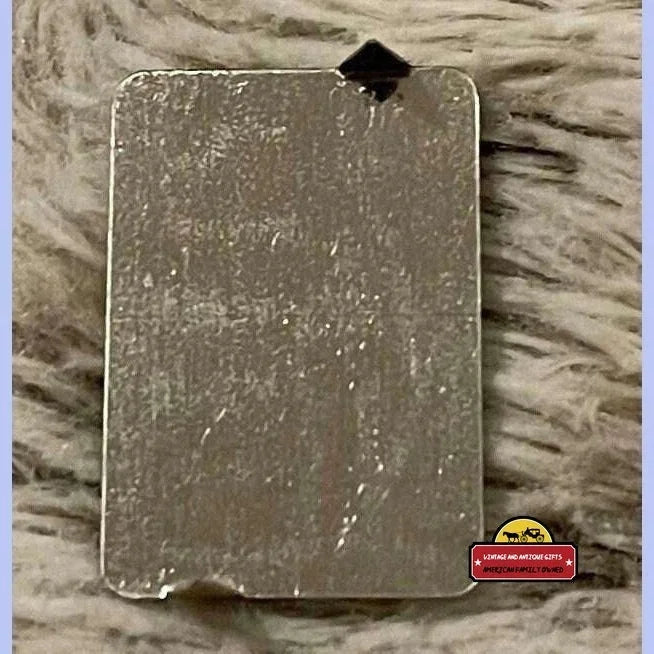
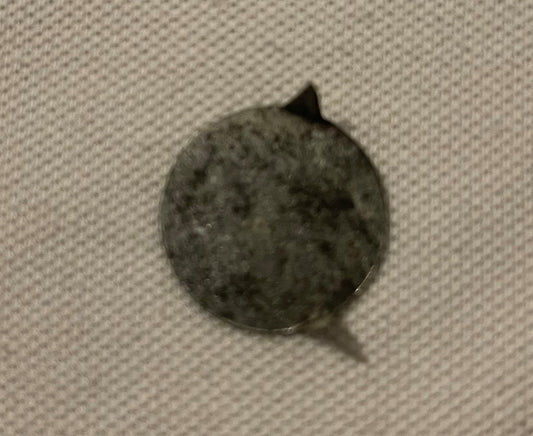
A small rectangle of lithographed tin, rounded corners, printed on a yellow ground. A figure stands facing left in a tall plumed headdress, one arm outstretched, the other holding a red club-shaped object, with a red wing-shaped device above and the words BLACK MARIA lettered in red beside it. Nothing on the front is printed with a maker, a town, a date, or a number. The back is bare metal, with a small folded prong meant to be pushed straight through a plug of chewing tobacco and crimped flat on the other side — the whole point of the thing.

🏭 Taylor Brothers, Winston-Salem

The tag doesn't name its maker, but a sibling die does: an embossed oval version of this same brand reads TAYLOR BROS / BLACK MARIA / WINSTON N.C. The trademark office backs that up, too: Taylor Brothers, Inc. registered BLACK MARIA for plug, twist and smoking tobacco on October 4, 1949 (No. 515,850), claiming they'd been using it since January 1, 1900 - it was one of eighteen brands the company filed on a single day in July 1947. Taylor Brothers was founded in 1883 by William B. Taylor, making plug, twist, and loose-leaf chewing tobacco under brands that included Bull of the Woods and Cannon Ball. The company sold to American Snuff Company in 1952, and the Winston-Salem plant it built is still running tobacco today.

Winston itself started as a land sale in 1849 for the new seat of Forsyth County, and took its name in 1851 from Joseph Winston, a Revolutionary War officer. The land came from next door: the Moravians had been building Salem since 1766, and when the brand-new county needed a courthouse town, the Salem church fathers sold it 31 acres just to the north. After the Civil War, demand for Southern tobacco soared, and there's a good story behind it. In 1865 Sherman's troops, sitting idle while Sherman and Johnston worked out terms at Bennett Place, helped themselves to John R. Green's tobacco factory in Durham, and once the war was over they started writing back to Durham for more of that bright leaf. Forsyth County soil happened to be just right for growing it, and in 1873 the first regular train rolled into Winston from Greensboro on a 28-mile branch line. That new rail spur is a big part of what drew R. J. Reynolds to town. By 1878 the town already had twenty-one tobacco businesses employing more than a thousand people — Hamilton Scales' plug works on Liberty Street, P. H. Hanes & Co., and R. J. Reynolds' first factory all opened within a few years of each other. Most of the hands in those factories, from the late 1800s well into the 1900s, were Black workers, and the stemmers, the folks who pulled the stems out of the leaf, were mostly Black women. Winston merged with its neighbor Salem in 1913 to become Winston-Salem. That same year Reynolds brought out Camel cigarettes, and before long the whole town had a new nickname: the Camel City.

📌 What The Tag Was For

A crimped tin tag was hard to fake. Once it was pushed through a plug and folded flat, a storekeeper couldn't quietly swap in a cheaper leaf and pass it off as the branded product — the tag would show the tampering. More than twelve thousand plug tobacco brands were registered between 1870 and the 1920s, and a great many of them wore a little tin tag like this. Plug was the big seller back then: in 1880, 55 percent of all the tobacco made in this country went out as plug. Louis Storino's collector's guide to these tags lists more than 6,000 of them. Manufacturers also turned the tags into their own reward system: customers saved them for cash or premiums running from candy to pocketknives to grandfather clocks, and a collectors' club with its own mail newsletter existed as early as 1886. Kids got in on it too. One Washington, D.C. paper, The Critic, grumbled that boys would stop a man right in the street and ask him for a tin tag or a cigarette card. I love that one. Collectors who work the Winston-Salem antique circuit will tell you Taylor Brothers tags turn up most often in estate sales around Forsyth County and the Piedmont.

📅 How Old It Is

The Smithsonian holds this same tag design and dates it to about 1929. Taylor Brothers wasn't in business before 1883, so nothing earlier is possible, and with the Smithsonian's date of about 1929 these are 1920s tags. On its own, this design is a hard one to find.

🚓 Why "Black Maria"

"Black Maria" was American slang for the police wagon that hauled prisoners off to jail, in print as early as 1835. Where the name itself came from is still an open question. One version says it honors Maria Lee, a formidable Boston boarding-house keeper of the 1820s the police used to call on when they needed help with a rowdy guest. The other points to a racehorse named Black Maria, foaled in Harlem in 1826, who won a brutal twenty-mile race in October 1832. Word historians lean toward the racehorse, but nobody has ever settled it.

📷 About the Last Photo

That one's just for history - you get the tag, not the factory! It's men and boys making plug chewing tobacco in a Winston, North Carolina factory sometime between 1880 and 1910 - the photo doesn't say whose factory, but this is exactly the kind of plug a tag like this got pressed into. Those long rows on the floor are plugs waiting to be boxed.

Shipping

🚚 Shipping & Handling

  • Shipping costs and timing are calculated at checkout.
  • Items curated and shipped directly by me include U.S. shipping at no additional cost, professionally packed to ensure safe arrival of your artifact.

Items from Vetted Pro Collectors
Shipping for items offered by vetted Pro Collectors is determined at checkout. All Pro Collector listings are reviewed to ensure fair, reasonable shipping practices.

For full details, please refer to our Shipping Policy.

Returns & Exchange

Take your time — you've got a full six months. If a piece isn't right for you, send it back the way it reached you and we're good.

In the first 30 days your money goes straight back the way you paid. After that it's store credit, so you can put it toward something you'd rather have.

Return shipping we sort out between us, case by case. I don't make this difficult.

If something arrives damaged, or it isn't what I said it was, send me a photo within 48 hours and I'll make it right.

Email info@vintageantiquesgifts.com or call 802-356-9872 — that's me answering, not a call center.

The only things I can't take back are custom or special-order pieces and gift cards.

View full details
  • 5 stars: 2 (100%)
  • 4 stars: 0 (0%)
  • 3 stars: 0 (0%)
  • 2 stars: 0 (0%)
  • 1 star: 0 (0%)
c
cbch60

Accurate description as well as fast and safe arrival of item; great seller.

Thank you so much!

r
reluctantsaint

Very happy with my item, no issues! Thank you! Love it! ++++++++. Love the extra gift too!

We are so glad you love it and appreciate your kind words!

Preserving History: Authentic Objects Across Eras

— Curated by Travis Weigel