Skip to product information
1 of 7

Vintage and Antique Gifts

Antique 1920s Root Beer Label 🥤 Sanitary Brand, Indiana Harbor Indiana, Jester & Castle NOS Lehmann S.F.

Antique 1920s Root Beer Label 🥤 Sanitary Brand, Indiana Harbor Indiana, Jester & Castle NOS Lehmann S.F.

Regular price $11.00 USD
Regular price Sale price $11.00 USD
Sale Sold out
Shipping calculated at checkout.

Size: 4 1/2" x 3 1/4"

🚚 Free US Shipping — ships within one business day. International shipping calculated at checkout.

Quantity

Who Made Sanitary Brand Root Beer? 🎭 A Masked Minstrel, a Storybook Lady, and Root Beer from a Steel Town

Size: 4 1/2" x 3 1/4"

During the First World War, East Chicago, Indiana, was hailed as the "Workshop of America," and its Indiana Harbor district had been steel country from the day it was established in 1901. Yet the Sanitary Bottling Works at 3824 Deodar Street sold its root beer under a label out of a fairy tale: a masked minstrel in a white ruff strums a lute below white castle towers, a lady in a powdered wig and a tall pointed hat turns toward him holding a red rose, and a gold crescent moon hangs in a black sky scattered with gold stars.

The artwork came from the other side of the continent. The tiny imprint at the foot reads LEHMANN, S.F., the mark of a San Francisco label house founded in 1911 by a printer who started out with $190. This 1920s label is new old stock, never pasted to a bottle.

🏷️ What the Label Prints

  • Brand: SANITARY BRAND Root Beer, with "Root Beer" set in blackletter
  • Under the brand: ARTIFICIAL COLOR
  • Bottler: SANITARY BOTTLING WORKS / 3824 DEODAR STREET / INDIANA HARBOR, INDIANA / TELEPHONE INDIANA HARBOR 1627
  • Lower panel: CONTENTS 24 FLUID OUNCES
  • Printer's imprint: LEHMANN, S.F.
  • Art: a lady in a powdered wig, a tall pointed teal hat with a red pompom and a teal gown, holding a red rose; a masked minstrel in a white ruff and a red suit patterned in diamonds, playing a lute; white castle towers with gold roofs; a gold crescent moon and stars on black; gold borders
  • Back: blank, with the design showing through faintly in reverse
  • Size: 4.5 x 3.25 inches
  • Condition: new old stock, never applied

The label was made for a 24-ounce bottle, a good deal bigger than the 7- and 8-ounce embossed Sanitary bottles that collectors find. And a mill town needed something cold to drink: from January 1920, when the Eighteenth Amendment took effect, until 1933, beer and whiskey were off the legal menu, and root beer never was.

🐴 Sanitary Bottling Works, Indiana Harbor

The bottler named on this label left its mark in glass as well as paper. Soda bottles from the Sanitary Bottling Works of Indiana Harbor, embossed with a horse's head and carrying the initials S.B.W. on the base, surface in 7-ounce and 8-ounce aqua sizes, and dealers date them to the 1920s. A Sanitary soda bottle from Indiana Harbor with a painted, applied color label turns up too.

Indiana's pop makers of the period worked under a close eye. In September 1909 the Indiana State Board of Health reported that of 151 samples of summer drinks it had analyzed, including pops, ginger ales and drinks made up from syrups and fruit flavors, 36 were illegal, in most instances because saccharin had been used in place of sugar; a few contained benzoate of soda, and others were artificially colored or improperly labeled. This label states its own coloring plainly, directly under the brand name.

And the Sanitary Bottling Works got caught itself. The Board's list of prosecutions for June 1914 names the works for selling ginger ale, red pop, orange cider and root beer that contained benzoate and saccharin, and that month's bulletin says it paid $110.50 in fines and costs. Bakers fined for unsanitary bake shops were on the same list, so the pop men had company. Saccharin was one of the hot food fights of the day. Harvey Wiley, the Agriculture Department's chief chemist, was the man people had in mind when they called the Pure Food and Drug Act of 1906 the Wiley Act (it passed the same year Upton Sinclair's The Jungle came out). In 1908 he took his case for banning saccharin straight to Theodore Roosevelt, and Roosevelt told him anyone who called it injurious to health was an idiot. Federal food rules treated saccharin as an adulterant from July 1912 anyway, the same year Wiley left the government.

🏭 Indiana Harbor and East Chicago, Indiana

Indiana Harbor is the part of East Chicago that lies east of the Indiana Harbor and Ship Canal. It was established in 1901 and has never been a separate town. Archibald McKinlay, the Calumet Region historian who grew up in the Harbor while his father worked at Inland Steel, said it "went up like a Hollywood set." Inland Steel's arrival transformed the city: the mill's capacity grew from 60,000 tons of steel in 1903 to 600,000 tons by 1914 and a million by 1917, and the company itself grew from 250 workers in 1897 to 2,600 in 1910. By 1907 the ship canal gave the district a navigable link to Lake Michigan, and by 1961 the Indiana Harbor plant employed more than 20,000.

East Chicago counted 3,411 people in 1900, 19,098 in 1910 and 35,967 in 1920. During World War I it earned the names "Arsenal of America" and "Workshop of America." Several thousand Mexican workers came to its mills during the labor shortage of 1917 and 1918, Mexican settlement in Indiana Harbor grew through the steel strike of 1919, and by 1928 Indiana Harbor was home to one of the largest Mexican-American communities in the Midwest. A survey in 1959 counted more than 70 nationalities in the city.

Deodar Street, the bottler's address, is one of East Chicago's streets named for trees, alongside Alder, Elm, Fir and Hemlock.

🖌️ Lehmann Printing & Lithograph Co., San Francisco

Adolph Lehmann started work at ten as an errand boy for the Eastman & Kimball Printing Company, served his apprenticeship there in every branch of the trade, and spent twenty years as a journeyman printer in San Francisco. In 1911, with $190 in capital, he went into business for himself. The Lehmann Printing & Lithograph Company grew into one of the largest label manufacturers in the world, working from a three-floor plant at 420 Fourth Street for customers that included California and Florida fruit packers, salmon packers of the Pacific Northwest, Louisiana shrimp packers and wholesale grocers.

Lehmann kept a permanent staff of artists who drew the illustrations and did the hand lettering. Their original label mock-ups, painted in gouache with an occasional touch of metallic paint and sized to fit the bottle, jar or can they were meant for, survive from about 1920 to 1930 and are held by the Letterform Archive. The gold borders, gold moon and gold stars on this Sanitary label are that metallic touch in print.

🎭 The Minstrel and the Lady

The figures step out of the commedia dell'arte. In that tradition Pierrot is the sad clown who pines for Columbine, and Columbine breaks his heart and leaves him for Harlequin. Pierrot came to Paris with the Comédie-Italienne in the late seventeenth century, appearing as a peasant in Molière's Don Juan of 1665; by the 1880s and 1890s he was everywhere in French pantomime and painting, and in the next decades he walked into modernism, from Schoenberg's Pierrot lunaire of 1912 to the Pierrot poems of Jules Laforgue that shaped T. S. Eliot's "Prufrock" of 1915. On this label the masked minstrel with his lute and the lady with her rose carry that old romance onto a bottle of Indiana root beer.

🎁 Good For

Root beer and soda collectors, bottle diggers who own a Sanitary horse-head bottle, East Chicago and Calumet Region history, Lehmann label collectors, and a kitchen, bar or game room wall.

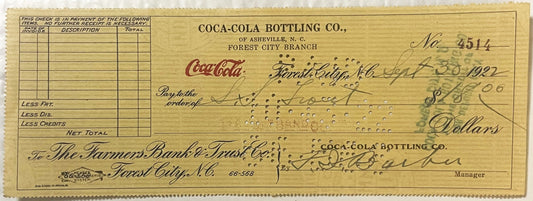
📷 The Coca-Cola bottling plant photo near the end is there for history only and isn't included; you get the label.

🥤 About these

The supply is finite - nobody's printing Sanitary Brand labels in Indiana Harbor again, and once these last unused ones are gone, they'll be very difficult to acquire.

Shipping

🚚 Shipping & Handling

  • Shipping costs and timing are calculated at checkout.
  • Items curated and shipped directly by me include U.S. shipping at no additional cost, professionally packed to ensure safe arrival of your artifact.

Items from Vetted Pro Collectors
Shipping for items offered by vetted Pro Collectors is determined at checkout. All Pro Collector listings are reviewed to ensure fair, reasonable shipping practices.

For full details, please refer to our Shipping Policy.

Returns & Exchange

Take your time — you've got a full six months. If a piece isn't right for you, send it back the way it reached you and we're good.

In the first 30 days your money goes straight back the way you paid. After that it's store credit, so you can put it toward something you'd rather have.

Return shipping we sort out between us, case by case. I don't make this difficult.

If something arrives damaged, or it isn't what I said it was, send me a photo within 48 hours and I'll make it right.

Email info@vintageantiquesgifts.com or call 802-356-9872 — that's me answering, not a call center.

The only things I can't take back are custom or special-order pieces and gift cards.

View full details
  • 5 stars: 1 (100%)
  • 4 stars: 0 (0%)
  • 3 stars: 0 (0%)
  • 2 stars: 0 (0%)
  • 1 star: 0 (0%)
c
c***s (1494)

Item was received in great condition and very promptly. Thanks again!

Preserving History: Authentic Objects Across Eras

— Curated by Travis Weigel