Skip to product information
1 of 5

Vintage and Antique Gifts

Vintage 1940s River Lad Brand California Fresh Asparagus Crate Label 🌱 — Blue Goose, American National Foods, Los Angeles

Vintage 1940s River Lad Brand California Fresh Asparagus Crate Label 🌱 — Blue Goose, American National Foods, Los Angeles

Regular price $9.00 USD
Regular price Sale price $9.00 USD
Sale Sold out
Shipping calculated at checkout.

Size: 9 1/4" x 9"

🚚 Free US Shipping — ships within one business day. International shipping calculated at checkout.

Quantity

Who Packed River Lad Asparagus? 🌱 RIVER LAD Brand California Fresh Asparagus, Blue Goose Quality

Size: 9 1/4" x 9" ~ Little to no storage wear.

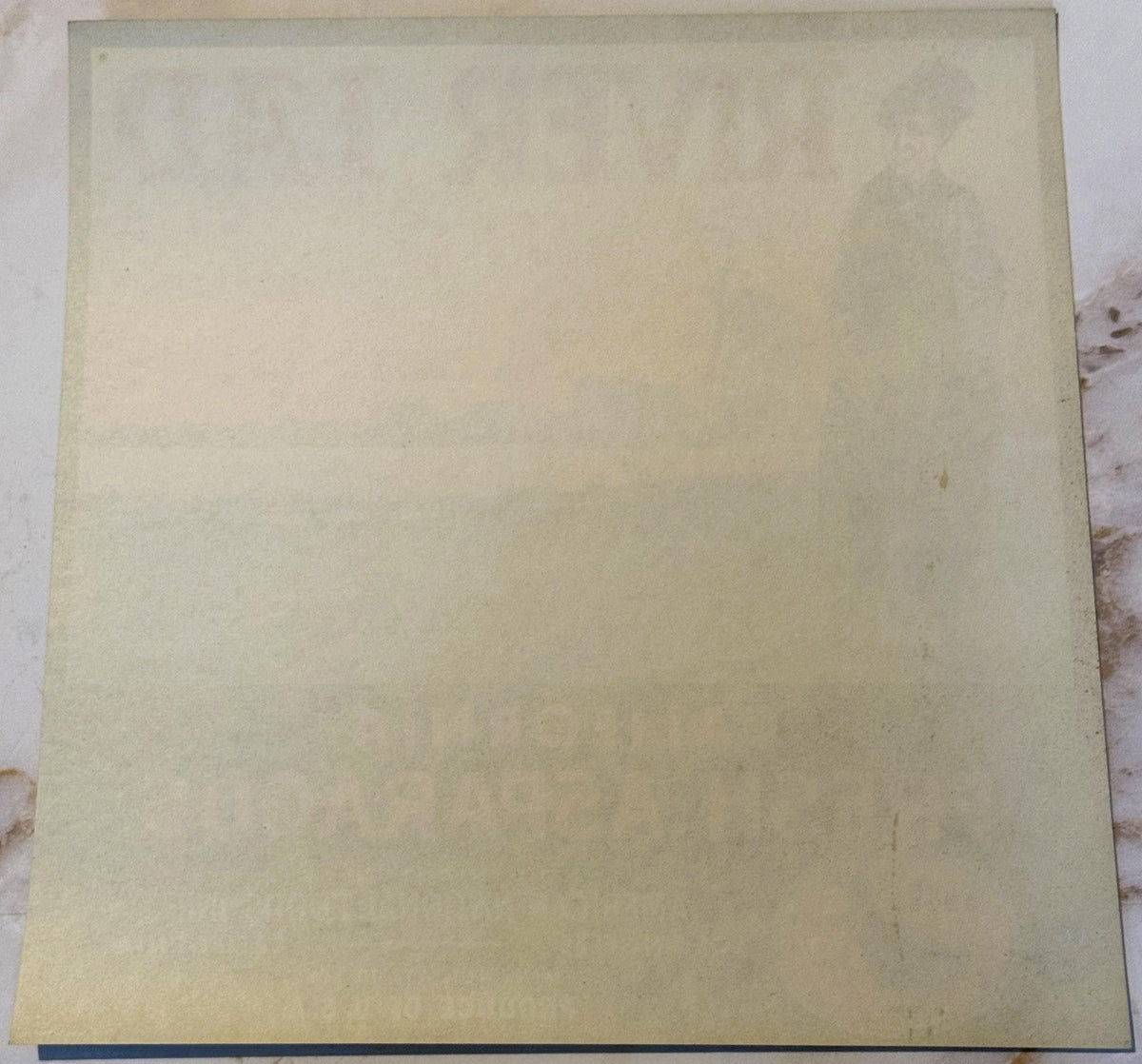
Here's a vintage 1940s River Lad asparagus label, sent out under the Blue Goose banner by American National Foods, Inc. of Los Angeles, and the River Lad himself is one of my favorite faces in the whole asparagus pile. He's a Dutch boy in wooden shoes, hands jammed in his pockets, grinning on a riverbank with a windmill across the water behind him. It's practical and good-looking at the same time, which is exactly what a label had to be to get noticed on a busy produce market floor.

Along with CALIFORNIA FRESH ASPARAGUS and MIN. NET WT. 30 LBS., the label carries the Blue Goose Quality trademark in its little oval, with American National Foods, Inc. lettered around the goose. The printer's line in the corner is Schmidt Litho. Co., S.F., and The Henry Ford museum in Dearborn, Michigan keeps a River Lad asparagus label from Schmidt in its collection, which it dates to 1940-1950. It sits in the museum's Research Center label collection as object 89.311.142, about 9 by 10 inches, a gift from Out of the West Publishing.

Up close he's even better. He's got a dark cap, a checked pink shirt under a brown vest, big baggy blue trousers and bright orange wooden shoes, and the whole sky behind him is burning orange and gold over the windmill and the farm buildings on the far bank. RIVER LAD runs across the top in tall red-orange letters, and the bottom is a solid black panel, which makes the orange goose oval and its little lavender ring pop right off the paper. The goose itself is a deep blue, walking along with TRADE MARK REG. arched over its back.

🌷 California's Holland

A Dutch boy on a box of California asparagus? It makes more sense than you'd think. Asparagus is one of the big crops of the Sacramento-San Joaquin River Delta, which started out as a huge freshwater marsh of peat and tule islands and was reclaimed for farming from the mid-1800s on. Chinese laborers did the backbreaking work of building the first levees between the 1850s and the 1870s, and the state set up its Board of Reclamation in 1861 to organize the job island by island. Today about 57 reclaimed islands and tracts sit behind some 1,100 miles of levees, and so much of that ground has sunk below sea level that people took to calling the Delta "California's Holland." So a river lad with a windmill fits right in.

🌾 Asparagus Country

The Delta and asparagus go way back. The first commercial crop went in on Bouldin Island in 1892, grown by Chinese farmers working in local partnerships, and a small cannery soon followed. By 1900 canned asparagus from the Hickmott Cannery was heading east, and in 1910 some 1,500 Chinese workers lived in the Delta, half of them in the Chinatown by the cannery at Terminous. In 1919 Thomas Foon Chew, remembered as the Asparagus King, moved his Bayside Cannery to Isleton, and he designed canning machinery that became a model for the modern cannery.

Asparagus acreage in the Delta grew about three and a half times between 1918 and 1930. By 1930 there were more than 350 asparagus camps with about 7,000 harvest hands, some 5,500 of them Filipino, many living in Stockton's Little Manila. Then the railroad ice cars changed everything, shifting the business from cans to fresh spears, and acreage climbed again. That's what this label was for: a crate of fresh California asparagus, at least 30 pounds of it, headed for a market far from the river. Competition from Peru and Mexico finally cut into Delta asparagus in the mid-1980s.

🪿 The Blue Goose

I've always liked the Blue Goose story. The goose started with two cousins, James S. Crutchfield and Robert B. Woolfolk, who founded the Crutchfield-Woolfolk Company in Pittsburgh in 1896 and opened their first packinghouse in Crescent City, Florida in 1903. From Pittsburgh they launched the Blue Goose trademark, one of the earliest tries at putting a brand name on fresh fruit and vegetables for the shopper. In 1919 the company became American Fruit Growers, Inc., with Crutchfield as president until 1939. Brenda Eubanks Burnette told the whole tale in Citrus Industry magazine in 2025, under the perfect title "Pieces of the Past: True Blue Goose."

American Fruit Growers worked mostly as a seller, not a grower. It would buy the very best fruit a grower or packer had and market it under its own name, or it would let a packer use the goose on that packer's top grade. Citrus wore the goose first, oranges and grapefruit, and then it turned up on apples and on vegetables too: asparagus, cabbage, onions. In 1922 the company counted 165 sales offices between the U.S. and Canada. It changed its name to Blue Goose Growers in 1961 and leaned hard into citrus. On this label the goose wears a different name, American National Foods, Inc.

You can still find the goose's old haunts in museum drawers. The Huntington Library's Jay T. Last Collection keeps a Blue Goose barrel label for Winesap apples - One U.S. Standard Barrel, marked Reg. U.S. Pat. Off. and AFG for American Fruit Growers Inc. - which its cataloger dates after 1919, when American Fruit Growers began. Down in Florida, where the cousins opened that first packinghouse, the Museum of Florida History files its Blue Goose citrus labels under American Fruit Growers, Incorporated, from Orlando, and from the Deerfield Groves Company at Cocoa and Wabasso. I like knowing this little goose has relatives tucked away in museum drawers from California to Florida.

🖨️ The Printer

Schmidt Lithograph has a story of its own. Max Schmidt was born in Germany in 1850, went to sea as a cabin boy at fourteen, and sailed around the world for six years before landing in San Francisco in 1871. He started his own shop in 1876. The 1906 earthquake and fire destroyed his plant, he rebuilt, and from 1907 on the business was the Schmidt Lithograph Company, a name it kept for about six decades, turning out crate labels, can labels, seed packets and stock certificates. In 1966 it merged with Stecher-Traung to become Stecher-Traung-Schmidt.

He's a cheerful one to hang in a kitchen, and a fun gift for anybody with Dutch roots or family from the Delta towns along the Sacramento and San Joaquin.

Shipping

🚚 Shipping & Handling

  • Shipping costs and timing are calculated at checkout.
  • Items curated and shipped directly by me include U.S. shipping at no additional cost, professionally packed to ensure safe arrival of your artifact.

Items from Vetted Pro Collectors
Shipping for items offered by vetted Pro Collectors is determined at checkout. All Pro Collector listings are reviewed to ensure fair, reasonable shipping practices.

For full details, please refer to our Shipping Policy.

Returns & Exchange

Take your time — you've got a full six months. If a piece isn't right for you, send it back the way it reached you and we're good.

In the first 30 days your money goes straight back the way you paid. After that it's store credit, so you can put it toward something you'd rather have.

Return shipping we sort out between us, case by case. I don't make this difficult.

If something arrives damaged, or it isn't what I said it was, send me a photo within 48 hours and I'll make it right.

Email info@vintageantiquesgifts.com or call 802-356-9872 — that's me answering, not a call center.

The only things I can't take back are custom or special-order pieces and gift cards.

View full details

Rescuing American History Since 2007

— Travis & the Kids