Skip to product information
1 of 4

Vintage and Antique Gifts

Vintage 1950s Plen Tee Color Apples Crate Label 🍎 Yakima Valley, Wapato WA, Native Beauty!

Vintage 1950s Plen Tee Color Apples Crate Label 🍎 Yakima Valley, Wapato WA, Native Beauty!

Regular price $5.50 USD
Regular price Sale price $5.50 USD
Sale Sold out
Shipping calculated at checkout.

Size: 10 1/4" x 8 3/4"

🚚 Free US Shipping — ships within one business day. International shipping calculated at checkout.

Quantity

Who Packed Plen Tee Color Apples? 🍎 Plen Tee Color Brand Yakima Valley Apples, Inland Fruit Co., Wapato, Washington

Size: 10 1/4" x 8 3/4" ~ Little to no storage wear.

Native Beauty! A smiling young woman with long dark braids and a beaded headband, a great big shiny red apple, and PLEN TEE COLOR in giant 3-D letters glowing from brown to gold on an orange-red ground. This is a vintage 1950s Plen Tee Color Brand crate label for Yakima Valley apples, shipped by the Inland Fruit Co. of Wapato, Washington, and never pasted on a box. These Native American images will never be used in American advertising again. Such a stunning and historic image!

🔍 What's on it

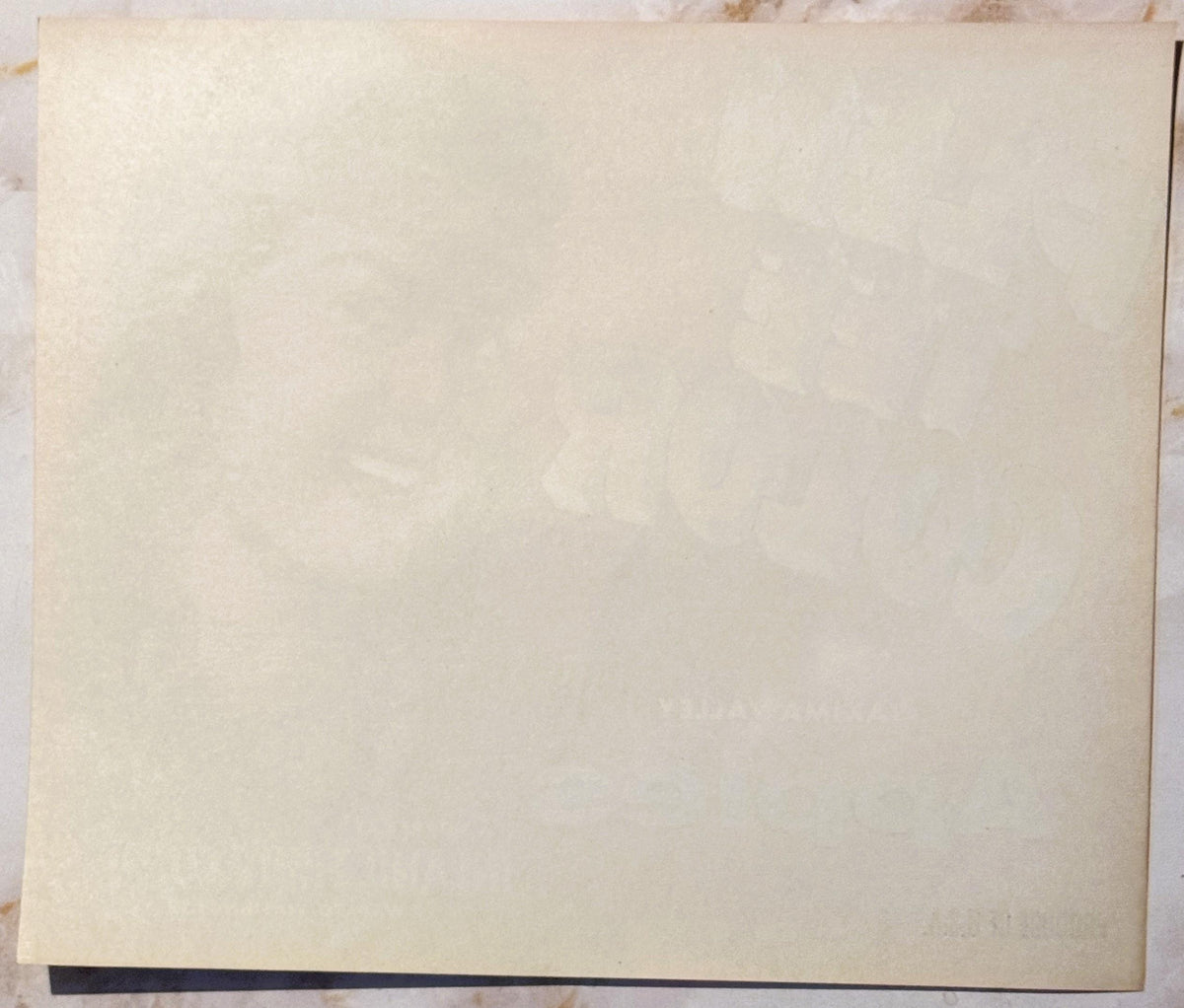
PLEN, TEE and COLOR stacked in big dimensional block letters that shade from brown to yellow with light blue sides, and BRAND in small type beside COLOR. Below, a large red apple with YAKIMA VALLEY in white and Apples in big light blue letters across it. In the lower left corner, CONTENTS ONE BUSHEL and PRODUCE OF U.S.A. On the right, the portrait: a smiling young woman with red lipstick, dark hair in two long braids, and a russet beaded headband with a zig-zag pattern and a single feather rising behind her head. Under her, SHIPPED BY INLAND FRUIT CO., WAPATO, WASHINGTON. No printer is named. The back is plain, with the design showing faintly through in reverse.

I get a kick out of the name. "Plen Tee Color" is plenty of color said the way a salesman would say it, and a good red color was something to brag about on an apple. That apple on the label sure has plenty of it!

🎨 Red Meant Something

The color of the label was doing a job too. The Yakima Valley packers had an informal color code for their apple grades: blue for Extra Fancy, red for Fancy, and green, white or yellow for the C grade. A buyer walking the aisles of an auction hall had a few seconds to size up a stack of boxes, and the label had to tell him what he was looking at before he walked on. By that old rule of thumb, a red label like this one went on Fancy.

📦 Contents One Bushel

That little line in the corner tells you exactly what box this was made for. Apples first went to market in hardwood barrels and bushel baskets, and in 1898 the Northwest Fruit Growers Association settled on a standard softwood crate built to hold one bushel, with the label pasted on the end where the buyer could see it. Once the Northern Pacific reached North Yakima in 1884, valley growers could ship east and over the Cascades, and in 1907 the Yakima County Horticultural Union put in the first big order of box labels, 25,000 of them.

The wooden crate had a good long run. Starting in the 1950s the packing houses moved to corrugated cardboard boxes with the brand printed right on them, and the paper end label lost its job. Washington State University keeps a Plen Tee Color label from Wapato in its fruit crate label collection, which the library dates to about 1954, right at the tail end of the crate label era. The label historian Pat Jacobsen estimates more than half a trillion fruit labels were printed over about 120 years, and fewer than 1 percent survive.

🚂 Wapato, on the Yakama Reservation

Wapato sits in the heart of the Yakima Valley, within the boundaries of the Yakama Indian Reservation. The name comes from the Chinook Jargon word for an edible root, the wapato. The town started out in 1885 as a stop on the Northern Pacific Railroad, founded by postmaster Alexander McCredy under the name Simcoe. By 1907 it was a booming town of well over 300 people, and it was incorporated as Wapato in 1908. Once the Irwin Canal brought water in 1896, farming became the big business in town. Japanese families began arriving as early as 1905, many of them by way of Hawaii, and by 1916 to 1918 a Japanese Town had grown up along West 2nd Street.

The name change came in 1903, when Simcoe became Wapato to stop the post office from mixing it up with old Fort Simcoe. The Wapato Irrigation Project spread canals and drains across the country around town from 1910 to 1920, and that same year of 1910 more than 1,500 loads of fruit, potatoes, hops and melons went out of Wapato by rail. The reservation itself goes back to the treaty signed on June 9, 1855, which joined 14 tribes and bands into the Yakama Nation. In 1994 the tribe changed the spelling of its name from Yakima to Yakama, the way it was written in that treaty, which is why the county, the river and the valley on this label say Yakima and the Nation says Yakama.

Wapato became the hub of Washington's Japanese community, second only to Seattle, until April 1942, when the families were forced out under Executive Order 9066. Braceros, Filipino and Mexican American workers and even German prisoners of war filled the farm jobs during the war years. Those war years were record years in the fields, too: the crops around Wapato were worth $5,261,233 in 1940, up from a little over $3 million in 1931, and close to $16 million by the end of the decade. By the time this label was printed, Wapato had about 3,200 people, and the crops around town were worth more than $21 million in 1956.

🍏 Inland Fruit

The Inland Fruit story, as the company told it, starts in the early 1940s in Yakima, when Inland Fruit & Produce began as a small wholesaler of fresh fruit and produce. In 1970 it dropped the produce side to concentrate on Washington apples, pears and soft fruit, and later it did business as Inland-Joseph Fruit Company. The company's retirement plan was wound up in 2008, and in 2010 Valicoff Fruit bought the old Inland Fruit warehouse in Wapato, where by 2014 it was putting in a multimillion-dollar apple packing line, so the old Inland Fruit warehouse is packing Yakima Valley apples again.

Inland Fruit was one of the cold-storage houses that kept Wapato working, and when those big storage plants grew in the 1970s, along with Yakima Fruit's, they let the town's packing crews work the whole year round instead of just at harvest. Cold storage like Inland Fruit's made Wapato a hub for holding produce, and it was a hard day for the town when two of its big fruit packing and cold-storage plants closed in the 1990s.

🏡 Display

Imagine hanging this vintage advertising on your wall as home decor in any room! All that orange and red looks great framed in a kitchen or a dining room, and it's a perfect gift for anybody from Wapato, Yakima or the Yakima Valley, an apple grower, or a collector of Western Americana.

Crate labels are a reminder of a bygone era, and the lithography on them is unparalleled even to this day, in my opinion. Museums and art institutes have galleries dedicated to them, and more and more collectors are seeking them out to preserve their history. Nobody is ever going to print these again. The supply for sale is all there is, and once it is framed on collectors' walls and tucked into gallery collections, these labels will be very hard to come by.

Shipping

🚚 Shipping & Handling

  • Shipping costs and timing are calculated at checkout.
  • Items curated and shipped directly by me include U.S. shipping at no additional cost, professionally packed to ensure safe arrival of your artifact.

Items from Vetted Pro Collectors
Shipping for items offered by vetted Pro Collectors is determined at checkout. All Pro Collector listings are reviewed to ensure fair, reasonable shipping practices.

For full details, please refer to our Shipping Policy.

Returns & Exchange

Take your time — you've got a full six months. If a piece isn't right for you, send it back the way it reached you and we're good.

In the first 30 days your money goes straight back the way you paid. After that it's store credit, so you can put it toward something you'd rather have.

Return shipping we sort out between us, case by case. I don't make this difficult.

If something arrives damaged, or it isn't what I said it was, send me a photo within 48 hours and I'll make it right.

Email info@vintageantiquesgifts.com or call 802-356-9872 — that's me answering, not a call center.

The only things I can't take back are custom or special-order pieces and gift cards.

View full details

Rescuing American History Since 2007

— Travis & the Kids