

Skip to product information
1 of 6

Vintage and Antique Gifts

Antique 1911 Adventures of Bobby Orde 📖 Stewart Edward White Grosset & Dunlap Reprint

Antique 1911 Adventures of Bobby Orde 📖 Stewart Edward White Grosset & Dunlap Reprint

Regular price $15.00 USD
Regular price Sale price $15.00 USD
Sale Sold out
Shipping calculated at checkout.

Size: 8 1/4" x 5 1/2"

🚚 Free US Shipping — ships within one business day. International shipping calculated at checkout.

Quantity

Who Was Bobby Orde? 📖 Antique 1911 Stewart Edward White Novel, Grosset & Dunlap Reprint

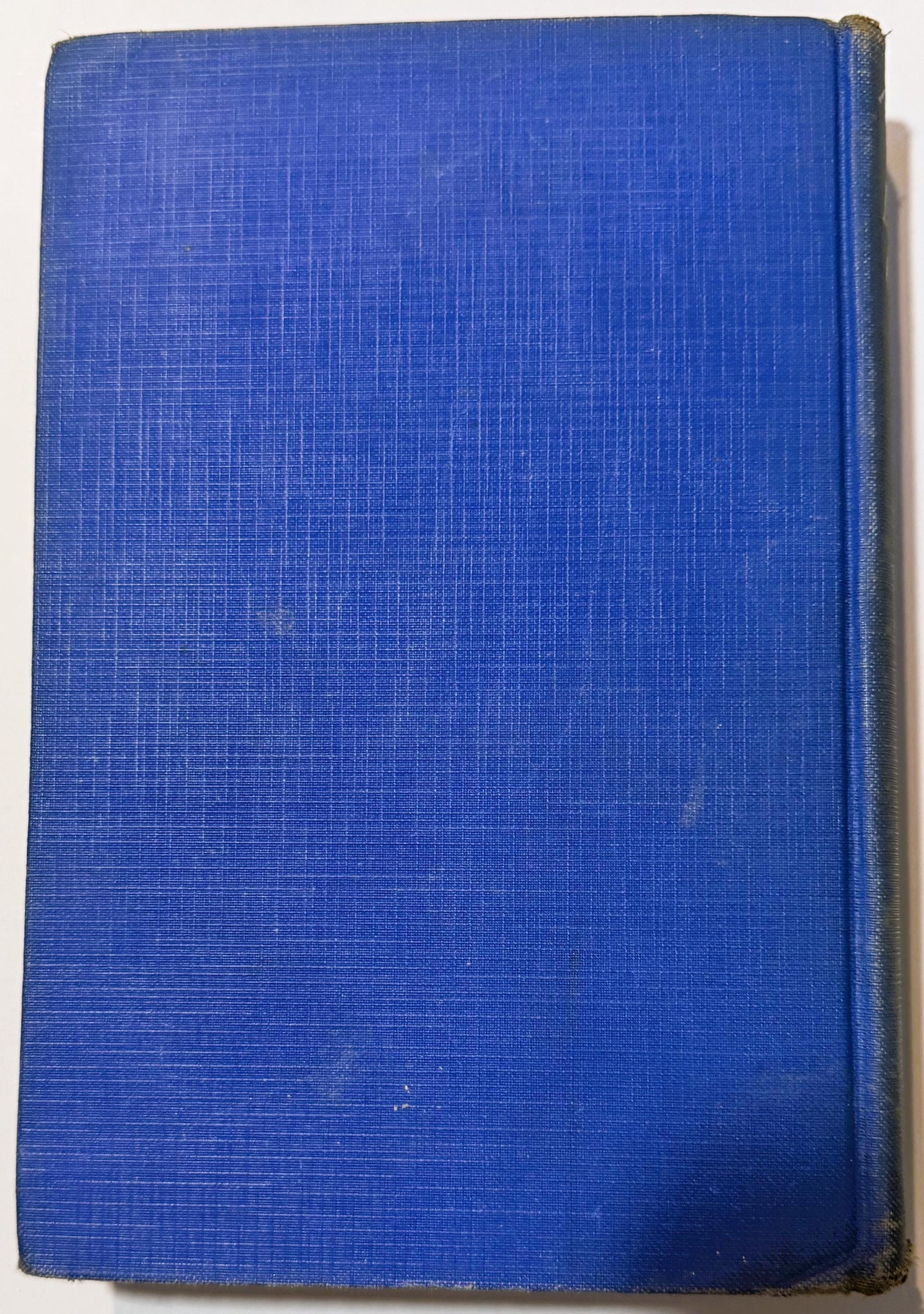
Size: 8 1/4" x 5 1/2" ~ just as pictured: blue cloth boards with silver lettering, a sound binding, the text block and endpapers complete, and a spine that wears its 115 years with character.

📖 The Book

This is a Grosset & Dunlap reprint of Adventures of Bobby Orde by Stewart Edward White. The copyright page reads "COPYRIGHT, 1911, BY DOUBLEDAY, PAGE & COMPANY," with the earlier copyright line beneath it, "COPYRIGHT, 1908, 1909, BY THE PHILLIPS PUBLISHING COMPANY" — the stories ran first in The American Magazine before White gathered them into this book. The copyright page here still reads "Printed in the United States at the Country Life Press, Garden City, N.Y." - Doubleday, Page's own model printing plant, moved out to Garden City on Long Island in 1910 and named for the company's magazine, Country Life in America. Grosset & Dunlap had the book on their list by 1920, selling it for 85 cents. Bobby is the son of the hero of White's earlier Riverman stories, growing up in a sawmill river town the book calls Monrovia — the woods, the mill, a boy's own printing press and rifle, seen at a boy's height rather than a man's.

I love how it looks. The front board is a deep blue linen-grain cloth with the title in flowing silver script and the author's name in spaced silver capitals, and the spine carries the same silver lettering down to GROSSET & DUNLAP at the foot.

🪵 What Happens in Monrovia

The book opens at nine o'clock one morning with Bobby walking, very properly, off to keep an agreement with his father. Mr. Orde is a lumberman whose firm runs a sawmill and logging outfit on the river, floating logs down to the booms, the big log pens above the mills where every log is sorted by its owner. That's Bobby's playground.

There are twenty-seven chapters, and the titles alone tell you what kind of boyhood this is: The Booms, Hide and Coop, The Printing Press, The Flobert Rifle, The Sportsman's Association, The Marshes, The Shooting Club, Christmas, The Boxing Match, The Murder, The Trial, The Sixteen-gauge Shotgun and The Sportsman. In The Printing Press, Bobby gets a little cast-iron press from his grandparents for his eleventh birthday, and the letters come out backward, crooked and smeared while his father laughs at the ink everywhere, until Bobby works out that pasting small squares of paper on the platen evens out the pressure and finally pulls a clean card. Anybody who ever had a toy press will know that feeling.

The Flobert rifle Bobby keeps looking at in a Monrovia store window was a real thing too. The Frenchman Louis-Nicolas Flobert, who lived from 1819 to 1894, invented the first metallic rimfire cartridge in 1845, putting the bullet, the powder and the primer in one little metal case, and built what he called parlor guns to shoot it, for target practice indoors. Bobby wants one badly. In 1916 a New York State list of best books praised the way it told a young boy's mind and ambitions, with discerning humor about his love, his log-walking, his printing press and his rifle.

✍️ Stewart Edward White

White was born in Grand Rapids, Michigan in 1873, the son of a lumberman, and he made his name writing the north-woods and frontier novels — The Riverman among them — that grew out of that world, before turning later in life to spiritualism. Theodore Roosevelt once called him the best man with a rifle and a pistol who ever shot at Sagamore Hill. He died in 1946 in Hillsborough, California.

His birthday was March 12, and his father, Thomas Stewart White, was the lumberman, so White grew up around the very trade this book is set in. The Riverman, the book about Bobby's father, came out in 1908. White died on September 18, 1946, and his late spiritualist books, The Unobstructed Universe among them in 1940, came a long way down the road from Bobby Orde.

🏠 Grosset & Dunlap

Grosset & Dunlap was founded in New York in 1898 by Alexander Grosset and George T. Dunlap as a reprint house, taking popular novels and putting them back into print in sturdy, affordable cloth editions — this copy's imprint sits at the foot of the spine.

That was the whole idea: the 1911 Doubleday first edition, 340 pages, sold for $1.20, and by 1920 Publishers Weekly listed it at $1.50 from Doubleday next to 85 cents from Grosset. Grosset & Dunlap went to Putnam in 1982, and the name lives on today under Penguin Random House. And Bobby still gets read: Willa Hammitt Brown's 2025 study of manhood and the American outdoors, Gentlemen of the Woods, cites the Grosset & Dunlap edition.

📰 Where Bobby Started

Before he was a book, Bobby was a magazine kid. The American Magazine was started in 1906 by the star muckrakers who walked out of McClure's together, Ida Tarbell, Lincoln Steffens and Ray Stannard Baker among them, with John S. Phillips running it, and White's stories ran there one at a time: "Until the Last Shot" in December 1908, "The Little Girl" in January 1909, "The Marshes" that March and "The Hole in the Cap" that August. All four came along into this book as chapters, which is why that 1908, 1909 Phillips line sits on the copyright page. In the magazine, the pictures for those stories were drawn by the illustrator Worth Brehm, and in 1909 the church weekly Western Christian Advocate told its readers about "another Bobby Orde story," this one about Bobby's first duck shooting.

🌳 A Printing Plant With Gardens

The Country Life Press wasn't an ordinary factory. When Doubleday, Page moved its printing out of Manhattan in 1910, it built a model plant in Garden City and wrapped it in formal gardens, lawns, reflecting pools and a sundial. Theodore Roosevelt laid the cornerstone, and in 1911 the Long Island Rail Road opened a little station named Country Life Press just for it, the same year this story came out between covers.

Grosset & Dunlap did well with books like this one. In 1907 they bought Chatterton & Peck and its children's list, and later, through the Stratemeyer Syndicate, they published the Hardy Boys, Nancy Drew, Tom Swift and the Bobbsey Twins. White kept writing too; his frontier novel The Silent Places was a top-ten bestseller in 1904.

🔖 What's Inside

The endpapers are printed in green and cream — trees, hills, a church spire, a fence, clouds — and a previous owner's bookplate is pasted inside the front cover, a small illustrated "Ex Libris" plate with a window, a golf bag and clubs, a fishing rod and creel, and a shelf of books. It's a nice little trace of someone who loved this book before I did.

The same green woodland scene runs across the back endpapers too, so the book opens and closes in Bobby's kind of country. It would sit just right on a shelf with your other north-woods stories, or make a fine gift for anybody who grew up around a lumber town, a river or a duck blind.

Shipping

🚚 Shipping & Handling

  • Shipping costs and timing are calculated at checkout.
  • Items curated and shipped directly by me include U.S. shipping at no additional cost, professionally packed to ensure safe arrival of your artifact.

Items from Vetted Pro Collectors
Shipping for items offered by vetted Pro Collectors is determined at checkout. All Pro Collector listings are reviewed to ensure fair, reasonable shipping practices.

For full details, please refer to our Shipping Policy.

Returns & Exchange

Take your time — you've got a full six months. If a piece isn't right for you, send it back the way it reached you and we're good.

In the first 30 days your money goes straight back the way you paid. After that it's store credit, so you can put it toward something you'd rather have.

Return shipping we sort out between us, case by case. I don't make this difficult.

If something arrives damaged, or it isn't what I said it was, send me a photo within 48 hours and I'll make it right.

Email info@vintageantiquesgifts.com or call 802-356-9872 — that's me answering, not a call center.

The only things I can't take back are custom or special-order pieces and gift cards.

View full details

Rescuing American History Since 2007

— Travis & the Kids