Skip to product information
1 of 8

Vintage and Antique Gifts

Vintage 1950s-1960s Atlantic Refining Company Stock Certificate 🛢️ Olive, 3.75% Cumulative Preferred Series B

Vintage 1950s-1960s Atlantic Refining Company Stock Certificate 🛢️ Olive, 3.75% Cumulative Preferred Series B

Regular price $7.00 USD
Regular price Sale price $7.00 USD
Sale Sold out
Shipping calculated at checkout.

Size: 12" x 8"

🚚 Free US Shipping — ships within one business day. International shipping calculated at checkout.

Quantity

What Was Atlantic Refining Preferred Stock? 🛢️ The Atlantic Refining Company, 3.75% Cumulative Preferred Stock, Series B

Size: 12" x 8" ~ little to no wear

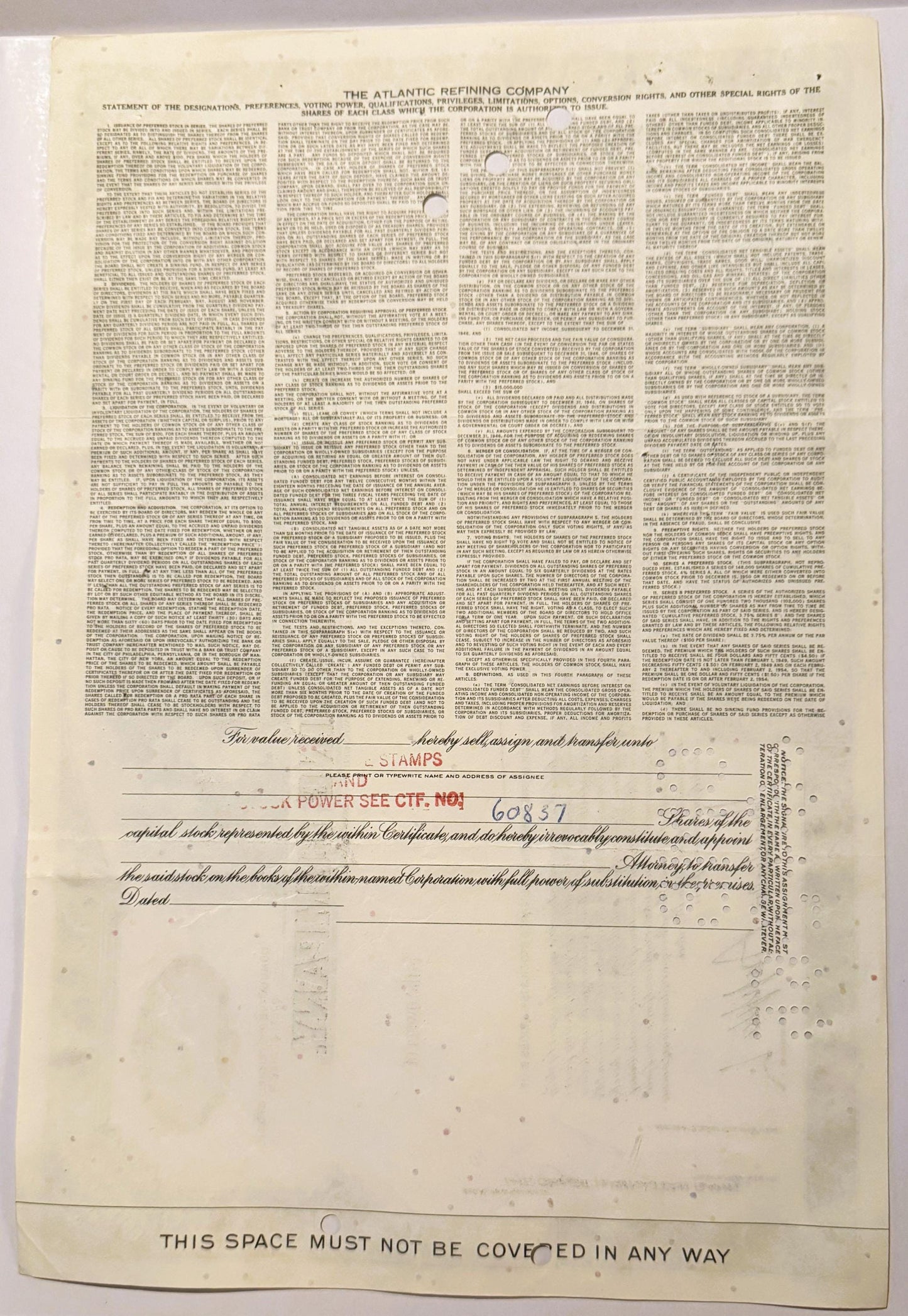
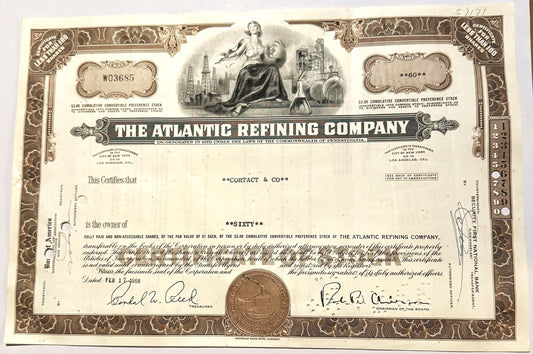
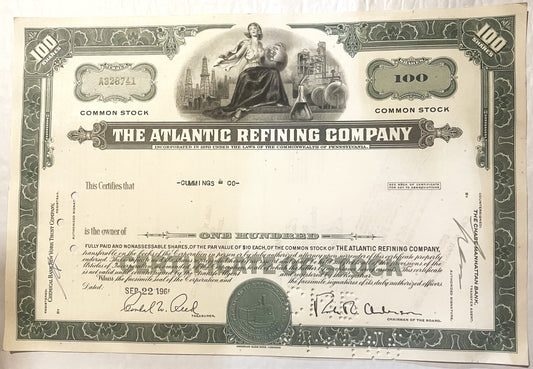
We've got a real gem here - a vintage 1950s - 1960s The Atlantic Refining Company stock certificate! This is the olive green preferred stock, and it is a beauty. Across the top two classical women in flowing robes recline on either side of a big round medallion that reads ATLANTIC, one resting by a sledgehammer and a gear wheel, the other holding out a scroll. CERTIFICATE FOR LESS THAN 100 SHARES is printed in both upper corners, and CUMULATIVE PREFERRED STOCK, 3.75% SERIES B on either side of the picture. THE ATLANTIC REFINING COMPANY runs underneath in bold letters, incorporated under the laws of the Commonwealth of Pennsylvania, and the shares carry a par value of one hundred dollars each. The company seal sits at the bottom with a building at its center, INCORPORATED 1870 and PHILADELPHIA around its edge, and AMERICAN BANK NOTE COMPANY is printed under it.

Along the sides it was registered by the Morgan Guaranty Trust Company of New York and countersigned by The Chase Manhattan Bank as transfer agent. On the printing shown, the two officer signatures at the bottom are engraved right into the plate, not signed by hand: Charles J. Reller over TREASURER, and Henderson Supplee Jr. over PRESIDENT. On the back is the full statement of the designations, preferences and rights of each class of stock, and the transfer form.

📅 Reading the Date Off the Paper

The printing in the photos dates itself. Morgan Guaranty Trust didn't exist until 1959, and Chase Manhattan took that name in 1955. At the other end, Henderson Supplee Jr. moved up from president to chairman of the board in 1964, so a plate that still shows him as PRESIDENT was printed before that. That plate came off the press between 1959 and about 1964.

The Series B itself is older. The back lays out its terms: 102,000 shares at $100 par, a 3.75% dividend a year, and a redemption premium of $4.50 a share through February 1, 1949, stepping down fifty cents a year to $1.50 a share from February 2, 1954, with no sinking fund. It also notes that Atlantic's earlier 4% Series A preferred had all been converted or redeemed by December 15, 1950. So the issue goes back to the late 1940s, and the certificates were printed for it over the years that followed.

🛢️ Atlantic, From Rockefeller to ARCO

The Atlantic Refining Company started out in Philadelphia in 1866 as the Atlantic Petroleum Storage Company, right at the beginning of the oil business. In 1874 John D. Rockefeller bought it and folded it into Standard Oil, which gave him a major foothold on the East Coast. When the Standard Oil Trust divided up territory among its companies in 1886, Atlantic got all of Delaware, the southern half of New Jersey and the southeast corner of Pennsylvania, which basically meant the whole Philadelphia area. In 1892 it absorbed two fellow Standard companies, Acme Oil of Pennsylvania and the Pittsburgh-based Standard Oil of Pennsylvania.

When the Sherman Antitrust Act broke the Trust apart in 1911, Atlantic was one of 11 companies out of 35 that got the rights to the Standard name, in its case for all of Pennsylvania and Delaware. Then it turned the name down. Like Conoco, Atlantic found its own name sold better than Standard, which was a rarity at the time. Over the years it grew up and down the East Coast, mostly by buying other companies.

Henderson Supplee Jr., the President whose engraved signature is on the printing shown, ran the company through the 1950s. He had been president of the Supplee-Wills-Jones Milk Company in Philadelphia before he came over to Atlantic in 1947, became Atlantic's president in 1952 and is credited with restructuring and reviving the company, and he moved up to chairman of the board in 1964 before retiring in 1965. He stayed on the board and played an important part in the merger that came next. In 1963 a New Mexico wildcatter named Robert O. Anderson merged his Hondo company into Atlantic, and in 1966, as Atlantic's chairman and chief executive, he merged it with Richfield Oil of Los Angeles to form the Atlantic Richfield Company, better known as ARCO. Two years later, on March 12, 1968, ARCO and Humble Oil confirmed the Prudhoe Bay field on Alaska's North Slope, the largest oil field in North America. Anderson ended up the largest individual landowner in the United States.

The Atlantic name had one more run. ARCO sold its Northeast business in 1985, the new owner brought the Atlantic name back, and in 1988 Philadelphia's own Sunoco bought it. The last known Atlantic station, in Chambersburg, Pennsylvania, became a Sunoco in 1996.

🏦 The Banks and the Engraver

Morgan Guaranty Trust Company was born in 1959, when J.P. Morgan & Co., which had become only a mid-sized bank, merged with the Guaranty Trust Company of New York. J.P. Morgan brought the famous name and the blue-chip clients.

The banks on the face have their own stories. The Chase Manhattan Bank was formed in 1955 when the Chase National Bank merged with the Bank of the Manhattan Company. The certificate was engraved and printed by the American Bank Note Company, formed in New York City in 1858 when several of the country's top security printers merged. It traces its roots back to a firm started in 1795 by Robert Scot, the first official engraver of the U.S. Mint, and during the Civil War it printed the federal Demand Notes for the Treasury.

🖼️ A Piece of History for the Wall

Imagine the conversations this will spark when your guests spot it on your wall. Stock certificates go all the way back to 1606 with the Dutch East India Company, and even the Walt Disney Company called it quits on paper certificates in 2013, so a real engraved certificate like this is a piece of history they just do not make anymore. Paper certificates are a finite supply, and once these are gone into collections and galleries, they will be very difficult to acquire. These were printed on paper that puts your average dollar bill to shame, thick, durable stock that keeps them looking fresh for decades.

And don't even get me started on the signatures! The two engraved ones are easy to read. The ones written in by hand are another matter. I'll level with you, I can barely read my own John Hancock, let alone one from sixty years ago. For those of you with a keen eye and a passion for history, the names on these can be a fun rabbit hole to go down.

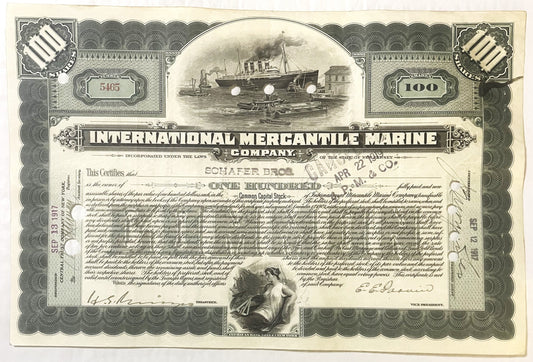
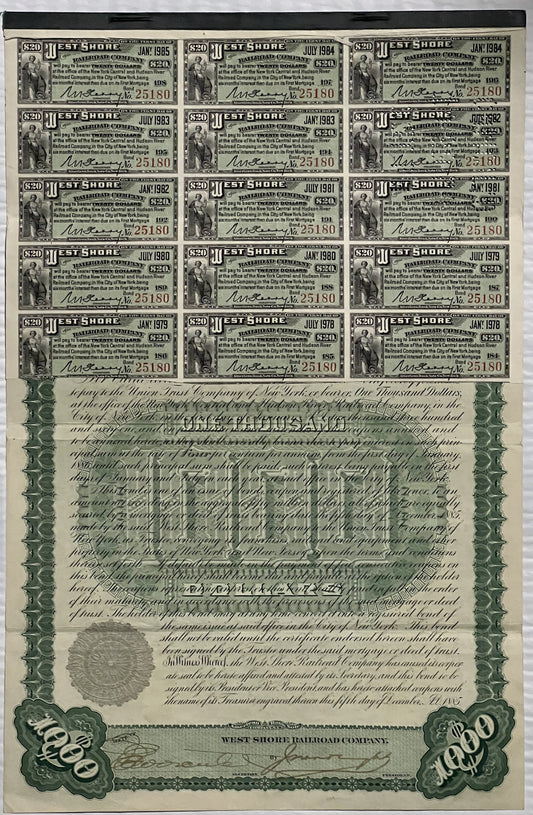
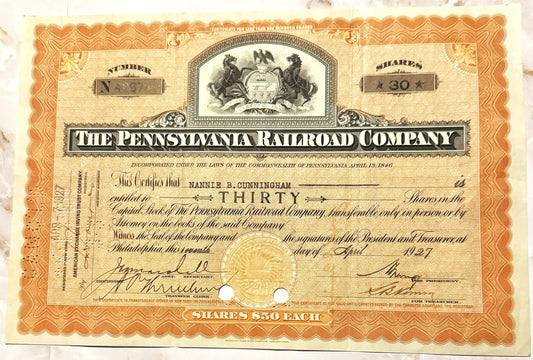
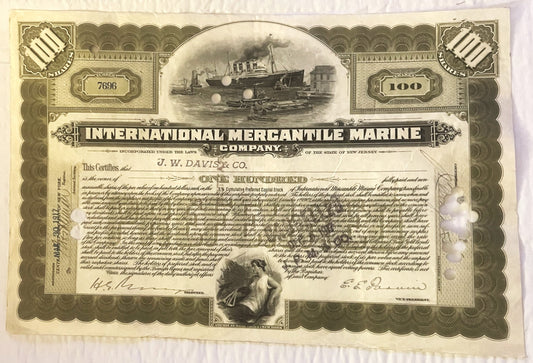
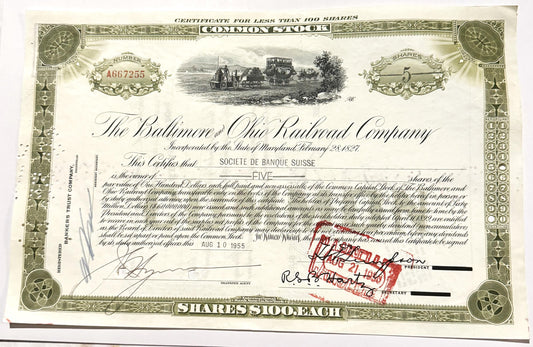
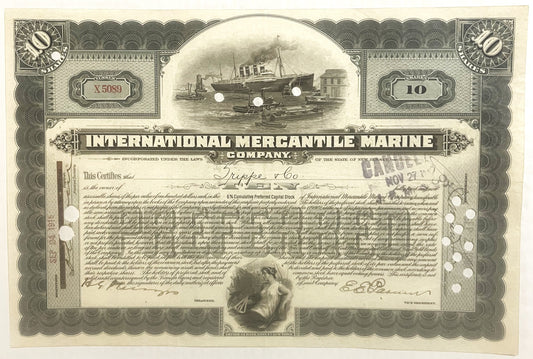
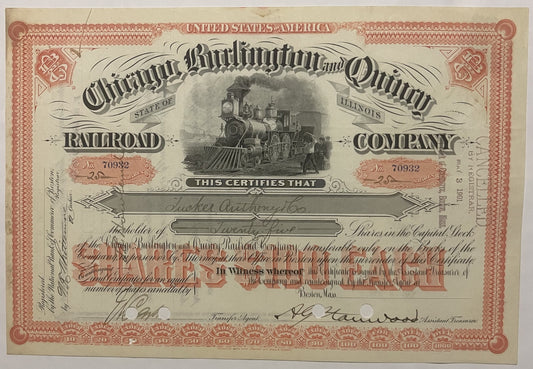
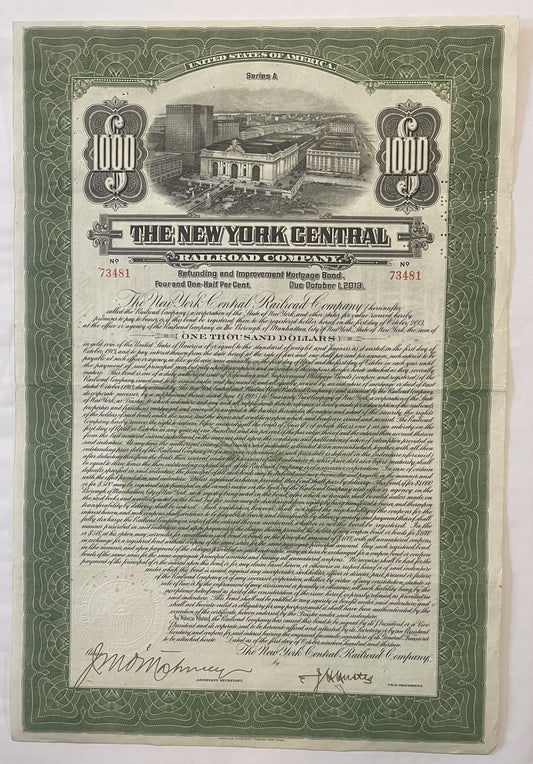
These are issued instruments rather than blanks. Being real working paper, they carry the marks that go with it - signatures, agent and registrar stamps, punch holes and the like. No two match - names, numbers, dates, signatures and punches all change - so the photos show the kind, not the exact sheet you'll get. They vary a little one to the next.

Shipping

🚚 Shipping & Handling

  • Shipping costs and timing are calculated at checkout.
  • Items curated and shipped directly by me include U.S. shipping at no additional cost, professionally packed to ensure safe arrival of your artifact.

Items from Vetted Pro Collectors
Shipping for items offered by vetted Pro Collectors is determined at checkout. All Pro Collector listings are reviewed to ensure fair, reasonable shipping practices.

For full details, please refer to our Shipping Policy.

Returns & Exchange

Take your time — you've got a full six months. If a piece isn't right for you, send it back the way it reached you and we're good.

In the first 30 days your money goes straight back the way you paid. After that it's store credit, so you can put it toward something you'd rather have.

Return shipping we sort out between us, case by case. I don't make this difficult.

If something arrives damaged, or it isn't what I said it was, send me a photo within 48 hours and I'll make it right.

Email info@vintageantiquesgifts.com or call 802-356-9872 — that's me answering, not a call center.

The only things I can't take back are custom or special-order pieces and gift cards.

View full details

Preserving History: Authentic Objects Across Eras

— Curated by Travis Weigel