Skip to product information
1 of 5

Vintage and Antique Gifts

Vintage 1998 Orioles Folding Fan โšพ Baltimore MLB Play by Play Orange & Black NOS

Vintage 1998 Orioles Folding Fan โšพ Baltimore MLB Play by Play Orange & Black NOS

Regular price 15.00 USD
Regular price Sale price 15.00 USD
Sale Sold out
Shipping calculated at checkout.
Quantity

โšพ Remember When Every Seat at Camden Yards Had Its Own Little Splash of Orange? ๐Ÿงก

There's a particular shade of orange that belongs to exactly one baseball town, and the second a fan like this snaps open, you're back there โ€” a warm night at Camden Yards, the warehouse lights glowing beyond right field, and a sea of orange and black waving between innings. This one, though, never made that trip. It's sat exactly as it left the dealer box, never popped open for a single game, waiting all these years for someone who still remembers what that stretch of Orioles baseball felt like.

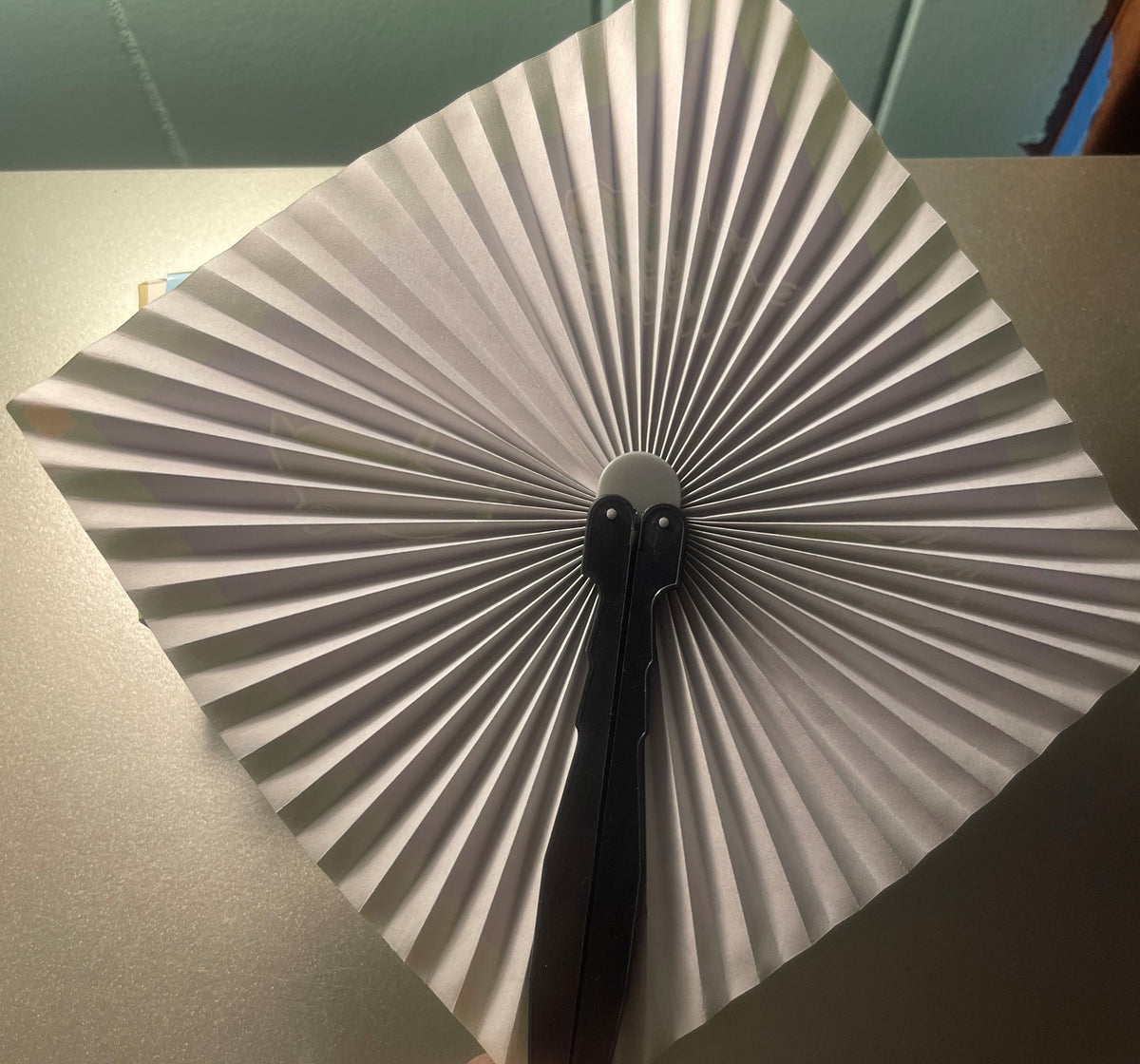
This is a Baltimore Orioles folding fan, officially licensed Major League Baseball merchandise produced by Play by Play Toys & Novelties, carrying a printed copyright date of 1998 right on the piece itself alongside a small "Made in China" production line near the handle. Fully opened, it spreads to a generous 11 x 9.5 inches (about 28 x 24 cm) of pleated orange paper radiating from a black plastic pivoting handle โ€” a rounded gray pivot cap and two silver rivets anchor the mechanism at the base.

Across the top, the team's flowing "Orioles" script rides the center panel, with the bird-on-diamond cap logo printed twice more along the lower panels on either side. A black-and-cream diagonal-striped border frames the whole thing, with small gold diamond accents marking each point where the fan's panel comes to a corner.

The original wholesale packaging โ€” a green dealer box holding a full dozen, its lid illustrated with a full-color ballpark scene, a scoreboard reading 02-07, a well-worn glove cradling a baseball, the Major League Baseball "Genuine Major League Merchandise" batter-silhouette seal, and an Orioles circular cap-logo patch โ€” is shown here for reference of how these left the factory.

This example is New Old Stock: never opened for use, never carried to a single game, straight from that original dozen-count box.


๐Ÿญ Play by Play Toys & Novelties: A Texas Story That Started With a Dishwashing Job

The name printed on this fan belongs to a real American company with a genuinely remarkable founder's story behind it. Arturo Torres fled his native Cuba in 1961 after the Bay of Pigs invasion, forced into exile after the Castro regime confiscated everything his family owned. He arrived in the United States with nothing and took a job washing dishes at a Texas Pizza Hut. From that start, Torres built a restaurant empire โ€” by the 1980s he operated 240 Pizza Hut and Taco Bell franchises across the region. He eventually sold those restaurant holdings for $125 million, and rather than retire on it, he turned around and founded Play by Play Toys in 1986, starting small as a supplier of stuffed toys and novelties for vending machines and arcade redemption games.

From that vending-prize beginning, Play by Play grew into one of the era's serious licensed-novelty operations, based out of San Antonio, Texas. The company took its public name to Wall Street in 1995, listing on NASDAQ under the ticker PBYB, and by 1997 was posting $74.2 million in annual sales. In 1996 it made its boldest move yet, acquiring the Seattle-area Ace Novelty Company โ€” a deal that, by the acquisition's own scale, made Play by Play the largest supplier of stuffed toys and novelties in the United States.

Along the way the company built out a broad licensing portfolio spanning children's entertainment characters, corporate trademarks, and professional sports team logos โ€” exactly the kind of license that would let a Texas novelty company press out a run of orange-and-black Orioles fans for the 1998 season. The Texas entity was later dissolved as a domestic filing in the early 2000s, and by its own successor company's account, the Play by Play name and operation relocated to Spain in 2002, eventually becoming part of the Famosaโ€“Giochi Preziosi toy group.

It's a genuinely American arc โ€” a Cuban exile's dishwashing job turning, within three decades, into a publicly traded licensing powerhouse.


โšพ From Milwaukee to St. Louis to Baltimore: How the Orioles Got Their Name

It's worth knowing, because it surprises most fans: the Orioles franchise wasn't born in Baltimore at all. It was one of the American League's eight original charter teams in 1901, and it spent that very first season as the Milwaukee Brewers before relocating the following year to become the St. Louis Browns. For 52 seasons the franchise played out its history in St. Louis under that name. It wasn't until 1953 that a syndicate of Baltimore business and civic leaders, headed by attorney Clarence Miles and Mayor Thomas D'Alesandro Jr., purchased the club and brought it home to Maryland. When the team took the field in 1954, it deliberately reached back into much older Baltimore history for its new identity โ€” reviving the "Orioles" name and the orange-and-black colors that had, in fact, belonged to this city long before there was a ballclub to wear them.


๐Ÿฆ Why Orange and Black: A Songbird, a Colonial Lord, and a State Flag

This is the piece of the story a casual souvenir stand would never tell you, and it's the most interesting thread behind this little fan. The Orioles' colors trace directly back to the Baltimore oriole itself โ€” and the bird, in turn, was named centuries earlier for its uncanny resemblance to a nobleman's coat of arms. The 18th-century naturalist Mark Catesby was among the first to record how Maryland colonists called the bird "the Baltimore-bird," because the male's orange-and-black plumage so closely echoed the heraldic colors of Cecil Calvert, the second Lord Baltimore and first proprietor of the Maryland colony โ€” which is also, of course, where the city of Baltimore takes its name. Maryland gave the bird legal protection as early as 1882 and named it the official state bird in 1947.

That Calvert heraldry didn't stop at a songbird โ€” it became Maryland's actual state flag, and it's genuinely unusual among American flags for it. Maryland's is the only state flag in the country based directly on British heraldry, combining the black-and-gold quartered arms of the Calvert family with the red-and-white Crossland arms inherited through Cecil Calvert's grandmother.

Those two halves carried real weight during the Civil War: Maryland units on the Union side favored the yellow-and-black Calvert quartering as their badge, while Maryland units that sided with the Confederacy became associated with the red-and-white Crossland cross. When the state formally standardized its flag in 1904, it stitched both halves back together into one banner โ€” a divided border state's wartime symbols reunited in a single design.

One curious wrinkle worth passing along: the true Calvert heraldic colors are gold and black, a touch more yellow than the vivid orange worn by the bird and the ballclub โ€” exactly why is something historians still debate. So a piece of ballpark novelty like this fan is, by way of a bird and a 17th-century English proprietor's coat of arms, still carrying that old Calvert color story into the stands.


๐Ÿงฑ The Warehouse Behind the Ballpark โ€” and a City They Started Calling "Charm"

The Orioles' modern home sits inside a genuine piece of Baltimore's railroad history rather than a generic stadium footprint. The long brick warehouse that looms over right field at Camden Yards was built between 1899 and 1905 by the Baltimore and Ohio Railroad to serve the adjacent Camden Station. At 1,016 feet long, just 51 feet wide, and eight stories tall, it's the longest brick building on the East Coast, and in its working life it could hold as many as 1,000 rail carloads of freight at once. The B&O used it for storage into the 1960s, but by the 1970s it sat abandoned, and it took a determined push from preservationists to stop it from being demolished before it was folded into the 1992 ballpark design as the sport's most recognizable outfield backdrop.

That same decade of civic near-losses gave Baltimore its enduring "Charm City" nickname โ€” and it's worth knowing that nickname is a modern invention, not old folklore. In 1974, with trash-collector and police strikes rattling public morale, Mayor William Donald Schaefer commissioned local ad agencies to dream up a tourism campaign. Copywriter Bill Evans landed on the idea that Baltimore held "more history and unspoiled charm tucked away in quiet corners than most American cities." The ad campaign itself was a commercial flop, but the name stuck anyway, worked its way into store names, team names, and bus livery across the city โ€” the same era, not coincidentally, when that old B&O warehouse was nearly lost before being saved.


๐Ÿ† The Season Printed on This Fan: 1998

The 1998 date carried on this fan lands in a specific, well-remembered Orioles year โ€” one that was bittersweet on the standings but unforgettable at the ballpark. The club finished fourth in the American League East that season with a 79-83 record, the first of what would become fourteen consecutive losing seasons for the franchise. And yet it was also the year Cal Ripken Jr. chose to end one of the sport's most extraordinary streaks. On September 20, 1998, after 2,632 consecutive games played, Ripken asked to be taken out of the Orioles' starting lineup for their final home game of the season against the Yankees โ€” deliberately closing the streak in Baltimore, the same city where it had begun in 1982 and where he'd broken Lou Gehrig's record three years earlier. Despite the losing record, fans kept showing up in force that year, with attendance topping 3.68 million across the season โ€” proof that between the ballpark itself and the closing chapter of the Ripken era, Baltimore still had every reason to fill the seats and wave something orange and black between innings.


๐Ÿ–ผ๏ธ Display Ideas

  • โšพ Open it fully and mount it flat against a wall as a starburst of orange, black, and cream โ€” the pleated panel reads like art from across a room.
  • ๐ŸŸ๏ธ Prop it beside a Camden Yards photo, ticket stub, or program from the Ripken era for a small shrine to that unforgettable season.
  • ๐Ÿงก Stand it open on a bookshelf or mantel next to other Orioles memorabilia for an instant pop of team color.
  • ๐ŸŽ Pair it with the original illustrated dealer box art (shown for reference) as a conversation piece about how ballpark novelties were once sold wholesale by the dozen.
  • ๐Ÿฆ Set it near anything Maryland-flag or oriole-themed to let the deeper Calvert-heraldry color story tell itself.
  • ๐Ÿ›๏ธ Frame it shadow-box style, fully spread, as a compact piece of late-1990s baseball Americana.

๐ŸŽ Who Collects These

Orioles collectors chasing anything tied to the 1998 season and the final Ripken streak find a natural home for this piece. Baltimore civic-history collectors interested in the oriole-and-Calvert heraldry story, and Maryland flag enthusiasts, tend to gravitate to it for that same reason. Ballpark-novelty and stadium-giveaway collectors appreciate it as a well-preserved example of the folding-fan format so common at humid summer games, and licensed-toy-industry collectors researching Play by Play's rapid 1990s rise find it a tangible artifact of that company's sports-licensing years.


โ“ FAQ

Is this genuine officially licensed MLB merchandise?
Yes โ€” the original packaging carries the Major League Baseball "Genuine Major League Merchandise" seal, and the fan itself is printed with the Orioles' team script and cap logo under a Play by Play / MLB copyright.

How is this fan dated to 1998?
The copyright date is printed directly on the fan itself near the handle, alongside the manufacturer's line, and repeated on the original dealer box.

What does "New Old Stock" mean for this item?
It means this fan was never opened for use or carried to a game โ€” it comes straight from an original, unopened dozen-count dealer box that sat in inventory rather than moving through a stadium concourse.

How big is it when fully opened?
11 x 9.5 inches (about 28 x 24 cm) โ€” a substantial pleated panel, whether displayed open or used as a hand fan.

Was this a stadium giveaway from a specific Orioles game?
There's no documentation tying this particular fan to a single giveaway date at Camden Yards โ€” it's best understood as a licensed retail/novelty item from the 1998 season rather than a promotional handout from one specific game.

Who made it, and are they still around?
Play by Play Toys & Novelties, a San Antonio, Texas company founded by Cuban-exile entrepreneur Arturo Torres, produced it under MLB license during the height of the company's 1990s licensing expansion.

Shipping

๐Ÿšš Shipping & Handling

  • Shipping costs and timing are calculated at checkout.
  • Items curated and shipped directly by me include U.S. shipping at no additional cost, professionally packed to ensure safe arrival of your artifact.

Items from Vetted Pro Collectors
Shipping for items offered by vetted Pro Collectors is determined at checkout. All Pro Collector listings are reviewed to ensure fair, reasonable shipping practices.

For full details, please refer to our Shipping Policy.

Returns & Exchange

Take your time โ€” you've got a full six months. If a piece isn't right for you, send it back the way it reached you and we're good.

In the first 30 days your money goes straight back the way you paid. After that it's store credit, so you can put it toward something you'd rather have.

Return shipping we sort out between us, case by case. I don't make this difficult.

If something arrives damaged, or it isn't what I said it was, send me a photo within 48 hours and I'll make it right.

Email info@vintageantiquesgifts.com or call 802-356-9872 โ€” that's me answering, not a call center.

The only things I can't take back are custom or special-order pieces and gift cards.

View full details