Skip to product information
1 of 4

Vintage and Antique Gifts

Vintage 1990-1998 Blue Hen Beer Label Delaware Fighting Blue Hens Revolutionary Militia History Collectible Craft Brewery Wilkes Barre PA 🍺

Vintage 1990-1998 Blue Hen Beer Label Delaware Fighting Blue Hens Revolutionary Militia History Collectible Craft Brewery Wilkes Barre PA 🍺

Regular price 5.50 USD
Regular price Sale price 5.50 USD
Sale Sold out
Shipping calculated at checkout.
Quantity

Size: 4 x 3.5 inches

Did You Know Delaware's Most Legendary Rooster Once Fought a Revolution — and Later Ended Up on a Beer Label? 🐓

There's something quietly electric about holding a piece of paper that carries this much American mythology in its ink. Not every beer label is just a beer label. Some of them are time capsules — small, flat rectangles of printed history that managed to survive the recycling bin, the garage box, the estate sale, the damp basement — and arrive in your hands still crisp, still colorful, still telling the story they were printed to tell. This is one of those labels. The moment you lay eyes on that bold black background, that blue-coated militiaman standing tall with a fighting gamecock perched on his arm and a musket in his grip, you feel it immediately: this thing was designed with intention. With pride. With a story to honor. And that story starts long before the brewery, long before the label press, long before Pennsylvania craft beer even had a name.

Welcome to the world of Blue Hen Beer — brewed under the hills of northeastern Pennsylvania, dressed in the colors of a Delaware revolution, and now resting comfortably in the hands of collectors who understand exactly what they're looking at.


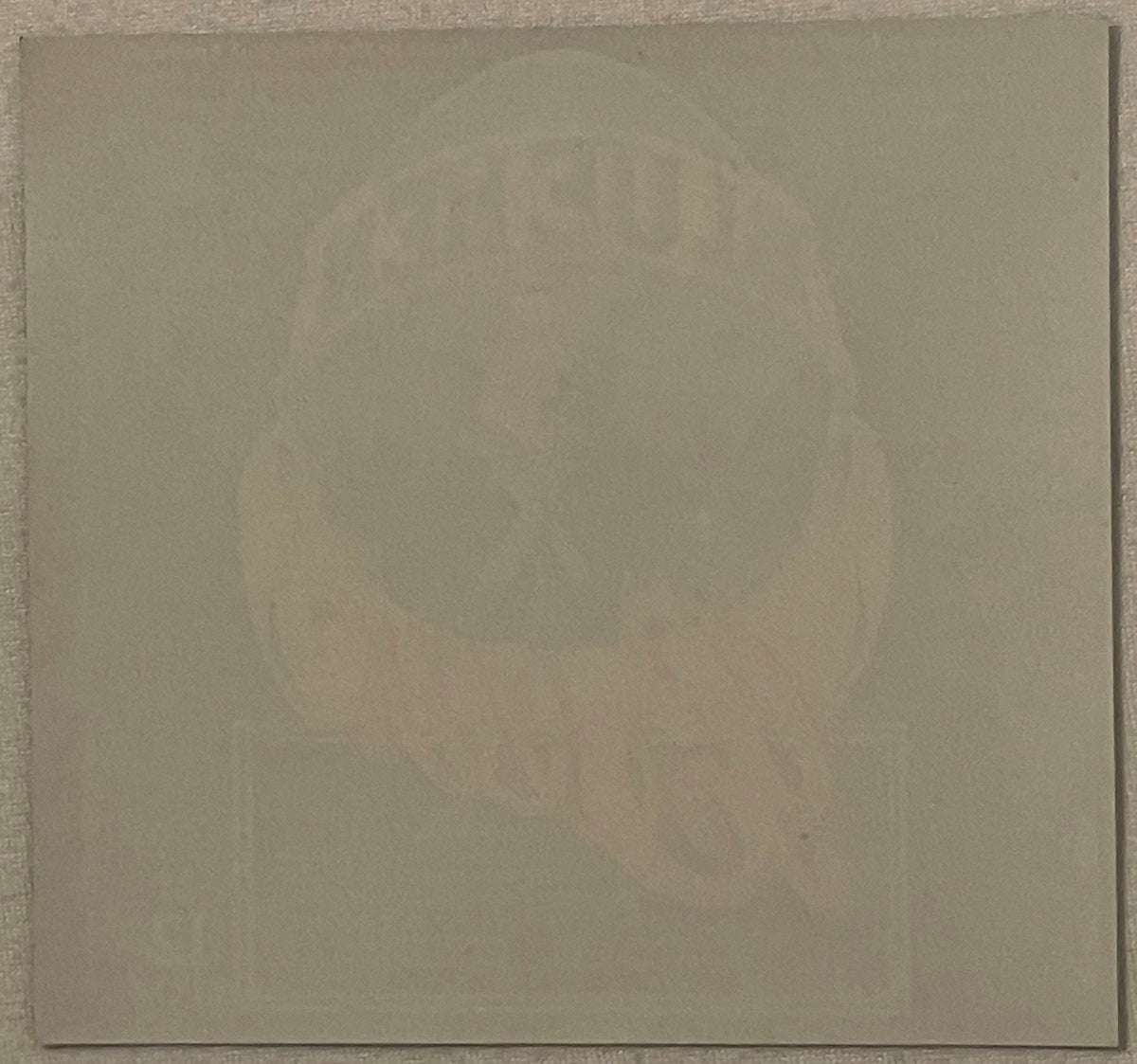
What you're holding is a vintage flat paper bottle label — unattached, unglued, never applied to a bottle — produced for Blue Hen Brewery Ltd., brewed and bottled under special license out of Wilkes-Barre, Pennsylvania. The label was printed for 12 fl oz bottles, and it comes to you in excellent, displayable condition: the paper is clean, the colors are rich, and the printing is crisp on both front and back panels.

The front face features a dramatic full-color illustration of a Revolutionary War militiaman in a deep blue coat, musket in hand, with a proud gamecock perched on his arm, rendered against a commanding black background with bold lettering in gold, blue, and flowing orange script. "BLUE HEN" arches across the top in deep blue with gold trim; "Beer" sweeps across the lower center in warm orange cursive.

A registered trademark symbol is clearly visible on the face of the label, speaking to the commercial seriousness of this brand's identity. The Government Warning text appears on the left side panel — a requirement that became federal law in 1989 — which places this label's production firmly in the 1990s era of American craft brewing's earliest and most romantically earnest chapter.

This is a new old stock label: it was printed, stored, and never used on a bottle. It has survived intact, and it is ready to be appreciated properly — framed, displayed, or filed into a serious collection.


🍺 The Brewery, the Brand, and the Brief Golden Window of 1990s American Craft Beer

To understand Blue Hen Beer, you have to understand the moment it was born into. The 1990s were a genuinely extraordinary decade for American brewing — and not in the polished, venture-capital-saturated way that craft beer would later become. This was the first wave: scrappy regional brands with big ideas, regional pride, and very little national distribution infrastructure. Breweries were popping up in rust belt cities, in river towns, in post-industrial communities that wanted something to call their own again. Wilkes-Barre, Pennsylvania — a city with deep roots in coal mining, industry, and a fierce working-class identity — was exactly the kind of place where a brand like Blue Hen could take root.

Blue Hen Brewery Ltd. produced a lager that, by the label's own declaration, was "craft brewed from the finest roasted barley malts, classic European hop varietals, cultured lager yeast and pure water." The label goes further: "No additives, preservatives or cereal fillers are used in the brewing of Blue Hen, making it one of America's truly fine beers." That language — earnest, specific, almost defiant in its pride — tells you everything about the era. This was a time when calling your beer "craft" meant something to the people who made it. It was a statement of philosophy as much as a marketing claim. Blue Hen Brewery was making a particular kind of argument with every bottle: that quality regional beer was worth seeking out, worth paying for, worth being proud of.

The decision to brew under special license — a common arrangement in smaller regional craft operations — meant that Blue Hen's identity was entrepreneurial and brand-driven even if its physical production was shared with a larger facility. This was standard practice in the early craft era, and it in no way diminishes the brand's integrity. The concept, the recipe, the label design, the story — those all belonged to Blue Hen. And that story, as we're about to see, was a genuinely extraordinary one to build a beer around.


🏙️ Wilkes-Barre, Pennsylvania — A City That Knows How to Keep a Story Alive

Wilkes-Barre sits in the Wyoming Valley of northeastern Pennsylvania, cradled by the Susquehanna River and the long ridge of the Pocono plateau. It's a city built on anthracite coal — one of the great industrial engines of 19th and early 20th century America — and it carries that history in its bones. The city was named for two British parliamentarians, John Wilkes and Isaac Barré, who had spoken out in favor of the American colonies during the years before the Revolution. The name itself is a small piece of colonial-era diplomacy, a reminder that even in the naming of Pennsylvania towns, the political currents of 1776 were running strong.

By the time the 1990s rolled around, Wilkes-Barre was in the midst of the economic transitions that challenged so many northeastern Pennsylvania communities after the coal industry declined. But the city's spirit — scrappy, community-forward, fiercely proud of its regional identity — never dimmed. It's the kind of place where local history is genuinely treasured, where people know their own story and want to see it honored. A brewery that rooted itself in Revolutionary War mythology wasn't just marketing cleverly. It was speaking the language of a community that understood what it meant to fight for something worth fighting for.

And real history tastes better.


🦅 Delaware's Fighting Blue Hens — The Revolutionary War Legend Behind the Label

Here is where this label earns its place in any serious collection of Americana. The "Blue Hen" isn't a marketing invention — it is one of the most vivid pieces of Revolutionary War folklore in the American tradition, rooted in the fighting spirit of Delaware's Continental soldiers.

The story, as it has been passed down through Delaware history and military lore, centers on a company of Delaware soldiers during the Revolutionary War who kept gamecocks — fighting roosters — as camp mascots. These birds were reportedly the offspring of a famous blue hen kept by Captain Jonathan Caldwell's men. The soldiers, far from home and facing the brutal uncertainty of colonial warfare, entertained themselves and maintained morale by staging cockfights between battles. The birds were legendarily fierce. And so were the men. When Delaware soldiers fought — at Brooklyn, at Trenton, at Camden — they fought with a reputation that followed them across the colonies. Fellow soldiers and even British officers reportedly marveled at their tenacity. They came to be called the "Blue Hen's Chickens," a nickname that carried equal parts affection and respect.

That nickname passed into Delaware's permanent identity. The Blue Hen chicken became Delaware's official state bird — codified in 1939 — and the University of Delaware adopted the Blue Hen as its athletic mascot, a tradition that runs deep in the state's sports culture to this day. For a beer brand to claim this imagery — the militiaman, the gamecock, the musket, the colonial blue — was to reach all the way back to 1776 and pull forward a story of defiant American resilience. It was bold. It was earned. And it was beautifully rendered on this label.

The militiaman on this label has specificity: the cut of the coat, the posture, the particular way the gamecock rides on the arm. Whether that illustration was based on historical reference or emerged fully from an artist's imagination is a detail that has blurred with time, but the result speaks for itself. This is not clip art. This is designed Americana.


📜 The Label as Artifact — Paper, Printing, and the Physical History of Beer Ephemera

Beer labels occupy a fascinating and underappreciated corner of American paper ephemera collecting. They are, in strict technical terms, commercial printing — produced in large quantities, designed to be glued to glass, soaked off, and discarded. Most labels that survived did so because they were stored by someone who understood, even instinctively, that these things were worth keeping. A pressroom overrun, a salesman's sample set, a printer's archive — these are the sources that feed today's collector market for vintage beer labels.

This Blue Hen label is flat and unglued — never applied. The paper is clean. The colors — that deep black background, the rich gold type, the vivid illustration — have held. What you're looking at is a four-color commercial print job from the 1990 - 1998 on label stock, complete with front face, side panels, and back panel text. The back and side panels carry the brand's brewing philosophy statement, the Government Warning (mandated after the Alcoholic Beverage Labeling Act of 1988 took effect January 1, 1989), and the production details connecting this beer to Wilkes-Barre and Blue Hen Brewery Ltd. Every element is consistent with a professionally produced, commercially registered regional brand, and the registered trademark symbol on the front face confirms that Blue Hen wasn't operating casually. This was a brand built to last.

That it didn't survive into the modern craft era is one of the many small losses of American regional brewing history — and it is precisely why this label matters now. It is the record.


🖼️ Display Ideas

  • 🖼️ Frame it flat — a simple black frame with a white or cream mat lets the label's own black background pop dramatically. Wall-mounted in a bar room, study, or Americana display, this commands attention.
  • 🍺 Pair it in a brewery grid — collectors who focus on Pennsylvania regional brewing often display labels in uniform frames in a grid arrangement. Blue Hen anchors a Pennsylvania craft beer wall beautifully alongside other Keystone State labels from the same era.
  • 🪖 Revolutionary War theme display — pair this label with other colonial Americana: reproduction broadsheets, pewter mugs, period maps, or Delaware-themed historical pieces. The militiaman illustration holds its own in serious historical display contexts.
  • 📚 Archival sleeve in a binder collection — serious label collectors who maintain archival binder systems will find this label an excellent addition to a regional Pennsylvania, craft brewing, or patriotic Americana section. Store flat in an acid-free sleeve.
  • 🎨 Shadow box with regional context — mount the label alongside a small Delaware Blue Hen reference, a vintage Pennsylvania road map, or a reproduction Revolutionary War image for a shadow box display that tells a complete story.
  • 🏠 Tavern room or home bar focal point — mounted near a vintage tap handle or bar sign collection, this label becomes a conversation piece with real historical depth — not just decoration, but a teaching moment in every gathering.

🎁 Who Collects These

The audience for a label like this is beautifully varied, and that's part of what makes it such a satisfying piece to offer. Beer label collectors — known in the hobby as labologists — form the most dedicated core audience. This is a recognized and serious collecting field with its own organizations, shows, and publications, and regional craft-era American labels from the 1990s are increasingly sought after as that decade's brewing history becomes harder to document. Blue Hen, as a brand with genuine mythological depth and handsome illustration, is exactly the kind of label that serious labologists pursue.

Delaware history enthusiasts and Revolutionary War collectors represent a second strong audience. The Blue Hen of Delaware is a beloved piece of state identity, and anything that honors that story, especially something this visually striking, resonates deeply with people who care about Delaware's place in American history. University of Delaware alumni and fans of the Fightin' Blue Hens athletic program will immediately recognize the cultural connection and appreciate the label's tribute to their mascot's origins.

Pennsylvania regional collectors — people who focus on the commercial and industrial history of the Wyoming Valley and the broader northeastern Pennsylvania region — find labels like this irreplaceable. Wilkes-Barre's commercial history from this period is not exhaustively documented in physical artifacts, and a professionally produced, registered brand label is a genuine historical record of local entrepreneurial ambition.

Americana and paper ephemera collectors round out the audience — people who simply love the beauty and storytelling power of vintage American printing. Bar and tavern decorators, history teachers looking for tactile teaching aids, gift buyers seeking something genuinely original for the history lover or the homebrewer in their life — all of them find something to love here.


❓ Frequently Asked Questions

What makes this label worth a second look beyond the eye-catching artwork?

The story behind it. This isn't a manufactured mascot — the Blue Hen name reaches back to real Revolutionary War regimental lore from Delaware, which gives the label a documented historical thread that most 1990s craft beer branding simply didn't have.

Is this label in truly displayable condition, or does it show significant age?

This label is in excellent displayable condition. The paper is clean, the printing is vivid, and the colors — including that dramatic black background — have held well. As a flat, unattached label that was never applied to a bottle, it avoided the most common sources of label damage: moisture from glass condensation, the stress of removal, and soaking-off damage. What you see in the photos is what you're getting: a crisp, bright, flat paper label ready to be framed or archived.

What exactly does "brewed under special license" mean on this label?

In the craft brewing world of the 1990s, and in American brewing more broadly, it was common for a brand to be conceived, designed, and marketed by one entity while the physical brewing and bottling was carried out by a licensed contract brewery or regional facility. This arrangement, sometimes called contract brewing or license brewing, was a legitimate and widely practiced model that allowed smaller entrepreneurial brands to bring quality products to market without the capital investment of owning a full production brewery. Blue Hen Brewery Ltd. held the brand, the recipe, the trademark, and the identity; the Wilkes-Barre facility handled production.

Why does the Government Warning help date this label to the 1990s?

The Alcoholic Beverage Labeling Act of 1988 required that all alcoholic beverages sold in the United States carry a specific health warning from the Surgeon General, effective January 1, 1989. Before that date, no such warning was federally mandated. The appearance of the Government Warning text on the side panel of this Blue Hen label confirms that it was produced no earlier than 1989. Combined with the visual design style, typography, and the broader context of when regional craft brands like Blue Hen were active, the 1990s production dating is consistent and well-supported by the physical evidence on the label itself.

How is this different from a label removed from a bottle?

This is a new old stock (NOS) flat label, meaning it was printed for use, stored, and never applied to a bottle. Labels removed from bottles, even carefully soaked and dried, typically show evidence of that process: residual adhesive, thinning or wrinkling at the edges, slight color shifts from moisture exposure, or micro-tears from removal. A flat, unattached label like this one carries none of those risks and limitations.

What is the connection between this label and Delaware's state bird?

The Blue Hen chicken became Delaware's official state bird in 1939, but the story behind the name goes back to the Revolutionary War, specifically to Delaware's Continental soldiers who were nicknamed the "Blue Hen's Chickens" for their fierce fighting spirit, reportedly connected to the gamecocks they kept as camp mascots. This label directly honors that heritage: the militiaman illustration, the gamecock on his arm, the blue coat, the name "Blue Hen" — all of it is a deliberate tribute to Delaware's Revolutionary War identity.

What's the best way to think about where a piece like this fits in a broader collection?

That depends on what you already collect, and that's part of the fun of it. It sits equally well in a Pennsylvania breweriana grouping, a Delaware or Revolutionary War history display, or a general Americana wall, since it genuinely belongs to all three worlds at once — regional brewing history, state folklore, and mid-century commercial art.


Shipping

🚚 Shipping & Handling

  • Shipping costs and timing are calculated at checkout.
  • Items curated and shipped directly by me include U.S. shipping at no additional cost, professionally packed to ensure safe arrival of your artifact.

Items from Vetted Pro Collectors
Shipping for items offered by vetted Pro Collectors is determined at checkout. All Pro Collector listings are reviewed to ensure fair, reasonable shipping practices.

For full details, please refer to our Shipping Policy.

Returns & Exchange

Take your time — you've got a full six months. If a piece isn't right for you, send it back the way it reached you and we're good.

In the first 30 days your money goes straight back the way you paid. After that it's store credit, so you can put it toward something you'd rather have.

Return shipping we sort out between us, case by case. I don't make this difficult.

If something arrives damaged, or it isn't what I said it was, send me a photo within 48 hours and I'll make it right.

Email info@vintageantiquesgifts.com or call 802-356-9872 — that's me answering, not a call center.

The only things I can't take back are custom or special-order pieces and gift cards.

View full details