Skip to product information
1 of 5

Vintage and Antique Gifts

Vintage 1960s Perfection Beer Label 🍺 Horlacher Brewing Co Allentown PA NOS Gnome Breweriana American Made

Regular price 5.00 USD
Regular price Sale price 5.00 USD
Sale Sold out
Shipping calculated at checkout.

Description

What Does It Mean When a Piece of Paper Outlives the Brewery That Printed It? 🍺

There is a particular kind of quiet miracle that happens in old cardboard boxes, in the back rooms of closed distributors, in the dusty shelving of shuttered printing houses. A label gets printed, gets bundled, gets set aside — and then the world moves on without it. The bottles get filled and emptied. The tap handles get retired. The neon signs get thrown out or stolen or simply fade. And yet somehow, this little rectangle of golden paper survives. Its colors intact. Its gnomes still grinning. Its gummed back never touched by water, never curled by a bottling line, never peeled away by the hand of a thirsty steelworker reaching into a cooler. It just waited. For you, maybe. For a wall in a den, a shadow box in a rec room, a framed conversation piece above a vintage bar cart. That is the story of this Vintage 1960s Perfection Beer Label from Horlacher Brewing Company of Allentown, Pennsylvania — and it is a story worth telling in full.

Breweriana collecting is one of those hobbies that sneaks up on you. You pick up one thing — a church key, a tap knob, a lithographed tray — and suddenly you understand that you are not just collecting objects. You are collecting evidence. Evidence that a town had a brewery, that a brewery had a culture, that a culture had its own language of color and font and mascot and slogan, and that all of it was printed, bottled, shipped, and poured into the daily life of a community that knew exactly what it was drinking and was proud of it. This label is that kind of evidence. Small in size. Enormous in meaning.


🍺 What You Are Actually Looking At

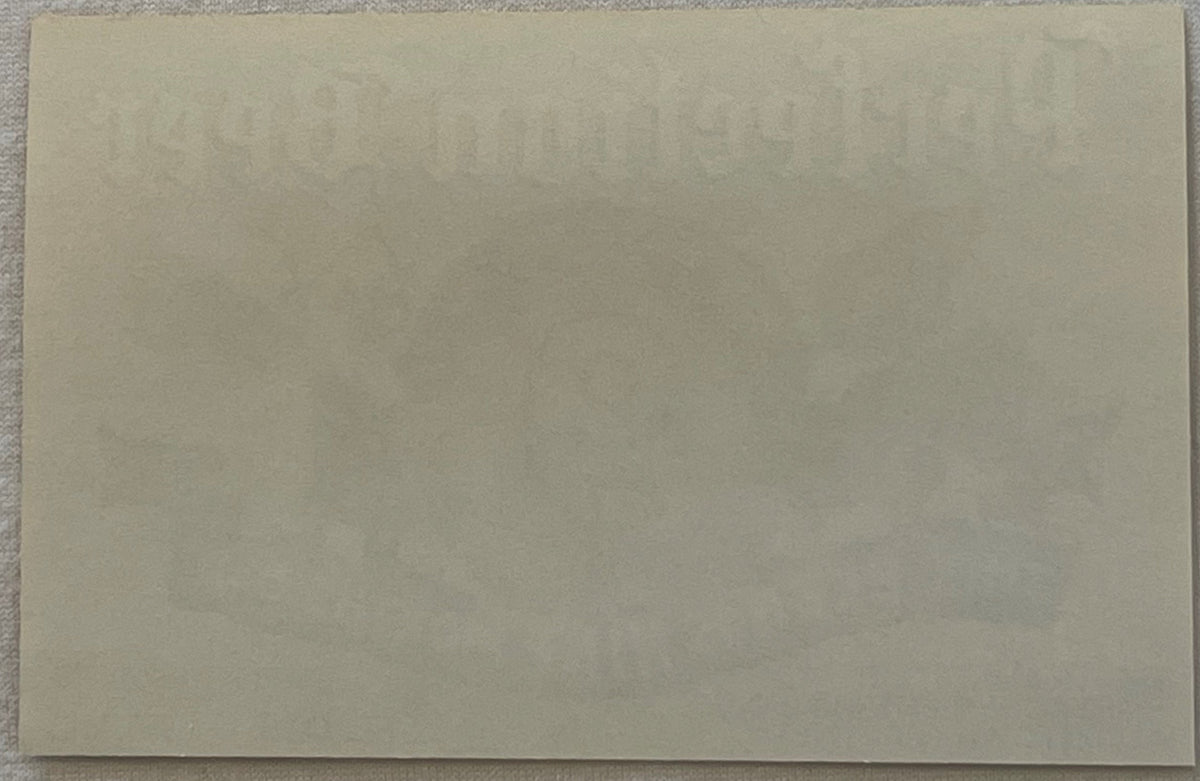
Let's start with the object itself, because collectors deserve specifics. This is a horizontal rectangular beer bottle label produced for Horlacher Brewing Company of Allentown, Pennsylvania, dating to the 1960s. It is NOS — New Old Stock — meaning it was never applied to a bottle, never moistened, never used in production. It has been in storage since its original print run, and its condition reflects that remarkable fact: the colors remain warm and vivid, the stock is clean, and the design reads exactly as it did the day it came off the press.

The label is printed on what appears to be a warm golden-tan paper stock — not stark white, not cream, but that particular amber-tinted shade that gives the whole design a natural, almost woodgrain warmth, as though the label itself were brewed from something. Across the top, "Perfection Beer" is rendered in an ornate blackletter typeface — the kind of gothic lettering that brewers of German descent reached for instinctively, a typographic shorthand for old-world craft, for lager cellars and cooperage and recipes carried across the Atlantic in someone's memory. The letters are cream-colored with dark outlines, reading crisply against the warm ground. And then there are the gnomes. Two of them. Cheerful, rotund, dressed in the timeless livery of the folkloric brewer — and grinning with the specific satisfaction of beings who have tasted something very good and are not particularly interested in sharing the secret of how it was made. They are, in the language of mid-century commercial illustration, absolutely perfect. The kind of mascot art that a skilled lithographer or commercial artist labored over, that a marketing man approved with a handshake, and that a printer ran off in a press run that nobody imagined would still be admired sixty years later.

The printing itself is characteristic of quality mid-century label production — rich, layered, the kind of color fidelity that came from experienced craftsmen working offset lithography presses at the height of that art form's commercial golden age. Every label of this era was a small manufactured object, not just a printed sheet, and you can feel that in the weight of the stock and the depth of the ink.


🏭 The Horlacher Brewing Company — A Lehigh Valley Original

Horlacher Brewing Company was a fixture of Allentown, Pennsylvania for the better part of the twentieth century. Founded in the late nineteenth century and operating well into the latter decades of the 1900s, Horlacher was exactly the kind of regional brewery that defined American beer culture long before the craft movement gave that concept its modern vocabulary. These were the breweries that made beer for their neighbors — for the steelworkers and the machinists, for the corner taverns and the church picnics, for the Friday nights and the Sunday afternoons of a working-class Pennsylvania city that took its leisure seriously.

Allentown, situated in the heart of the Lehigh Valley, was a natural home for brewing. The region's German immigrant population brought with it a deep cultural tradition of lager brewing — the same tradition that built Milwaukee, St. Louis, and Cincinnati into brewing capitals. In the Lehigh Valley, that tradition expressed itself in a cluster of regional breweries that competed fiercely for local loyalty and produced beers that were, by any honest account, very good. Horlacher was among the survivors. The brewery navigated Prohibition, the post-war consolidation wave, and the rise of national brands with enough stubbornness and local pride to keep going long after many of its contemporaries had been absorbed or shuttered.

The Perfection brand name itself speaks to a particular ambition — the kind of aspirational branding that regional breweries deployed to signal quality without the advertising budgets of the nationals. "Perfection" said: we are not making something good enough. We are making something that could not be improved. That is a bold claim on a beer label. And the gnomes — those knowing, grinning, folkloric little figures — were the brand's way of winking at you while making it. Old-world craft, rendered in mid-century commercial illustration, bottled in Allentown, Pennsylvania, and sold to people who already knew it was good because they had been drinking it their whole lives.


🏙️ Allentown, Pennsylvania — The Lehigh Valley and Its Brewing Soul

To understand this label, you need to understand Allentown — not the city of today, but the Allentown of the 1960s, when this label was printed. It was a city of industry and immigration, of Bethlehem Steel and silk mills, of neighborhoods where German, Eastern European, and Pennsylvania Dutch traditions overlapped in the smoky, convivial atmosphere of corner taverns and social clubs. Beer was not a luxury in this Allentown. It was a social currency, a daily ritual, a bond between the man who brewed it and the man who drank it.

The Lehigh Valley brewing tradition ran deep. Long before Horlacher, the region's German settlers had established a culture of home and commercial brewing that treated lager-making as a serious craft. The limestone-filtered water of the region, the proximity to Pennsylvania grain fields, and the cold-storage possibilities of the valley's limestone caves and later its industrial ice houses made the area a natural brewing environment. By the time Horlacher was operating at full commercial scale, it was drawing on a regional infrastructure — hop merchants, maltsters, cooperages, glass bottle suppliers, and yes, label printers — that had been built over generations.

Local legend has it that in Horlacher's heyday, deliveries from the brewery were a neighborhood event on certain streets of Allentown's east side — that residents would know the truck routes by heart and that tavern owners would hold a spot at the bar for the driver, who was as much a familiar figure in the community as the mail carrier or the parish priest. Whether or not this particular story is documented, it rings true to anyone who has spent time with the social history of mid-century regional brewing. These were not anonymous supply chains. They were relationships.

Lore passed down among Lehigh Valley breweriana collectors holds that Horlacher labels from the 1960s are among the most visually distinctive in the regional canon — that the brewery invested meaningfully in its label design during this period and that the gnome imagery on the Perfection brand was considered something of a signature, the kind of mascot that drinkers recognized from a distance across a bar. Whether that reputation has a single documented origin or is simply the accumulated testimony of collectors who have handled enough examples to draw their own conclusions, it gives pieces like this one an additional layer of significance within the community that pursues them.


🍺 The Nine-Month-Old Gnome and the Art of the Beer Label

The seller's notes describe these as "Nine Months Old Gnome Artwork" — a phrase that, once you sit with it, opens up a small window onto the life cycle of a commercial label in mid-century American brewing. Labels were printed in large quantities, bundled, and stored. A brewery might order a run sufficient for months of production, then find that a reformulation, a rebranding, or a shift in production volume left a portion of the run unused. NOS beer labels exist precisely because of this gap between print run and consumption — because a printer delivered more than the bottling line could use, or because the brand was retired before the stock was exhausted, or simply because a bundle got shuffled to the back of a shelf and forgotten.

That is the remarkable thing about NOS condition in paper breweriana. Paper is fragile. It absorbs moisture, fades under light, yellows with age, and is uniquely vulnerable to the environments in which it was typically stored — warehouses, stockrooms, basements, all the spaces that are the enemies of archival permanence. When a label survives decades in NOS condition, it is not luck alone. It is luck combined with the particular microclimate of wherever it was stored, and the fact that nobody opened the box until now. The colors on this label are still warm. The gnomes are still grinning. That is a sixty-year survival story compressed into a horizontal rectangle of golden paper, and it deserves to be treated accordingly.

Mid-century commercial label art is increasingly recognized as a legitimate category of American graphic design history. The artists who produced this work were skilled professionals — many trained in commercial illustration programs, employed by printing houses that served regional industries from brewing to canning to spirits to tobacco. They worked within tight constraints: a fixed format, a brand color palette, a mascot established by previous designers, a typeface that the brewery considered its own. Within those constraints, they created work that was meant to be functional and disposable, and that has instead become collectible and celebrated. The gnomes on this Perfection label are a perfect example. They are not fine art. They are commercial illustration at its most confident and warm — and sixty years on, they carry an emotional weight that no algorithm could have predicted.


🖼️ Display Ideas

  • 🖼️ Frame it solo in a deep shadow box with a mat in cream or amber to echo the warm tones of the label stock — this is the full presentation treatment, appropriate for a den wall, a home bar, or a dedicated breweriana display.
  • 🍺 Create a Lehigh Valley brewery grouping by pairing this label with other Horlacher or Allentown-area breweriana — tap handles, trays, church keys, or additional labels — in a framed gallery arrangement that tells the story of the regional brewing tradition as a whole.
  • 🏠 Mount it above a vintage bar cart or home bar setup as a conversation anchor — the gnome imagery and the "Perfection" branding are visually striking enough to hold the eye and warm enough to set the tone for the whole space.
  • 📚 Archive it in a labeled collector's sleeve within a flat archival portfolio alongside documentation of Horlacher Brewing Company history — a research-quality addition to a serious breweriana or Pennsylvania ephemera collection.
  • 🎁 Frame it as a gift for a Lehigh Valley native, an Allentown or Bethlehem transplant, or anyone with deep roots in the Pennsylvania German brewing tradition — this is the kind of piece that stops a person mid-sentence when they see it.
  • 🖼️ Pair it with vintage Allentown photography or maps in a mixed-media Pennsylvania history display — the label functions beautifully as a piece of graphic ephemera within a broader document of place and time.

🎁 Who Collects These

Breweriana collectors are the obvious first audience — and within that community, regional and state-specific collectors are among the most passionate. Pennsylvania has a particularly rich brewing heritage, and collectors who focus on Lehigh Valley, eastern Pennsylvania, or pre-consolidation regional brands pursue Horlacher material with real dedication. NOS labels in this condition are not common. They surface occasionally, attract immediate attention, and move quickly among people who know exactly what they are looking at.

Pennsylvania history and local heritage collectors represent a second, overlapping audience. For this community, the label is not primarily a beer artifact — it is a piece of Allentown, a document of the Lehigh Valley's industrial and immigrant heritage, a physical connection to a city and a way of life that the steel closures and the demographic shifts of the late twentieth century fundamentally transformed. Billy Joel wrote a song about it. The people who grew up there lived it. For them, this label is not nostalgia in the passive sense. It is memory made tangible.

Mid-century graphic design and commercial art enthusiasts are a growing third category, as the design world increasingly recognizes the sophistication and warmth of pre-digital American commercial illustration. The gnome artwork on this label is a genuinely lovely piece of that tradition, and collectors who approach breweriana from a design history angle will find it immediately engaging.

Home bar and vintage interior decorators round out the audience — people who are building spaces with personality, who want walls that tell stories and objects that reward attention, and who understand that a framed vintage label does something that a reproduction poster simply cannot. Authenticity has a presence. You feel it in a room.


❓ Frequently Asked Questions

What exactly does "NOS" mean, and why does it matter for this label?

NOS stands for New Old Stock — a term that originally comes from the automotive and industrial parts world and has been adopted by collectors across many categories to describe vintage items that were produced but never used or put into service. For this Horlacher Perfection Beer label, NOS means it was printed as part of a production run in the 1960s, but it was never applied to a bottle. It was never moistened on a bottling line, never handled by production workers applying it to glass, and never exposed to the humidity and wear of a working brewery environment. As a result, the colors remain vivid, the paper stock is clean and uncurled, and the design reads exactly as the commercial artist and printer intended it to look. In the world of paper breweriana, NOS condition is the gold standard — and for a piece of paper that is now more than sixty years old, it represents a genuinely remarkable survival.

How should I store or display this label to preserve its condition?

Paper breweriana of this age does best when kept away from direct sunlight, high humidity, and significant temperature fluctuations. For archival storage, a labeled polyester sleeve or acid-free mylar sleeve within a flat archival box is the standard approach among serious collectors — it protects the paper from environmental exposure and handling while keeping the label visible and accessible. For display, UV-filtering glazing in a frame is strongly recommended, as it blocks the portion of light spectrum most responsible for color fading and paper degradation. A shadow box or deep frame with acid-free mat board and backing will both protect the label and present it beautifully. If you are adding it to a framed display, handle it minimally and only by the edges.

Is the gum on the back of the label still active? Can it still be applied to a bottle?

NOS labels of this era typically retain their original water-activated gum on the reverse — the same gumming process used by commercial bottling operations, which applied labels by moistening the gum and pressing them to the glass. Whether or not the gum on this specific label remains fully functional after sixty-plus years of storage, collectors and display enthusiasts are strongly advised against attempting to apply it to a bottle. Doing so would transform an NOS collectible — one whose value is entirely predicated on its unused, unapplied condition — into an applied label, which is a fundamentally different and significantly less collectible object. The right approach is to treat this as the display and collection piece it is, and to frame or archive it accordingly.

What do I need to know about the history of Horlacher Brewing Company?

Horlacher Brewing Company operated in Allentown, Pennsylvania across a substantial portion of the twentieth century, producing regional lager beers for the Lehigh Valley market. The brewery was part of a broader tradition of German-heritage regional brewing in eastern Pennsylvania, a tradition that valued craft and local identity over national scale. Like many regional breweries, Horlacher navigated the consolidation pressures of the post-war American brewing industry, when national brands with massive advertising budgets began squeezing the regionals from every direction. The fact that Horlacher continued operating and continued producing distinctive, well-regarded brands like Perfection Beer into the 1960s and beyond is a testament to the loyalty of its local market and the quality of its product. For collectors, Horlacher occupies a respected place in the Pennsylvania breweriana canon — recognized as a genuine regional original rather than a minor also-ran.

What makes the gnome artwork on this label significant from a collector's perspective?

Mascot and character imagery in mid-century beer label design is among the most sought-after graphic elements in breweriana collecting, and gnome or folkloric figure imagery has a particular resonance given its connection to the German and Central European brewing traditions that shaped so much of American regional beer culture. The gnomes on the Perfection Beer label are not generic clip-art figures — they are specific, characterful, clearly the product of a skilled commercial illustrator working within a defined brand identity. They carry the warmth and confidence of mid-century American commercial art at its most accomplished, and they represent the kind of mascot that drinkers of the era would have recognized immediately as belonging to this specific brand, in this specific city, from this specific brewery. That specificity — geographic, cultural, chronological — is exactly what drives collector interest and long-term value in pieces of this kind.

Is this label suitable for someone who is just beginning to collect breweriana or Pennsylvania ephemera?

Absolutely — and in some ways, a piece like this is an ideal entry point precisely because it combines multiple collecting categories in a single accessible object. It is breweriana, Pennsylvania history, Lehigh Valley local heritage, mid-century commercial art, and paper ephemera all at once. A new collector can engage with it on any of those levels and find it rewarding. It is also genuinely displayable without any specialized equipment or expertise — a good frame and a wall are all you need to make it the most interesting piece in the room. For the collector who wants to understand why people pursue this material seriously, holding a sixty-year-old NOS beer label with artwork this warm and specific is an extremely effective demonstration. It answers the question of why this matters before you have even finished asking it.

How rare are Horlacher Brewing Company labels from this period, and specifically the Perfection brand?

Horlacher material turns up in the collector market with some regularity, but NOS examples in this condition are considerably less common than used or applied labels recovered from bottles. The Perfection brand, with its distinctive gnome artwork, is among the more visually memorable and therefore more actively sought Horlacher designs — which means that when NOS examples do surface, they attract immediate attention from collectors who have been looking for them. Paper breweriana from regional Pennsylvania breweries of the 1960s occupies a sweet spot in the market: old enough to be genuinely historical, specific enough to have a dedicated collector community, and scarce enough in top condition that strong examples are worth pursuing when they appear. This label, in NOS condition with full color and clean stock, represents that category at its best.

Shipping

🚚 Shipping & Handling

  • Shipping costs and timing are calculated at checkout.
  • Items curated and shipped directly by me include U.S. shipping at no additional cost, professionally packed to ensure safe arrival of your artifact.

Items from Vetted Pro Collectors
Shipping for items offered by vetted Pro Collectors is determined at checkout. All Pro Collector listings are reviewed to ensure fair, reasonable shipping practices.

For full details, please refer to our Shipping Policy.

Returns & Exchange

Product Page Return Policy

  • 60-Day Returns – Items must be in original condition.
  • Refunds – Issued after inspection (excluding shipping costs).
  • Return Shipping – Customer is responsible unless item is damaged or incorrect.
  • Damaged/Incorrect Items – Contact us within 48 hours for a replacement or refund.
  • Easy Returns – Email [email protected] or call 802-356-9872 to initiate a return.

For full details, visit our Refund Policy.

View full details