Skip to product information
1 of 3

Vintage and Antique Gifts

Vintage 1980s Saxophone California Raisin Tin Pin 📌 WOW The Memories!

Vintage 1980s Saxophone California Raisin Tin Pin 📌 WOW The Memories!

Regular price 5.50 USD
Regular price Sale price 5.50 USD
Sale Sold out
Shipping calculated at checkout.
Quantity

🎷 Do You Remember the Day a Raisin Made You Stop Everything and Watch TV?

I have to be honest with you — when I first laid eyes on these buttons, I did exactly what any self-respecting child of the 1980s would do. I went straight to YouTube and watched every single California Raisins video ever made. Every last one. And I am here to tell you: nothing — not a single thing — is better than listening to a song performed by a California Raisin. The memories came flooding back so fast I nearly forgot I was supposed to be cataloguing inventory. That claymation shuffle, those white gloves, that saxophone wailing "I Heard It Through the Grapevine" — it all came rushing home like it never left. These little pins carry every bit of that magic, right there in the lithography.


📌 What You're Looking At

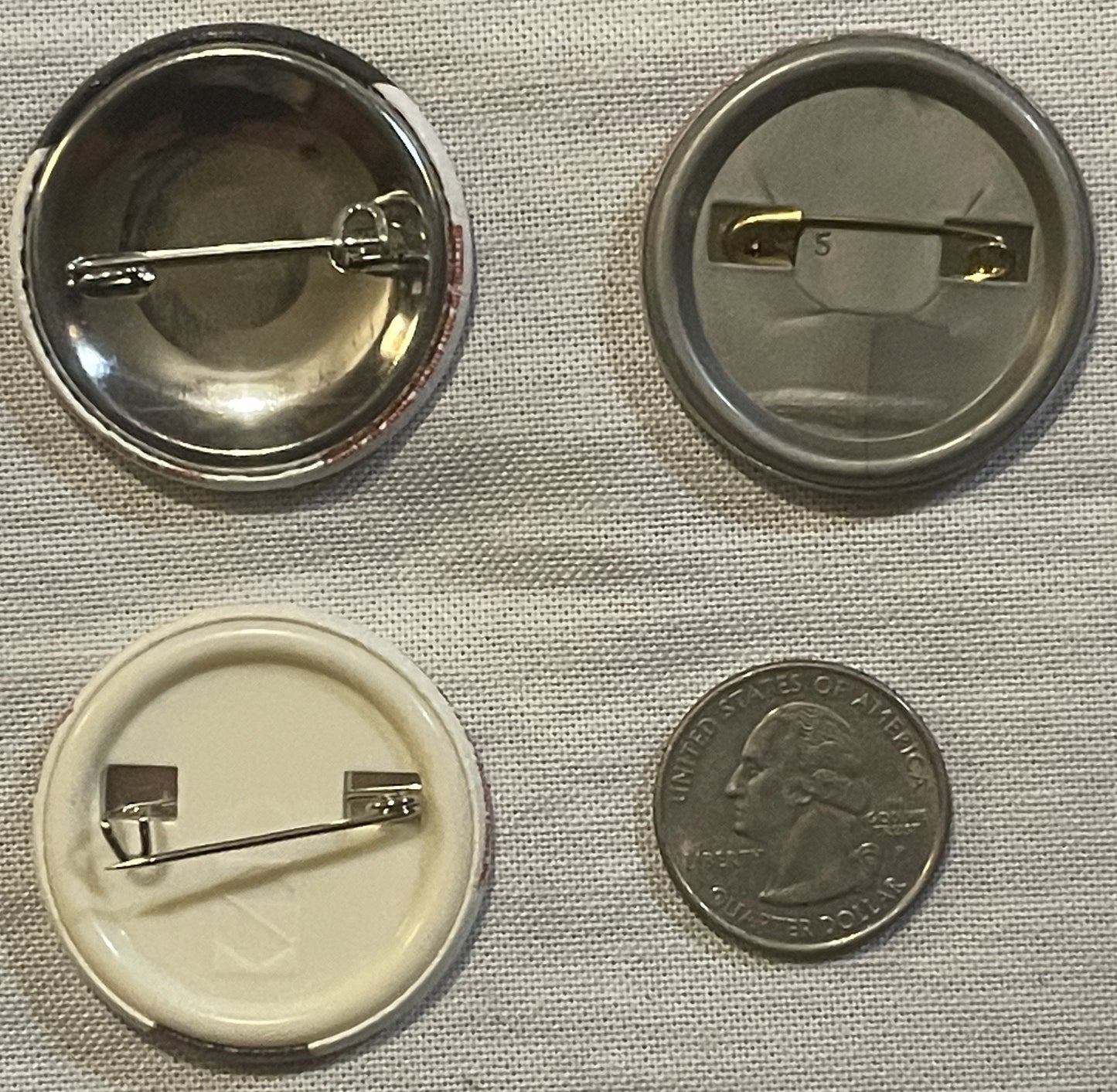
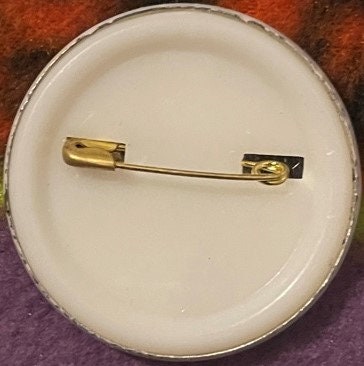
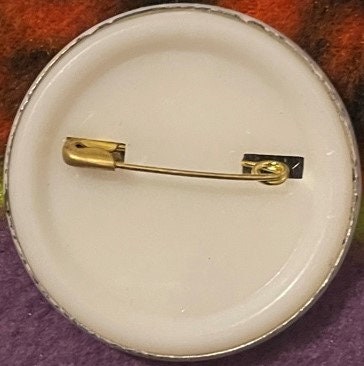
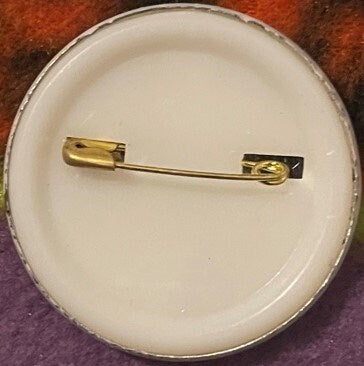
This is a vintage California Raisins pinback button — a genuine piece of licensed CALRAB merchandise from the golden era of one of the most beloved advertising campaigns in American history. The button measures approximately 1½ inches in diameter and features a beautifully lithographed cartoon raisin — specifically Stamford "Stretch" Thompson, the band's own bass-playing friend — rendered here in full saxophone-playing glory. He's got his white cartoon gloves wrapped around a bold yellow saxophone, his blue-lidded eyes half-closed in that unmistakable cool, his black-and-white shoes planted on the ground like he owns the stage. The colors — white background, rich brown raisin body, vivid yellow saxophone, crisp black detailing, and those signature blue eyes — pop the way only a well-printed lithographed button can. On the back, a gold-toned safety-pin style clasp keeps everything exactly as it was found: New Old Stock (NOS), pulled from warehouse storage where it had been tucked away for decades in big boxes, untouched, waiting.

This button was produced under the CALRAB license — the California Raisin Advisory Board, headquartered in Fresno, California — and distributed through Applause, the dominant licensed merchandise partner for the California Raisins line. Applause's name is practically synonymous with the Raisins collectible universe; they produced the overwhelming majority of the figures, buttons, and character merchandise that now fill collector cases and shadow boxes across the country. This button belongs to a multi-design series that captured every member of the band in a different pose — saxophone, microphone, dancing, surfing — a full cast of characters meant to be worn, displayed, traded, and treasured.

I have seen some folks out there date pins like this to the 1970s. I want to set the record straight, gently but firmly: it isn't possible. The California Raisins didn't exist until 1986. These buttons are a product of that campaign era — mid-to-late 1980s through the early 1990s — and that's exactly where they belong in the timeline of American advertising history.


🍇 The Company Behind the Characters — CALRAB and Fresno's Raisin Legacy

To understand why these little lithographed buttons matter, you have to understand where they came from — and that means going back to Fresno, California, the agricultural heart of the San Joaquin Valley, and one of the most important food-producing regions in American history.

The story of Fresno raisins begins earlier than most people realize. In 1876, a group of female schoolteachers — pioneers in every sense of the word — set aside four acres out of a hundred-acre property to grow grapes for raisin harvest. Two years later, their first batch came in: thirty boxes, ready for market. That modest harvest was the seed of an entire West Coast industry. By the 1960s, the United States was producing 250,000 tons of raisins per year, the majority of it grown in and around Fresno. The Sun-Maid brand, which became the face of California raisins worldwide, even traces its name to Fresno: a local advertiser named E.A. Berg coined the term "Sun-Maid" as a nod to the natural process of grapes being "made" in the California sun — dried on paper trays between the vine rows, turned by hand, boxed, and shipped to the world.

But by the 1980s, raisin growers were struggling. Foreign competition was intense, consumption was flat, and the industry needed something dramatic. That something arrived in the form of the California Raisin Advisory Board — CALRAB — a California state marketing commission established to coordinate the regulation and promotion of the state's raisin crop. CALRAB's mission was straightforward: stabilize prices, fund research, maintain quality standards, and — critically — expand the market through advertising. What nobody could have predicted was just how far that advertising would go.


🎬 The Creative Genius — Foote, Cone & Belding, Will Vinton, and the Birth of a Legend

The California Raisins were born in 1986, conceived by advertising firm Foote, Cone & Belding (FCB) for a Sun-Maid commercial on behalf of CALRAB. The spark came from a writer named Seth Werner, who imagined anthropomorphized raisins — wrinkled, brown, unmistakably fruit — strutting and grooving as a rhythm and blues band. The production was handed to Will Vinton Studios, the Portland, Oregon outfit that had pioneered Claymation, and character designs were developed by Michael Brunsfeld.

On September 14, 1986, the first thirty-second television commercial debuted. Sunglasses on, high-top sneakers laced up, the Raisins launched into a cover of Marvin Gaye's "I Heard It Through the Grapevine" — and American pop culture stopped dead in its tracks. The response was unlike anything the raisin industry had ever seen. Raisin sales jumped 20 percent. Fan clubs appeared across the country. The characters crossed into animated specials, earning an Emmy Award. They got their own comic books. Their own Nintendo video game. Lunch boxes, T-shirts, costumes, figurines — and yes, pinback buttons like this one.

Lead vocals for the Raisins were performed by musician Buddy Miles, lending the characters a genuine soul and R&B credibility that audiences immediately felt. Celebrity crossovers followed: Ray Charles joined the Raisins, and — remarkably — Michael Jackson agreed to appear as a Claymation character alongside them, singing his own version of "Grapevine." Jackson agreed to do it for free, with one condition: he would only work with Vinton, whose studio he already knew from their collaboration on Captain EO.

The characters were eventually given full names and personalities in the mockumentary special Meet the Raisins! — and that's where Stamford "Stretch" Thompson came into his own. The band's lineup: A.C. Arborman on vocals, his younger brother Beebop Arborman on drums, their cousin Red Raisin on guitar and piano, and their friend Stamford "Stretch" Thompson — the tall one, the cool one, the one with the saxophone. The button in your hands is his button. Stretch, mid-song, eyes half-lidded, lost in the music the way only a Claymation raisin can be.


📖 Local Legend and Collector Lore 🍇

Lore passed down among California Raisins collectors holds that the warehouse finds of these pinback buttons — including the cache from which this example comes — were stored in large, undivided boxes, hundreds of buttons together, for the better part of forty years. Not organized, not individually bagged, just piled in the way that surplus promotional merchandise gets tucked away when a campaign winds down and no one knows quite what to do with the leftovers. The collector community has long speculated that the Raisins merchandise overflow was significant — CALRAB had licensed so aggressively during the peak years that warehouses across California were left holding stock when the board closed its doors on July 31, 1994. Local legend has it that some of the most pristine survivors of the Raisins merch era came not from retail shelves but from exactly these kinds of forgotten warehouse pallets, moved once or twice over the decades before finally surfacing.

The Smithsonian's National Museum of American History makes sure to hold examples of California Raisins collectibles in its collection — a testament to the cultural weight these characters carry. These aren't just cute novelty items. They are documented American advertising history, collected and preserved at the national level. Collectors have known this for years; the Smithsonian's interest has only deepened the community's conviction that a complete Raisins collection is something worth building seriously.

There is also a persistent rumor in collector circles — one I find completely plausible — that the multi-pose button series was originally distributed not just through traditional retail but through promotional partnerships, school fundraisers, and fair circuit vendors across California's Central Valley, making them simultaneously mass-produced and oddly regional in their original circulation. That combination — wide production, concentrated original distribution — is exactly what drives the kind of collector hunger these buttons still generate decades later.


📉 The Rise, The Fall, and Why That Makes This Button More Meaningful

The California Raisins campaign ended not with a whimper but with a kind of tragic irony that only makes the story richer. CALRAB, as a nonprofit marketing commission, could not profit from the characters it had created. Every dollar the Raisins generated in cultural cachet and merchandise licensing went back into funding more advertising — a virtuous cycle that eventually became vicious. Production costs soared. Grower-members revolted. On July 31, 1994, CALRAB closed permanently.

Following the board's collapse, the California Raisins became intellectual property of the State of California. In 1998, the California Raisin Marketing Board was established to replace CALRAB — but the Raisins as a cultural force had already done their work. They had saved an industry, made claymation a household word, put Fresno on the pop culture map, and left behind a trail of merchandise that collectors have been hunting ever since.

Modern scholarship has begun examining the campaign with fresh eyes: a 2025 academic presentation explored how this beloved advertising phenomenon intersected with questions of cultural representation, commercial exploitation, and the appropriation of African American musical tradition — the characters were, after all, designed as caricatures of R&B performers, animated by a predominantly white studio, voiced by Black musicians, and sold by a white-led agricultural board. That conversation is part of the full history of these objects, and it belongs in the record alongside the Emmy awards and the Smithsonian cases. The buttons don't get simpler the more you know about them — they get more interesting.


🖼️ Display Ideas

  • 🎷 Shadow box the full band lineup — collect all four named characters (A.C., Beebop, Red, and Stretch) and display them together in a deep shadow box with a reproduction of the original 1986 commercial print ad as a backdrop.
  • 📺 1980s pop culture gallery wall — pair with other era pinbacks, TV Guide covers, and vintage advertising ephemera for a living-room or den installation that stops every visitor cold.
  • 🎸 Music room accent — mounted near a record player or vinyl display, this button reads as genuine mid-century American music culture — because that's exactly what it is.
  • 🌾 California agricultural history display — frame alongside a vintage Sun-Maid label, a Fresno-area farming photograph, and a CALRAB pamphlet for a conversation-starting local history vignette.
  • 🏛️ Advertising history collection — alongside other iconic American ad characters of the era, this button holds its own as a museum-quality piece of commercial art and cultural documentation.
  • 🎀 Wear it — the safety-pin clasp on the back works exactly as designed. Pin it to a denim jacket, a canvas tote, a band bag. These were made to be seen.

🎁 Who Collects These

California Raisins collectors are a devoted, knowledgeable community — and they span a wider range than you might expect. There are the obvious enthusiasts: children of the 1980s who grew up watching the Claymation specials and want a tangible piece of that memory on their shelves. But there are also serious advertising history collectors who pursue CALRAB merchandise the way others pursue Coca-Cola trays or Burma-Shave signs — as documented American commercial art with a verifiable provenance and cultural weight. Pinback button specialists are a third distinct audience; the lithography on these buttons is a craft in its own right, and serious button collectors track the California Raisins series the way others track political campaign buttons or World's Fair souvenirs. Claymation and animation enthusiasts seek these out as physical artifacts of Will Vinton's legacy. And increasingly, scholars and cultural historians are treating this merchandise as primary source material — objects that document not just an ad campaign but a particular moment in American race, agriculture, commerce, and pop culture history. Whatever brought you here, you are in excellent company.


❓ Frequently Asked Questions

Which California Raisin character is on this button?

This button depicts Stamford "Stretch" Thompson, the saxophone-playing member of the California Raisins band. Stretch was one of four characters given full names and backstories in the 1988 mockumentary special Meet the Raisins! The band's lineup was A.C. Arborman on vocals, his younger brother Beebop Arborman on drums, their cousin Red Raisin on guitar and piano, and Stretch on bass — though on this button he's clearly channeling his inner saxophonist, which is entirely on-brand for a character who lived to make music. The saxophone pose is one of the most beloved in the button series, and Stretch's half-lidded blue eyes and white-gloved hands wrapped around that yellow saxophone make this one of the most visually striking of the set.

Is this an original piece or a later reissue?

This is a genuine vintage piece from the original CALRAB campaign era — New Old Stock pulled from warehouse storage where it had been held since the Raisins' commercial peak. It is worth knowing that some California Raisins buttons were reissued in later years, and the dating information — typically printed in small type along the button's crimped metal edge — can be difficult to read on pieces that have been stored. What I can tell you is that this button came from a warehouse find of original campaign-era stock, and its lithography, clasp style, and color palette are consistent with the Applause-licensed merchandise of the late 1980s through early 1990s. If precise dating is critical for your collection documentation, examining the edge markings under magnification is the standard collector practice.

Who made this button, and who licensed it?

The California Raisins merchandise line was licensed through the California Raisin Advisory Board (CALRAB), based in Fresno, California. The dominant licensed manufacturer and distributor for Raisins collectibles was Applause, whose name appears on the majority of verified California Raisins merchandise — figures, buttons, and character items alike. The specific pinback fabrication firm (the company that physically pressed and lithographed these buttons) is not documented in surviving records I've been able to locate, which is common for promotional merchandise of this era. What is well-established is the CALRAB/Applause licensing relationship that brought these to market.

Why do the Smithsonian and serious collectors treat California Raisins merchandise as significant?

Because the California Raisins campaign was genuinely transformative — not just as advertising, but as American cultural history. The 1986 debut commercial reversed a decades-long decline in raisin consumption, boosting sales by 20 percent almost overnight. The characters won Emmy Awards, crossed into mainstream entertainment, inspired celebrity collaborations with Ray Charles and Michael Jackson, and generated a merchandise universe so vast it has sustained a dedicated collector market for nearly forty years. The Smithsonian's National Museum of American History holds California Raisins collectibles as part of its permanent collection — a recognition that these objects document something real and lasting about American commerce, creativity, agriculture, and pop culture. A pinback button from this campaign isn't novelty merchandise. It's a primary source.

What condition should I expect?

This is New Old Stock (NOS) — meaning it was never put into retail circulation, never sold through a store, and has been held in warehouse storage since the campaign era. It is an excellent early example of American advertising ephemera and lithographed promotional art from one of the most celebrated campaigns of the twentieth century. As with all NOS warehouse finds, each piece is individual — I am meticulous about condition and will never oversell what I have. What I can tell you is that the artistry of the lithography, the boldness of the color palette, and the integrity of the safety-pin clasp mechanism are all there to be appreciated.

Is this part of a series? Should I try to collect the whole set?

Absolutely, and many collectors do exactly that. The California Raisins button series was issued in multiple character poses — saxophone, singing, dancing, surfing, and others — with each of the four named band members represented across the set. Collecting the full lineup (A.C., Beebop, Red Raisin, and Stretch) in multiple poses is a recognized collecting goal within the California Raisins community. The Smithsonian's own approach — ensuring representation of as many Raisins collectibles as possible — mirrors the instinct serious collectors have always had: this is a campaign complete enough, and historically significant enough, to document comprehensively. The nostalgia and cultural value attached to these pieces show no signs of diminishing, which makes completing a set both a personal pleasure and a sound collecting decision.

How do these buttons connect to the broader history of Fresno and California agriculture?

More directly than most people realize. The California Raisins were not a marketing invention dreamed up in a Manhattan boardroom — they were the desperate, creative response of Fresno-area raisin growers to genuine economic pressure. The first raisin farms in Fresno were started in 1876 by female schoolteachers who set aside four acres for a raisin harvest; their first thirty boxes launched a West Coast industry. By the 1960s, Fresno-area farms were producing 250,000 tons annually, but foreign competition was eroding the market. CALRAB existed to fight back. The Raisins campaign was that fight — and this button, small as it is, is a direct artifact of that agricultural and economic history. Collecting it is collecting a piece of California's farming legacy as much as it is collecting a piece of 1980s pop culture. Both stories are real, and both live in this pin.

Shipping

🚚 Shipping & Handling

  • Shipping costs and timing are calculated at checkout.
  • Items curated and shipped directly by me include U.S. shipping at no additional cost, professionally packed to ensure safe arrival of your artifact.

Items from Vetted Pro Collectors
Shipping for items offered by vetted Pro Collectors is determined at checkout. All Pro Collector listings are reviewed to ensure fair, reasonable shipping practices.

For full details, please refer to our Shipping Policy.

Returns & Exchange

Take your time — you've got a full six months. If a piece isn't right for you, send it back the way it reached you and we're good.

In the first 30 days your money goes straight back the way you paid. After that it's store credit, so you can put it toward something you'd rather have.

Return shipping we sort out between us, case by case. I don't make this difficult.

If something arrives damaged, or it isn't what I said it was, send me a photo within 48 hours and I'll make it right.

Email info@vintageantiquesgifts.com or call 802-356-9872 — that's me answering, not a call center.

The only things I can't take back are custom or special-order pieces and gift cards.

View full details