
Skip to product information
1 of 4

Vintage and Antique Gifts

Vintage 1993 Pin-Up Girls II 🎴 Vargas Trading Card Set, Sealed 21st Century Archives Box

Vintage 1993 Pin-Up Girls II 🎴 Vargas Trading Card Set, Sealed 21st Century Archives Box

Regular price 16.00 USD
Regular price Sale price 16.00 USD
Sale Sold out
Shipping calculated at checkout.
Quantity

Remember When a Pin-Up Was a Love Letter to Elegance, Not Just a Whistle? 🌹

There's a particular kind of golden-age glamour that only the pin-up artists of the 1940s ever quite managed to bottle — the long sweep of a silk gown, the tilt of a head caught mid-turn, a knowing half-smile aimed straight at whoever was lucky enough to be looking. Before pin-up art became a punchline or a novelty print sold in a mall shop, it was commercial illustration at its most technically dazzling, painted by men who trained as fine artists and applied every ounce of that skill to selling magazines. This sealed box of Pin-Up Girls II trading cards holds fifty little windows into that world — never opened, never broken from its original shrink wrap, sitting exactly as it did the day it left the factory floor.

🎴 What This Piece Is

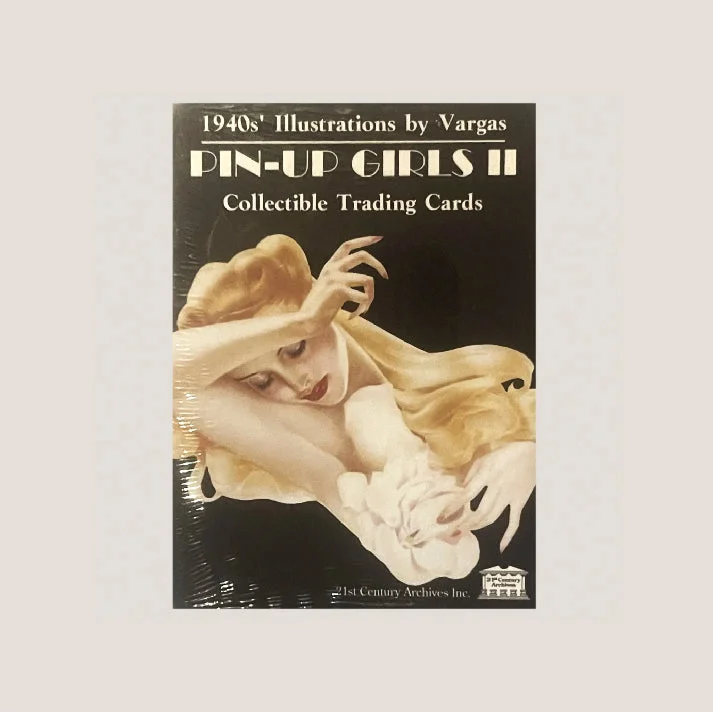
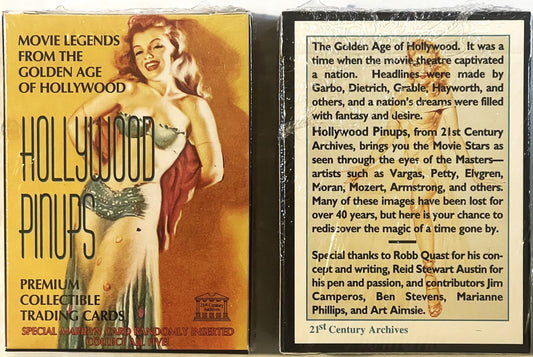
This is a factory-sealed box of Pin-Up Girls II Collectible Trading Cards, published by 21st Century Archives Inc. as the direct sequel to the company's earlier "Pin-Up Girls" set. The box art and every card in the set draw on the illustrations of Alberto Vargas, the legendary "Varga Girl" artist of 1940s Esquire fame.

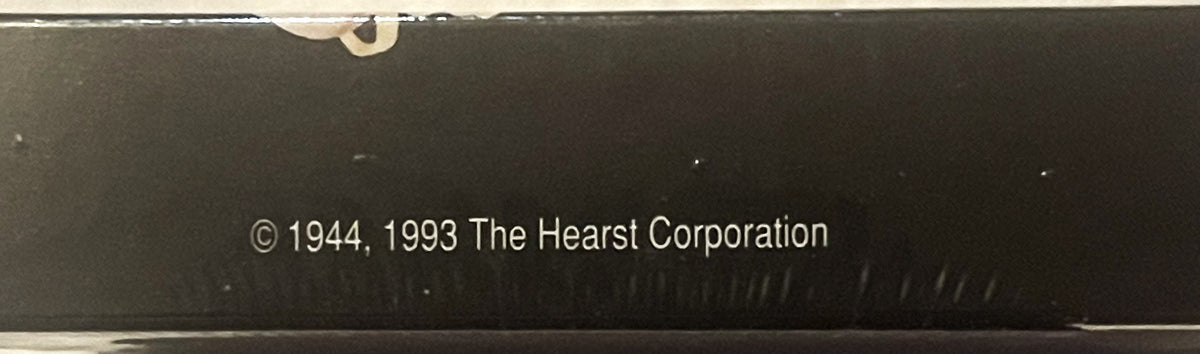
The box itself, and the insert card packaged with it, are produced by offset lithography on sturdy cardboard stock with a glossy finish — rendered in deep blacks, warm golds and blondes, creamy ivory whites, soft flesh tones, and a single flash of red at the lips that pulls the eye straight into the artwork. The cover shows a Varga-style reclining woman, blonde hair sweeping across a white robe and a spray of flowers, one gloved and manicured hand lifted to her hair — instantly recognizable to anyone who's ever paged through a vintage men's magazine of that era.

Inside, the set contains fifty different cards, each one carrying not just an illustration but text on the back written by pin-up historian Reid Stewart Austin, plus a Limited Edition Prizm insert set packed into cases of the product. This example belongs to the broader early-to-mid 1990s wave of licensed non-sport trading cards, and it comes to you as genuine New Old Stock — sealed, unopened, exactly as it was originally packaged.


🎨 Alberto Vargas — The Man Whose Name Became a Word

The artist behind every card in this box was born Joaquin Alberto Vargas y Chávez in Arequipa, Peru, in 1896, the son of Max T. Vargas, a noted regional photographer. Young Alberto trained formally in Europe — Switzerland, then Paris and Geneva — before immigrating to the United States, where by the late 1910s he'd found work in New York painting for the Ziegfeld Follies and doing publicity artwork for early Hollywood studios. It's easy to forget that before Vargas ever painted a magazine centerfold, he was learning to render glamour under stage footlights, capturing showgirls and film stars in a style that borrowed as much from classical portraiture as from commercial art.

Everything changed in 1940, when Vargas joined Esquire magazine. Over the next six years he produced roughly 180 paintings for its pages — the pin-ups that would come to define an entire visual era. Here's where the lore gets interesting: Esquire's editors shortened "Vargas" to simply "Varga" for the published pin-up line, dropping the final "s." Collectors and historians have long noted this wasn't a stylistic choice — it let the magazine argue that "Varga" was a trademark belonging to Esquire itself rather than to the artist. When Vargas later tried to assert control over his own signature style, a legal dispute with the magazine went against him, and for years he was effectively cut off from the very name that had made him famous. It's one of the great cautionary tales of mid-century commercial art — a man losing legal ownership of his own artistic identity — and it left Vargas in genuine financial hardship through much of the 1950s.

The reach of those Esquire pin-ups, meanwhile, went far beyond magazine racks. Old-timers of the WWII generation and aviation historians alike have long pointed out that much of the hand-painted nose art carried into combat on American and Allied bomber and fighter planes was directly inspired by — and often copied straight from — Vargas's Esquire pin-ups, alongside the work of his contemporary George Petty. Somewhere over the Pacific and the skies of Europe, a Varga Girl rode along on the fuselage of more aircraft than anyone will ever fully count, a small piece of pin-up glamour carried into war as a talisman of home.

Vargas found a second act starting in 1959, when Playboy began commissioning his work; over the following sixteen years he painted 152 more pieces for the magazine, restoring both his reputation and his livelihood. His 1978 authorized biography renewed public fascination with his life story and briefly drew him back to the easel — he even produced album cover art in his final years, including work associated with the rock band The Cars and with performer Bernadette Peters. Vargas died in 1982 at the age of 86. Today a substantial body of his original Esquire-era paintings resides in the permanent collection of the Spencer Museum of Art at the University of Kansas, donated in 1980 — a fitting home for work that started as commercial magazine illustration and is now studied as a genuine chapter of American art history.


🏢 21st Century Archives and the Non-Sport Card Boom

21st Century Archives Inc. operated as a niche publisher of non-sport trading cards through the early-to-mid 1990s, a period when the trading card industry — flush with cash and collector enthusiasm from the sports card boom of the prior decade — began experimenting heavily with licensed nostalgia. Instead of ballplayers, companies like this one built entire sets around movie stills, classic illustration, and vintage glamour art, selling them to a collector base hungry for anything with genuine period pedigree. Pin-Up Girls II was 21st Century Archives' follow-up to their original Pin-Up Girls release, and the box proudly notes that first series was named "Non-Sport Card Design of the Year" — the company's own boast, printed right on the packaging, and worth preserving here exactly as the manufacturer stated it.

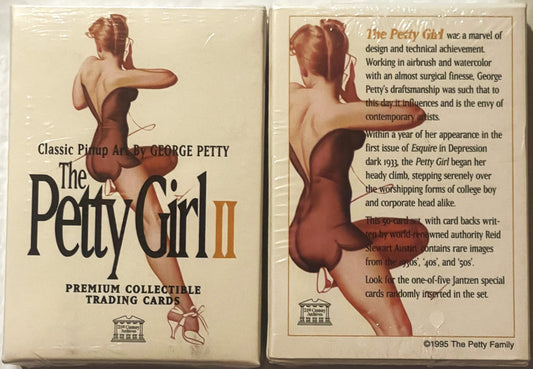
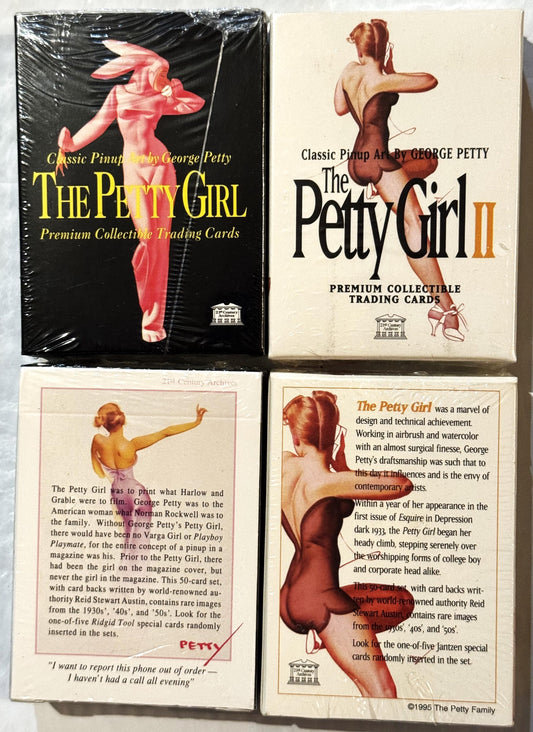
Structurally, the set followed the collector-chase logic that defined the whole early-90s card era: fifty base cards forming the primary set, with a Limited Edition Prizm parallel set inserted into cases as a rarer, shinier variant for the dedicated collector to hunt down. "Prizm" technology — foil-treated, refractive card stock — was one of the hottest innovations in the trading card world at the time, and its use here signals that 21st Century Archives was keeping pace with the flashiest production techniques the industry had to offer, applied to artwork already fifty years old by the time these cards were printed. The company went on to release further pin-up themed sets in the years that followed, including a Petty Girl set built around George Petty's work and a later "Pin-Ups Uncovered" release — evidence that the Vargas-Petty pin-up revival was no one-off but a sustained niche the company clearly believed in.


✍️ Reid Stewart Austin — The Man Who Told the Varga Girl's Story

Every card back in this set carries text from Reid Stewart Austin, credited on the box as a "world-renowned pinup authority" — and the credentials back that up. Austin spent twenty years as an art director at Playboy, working directly within the same publishing world that had given Vargas his second career. In 1978 he co-authored Alberto Vargas: The Authorized Biography in direct collaboration with Vargas himself — meaning the man writing these very card backs had sat with the artist and helped him tell his own life story while Vargas was still alive to correct the record. Austin went on to write Varga: The Esquire Years in 1987 and later The Classic Pin-up Art of George Petty. Few people writing about mid-century pin-up art in the 1990s had Austin's direct, personal line back to the artist — which is exactly what makes this fifty-card set more than a picture book. Each card carries a fragment of firsthand-informed history rather than secondhand guesswork.


🖼️ From Esquire's Pages to Today's Collectors

Vargas's work has had a long afterlife well beyond the magazine stand. His paintings live in museum collections, his signature style shows up in tattoo art, hot rod culture, and burlesque revival aesthetics, and "Varga Girl" remains one of the most instantly recognizable phrases in the history of American illustration. Sets like this one exist precisely because that appeal never faded — by the early 1990s, a new generation of collectors who'd grown up hearing about wartime nose art and Esquire's golden age wanted a tangible, affordable way to own a piece of it, and 21st Century Archives built exactly that. A sealed box like this one represents that collector moment frozen in place: pin-up nostalgia, packaged with genuine care, for a hobby that was booming at the time and has never really stopped.


🖼️ Display Ideas

  • 🎩 Prop the sealed box upright on an open shelf or bookcase as a standalone piece of graphic art — the cover illustration alone reads beautifully at a distance.
  • 🍸 Pair it on a bar cart or home bar shelf alongside cocktail glasses and vintage barware for an instant mid-century lounge feel.
  • 📚 Set it beside a vintage Esquire or Playboy reproduction and a Vargas biography for a small curated "pin-up history" shelf display.
  • 🖌️ Give it a spot in a home studio or graphic design office as a nod to the roots of American commercial illustration.
  • 🎁 Wrap it as a gift for the illustration or Vargas collector who already owns the books and prints but not the trading cards.
  • 🪞 Display it on a vanity or dressing table for a playful, glamorous touch of old Hollywood boudoir styling.

🎁 Who Collects These

This piece tends to find its way to Vargas and Esquire pin-up devotees, non-sport trading card collectors rounding out a licensed-art run, WWII aviation and nose-art enthusiasts drawn to the connection between Vargas's illustrations and wartime plane art, Playboy and mid-century men's-magazine ephemera collectors, illustration and graphic design fans studying the golden age of American commercial art, and gift-givers looking for something with genuine period charm and a story worth telling rather than a generic novelty print.


❓ FAQ

Is this original Vargas artwork, or a reproduction on trading cards?

These are licensed trading cards reproducing Alberto Vargas's illustrations, published by 21st Century Archives Inc. as a collector card set — not original paintings. The originals from his Esquire years largely reside in museum collections today.

What exactly is inside the box?

The set is built around fifty different base cards, with a Limited Edition Prizm parallel insert set included per case. Each card back carries historical text written by pin-up authority Reid Stewart Austin.

Is this the same as the original Pin-Up Girls set?

No — this is Pin-Up Girls II, the officially billed sequel to 21st Century Archives' first Vargas pin-up release, which the company's own packaging credits with a "Non-Sport Card Design of the Year" honor.

Has the box ever been opened?

This is New Old Stock — sealed in its original shrink wrap and never opened since it left the factory.

What era does this set date to?

It belongs to the early-to-mid 1990s wave of licensed non-sport trading cards, produced during a period when publishers were actively reviving classic 1940s pin-up illustration for a new generation of collectors.

Why does the box mention Prizm cards specifically?

Prizm foil-treated card stock was a sought-after production technique in the trading card industry at the time, used here to create a rarer parallel version of the base fifty-card set for dedicated collectors.

Who was Reid Stewart Austin, and why is his name on the cards?

Austin was a longtime Playboy art director and the co-author of the authorized 1978 Vargas biography, written directly with the artist. His firsthand knowledge is why his name carries real weight on a set built around Vargas's life and work.

Shipping

🚚 Shipping & Handling

  • Shipping costs and timing are calculated at checkout.
  • Items curated and shipped directly by me include U.S. shipping at no additional cost, professionally packed to ensure safe arrival of your artifact.

Items from Vetted Pro Collectors
Shipping for items offered by vetted Pro Collectors is determined at checkout. All Pro Collector listings are reviewed to ensure fair, reasonable shipping practices.

For full details, please refer to our Shipping Policy.

Returns & Exchange

Take your time — you've got a full six months. If a piece isn't right for you, send it back the way it reached you and we're good.

In the first 30 days your money goes straight back the way you paid. After that it's store credit, so you can put it toward something you'd rather have.

Return shipping we sort out between us, case by case. I don't make this difficult.

If something arrives damaged, or it isn't what I said it was, send me a photo within 48 hours and I'll make it right.

Email info@vintageantiquesgifts.com or call 802-356-9872 — that's me answering, not a call center.

The only things I can't take back are custom or special-order pieces and gift cards.

View full details
  • 5 stars: 4 (100%)
  • 4 stars: 0 (0%)
  • 3 stars: 0 (0%)
  • 2 stars: 0 (0%)
  • 1 star: 0 (0%)
9
9***9 (22)

These pin-ups are phenomenal! I admire the quality and style each one presents. The cards as well as the case box are in excellent condition. Really great price as well for this collection. It was a pleasure doing business with this shop.

d
d***s (2080)

Fast, careful shipping!! Thanks!!

c
c***o (68)

Perfectly packaged, mint condition as advertised. Beautiful cards

8
8***2 (206)

Great seller, fast and secure shipping